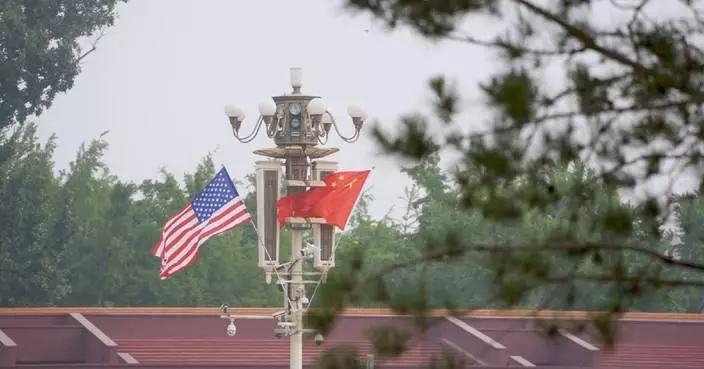
A growing number of Americans hold positive views of China in recent years, with the public favoring more stable bilateral relations, according to a New York Times online report citing surveys by several major polling institutions.
A recent poll by the Chicago Council on Global Affairs found that 57 percent of Americans believe the United States should pursue friendly cooperation and engagement with China, up from 40 percent in 2024.
Dina Smeltz, a former State Department official who oversees the Council's survey work, said most Americans now want to cooperate with China.
The findings align with a Gallup survey conducted earlier this year, which also recorded a sharp rise in the share of Americans expressing favorable views of China.
The latest Pew Research Center survey, released in September, offered more detail. Compared with 2021, the share of respondents with "warm" or neutral feelings toward China rose by 8 and 7 percentage points, respectively, while the proportion holding cold views fell by 14 percentage points over the past five years.
Both Pew and the Chicago Council found that young Americans are notably more positive toward China. They are getting more familiar with the country's technological innovation and cultural appeal, a trend reflected in the "Chinamaxxing" craze sweeping the internet, in which young Westerners immerse themselves in Chinese lifestyles and habits.
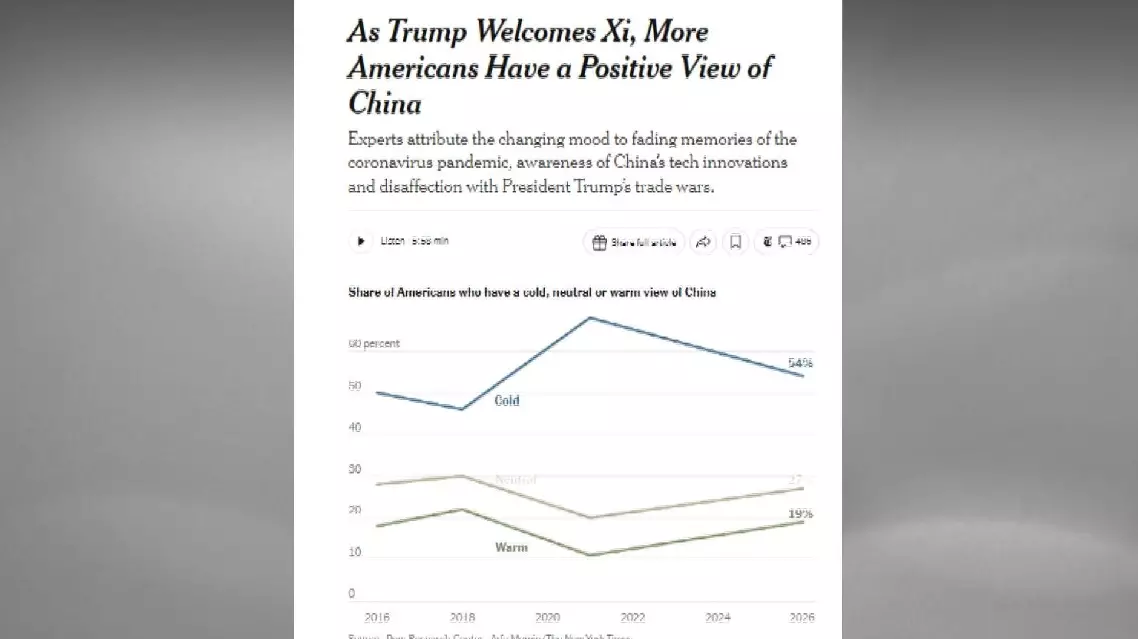
China's image in US improves as more Americans favor stable ties: polls
Two American veterans of the historic "ping-pong diplomacy" have welcomed the renewed mention by Chinese President Xi Jinping of the episode during the recent China-U.S. summit, expressing hope that the two countries will strengthen exchanges, enhance mutual trust and pass on their friendship from generation to generation.
Xi mentioned "ping-pong diplomacy" in a toast at a welcome banquet hosted by the U.S. president on Thursday evening, saying it opened the great process of normalizing China-U.S. relations with the political wisdom of "a small ball moving the globe".
In an interview with China Media Group (CMG) on Friday, Connie and her husband Dell Sweeris, former players on the U.S. National Table Tennis Team, said they were delighted that the episode was mentioned again during the China-U.S. summit.
"I was really, really kind of shocked about that, because here in the United States, it's not as popular. And I don't think many people, a lot of people, young people, maybe don't even know about Ping-Pong Diplomacy. So I was really surprised to hear that. But at the same time, I was really happy that he mentioned that," Connie said.
In 1971, Connie visited China with the U.S. table tennis delegation. The following year, she and her husband Dell hosted the Chinese table tennis team on its return visit to the United States.
Dell recalled that when the Chinese team visited the United States, American audiences not only wanted to watch matches but also wanted to meet these Chinese friends from afar. After a training session, a remark by a Chinese player left him with deep impression.
"We were practicing and they said they would give us some instruction. So they were telling us some things to do that would improve our skills. And then when they finished, they said, 'well now you teach us something'. The intent was to have a mutual exchange and not just have only one-sided. They wondered about us and we showed them our country, all different aspects of it," Dell said.
More than half a century of friendship also endures in the small moments. Connie remembered how, during the Chinese team's 1972 visit to the United States, the Chinese players learned “Home on the Range” and sang it to them in English on the bus. When she returned to Beijing this April, she reunited with a Chinese player from back then - someone who still remembered the tune and could sing it.
Today, the couple hopes more young Americans will have experiences like theirs.
"I would like to encourage them, if they get opportunities to do this, where they can go into China, as a student or as a ping pong player or music or education, take advantage of doing that. Because I'm a firm believer that the more you understand a person's culture and their beliefs, it helps promote communication and keeps friendships, and making friendships go forward," Connie said.
The couple also reflected on the wider stakes of the China-U.S. relationship, calling on both countries to work together for global peace and solutions to shared challenges.
"The relationship between China and the U.S. is on a global stage, and I really believe that if we can make it work between our two countries, that will set forth peace maybe throughout the world," Connie said.
"We need the leaders of the country and the people that work under them to work together and find common ground and appreciate both sides of things and come up with a solution to the world, because everybody's looking to us to do that, I think," Dell said.
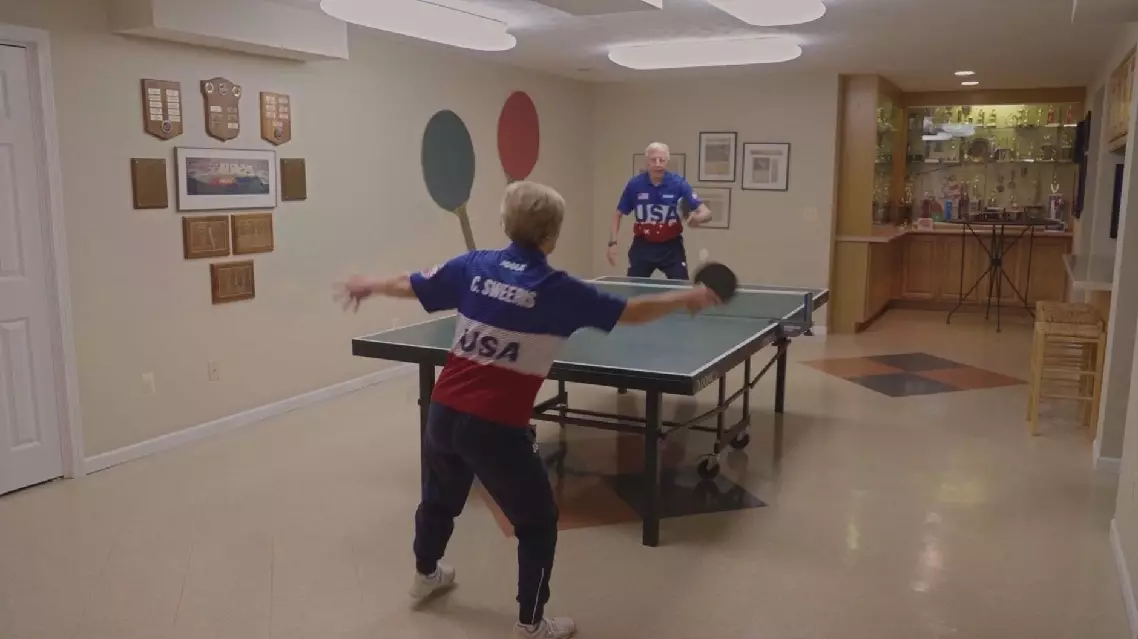
Ping-pong diplomacy veterans hope for stronger China-US ties