A pair of giant pandas, Ping Ping and Fu Shuang, departed for Zoo Atlanta in the U.S. from Chengdu Shuangliu International Airport in southwest China's Sichuan Province on a chartered flight at 02:55 Sunday, kicking off their 10-year stay at the zoo.
Before the departure, the Chengdu Research Base of Giant Panda Breeding held a farewell ceremony for the pair.
The male panda, Ping Ping, born on March 17, 2020, is easily recognizable due to its large, dark eye rims. It has a stocky build, moves nimbly, and has demonstrated proficiency in climbing trees, often resting among the branches. The female panda, Fu Shuang, born on October 18, 2020, is characterized by a small tuft of fluffy fur on its head and a full, protruding forehead. With a round appearance, it is quick to react, and very capable of foraging for food.
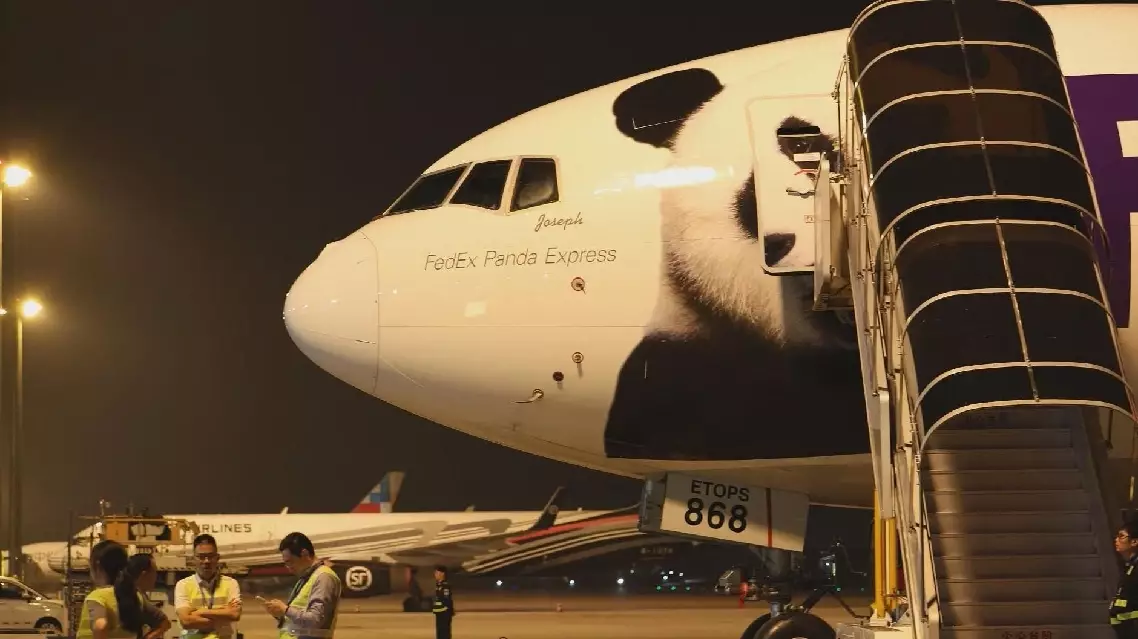
Two giant pandas set off from Chengdu for 10-year stay at Zoo Atlanta
The intelligent transformation of commercial satellites, driven by the integration of technologies involving communications, sensing and computing, has greatly improved their efficiency in collecting, processing and transmitting data, experts said.
A recent example is a "smart" satellite launched aboard a Lijian-1 Y18 carrier rocket along with another eight satellites. Developed by the Pengcheng Laboratory in Shenzhen, south China’s Guangdong Province, the satellite is equipped with multiple payloads integrating laser communications, remote sensing and intelligent computing.
In the past, large volumes of imagery from remote sensing satellites had to be transmitted back to Earth for screening and processing. Now, with onboard intelligent computing, part of the identification and processing can be done directly on the satellite.
For time-sensitive missions such as disaster prevention and relief, this shift means some tasks that once require half a day to a full day to process can now be done in minutes.
"Based on the existing communications satellite platform, we want to further expand the capabilities of an individual satellite, thereby enhancing the overall efficiency of our space-based infrastructure," said Wang Ye, director of the aerospace institute under the laboratory's broadband communications research department.
"Communications, sensing and computing are integrating at an accelerating pace. This is driven, on the one hand, by demand for real-time space-based services. The traditional way of separate deployment leads to high latency, low coordination efficiency and huge bandwidth costs from transmitting all raw data to the ground. On the other hand, breakthroughs in onboard hardware, laser communications and payload integration now make it possible to coordinate sensing, communications and computing through hardware resource reuse and integrated resources scheduling," said Ma Xiaokai, deputy secretary-general of the Space Computing Working Committee of the China Computer Industry Association.
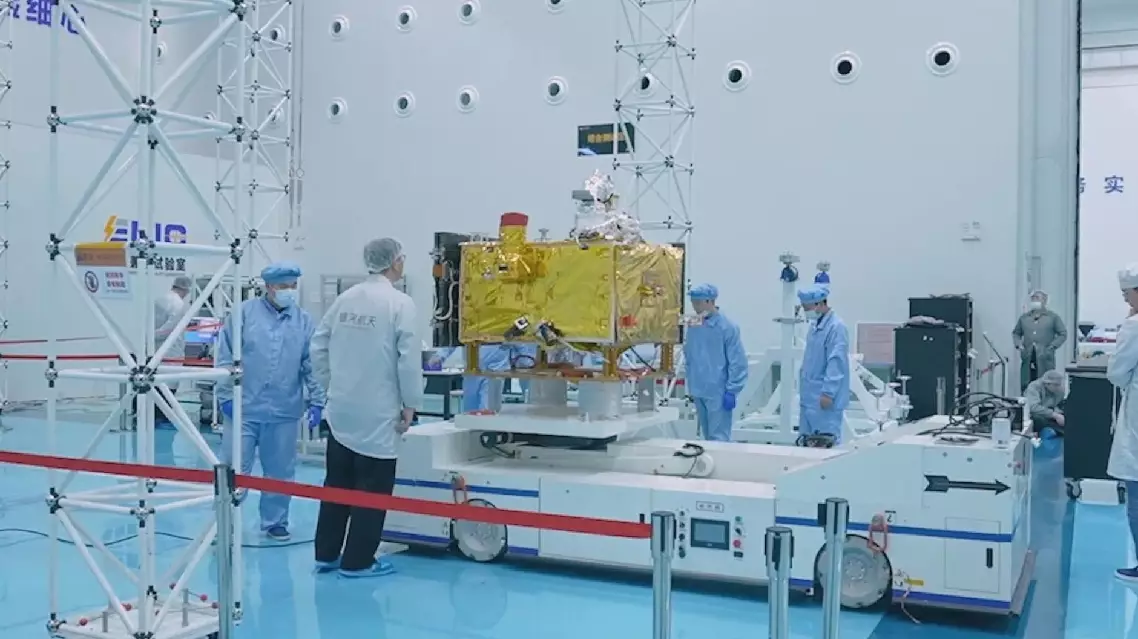
Intelligent transformation boosts commercial satellite data efficiency: experts