Skip to Content Facebook Feature Image

University presidents from China, US call for bridging minds through education, exchanges

China

China

China

University presidents from China, US call for bridging minds through education, exchanges

2026-09-26 23:33 Last Updated At:09-27 09:20

University presidents from China and the United States have urged efforts to bridge minds between the two peoples through education and youth exchanges.

On Thursday morning, Chinese President Xi Jinping said 100,000 young Americans will be invited to visit China for exchanges and study over the next five years.

Xi made the remarks while attending a welcome ceremony hosted by U.S. President Donald Trump at the White House during his three-day state visit.

In interviews with China Global Television Network (CGTN), the presidents noted that people-to-people exchanges among young people can foster friendship, deepen understanding of shared values and contribute to a better future.

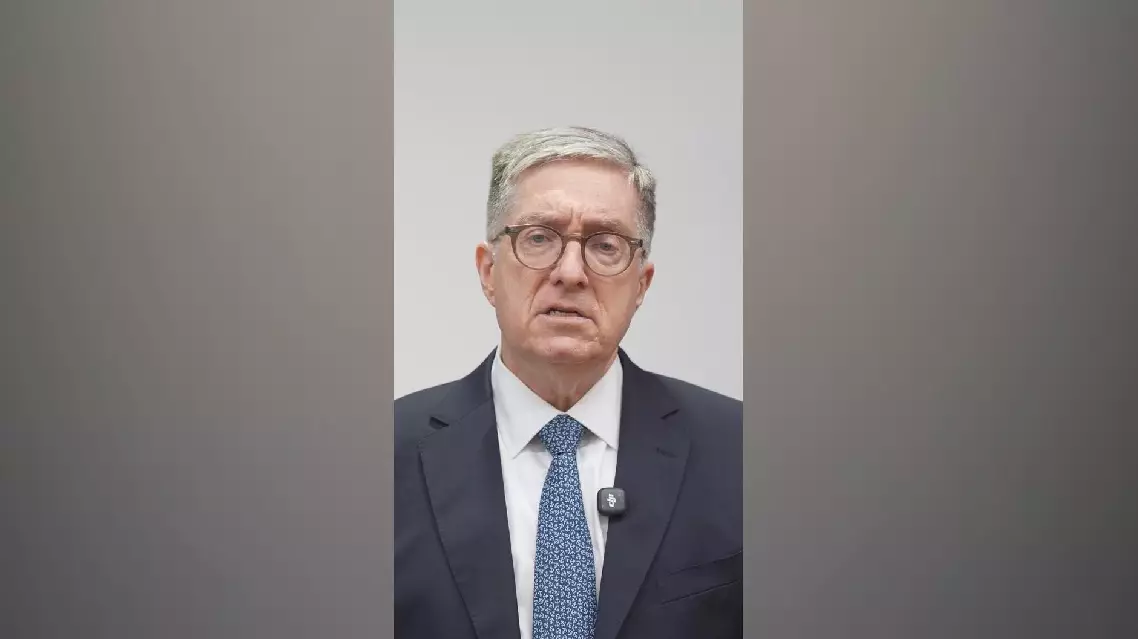
"A durable relationship between nations must be built on a sense of shared humanity among the citizens. That sense of shared humanity is best nurtured starting with the youth of each nation. The youth of a country embody all its hopes for continuous improvement. They express its collective energy and its ability to dream of a better future," said Jeffrey Lehman, vice chancellor and American President of New York University Shanghai.

"Chinese and American universities can create opportunities for more young people to bridge information gaps, broaden perspectives and deepen understanding. Through real encounters, shared learning, joint efforts to address global challenges, we can recognize the unique value we each bring," said Duan Peng, president of Beijing Language and Culture University.

The presidents also encouraged more young Americans to visit China, explore the country firsthand and discover it through personal experience.

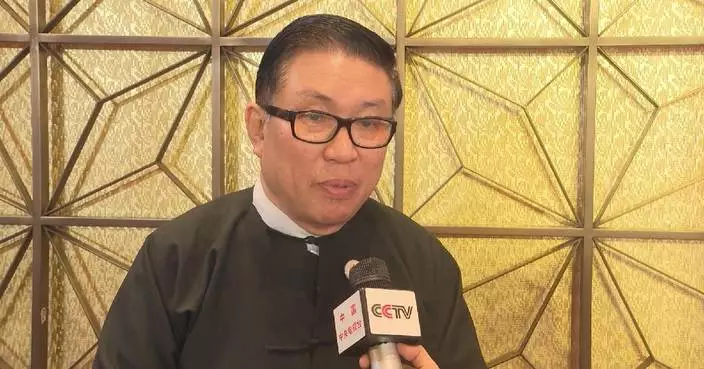
"Before they come to China, come to UIBE (University of International Business and Economics), [they have] perhaps the perception of what China is and will read the headlines. But when they come to Beijing, come to UIBE and they step into in the hutongs of Beijing, then they come to the restaurants, enjoy the meals and even have the midnight conversations and they find -- wow, this is real China," said Zhao Zhongxiu, President of UIBE.

"If you have the curiosity and the sense of adventure to want to be somewhere that's unfamiliar, out of your comfort zone, you should get on the plane and come to China," said John Quelch, executive vice chancellor and American president of Duke Kunshan University.
University presidents from China, US call for bridging minds through education, exchanges

University presidents from China, US call for bridging minds through education, exchanges
The intelligent transformation of commercial satellites, driven by the integration of technologies involving communications, sensing and computing, has greatly improved their efficiency in collecting, processing and transmitting data, experts said.

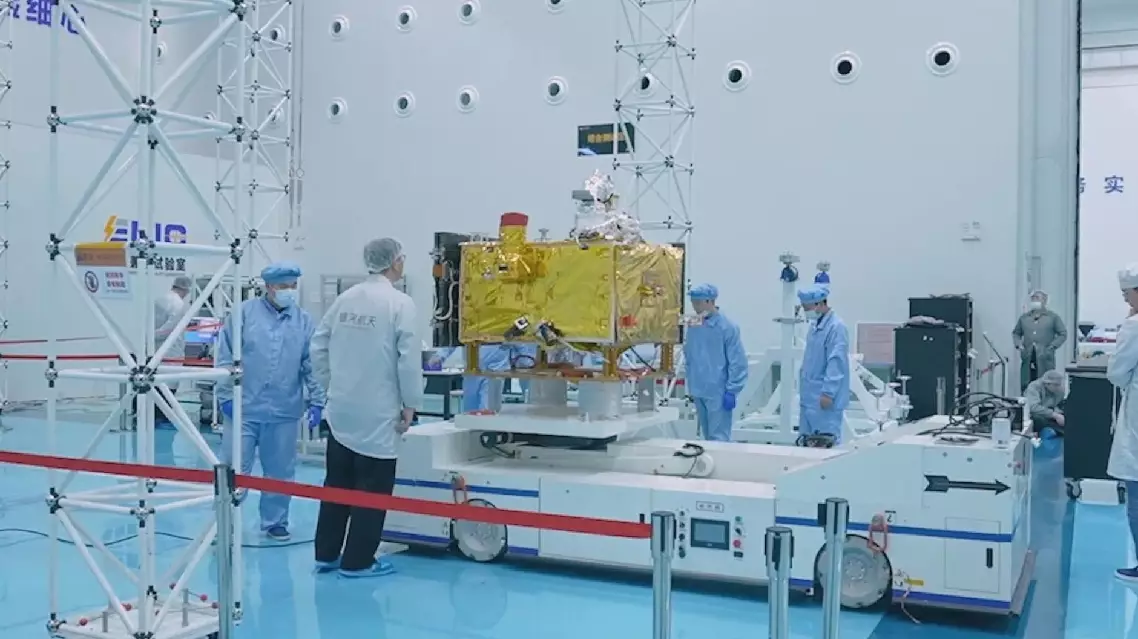
A recent example is a "smart" satellite launched aboard a Lijian-1 Y18 carrier rocket along with another eight satellites. Developed by the Pengcheng Laboratory in Shenzhen, south China’s Guangdong Province, the satellite is equipped with multiple payloads integrating laser communications, remote sensing and intelligent computing.

In the past, large volumes of imagery from remote sensing satellites had to be transmitted back to Earth for screening and processing. Now, with onboard intelligent computing, part of the identification and processing can be done directly on the satellite.

For time-sensitive missions such as disaster prevention and relief, this shift means some tasks that once require half a day to a full day to process can now be done in minutes.

"Based on the existing communications satellite platform, we want to further expand the capabilities of an individual satellite, thereby enhancing the overall efficiency of our space-based infrastructure," said Wang Ye, director of the aerospace institute under the laboratory's broadband communications research department.

"Communications, sensing and computing are integrating at an accelerating pace. This is driven, on the one hand, by demand for real-time space-based services. The traditional way of separate deployment leads to high latency, low coordination efficiency and huge bandwidth costs from transmitting all raw data to the ground. On the other hand, breakthroughs in onboard hardware, laser communications and payload integration now make it possible to coordinate sensing, communications and computing through hardware resource reuse and integrated resources scheduling," said Ma Xiaokai, deputy secretary-general of the Space Computing Working Committee of the China Computer Industry Association.

Intelligent transformation boosts commercial satellite data efficiency: experts

Intelligent transformation boosts commercial satellite data efficiency: experts

Recommended Articles