Skip to Content Facebook Feature Image

Traditional Hunan music meets Western symphony in special London concert

China

China

China

Traditional Hunan music meets Western symphony in special London concert

2026-09-26 22:51 Last Updated At:09-27 09:20

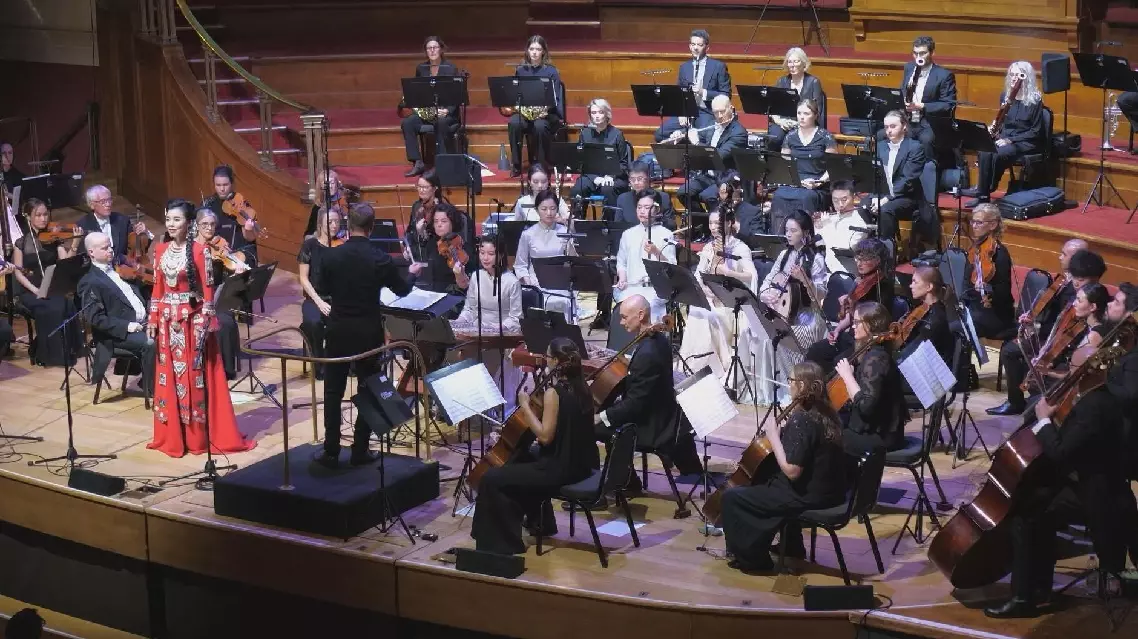
The acclaimed Chinese folk music production A Panorama of Hunan brought its rich showcase of traditional Hunan music to London for a special gala performance in early September, striking a chord of friendship, following five star reviews at the Edinburgh Festival in 2025.

The concert united elite performers from two distinct musical cultures: China's renowned Hunan Song and Dance Theater and the Royal Philharmonic Concert Orchestra.

Bringing together different styles meant limited rehearsal time was even more precious than usual.

"This time it's a mixed orchestra with the British orchestra. So, it's a symphony. One is a symphony and the other is Chinese traditional. Sometimes in rehearsals it's a little bit difficult, because [of] the pitch and the balance we need," said Liu Sha, chief conductor of China National Traditional Orchestra.

Alongside instruments instantly familiar to a London audience, the stage featured traditional Chinese instruments characteristic of Hunan folk music, such as the erhu, pipa, sheng, and bamboo flute.

Communication during rehearsals relied heavily on translators, as Western musicians tackled traditional Chinese pieces and Chinese and British musicians integrated into the symphonic arrangements.

"It's just a joy to be able to conduct the Royal Philharmonic Concert Orchestra. They respond so quickly, and you can tell that even if something goes awry, you can tell that they know what it is, and they fix it without you having to say anything. And Hunan is ... they are the best of their kind really, and they are real advocates of their traditional music. It's something that has existed for thousands of years, and we that it hope continues long into the future," said Thomas Payne, principal conductor of the London City Orchestra.

With a vast repertoire available, the orchestra curated a dynamic program blending traditional favorites, contemporary pieces, and original compositions.

Timed to coincide with the approach of the Mid-Autumn Festival, the concert explored enduring themes of reunion, reflection, and celebration through the distinctive lens of Hunan folk culture, delivering an unforgettable cross-cultural experience for the audience.
Traditional Hunan music meets Western symphony in special London concert

Traditional Hunan music meets Western symphony in special London concert

The intelligent transformation of commercial satellites, driven by the integration of technologies involving communications, sensing and computing, has greatly improved their efficiency in collecting, processing and transmitting data, experts said.

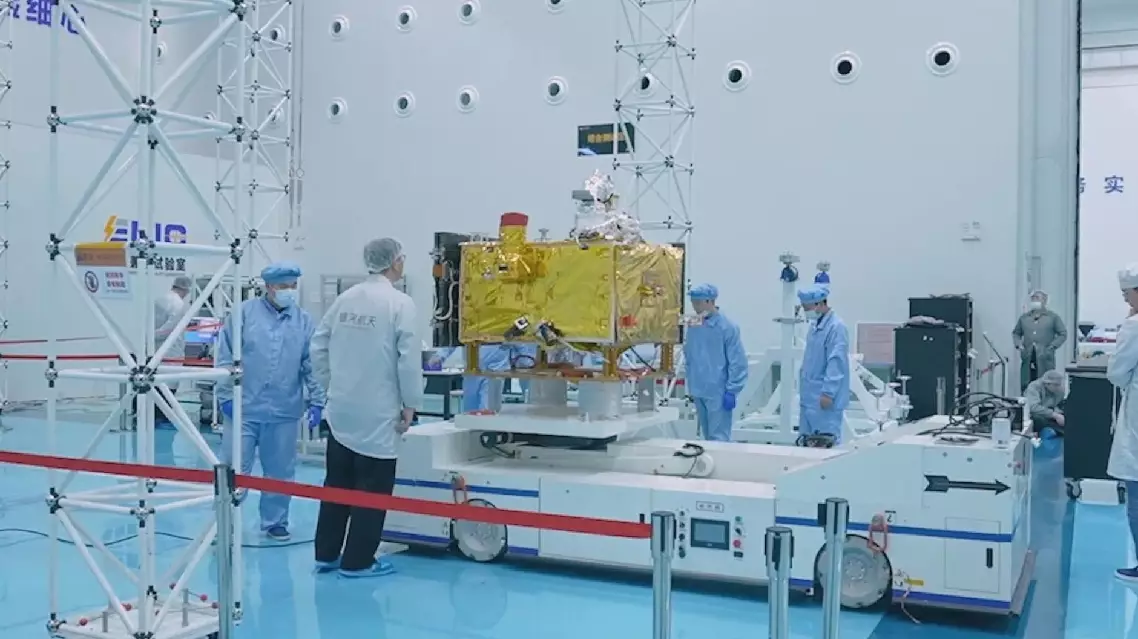
A recent example is a "smart" satellite launched aboard a Lijian-1 Y18 carrier rocket along with another eight satellites. Developed by the Pengcheng Laboratory in Shenzhen, south China’s Guangdong Province, the satellite is equipped with multiple payloads integrating laser communications, remote sensing and intelligent computing.

In the past, large volumes of imagery from remote sensing satellites had to be transmitted back to Earth for screening and processing. Now, with onboard intelligent computing, part of the identification and processing can be done directly on the satellite.

For time-sensitive missions such as disaster prevention and relief, this shift means some tasks that once require half a day to a full day to process can now be done in minutes.

"Based on the existing communications satellite platform, we want to further expand the capabilities of an individual satellite, thereby enhancing the overall efficiency of our space-based infrastructure," said Wang Ye, director of the aerospace institute under the laboratory's broadband communications research department.

"Communications, sensing and computing are integrating at an accelerating pace. This is driven, on the one hand, by demand for real-time space-based services. The traditional way of separate deployment leads to high latency, low coordination efficiency and huge bandwidth costs from transmitting all raw data to the ground. On the other hand, breakthroughs in onboard hardware, laser communications and payload integration now make it possible to coordinate sensing, communications and computing through hardware resource reuse and integrated resources scheduling," said Ma Xiaokai, deputy secretary-general of the Space Computing Working Committee of the China Computer Industry Association.

Intelligent transformation boosts commercial satellite data efficiency: experts

Intelligent transformation boosts commercial satellite data efficiency: experts

Recommended Articles