Skip to Content Facebook Feature Image

US, China must honor promises to build trust, says retired American teacher Ronald Sakolsky

China

China

China

US, China must honor promises to build trust, says retired American teacher Ronald Sakolsky

2026-09-27 01:03 Last Updated At:09:18

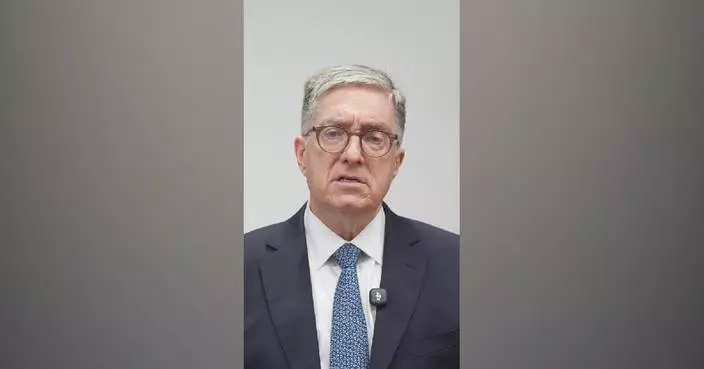
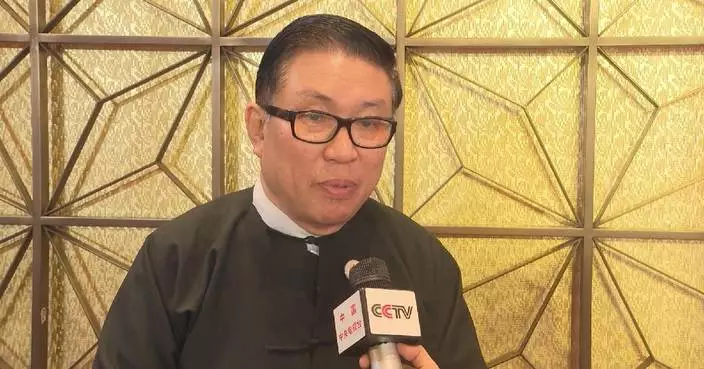
Both the United States and China must strictly honor their commitments, and their leaders must remember the billions of citizens counting on their words, a retired American teacher, Ronald Sakolsky, shared his insights on China-U.S. relations with China Global Television Network (CGTN) on Thursday.

Sakolsky's views on trust and commitment are rooted in a remarkable life experience.

Thirty years ago, while teaching in China, he donated 5,000 U.S. dollars to Yin Yuzhen, an Inner Mongolian farmer determined to fight desertification. With those funds, Yin and her family planted over 50,000 trees, transforming a barren wasteland into a lush forest. Years later, Yin used social media to track Sakolsky down to thank him. They reconnected earlier this year and met again in person in China in August this year.

Reflecting on how Yin proved that "impossible is possible," Sakolsky noted that achievements and international agreements require unwavering dedication.

"I've learned through life experiences that if you have doubt that you will be able to fulfill the promise, don't make the promise. If I commit to a goal, I will not stop until that goal is reached. If I make a promise, I do everything within my capability to get to that promise. Miss Yin showed that to me. I told her trees couldn't grow in the [desert]. She showed me that impossible is possible. So a promise can be achieved. You just have to believe in it. If you don't believe in it, don't make a promise," said Sakolsky.

Chinese President Xi Jinping mentioned Sakolsky's story in his toast at the White House state dinner during his state visit to the U.S., saying that the story touches the hearts of many Chinese people and stands as a shining example of the friendly exchanges between the two peoples.

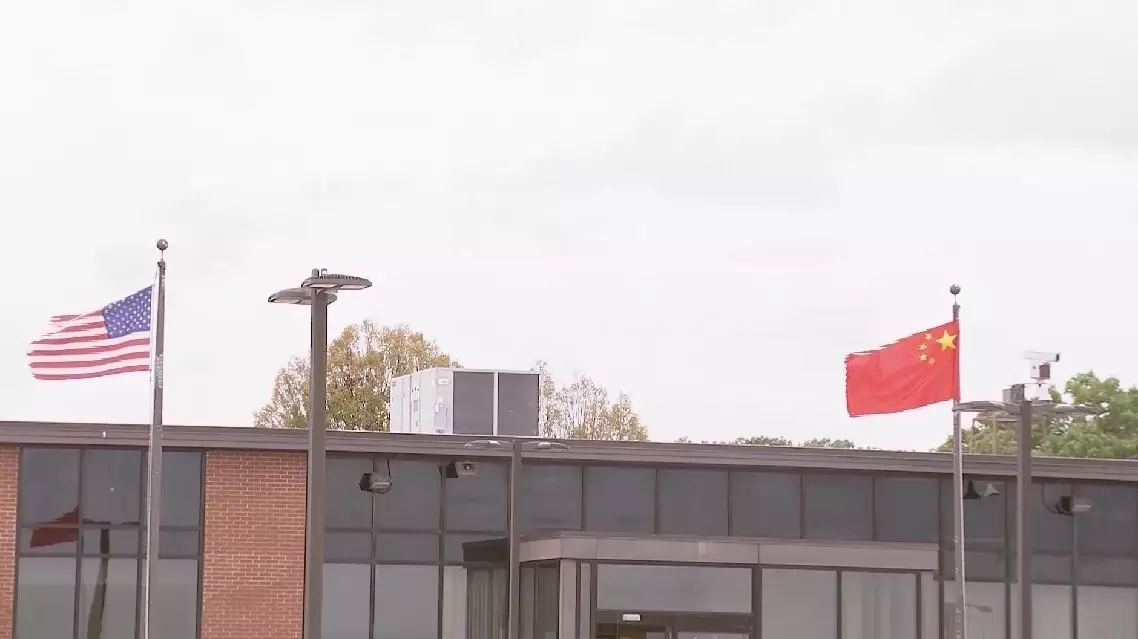
On bilateral ties, Sakolsky urged leaders from both nations to remember the immense weight of their responsibility to ordinary citizens who look to them for reliability.

"If they're going to make these concessions, they can't just speak the words and then a month later, change their mind and do something else. That's what causes the problems in the world today. That's what causes the problems with regular people: lack of trust. I only hope that this time they stick to what they've decided and what they've promised, because it's what the people want. Remember, they are only two people, but they represent millions and billions of people. Somewhere along the line, they have to remember that," said Sakolsky.
US, China must honor promises to build trust, says retired American teacher Ronald Sakolsky

US, China must honor promises to build trust, says retired American teacher Ronald Sakolsky

The intelligent transformation of commercial satellites, driven by the integration of technologies involving communications, sensing and computing, has greatly improved their efficiency in collecting, processing and transmitting data, experts said.

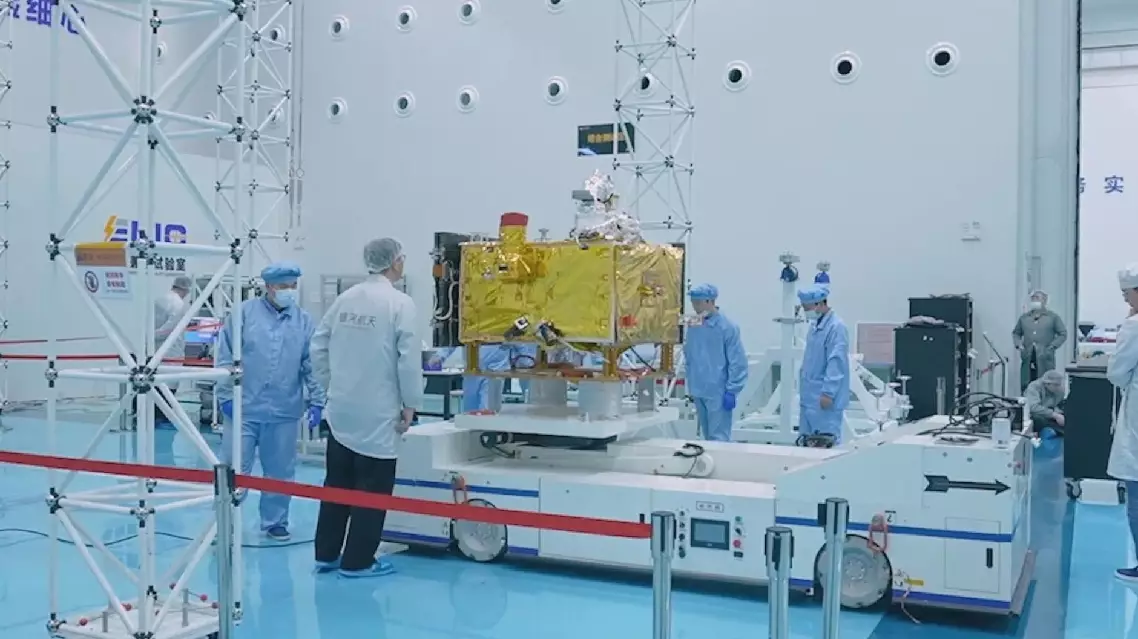
A recent example is a "smart" satellite launched aboard a Lijian-1 Y18 carrier rocket along with another eight satellites. Developed by the Pengcheng Laboratory in Shenzhen, south China’s Guangdong Province, the satellite is equipped with multiple payloads integrating laser communications, remote sensing and intelligent computing.

In the past, large volumes of imagery from remote sensing satellites had to be transmitted back to Earth for screening and processing. Now, with onboard intelligent computing, part of the identification and processing can be done directly on the satellite.

For time-sensitive missions such as disaster prevention and relief, this shift means some tasks that once require half a day to a full day to process can now be done in minutes.

"Based on the existing communications satellite platform, we want to further expand the capabilities of an individual satellite, thereby enhancing the overall efficiency of our space-based infrastructure," said Wang Ye, director of the aerospace institute under the laboratory's broadband communications research department.

"Communications, sensing and computing are integrating at an accelerating pace. This is driven, on the one hand, by demand for real-time space-based services. The traditional way of separate deployment leads to high latency, low coordination efficiency and huge bandwidth costs from transmitting all raw data to the ground. On the other hand, breakthroughs in onboard hardware, laser communications and payload integration now make it possible to coordinate sensing, communications and computing through hardware resource reuse and integrated resources scheduling," said Ma Xiaokai, deputy secretary-general of the Space Computing Working Committee of the China Computer Industry Association.

Intelligent transformation boosts commercial satellite data efficiency: experts

Intelligent transformation boosts commercial satellite data efficiency: experts

Recommended Articles