Skip to Content Facebook Feature Image

Budapest festival draws Hungarians to Chinese Mid-Autumn traditions

China

China

China

Budapest festival draws Hungarians to Chinese Mid-Autumn traditions

2026-09-27 01:25 Last Updated At:09:18

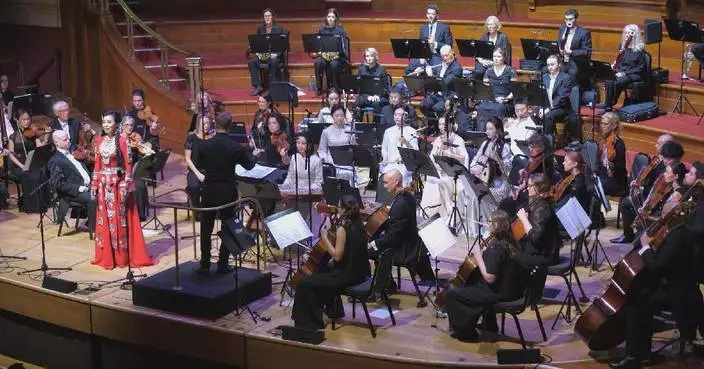
A cultural festival held in the run-up to this year's Mid-Autumn Festival brought Hungarian and Chinese residents together in Budapest for traditional performances, mooncake-making and calligraphy, showcasing local interest in the holiday and Chinese culture.

Falling on Friday this year, the Mid-Autumn Festival is traditionally associated with family reunions, moon viewing and sharing mooncakes.

The event also offered Chinese food, tea ceremonies and heritage craft workshops.

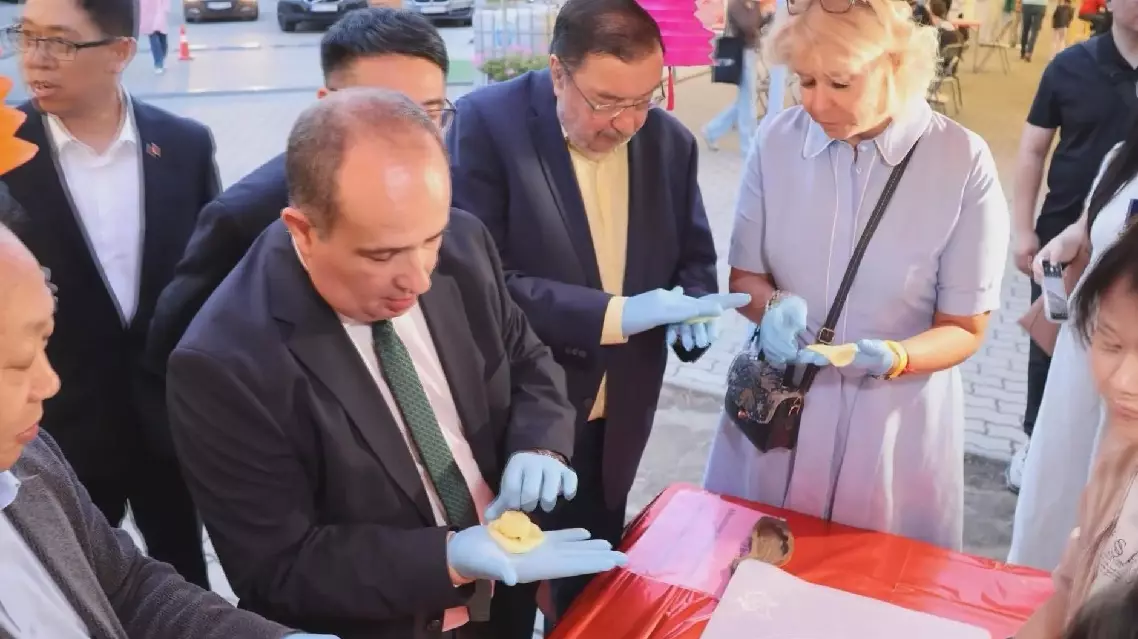
Gabor Radvanyi, deputy mayor of Budapest's 10th District, joined visitors at a mooncake-making station, kneading dough, wrapping it around fillings and pressing it into a mold.

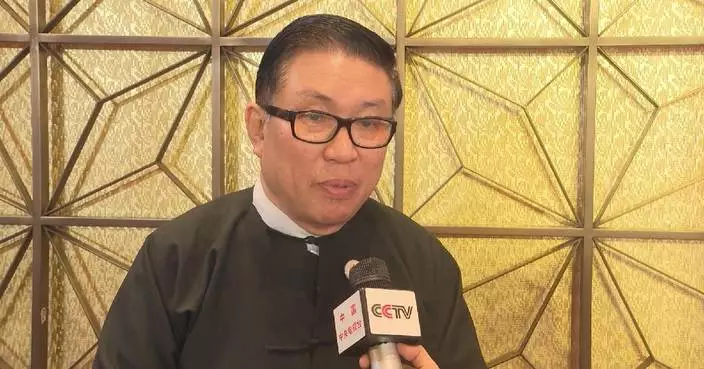
"I really enjoy attending Chinese cultural events because I am always greeted with warmth, hospitality and respect. We deeply admire Chinese culture, which has a history of more than 5,000 years. Chinese culture has become increasingly familiar to Hungarians in recent years. We live here together and embrace Chinese customs, while the Chinese community has integrated very well into Hungarian society. I wish all Chinese people, both here and in China, a happy Mid-Autumn Festival," Radvanyi said.

Visitors said the mix of performances and workshops made different aspects of Chinese culture more accessible.

"I can see that Hungarians are interested in a culture as distant, distinctive and rich as China's. There are all kinds of stage performances, giving people a chance to discover Chinese dance, music and other art forms. Chinese calligraphy is also very popular, and the characters themselves are fascinating," said local resident Eniko.

Food offered another way to explore the traditions associated with the holiday.

"Here, you can talk with people and sample different foods. Every Chinese festival has its own signature food. For the Mid-Autumn Festival, it is the mooncake. Mooncakes are not only delicious but also come in many varieties," said local resident Anita.

The gathering also gave Chinese-language learners a chance to practice while learning more about the traditions behind the festival.

"I'm learning Chinese, so this is a great opportunity to put what I've learned into practice. Families cook and eat together, making and sharing traditional pastries. I think the festival is mainly about community and bringing families together," said Lilla, another resident.
Budapest festival draws Hungarians to Chinese Mid-Autumn traditions

Budapest festival draws Hungarians to Chinese Mid-Autumn traditions
The intelligent transformation of commercial satellites, driven by the integration of technologies involving communications, sensing and computing, has greatly improved their efficiency in collecting, processing and transmitting data, experts said.

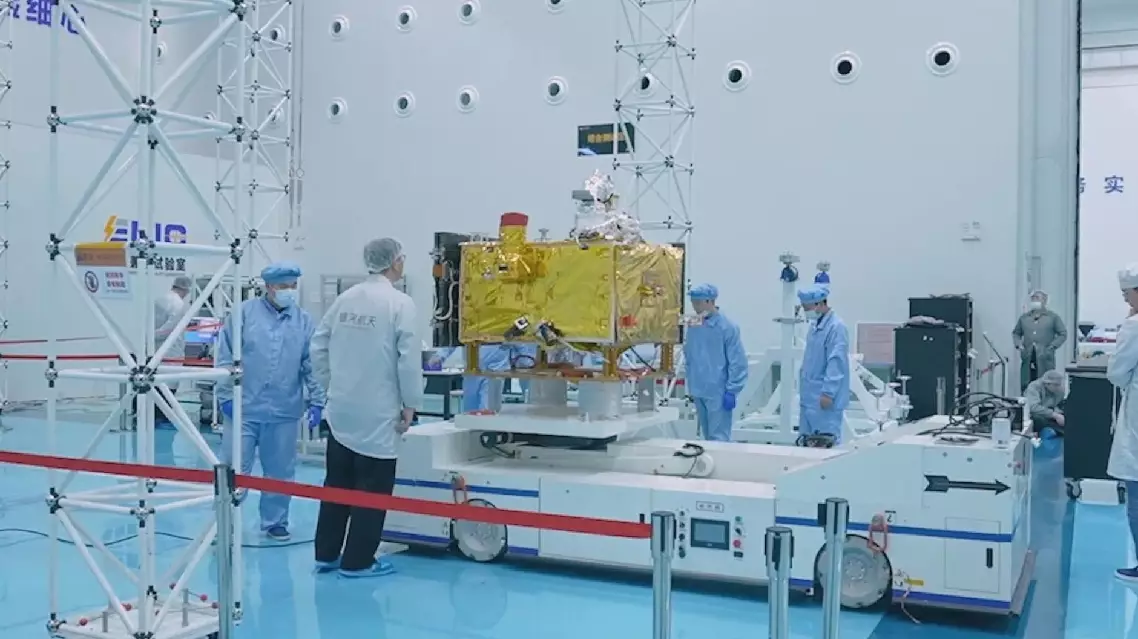
A recent example is a "smart" satellite launched aboard a Lijian-1 Y18 carrier rocket along with another eight satellites. Developed by the Pengcheng Laboratory in Shenzhen, south China’s Guangdong Province, the satellite is equipped with multiple payloads integrating laser communications, remote sensing and intelligent computing.

In the past, large volumes of imagery from remote sensing satellites had to be transmitted back to Earth for screening and processing. Now, with onboard intelligent computing, part of the identification and processing can be done directly on the satellite.

For time-sensitive missions such as disaster prevention and relief, this shift means some tasks that once require half a day to a full day to process can now be done in minutes.

"Based on the existing communications satellite platform, we want to further expand the capabilities of an individual satellite, thereby enhancing the overall efficiency of our space-based infrastructure," said Wang Ye, director of the aerospace institute under the laboratory's broadband communications research department.

"Communications, sensing and computing are integrating at an accelerating pace. This is driven, on the one hand, by demand for real-time space-based services. The traditional way of separate deployment leads to high latency, low coordination efficiency and huge bandwidth costs from transmitting all raw data to the ground. On the other hand, breakthroughs in onboard hardware, laser communications and payload integration now make it possible to coordinate sensing, communications and computing through hardware resource reuse and integrated resources scheduling," said Ma Xiaokai, deputy secretary-general of the Space Computing Working Committee of the China Computer Industry Association.

Intelligent transformation boosts commercial satellite data efficiency: experts

Intelligent transformation boosts commercial satellite data efficiency: experts

Recommended Articles