Iranian Foreign Minister Seyed Abbas Araghchi has said more than 5,000 people, including hundreds of women and children, were killed in the U.S. and Israeli "aggression" against Iran, Iranian media reported early Saturday.
In his remarks at a press briefing in New York, Araghchi listed some of the civilian targets struck in the U.S. and Israeli attacks as residential areas, schools, hospitals, energy facilities, sports and cultural complexes and transportation infrastructure, according to the semi-official Fars news agency.
Araghchi emphasized that the assassinations of Iran's former Supreme Leader Ali Khamenei and a number of the country's senior political and military officials were "flagrant crimes and in violation of international law," said the report.
On Feb. 28, Israel and the United States launched joint attacks on Iran's capital Tehran and other cities. Iran has since tightened its grip on the Strait of Hormuz.
On June 18, the United States and Iran signed a memorandum of understanding (MoU) on ending the war in the region on all fronts, including Lebanon.
Under the MoU, they were scheduled to hold negotiations within 60 days, a deadline that expired on Aug. 17, to reach a final agreement, but the talks' fate remains unclear amid recent escalations.
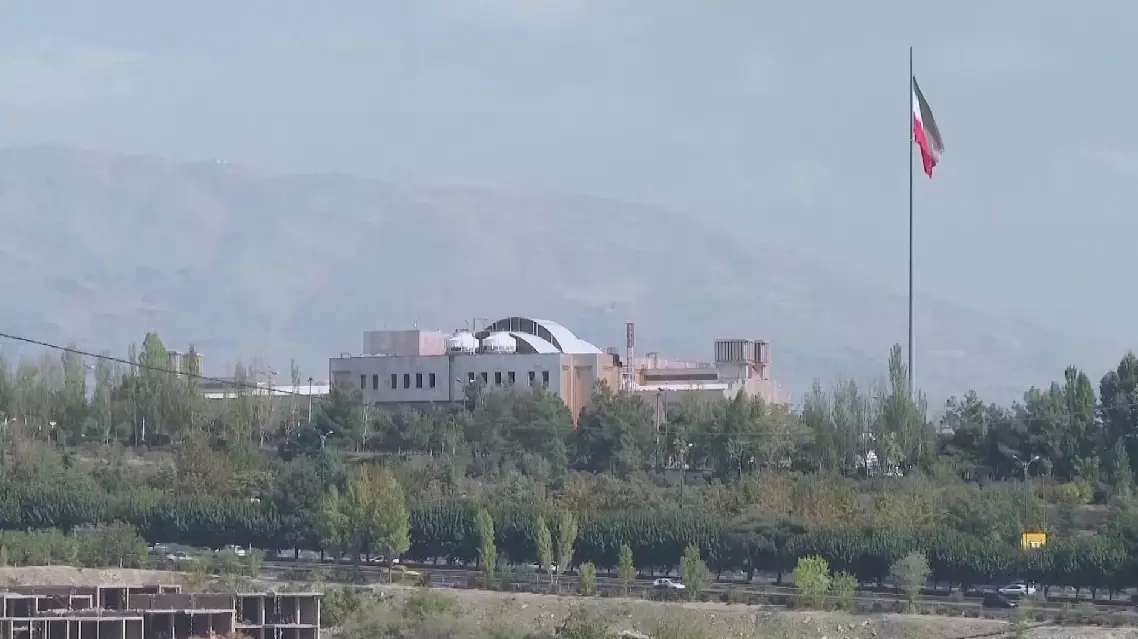
Iran's FM says over 5,000 people killed in U.S., Israeli attacks
The intelligent transformation of commercial satellites, driven by the integration of technologies involving communications, sensing and computing, has greatly improved their efficiency in collecting, processing and transmitting data, experts said.
A recent example is a "smart" satellite launched aboard a Lijian-1 Y18 carrier rocket along with another eight satellites. Developed by the Pengcheng Laboratory in Shenzhen, south China’s Guangdong Province, the satellite is equipped with multiple payloads integrating laser communications, remote sensing and intelligent computing.
In the past, large volumes of imagery from remote sensing satellites had to be transmitted back to Earth for screening and processing. Now, with onboard intelligent computing, part of the identification and processing can be done directly on the satellite.
For time-sensitive missions such as disaster prevention and relief, this shift means some tasks that once require half a day to a full day to process can now be done in minutes.
"Based on the existing communications satellite platform, we want to further expand the capabilities of an individual satellite, thereby enhancing the overall efficiency of our space-based infrastructure," said Wang Ye, director of the aerospace institute under the laboratory's broadband communications research department.
"Communications, sensing and computing are integrating at an accelerating pace. This is driven, on the one hand, by demand for real-time space-based services. The traditional way of separate deployment leads to high latency, low coordination efficiency and huge bandwidth costs from transmitting all raw data to the ground. On the other hand, breakthroughs in onboard hardware, laser communications and payload integration now make it possible to coordinate sensing, communications and computing through hardware resource reuse and integrated resources scheduling," said Ma Xiaokai, deputy secretary-general of the Space Computing Working Committee of the China Computer Industry Association.
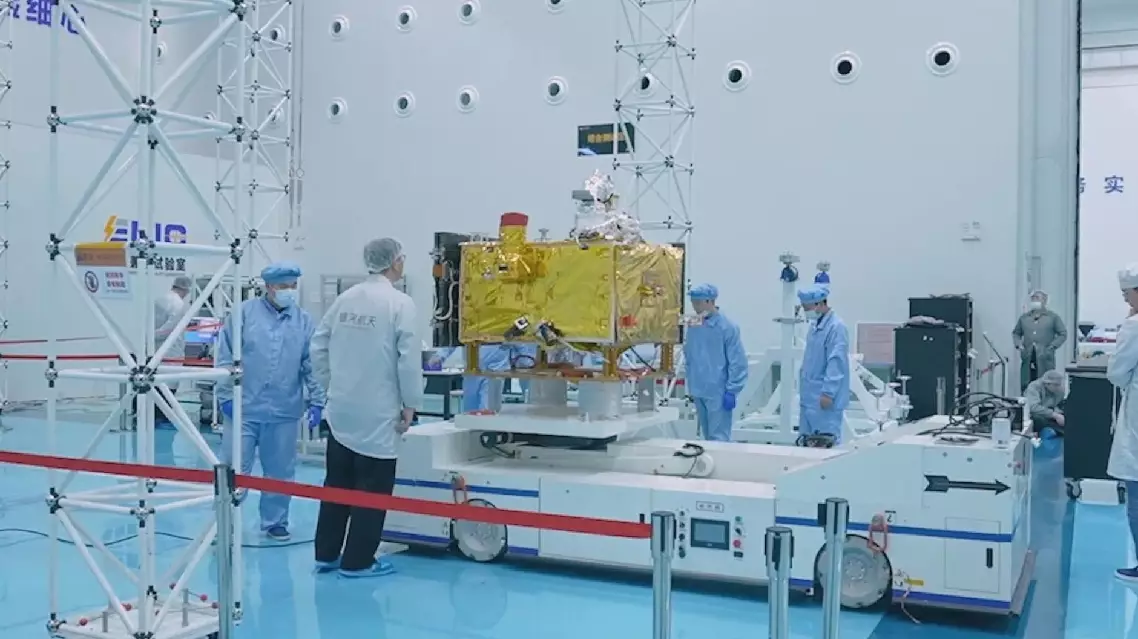
Intelligent transformation boosts commercial satellite data efficiency: experts