China's railway system is expected to handle 13 million passenger trips on Saturday, the second day of the three-day Mid-Autumn Festival holiday.
To meet the travel demand, railway authorities have decided to increase 644 additional trains.
As the Qiantang River tidal bore enters its best viewing season, the Yangtze River Delta region in east China has, for the first time, launched a dedicated tidal bore sightseeing train service to capture the surge in tidal viewing tourism.
According to China Railway Shanghai Group, the service will run daily throughout the Mid-Autumn and National Day holiday period spanning from September 24 to October 7.
"The station's Red Boat Lei Feng Service Station and local volunteers are providing passengers with warm services including tidal bore route information, assistance for passengers with special needs, and luggage storage," said Dong Qichang, head of the Haining West Railway Station under China Railway Shanghai Group.
In road transport, travel is mainly short and medium distance, with suburban and rural tourism accounting for a large share of trips during holidays.
The national civil aviation sector is expected to transport 1.91 million passengers Saturday, up 35 percent year on year. Passenger flows at major Chinese cities remain high.
Waterways are expected to transport 1.15 million passengers nationwaide on Saturday, with a significant rise in intra-provincial and local tourist flows.
The Mid-Autumn Festival, a traditional Chinese holiday celebrated on the 15th day of the eighth month in the Chinese lunar calendar, falls on Friday this year. Across China, people celebrate the day by gathering for moon-gazing, eating mooncakes, and lighting colorful lanterns.
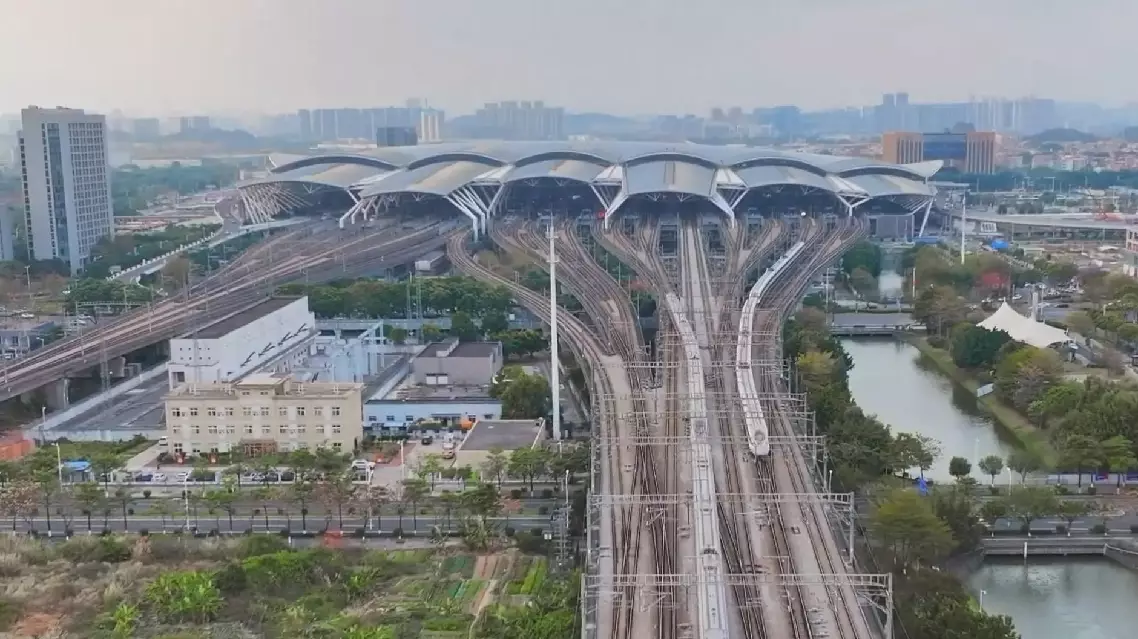
China's railway expected to handle 13 mln passenger trips on 2nd day of Mid-Autumn holiday
The intelligent transformation of commercial satellites, driven by the integration of technologies involving communications, sensing and computing, has greatly improved their efficiency in collecting, processing and transmitting data, experts said.
A recent example is a "smart" satellite launched aboard a Lijian-1 Y18 carrier rocket along with another eight satellites. Developed by the Pengcheng Laboratory in Shenzhen, south China’s Guangdong Province, the satellite is equipped with multiple payloads integrating laser communications, remote sensing and intelligent computing.
In the past, large volumes of imagery from remote sensing satellites had to be transmitted back to Earth for screening and processing. Now, with onboard intelligent computing, part of the identification and processing can be done directly on the satellite.
For time-sensitive missions such as disaster prevention and relief, this shift means some tasks that once require half a day to a full day to process can now be done in minutes.
"Based on the existing communications satellite platform, we want to further expand the capabilities of an individual satellite, thereby enhancing the overall efficiency of our space-based infrastructure," said Wang Ye, director of the aerospace institute under the laboratory's broadband communications research department.
"Communications, sensing and computing are integrating at an accelerating pace. This is driven, on the one hand, by demand for real-time space-based services. The traditional way of separate deployment leads to high latency, low coordination efficiency and huge bandwidth costs from transmitting all raw data to the ground. On the other hand, breakthroughs in onboard hardware, laser communications and payload integration now make it possible to coordinate sensing, communications and computing through hardware resource reuse and integrated resources scheduling," said Ma Xiaokai, deputy secretary-general of the Space Computing Working Committee of the China Computer Industry Association.
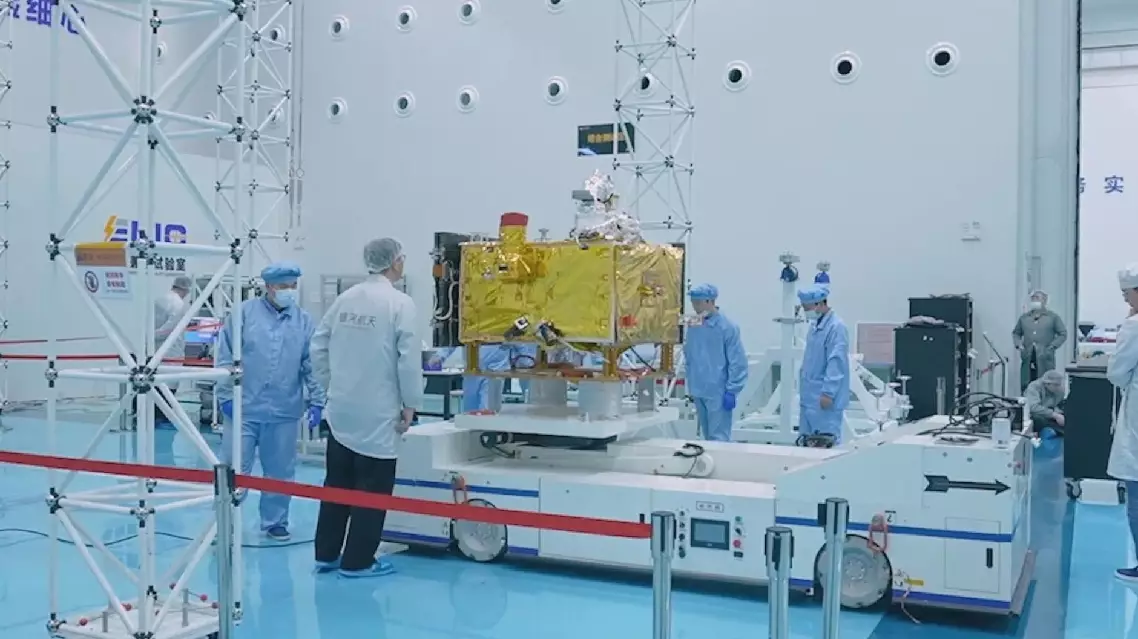
Intelligent transformation boosts commercial satellite data efficiency: experts