U.S. President Donald Trump said Saturday that he has rejected a conditional proposal by Iran concerning the reopening of the Strait of Hormuz.
Trump told journalists at the White House that the United States has "total control of the Hormuz Strait. Massive amounts of oil are coming out of the Hormuz Strait", and 29 ships came out there Friday night.
He added that he would like to make a deal with Iran, but "that deal would not be acceptable".
Iranian Foreign Minister Seyed Abbas Araghchi said he had heard the first reaction from the U.S. president, but nothing had yet been conveyed to Iran by the mediators.
He said Tehran is waiting for Washington's final position to be conveyed through the mediators, and decisions will be made based on that.
Any progress toward reopening the Strait of Hormuz depends on the fulfillment of Iran's conditions, Araghchi said, stressing Tehran will not back down from these conditions.
Araghchi told reporters at the United Nations (UN) headquarters in New York on Friday that Iran had conveyed to the United States through Qatar a "concrete" plan under which the strait can be reopened within seven days if necessary conditions are met.
The seven-day timeline will start as soon as Washington accepts it, he said.
Under the plan, the United States would need to take certain actions that Iran believes may take four or five days, said Araghchi, adding that on day six, the strait would be open. "And on day seven, the talks with the U.S. will be started for the final deal on mutually agreed subjects," he said.
He further said the actions the United States should take are not new, as they are already included in the memorandum of understanding (MoU) signed in June.
So he said the choice rests with the United States now, and Iran will not accept coercion, threats, or intimidation, and will not surrender its sovereign rights under pressure.
Iranian President Masoud Pezeshkian said in an interview on Saturday that his government no longer trusts negotiations with the United States after all previous rounds of diplomacy were followed by strikes and sanctions.
Qatar and Pakistan are mediating between Iran and the United States, and the talks are based on the Iran-U.S. MoU signed in June, Pezeshkian said.
He noted that the issue over the Strait of Hormuz can be resolved only through negotiations, not through the use of force.
Closing the Strait of Hormuz is a natural response when paths are blocked for Iran, he said.
On June 18, the United States and Iran signed an MoU on ending the war in the region on all fronts, including Lebanon. Under the MoU, they were scheduled to hold negotiations within 60 days, which ended on Aug 17, to reach a final agreement, but the fate of the talks remains unclear following a series of recent escalations between the two countries.
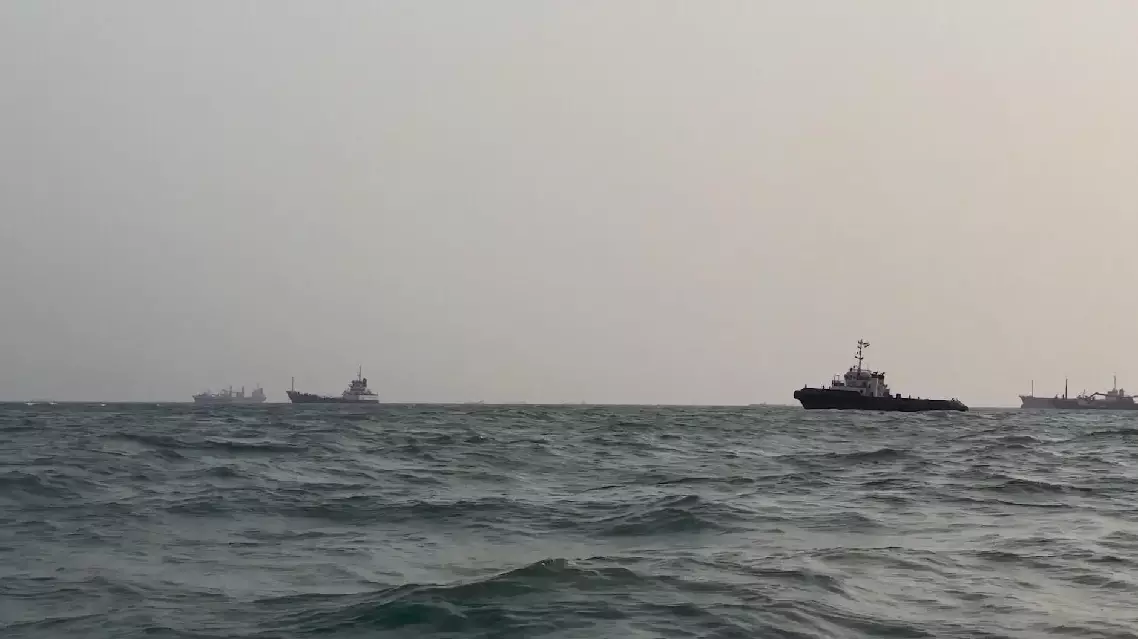
Trump rejects Iran's conditional proposal on reopening Hormuz Strait