Staff from Zoo Atlanta received a pair of giant pandas, Ping Ping and Fu Shuang, from southwest China's Sichuan Province early on Sunday.
Before their departure, the Chengdu Research Base of Giant Panda Breeding held a farewell ceremony for the pair, and Zoo Atlanta employees traveled to Chengdu for the handover.
To create a more comfortable and safer living environment for the two pandas, the U.S. side has carried out venue renovations and upgrades with technical assistance from Chinese experts, according to Sam Rivera, vice president of animal health at Zoo Atlanta.
"We collaborated with our colleagues from the panda base to make our facilities bigger. So we made more space for pandas. We also want to ensure that they have good food, good bamboo, so we are collecting a lot of bamboo from the Atlanta area to make sure that they have plenty of food to eat," he said.
China-U.S. giant panda protection cooperation is one of China's longest-running and most far-reaching international wildlife protection initiatives.
In April 1972, two giant pandas -- Ling Ling and Xing Xing, arrived in the United States following the visit of then U.S. President Richard Nixon to China in February the same year. In 1994, the China Wildlife Conservation Association (CWCA) signed an agreement with the San Diego Zoo, officially launching the cooperation program.
Over the past three decades, the two sides have conducted joint research in key areas including panda behavior, nutrition, genetics and disease prevention, achieving significant breakthroughs in breeding techniques. Through the cooperation, pandas in the United States have successfully bred and raised 17 cubs to date -- six in San Diego, four in Washington and seven in Atlanta.
The latest move came after the CWCA signed an agreement on international cooperation in giant panda protection with Zoo Atlanta last year.
"The Zoo Atlanta, the city of Atlanta, people in Georgia and beyond are very excited for new giant pandas to come and make their home at Zoo Atlanta. Zoo Atlanta has made wonderful collaborations and friendships here at the Chengdu panda base, and we have worked together to do different science projects and research to learn more about the care of giant pandas," said Gina Ferrie, vice president of collections and conservation at Zoo Atlanta.
The pair is set for a 10-year stay in the United States, which is set to further boost international cooperation on giant panda protection.
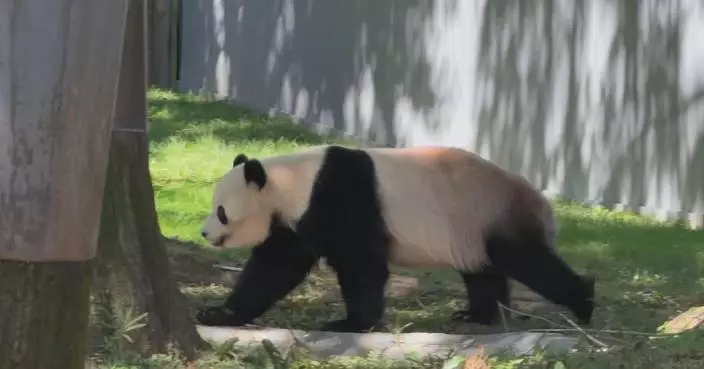
The male panda, Ping Ping, born on March 17, 2020, is easily recognizable due to its large, dark eye rims. It has a stocky build, moves nimbly, and has demonstrated proficiency in climbing trees, often resting among the branches.
The female panda, Fu Shuang, born on October 18, 2020, is characterized by a small tuft of fluffy fur on her head and a full, protruding forehead. With a round appearance, it is quick to react, and very capable of foraging for food.
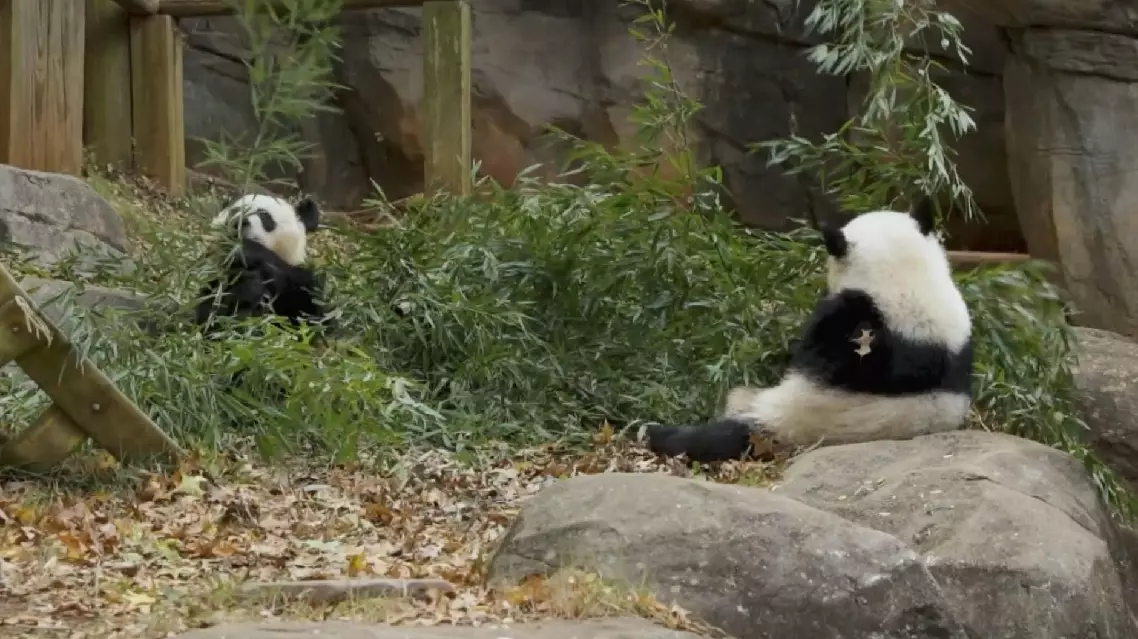
Zoo Atlanta staff receive giant pandas in Chengdu