An assault and kidnapping case against a leader of a secretive North Carolina religious group appears to be finally returning to the courtroom more than nine years after her first trial ended without a verdict.
Word of Faith Fellowship leader Brooke Covington was first tried in 2017 on second-degree kidnapping and simple assault charges. Prosecutors said she held down and beat a one-time member of the group more than 13 years ago.
That case ended in a mistrial after the jury foreman brought his own research into deliberations. Covington has maintained she is innocent.
In the meantime, the COVID-19 outbreak, a move to remove the original prosecutor that ended with the suspension of the law license of the attorney making the request, deaths or retirements of lawyers on both sides and handing the trial to a new prosecutor in a new jurisdiction have all delayed a new trial.
Covington's trial is set to begin Monday in Buncombe County, according to court records. Both the new prosecutor and Covington's lawyer didn't respond to messages seeking details about the trial.
Matthew Fenner joined Word of Faith as a teenager in 2010 with his mother. He was at a service on the church’s compound in Spindale, North Carolina, when members including Covington started what the church called a “blasting” session on him, according to Fenner. Members held him down and choked and beat him for two hours while others prayed to expel “homosexual demons,” Fenner said.
Word of Faith is a nondenominational Protestant church that was founded in 1979 by Sam and Jane Whaley in the foothills of the Blue Ridge Mountains between Charlotte and Asheville. Members consider Jane Whaley a prophet.
In 2017, The Associated Press published a series of stories about Word of Faith that detailed former church members’ allegations of abuse. The AP spoke to dozens of former congregants around the world, listened to hours of secretly recorded conversations with church leaders, and reviewed hundreds of pages of law enforcement, court and child welfare documents.
Whaley has denied that she or other church leaders ever abused Word of Faith members. She has also said that any discipline would be protected by the Constitution’s freedom of religion tenet.
The church said the allegations made to the AP were false and made by “certain former members” out to target the church and that it does not condone abuse.
The case was turned over to a special prosecutor after Fenner’s lawyer accused District Attorney Ted Bell of siding with Word of Faith in his handling of the case.
Attorney Andrew LaBreche said Bell didn’t investigate new evidence or witnesses and made a deal to drop the felony kidnapping charge against Covington.
Bell provided text messages and other evidence he refused to talk to Word of Faith members when they tried to steer conversations toward the assault cases.
Superior Court Judge William Stetzer not only denied LaBreche’s request to remove the prosecutor, but in his order said LaBreche’s “repeated acts of dishonesty and the significant harm to the legal profession” led the judge to suspend his law license for three years. He also awarded Bell legal fees.
LaBreche is appealing the ruling, and his suspension has been delayed until his case can be heard.
Word of Faith had about 700 members in North Carolina a decade ago, but a sworn statement from a former church leader said membership had now dwindled to about 300 to 400 people.
The AP reported that the church controlled almost every aspect of their members’ lives, including who they married, what subjects they studied in school and whether they could go to college. Members were regularly slapped, choked and thrown to the floor during high-decibel group prayer.
The AP investigation also found that the church and its hundreds of followers controlled law enforcement and social services, preventing fair investigations.
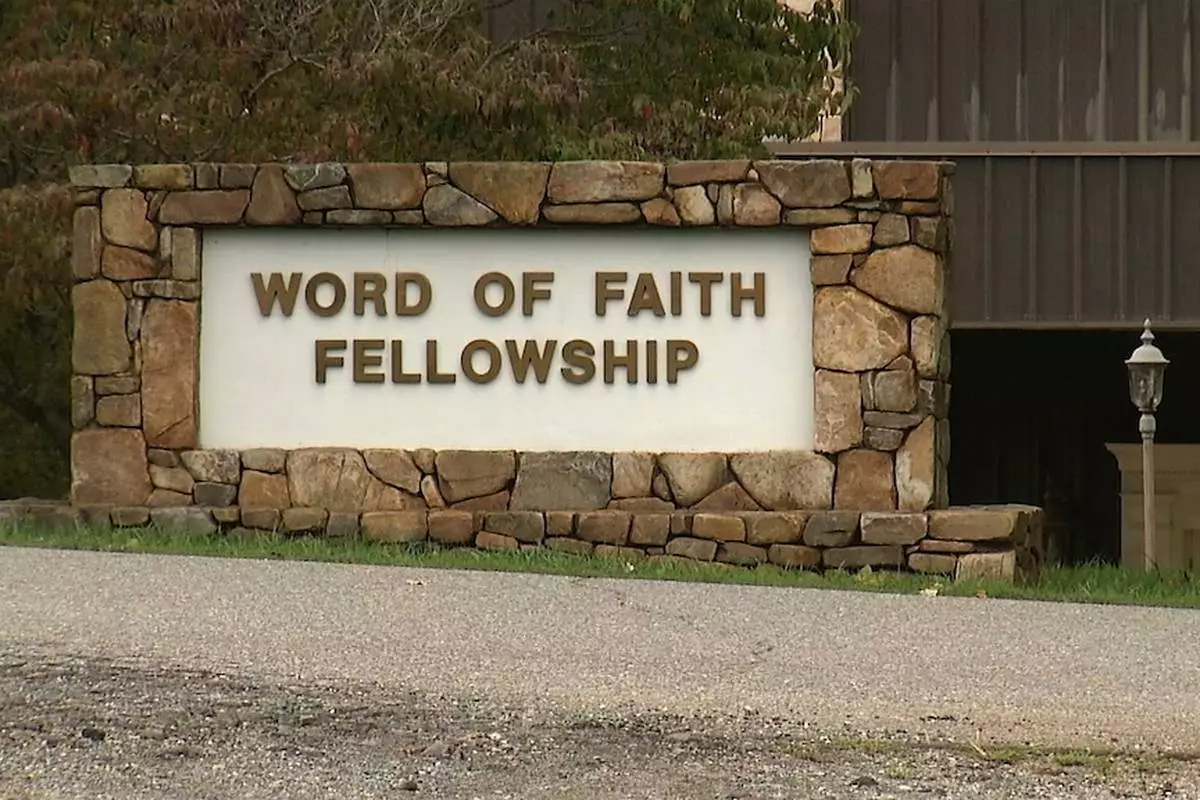
FILE - This image from video shows the entrance to the Word of Faith Fellowship church in Spindale, N.C., in 2016. (AP Photo/Alex Sanz, File)
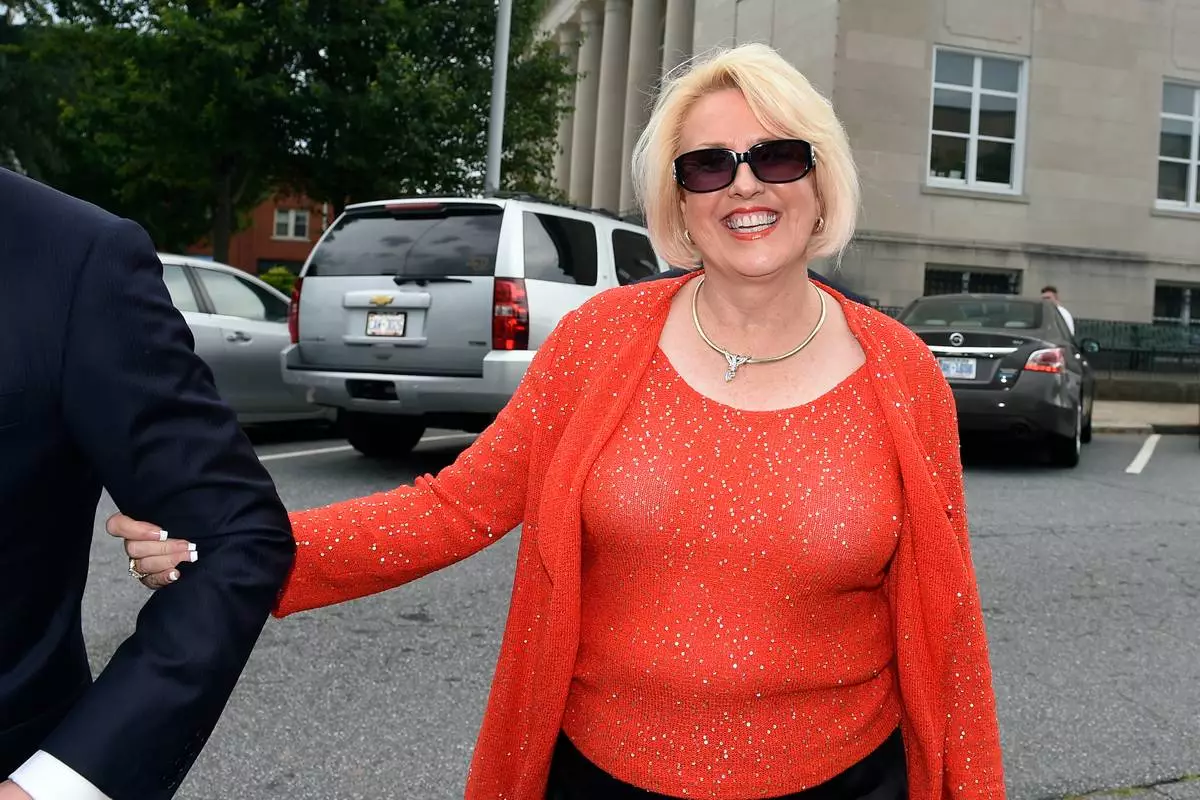
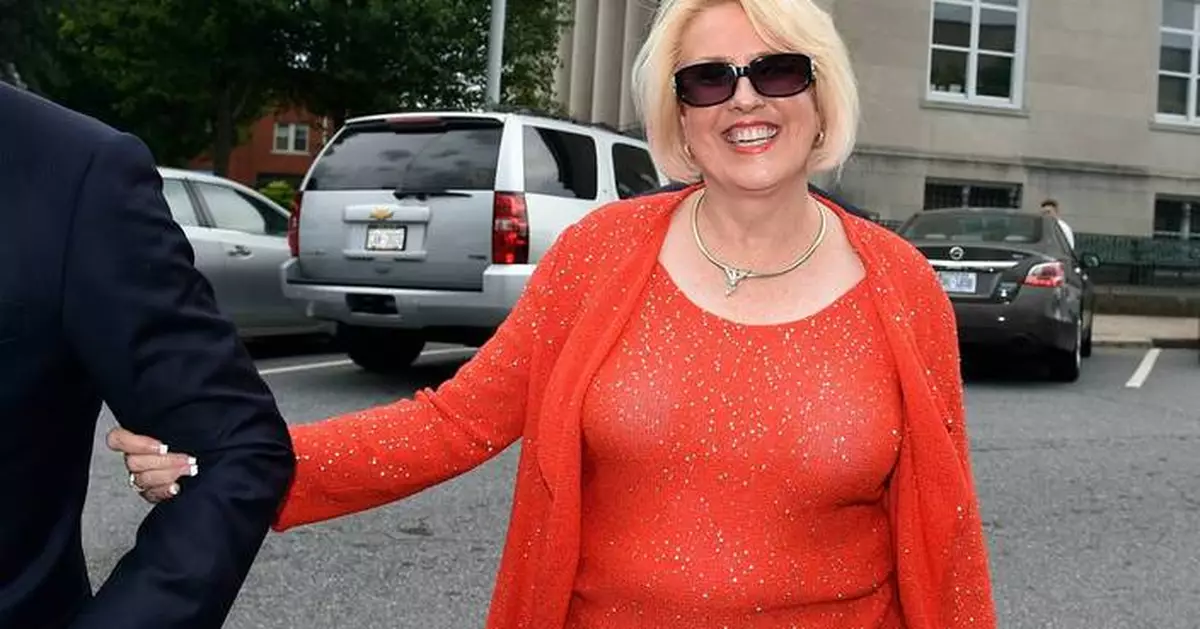
FILE - Brooke Covington, a member of the Word of Faith Fellowship church in Spindle, N.C., leaves a hearing at Rutherford County Courthouse in Rutherfordton, N.C., May 19, 2017. (AP Photo/Kathy Kmonicek, File)
Five years after the assassination of Haitian President Jovenel Moïse, dozens of people arrested in connection with the killing in the troubled Caribbean nation are still awaiting trial in Miami.
Haiti has not had a president since a squad of gunman killed Moïse and wounded his wife in an overnight raid at their home. U.S. prosecutors have charged more than 40 people with crimes related to the assassination and a dozen have been convicted, included five who are serving life sentences.
Christian Emmanuel Sanon, a Florida pastor and dual Haitian-American citizen who authorities said aspired to be Haiti’s president, was set to stand trial Monday in the next case to go before a jury. He faces eight charges connected to the assassination, including conspiring to kidnap or kill a person outside the U.S., and has pleaded not guilty.
Federal prosecutors in the U.S. say South Florida served as a central location for planning and financing the plot to oust Moïse and replace him with someone of the conspirators’ choosing.
Haiti is the poorest country in the Americas, and its history of dictatorship, political upheaval and foreign intervention has long stymied the consolidation of democratic rule.
Moïse was killed on July 7, 2021, when about two dozen foreign mercenaries, mostly from Colombia, attacked his home near Port-au-Prince. The scheme to kill Moïse included paying mercenaries with money obtained from U.S. government programs that were intended to help businesses during the COVID-19 pandemic, according to court records.
In 2025, justice officials in Haiti asked the U.S. and Canada for help after a local court of appeals ordered a new investigation into Moïse’s killing, the third inquiry of its kind since he was shot 12 times at his private residence. His wife, Martine, also was wounded in the attack.
The previous investigations were stalled because Haitian judges kept resigning from the case, fearing for their lives, and gangs seized control of the downtown Port-au-Prince courthouse where the judges were interrogating suspects.
Any proceedings in Haiti “continue to face significant difficulties,” the country's Ministry of Justice and Public Security said recently.
Haiti has been overwhelmed by gang violence: More than 3,000 people were killed this year by June and about 1.5 million people have been displaced in recent years, according to the United Nations.
The plan to oust Moïse began to truly take shape in April 2021, when Sanon met in South Florida with a former Haitian senator and several U.S. businessman, according to an indictment. The group agreed that, once in power, Sanon would award contracts to Florida-based Counter Terrorist Unit Federal Academy and Counter Terrorist Unit Security, collectively known as CTU, for infrastructure projects, security forces and military equipment, investigators said.
CTU initially retained about 18 Colombian nationals with military training to provide security for Sanon, according to prosecutors. Conspirators also spent months obtaining weapons and body armor and attempting to build relationships with Haitian gangs, officials said.
By June 2021, the conspirators realized Sanon had neither the constitutional qualifications nor sufficient popular support to become president. They then backed Wendelle Coq Thélot, a former Haitian Superior Court judge. She died in January 2025 while still a fugitive.
Martine Moïse described the attack while testifying earlier this year at the trial of four men who were ultimately convicted in the conspiracy to kill her husband.
She said she went to bed around 10 p.m. and awoke to the sounds of gunfire about three hours later. She said she turned to her husband in bed next to her to ask what was going on.
“Honey, we are dead,” Jovenel Moïse said, according to his wife’s testimony.
Martine Moïse said gunfire continued as she crawled downstairs to check on her two adult children. She said she then returned to her and her husband’s bedroom, where she and Jovenel Moïse got on the floor on either side of the bed and used it as protection from gunfire.
Men eventually burst into the room and opened fire with what sounded like an automatic weapon, Martine Moïse said. She was struck several times. She said she heard men speaking in Spanish before someone shot Jovenel Moïse multiple times, killing him.
After the attackers cleared out, Martine Moïse said she expected to find the dead bodies of the 30 to 50 security officers assigned to protect the house, but there were none. She said she later learned that they were paid to leave their posts.
Sanon was previously scheduled to be tried with the four other men who were convicted earlier this year, but his case was separated and delayed for health reasons. Prosecutors have said Sanon helped raise money for the conspiracy and arranged travel to Haiti and lodging for himself and others on the island.
The latest defendants charged include Joseph Badio, a former Haiti Ministry of Justice employee, and 17 others described as Colombian mercenaries. They were recently transported to the U.S. from Haiti.
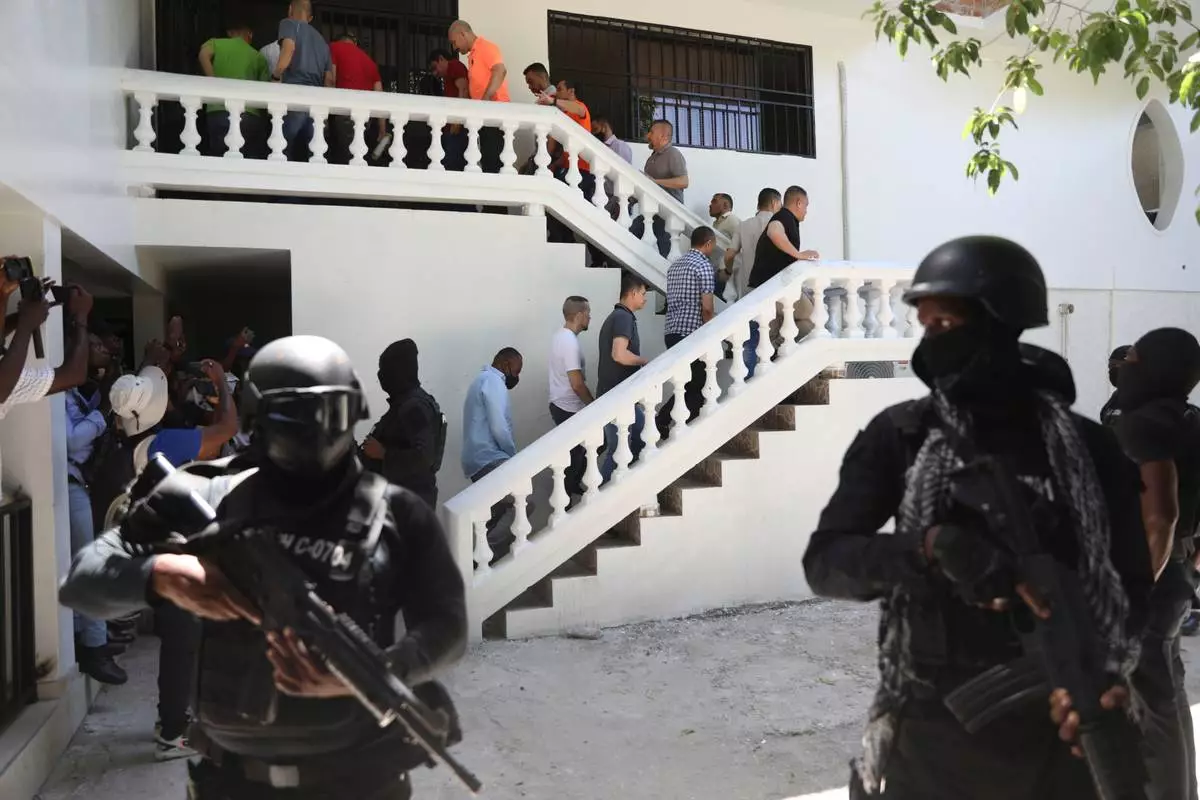
FILE - Colombians and Haitians who are accused of involvement in the 2021 assassination of Haitian President Jovenel Moise are escorted in handcuffs to their court hearing in Port-au-Prince, Haiti, May 26, 2025. (AP Photo/Odelyn Joseph, File)
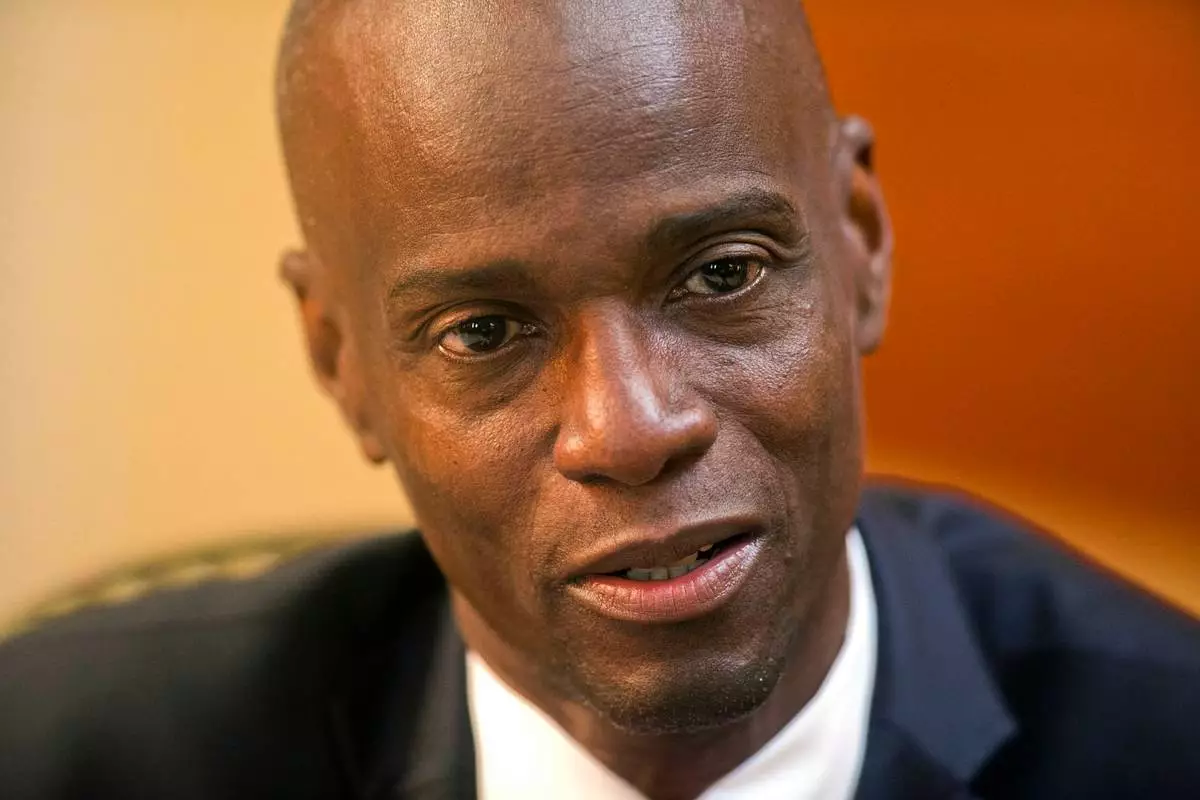
FILE - Haiti's President Jovenel Moise speaks during an interview at his home in Petion-Ville, a suburb of Port-au-Prince, Haiti, on Feb. 7, 2020. (AP Photo/Dieu Nalio Chery, File)