Skip to Content Facebook Feature Image

China opens four new high-speed railway lines, expanding world's largest network

China

China

China

China opens four new high-speed railway lines, expanding world's largest network

2026-09-28 17:34 Last Updated At:20:38

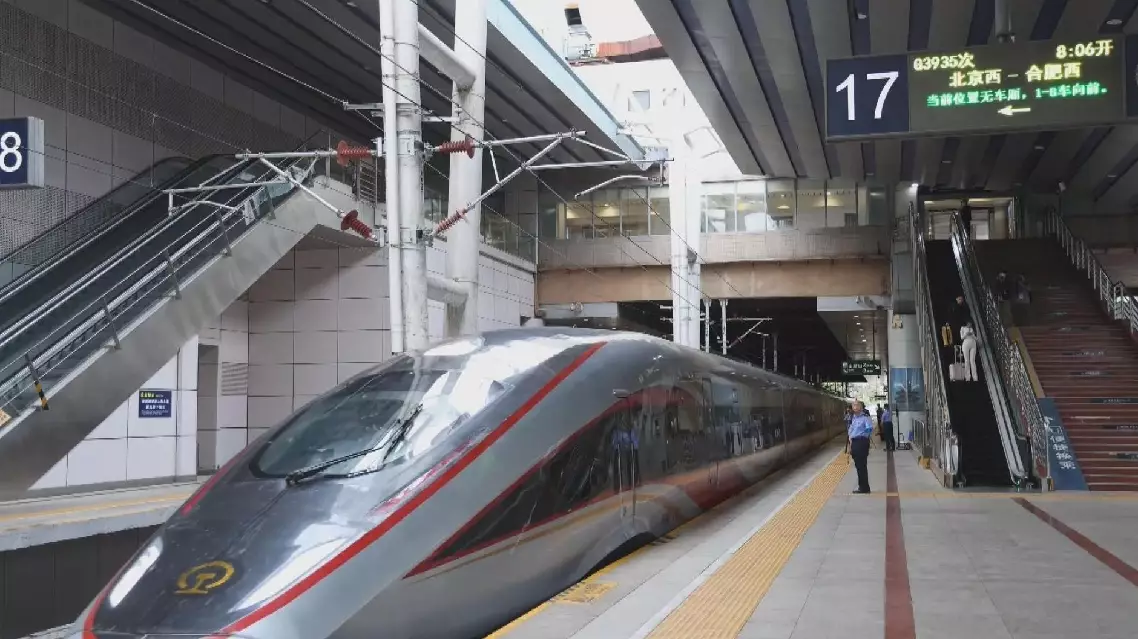
China opened four new high-speed railway lines to traffic on Monday, further expanding the world's largest high-speed rail network.

The Xi'an-Ankang High-speed Railway, connecting Xi'an, the provincial capital of northwest China's Shaanxi Province and another city Ankang in the same province, slashes travel time between the two cities from about three hours in the past to around 45 minutes.

The newly built main line of the railway has a total length of about 171 kilometers and a designed speed of 350 kilometers per hour. The line starts at the Xi'an East Station, crosses the Qinling Mountains and connects to the Ankang West Station with a total of five stations on the route.

The Xiong'an-Shangqiu line, a new section of the Beijing-Hong Kong High-Speed Railway, forms about a quarter of the entire high-speed corridor.

The section links the Xiong'an New Area in Hebei Province in the north with Shangqiu in Henan Province in central China.

The newly opened section is expected to further strengthen Shangqiu's role as a national rail hub and significantly cut travel time between Shangqiu and Beijing.

"With the opening of the Xiong'an-Shangqiu High-speed Railway, Beijing now has a third high-speed rail corridor running southward, filling the gap in the rail network between the Beijing-Guangzhou and Beijing-Shanghai lines. For the Xiong'an New Area, the southbound high-speed rail corridor has been fully opened up, allowing direct access to central and eastern China and integration into the national high-speed rail network with greater efficiency," said Hou Libo, senior economist with the planning and statistics department of China Railway Beijing Group Co., Ltd..

The Yichang-Xingshan high-speed railway line in central China's Hubei Province also began service in the day, facilitating tourism, industrial development and rural revitalization in the mountainous region, according to China Railway Wuhan Bureau Group Co., Ltd., its operator.

Traversing the Daba Mountains, the 101-km line with a design speed of 350 km per hour connects China's two major high-speed railway arteries, namely the Shanghai-Chongqing-Chengdu line and the Zhengzhou-Chongqing line.

Opened shortly before China's National Day holiday on October 1, the railway is expected to boost tourist flows between major cities including Wuhan, Zhengzhou and Chongqing, as well as iconic attractions such as the Three Gorges region on the Yangtze River, unleashing renewed economic momentum for the central region.

The Harbin-Yichun High-Speed Railway, China's northernmost high-speed rail line, is another of the four new routes.

The railway runs through a region of discontinuous permafrost in northeast China's Heilongjiang Province, connecting the forest city of Yichun and Harbin, the provincial capital.

The Yichun West Railway Station is currently the highest-latitude high-speed railway station in China and the largest newly built station on the entire line, with the capacity to accommodate 1,500 passengers waiting at the same time.

The new line spans 318 kilometers with a designed speed of 250 kilometers per hour and nine stations on the route.

China has built the world's largest high-speed railway network so far. By the end of 2025, the total mileage of operating railways in the country had reached 165,000 km, including over 50,000 km of high-speed rail.

Under national plans, China's high-speed rail network is projected to reach 70,000 km by 2035.
China opens four new high-speed railway lines, expanding world's largest network

China opens four new high-speed railway lines, expanding world's largest network
Competition between the United States and China is healthy when it is fair, but dangerous when it becomes an effort to trip or eliminate the other side, David Lampton, former president of the National Committee on United States-China Relations, said in commenting on Chinese President Xi Jinping's just-concluded state visit to the U.S.

Xi paid a state visit to the United States on Sept 23-25 at the invitation of President Donald Trump. It was Xi's first state visit to the country in 11 years and followed Trump's state visit to China back in May.

During the trip, Xi had an in-depth exchange of views Trump on bilateral relations as well as major international and regional issues of common concern.

The two leaders reached a consensus on eight outcomes which span a wide range of areas, including the economy and trade, technology, people-to-people exchanges and international situations. A major one is that the two sides have agreed to build a constructive relationship of strategic stability based on respect, fairness and reciprocity.

Speaking at a welcome ceremony hosted by Trump at the White House on Thursday, Xi said that China and the U.S. should embrace healthy competition, avoid confrontation, and jointly explore the right way to get along.

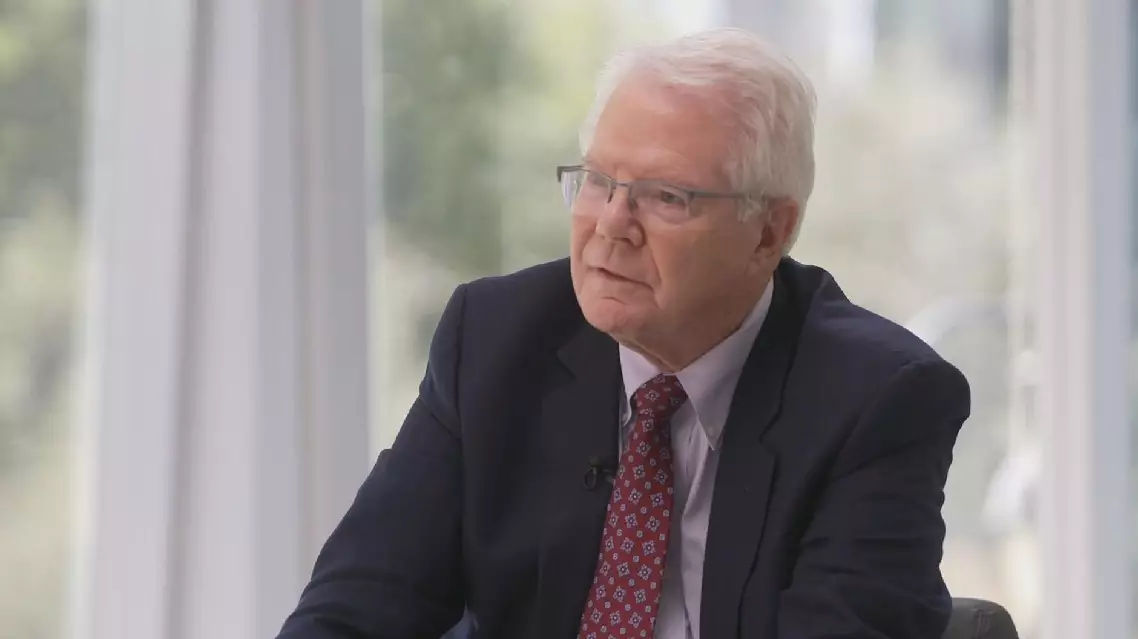
Reflecting on the nature of competition between major countries, Lampton outlined three distinct forms it can take.

"There are different forms of competition. There's the form of competition, like a tracks race, a running race. You all line up at the same line, the gun fires and whoever is the most capable wins at the end of the race. But there's the kind where the gun goes off and I try to trip, or you try to trip the other guy. And then there's the kind of competition where you're trying to eliminate the other, right?" he said in an interview with China Global Television Network (CGTN) on Friday.

Lampton made clear which form he believes should define the China-U.S. relationship.

"Obviously, I think competition is good in that first sense. That's what economic progress, scientific innovation [means]. It was [Thomas] Edison [who] made fortune out of inventing the light bulb. Inventors were motivated by their desire for knowledge, but also money. So, I think competition is basically human life, but I think we need to have the kind of competition if we're not helping the other, in some case through partnership and so forth, we're at least not trying to trip them," he added.

During the visit, Xi and Trump agreed to support each other as China will host the 2026 APEC Economic Leaders' Meeting in November and the United States will host the G20 Leaders' Summit in December, expressing intention that they will attend each other's event.

Lampton said the focus now should be on putting those commitments into practice to build a stronger foundation for future engagement.

"[It is] very important for both sides to do what they say. If it's only for two months, at least let's both do what we say for two months and then that'll create a better foundation when we get together for the next two meetings that you just mentioned," said Lampton.

China-U.S. relations expert urges fair competition, warns against "tripping" each other

China-U.S. relations expert urges fair competition, warns against "tripping" each other

Recommended Articles