WASHINGTON (AP) — Anthony Davis says he'll decide after the season is over whether he wants to remain with the Washington Wizards beyond 2026-27.
“I'm going to go through the season and try to do what I do at a high level, and then when it's over, sit down and have those conversations again with the front office," Davis said at media day Monday.
That timetable might be tricky for Washington management, because if Davis doesn't want to stay with the team it could make sense to trade him for significant assets. But the star center's answer Monday should give him some temporary relief from questions about his future. The Wizards traded for Davis in February. He has a player option for 2027-28, meaning this could be his lone season in Washington.
The team is in an intriguing situation. During this calendar year, the Wizards have acquired Davis and Trae Young — the latter of whom did agree to an extension with Washington — and drafted AJ Dybantsa with the No. 1 overall pick. The 33-year-old Davis began his career in New Orleans before he was traded to the Los Angeles Lakers, where he played with LeBron James for 5 1/2 seasons in a major spotlight.
The last couple seasons have been a whirlwind, though. He was traded from the Lakers to Dallas in the deal that sent Luka Doncic to Los Angeles. Then last season, the Mavericks dealt him to Washington.
The Wizards haven't won more than 18 games in any of their past three seasons, and although there's a chance for significant improvement soon, they may not be enough of a title contender for Davis' liking. But at his age — and coming off his latest injury — Davis has a lot to prove.
So it's in everyone's best interest for him to play well in Washington.
“AD's in a great frame of mind. He's focused and ready to start the season," Wizards general manager Will Dawkins said recently. "I would say he's very much a motivated player right now, and I would expect AD to remind the basketball world who he really is.”
See AP’s full NBA coverage here

Washington Wizards forward/center Anthony Davis poses for a photo during the NBA basketball team's media day, Monday, Sept. 28, 2026, in Washington. (AP Photo/Nick Wass)

Washington Wizards forward/center Anthony Davis poses for a photo during the NBA basketball team's media day, Monday, Sept. 28, 2026, in Washington. (AP Photo/Nick Wass)

Washington Wizards forward/center Anthony Davis poses for a photo during the NBA basketball team's media day, Monday, Sept. 28, 2026, in Washington. (AP Photo/Nick Wass)
PUERTO SAN CARLOS, Mexico (AP) — Wind whipped Mexico’s northern Pacific coast and water began to flood some streets Monday as Hurricane Polo bore down on Baja California Sur, threatening flash floods and mudslides. Meanwhile, Hurricane Nolo could still bring torrential rain to parts of Hawaii even as the storm edges away from the state.
In Puerto San Carlos, a fishing town of about 5,700 people, high tides and pounding waves from Polo were breaching sea barriers as residents worried for their homes in the mostly empty town. Hundreds of people in the region evacuated, hunkering down in nearby shelters in schools and other facilities.
“Civil Protection told those of us here in San Carlos to evacuate because this is a high-risk area. With the current tides, the expected waves and the wind, the earthen barriers they built (to prevent flooding) could give way,” Rocío Sánchez, a fisherwoman, said.
Polo was a Category 3 storm with top sustained winds of 115 mph (185 kph) Monday, the U.S. National Hurricane Center in Miami said. It's expected to produce 6-12 inches (about 15 to 30 centimeters) of rain across parts of Baja California Sur.
Forecasters said it would hit the Mexican mainland after lashing Baja California Sur, and that life threatening winds and flash floods were expected. It could bring heavy rain and flooding to parts of the U.S. Southwest later in the week.
The government of the northern Mexican state of Sonora on Monday night announced it would suspend all “non-essential” activities, including school, sports and non-essential work, in the state capital and more than a dozen municipalities due to the incoming hurricane.
Residents in Baja California Sur were anxiously bracing themselves. Margarita Bobadilla and her family were sheltered in a local school, saying it was safer than weathering the storm in her wooden house.
“Material things can be replaced, but family can’t. My children and I decided to come here last night, and now we’re waiting to see what happens.”
Others lingered in their mostly emptied town of Puerto San Carlos, crossing their fingers the light flooding and powerful winds would be the worst of Polo.
Laura Velázquez, national coordinator of Mexico’s Civil Protection Agency, reported that Polo would make landfall later in the afternoon. With Polo approaching Mexico, the Mexican navy said it had personnel ready across the northern Pacific coast and deployed three vessels that could ship aid to coastal communities isolated by the storm. Local authorities along the Baja California Peninsula said they had shelters at the ready.
At a Monday morning news briefing, Velázquez urged residents to stay off the streets and seek shelter if their homes are at risk. She said travel will be suspended in the area where the hurricane was expected to make landfall and that ports across the region would be closed.
At the same time, Tropical Storm Rachel was brewing over Mexico’s southwest coast. The hurricane center said Monday that Rachel had maximum sustained winds of 60 mph (96.6 kph) and was located about 250 miles (402.3 kilometers) southwest of Acapulco. No coastal watches or warnings were in effect.
Storm activity in the Pacific has been above average during what is already the peak of hurricane season, according to National Weather Service lead forecaster Bob Oravec. He said that pattern is consistent with El Niño years, when the Pacific often sees more tropical storms and hurricanes.
While Polo is slated to weaken over northern Mexico, tropical weather was also supposed to deal a one-two punch to the U.S. Southwest.
The region has already been saturated by heavy rain over the past months, and regions like New Mexico and Grand Canyon were hit by devastating floods earlier this month. Now, the remnants of Polo are forecast to track east across the region, expected to douse Arizona, Utah, New Mexico and Texas with inches of rain.
That’s a good chunk of the 8-12 inches (about 20-30 centimeters) the arid area of canyons and rocky expanses with little vegetation usually gets in a year. Such terrain is already conducive to flash flooding, sudden torrents that can sweep down canyons and other low-lying areas with little warning. The new tropical weather adds more risk, said Andrew Mangham, senior service hydrologist for the National Weather Service in Albuquerque.
“We’re getting caught up here in a very, very short time,” Mangham said. “And that’s not really what we want. We want nice rains, you know, all summer long.”
Nolo, meanwhile, was well southwest of Hawaii and moving away from the Big Island as the weekend drew to a close. Nolo drenched communities in south and southeastern parts of the Big Island over the weekend, prompting some highway closures on Saturday evening and Sunday as rushing water and boulders blocked roadways.
Hawaii National Guard members rescued 19 people from flooding over the weekend, the U.S. National Guard said in a post on Facebook.
Damage assessments are still underway as Nolo moves northwest. While it's keeping its distance from the main Hawaiian Islands, it's approaching Papahanaumokuakea Marine National Monument, a marine conservation area northwest of the islands, according to the National Hurricane Center. It could bring dangerous conditions to the area starting Tuesday, the center reported.
Thousands of households and businesses on Maui lost power for a time, but by Monday afternoon, service had been restored to nearly all of them, according to poweroutage.us. The majority of the outages were related to storm damage, according to statements from Hawaiian Electric.
Hawaii residents were still recovering from several other natural events this year, including spring Kona low storms, a May earthquake, Hurricane Lala in August and Hurricane Lowell in September. Those events affected more than 1,290 homes, according to the state, and caused nearly $700 million in damage and recovery costs.
Janetsky reported from Mexico City. Photojournalist Eduardo Verdugo contributed from Puerto San Carlos, Mexico, reporter Julie Walker reported from New York, reporter Mead Gruver reported from Fort Collins, Colorado. Videojournalist Eugene Garcia and photographer Gregory Bull contributed from Hilo, Hawaii.
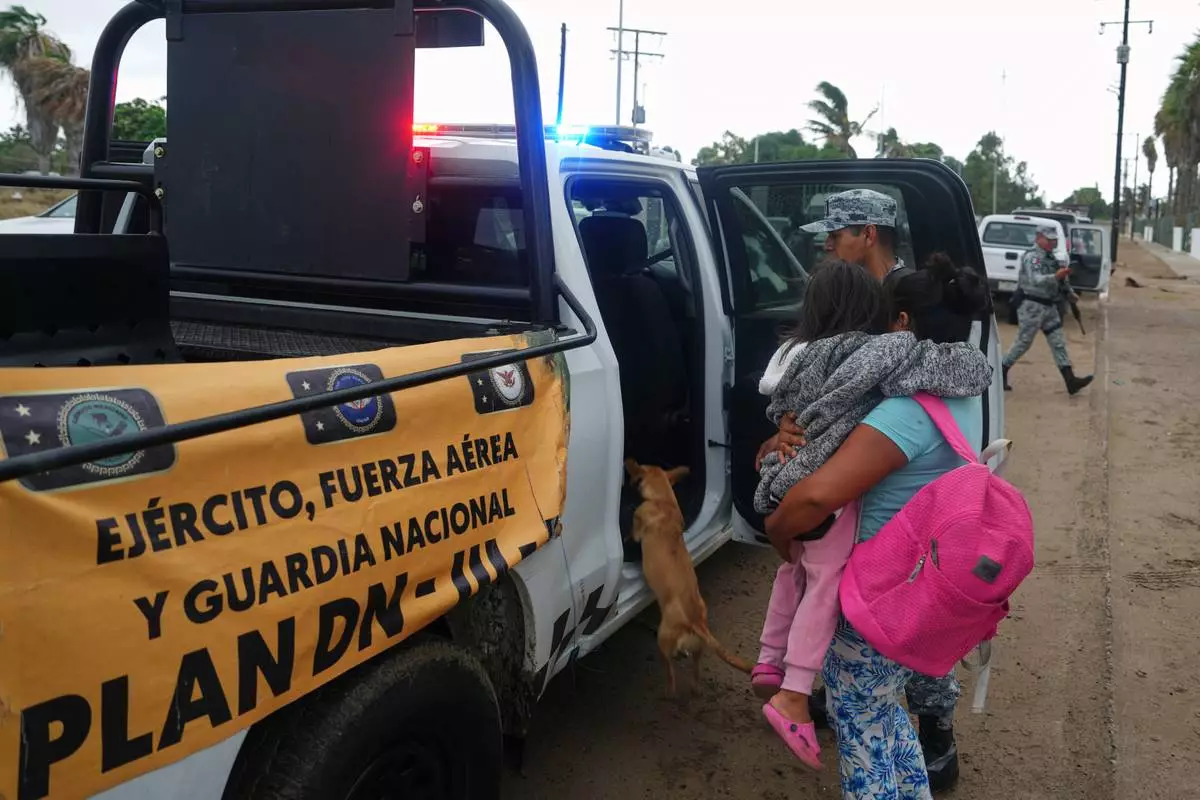
Residents are evacuated by the Army as Hurricane Polo approaches Puerto San Carlos, Baja California Sur state, Mexico, Monday, Sept. 28, 2026. (AP Photo/Eduardo Verdugo)
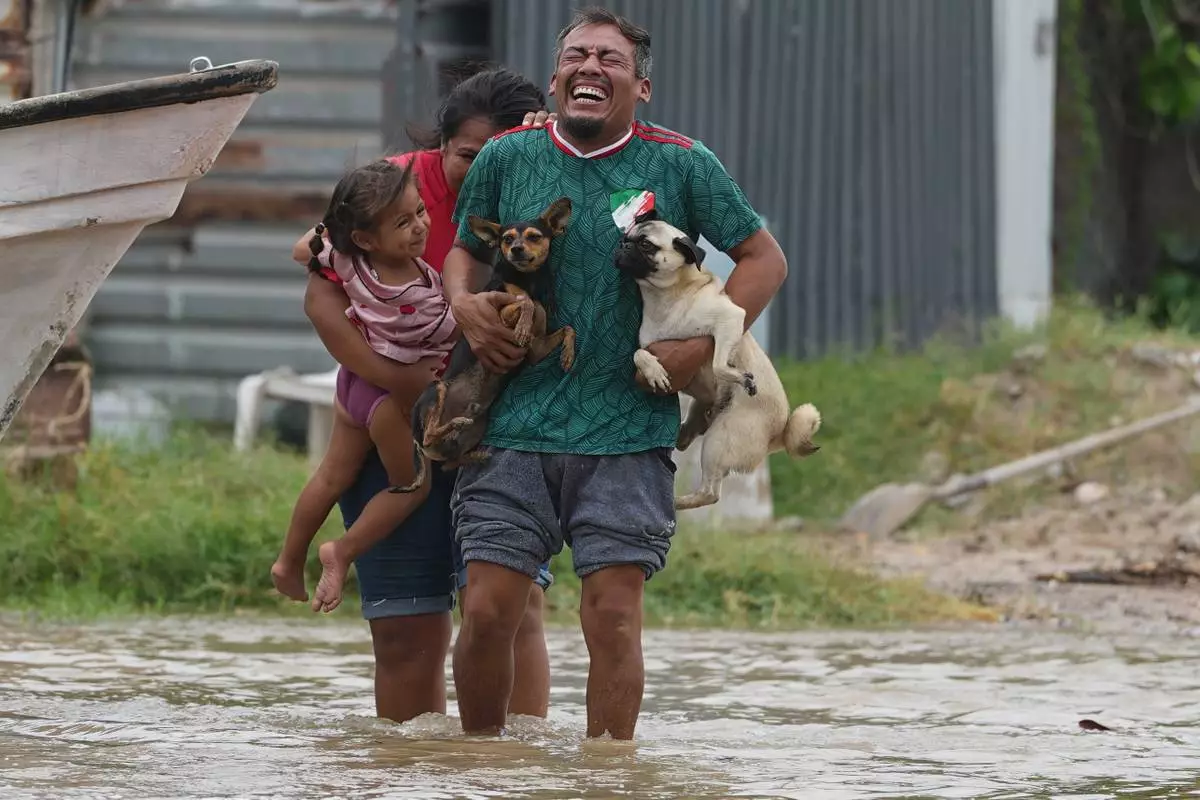
People evacuate their homes as Hurricane Polo approaches Puerto San Carlos, Baja California Sur state, Mexico, Monday, Sept. 28, 2026. (AP Photo/Eduardo Verdugo)
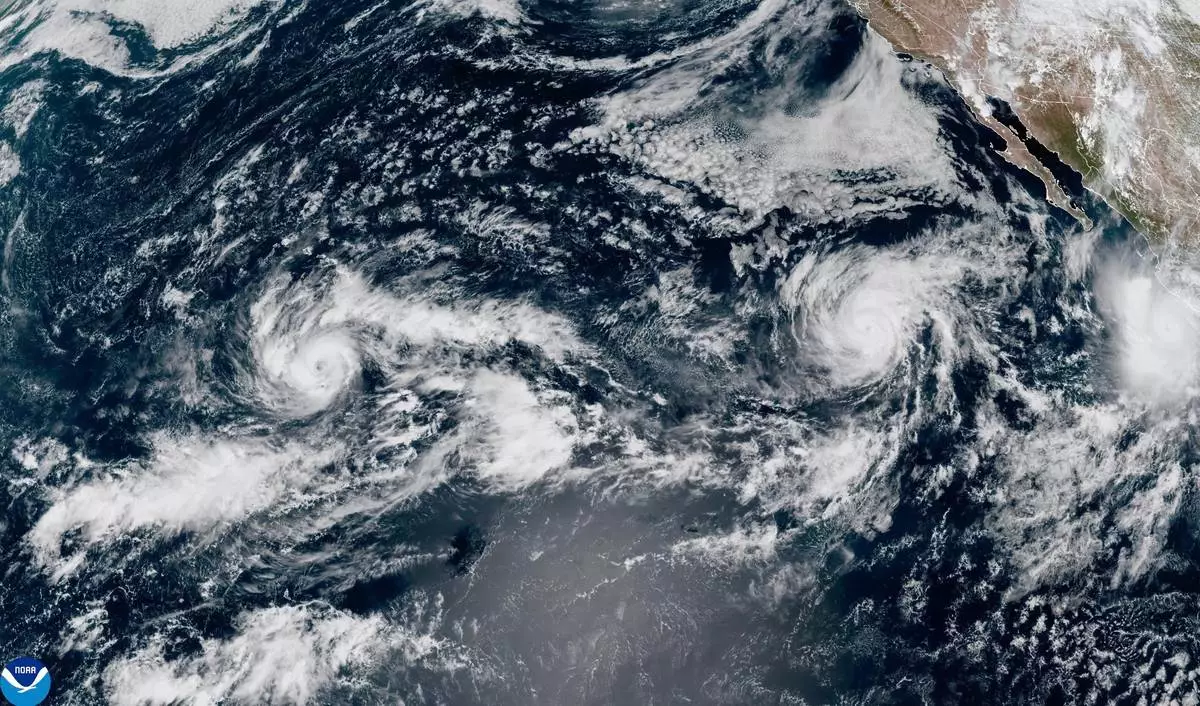
This satellite image provided by NOAA shows Tropical Storm Nolo, left, south of Hawaii; Hurricane Odalys, middle, and Hurricane Polo, right, off the coast of Mexico, in the Pacific Ocean on Thursday, Sept. 24, 2026. (NOAA via AP)

Workers build a barricade to help keep water out of their town as Hurricane Polo approaches in Puerto San Carlos, Baja California Sur state, Mexico, Sunday, Sept. 27, 2026. (AP Photo/Eduardo Verdugo)
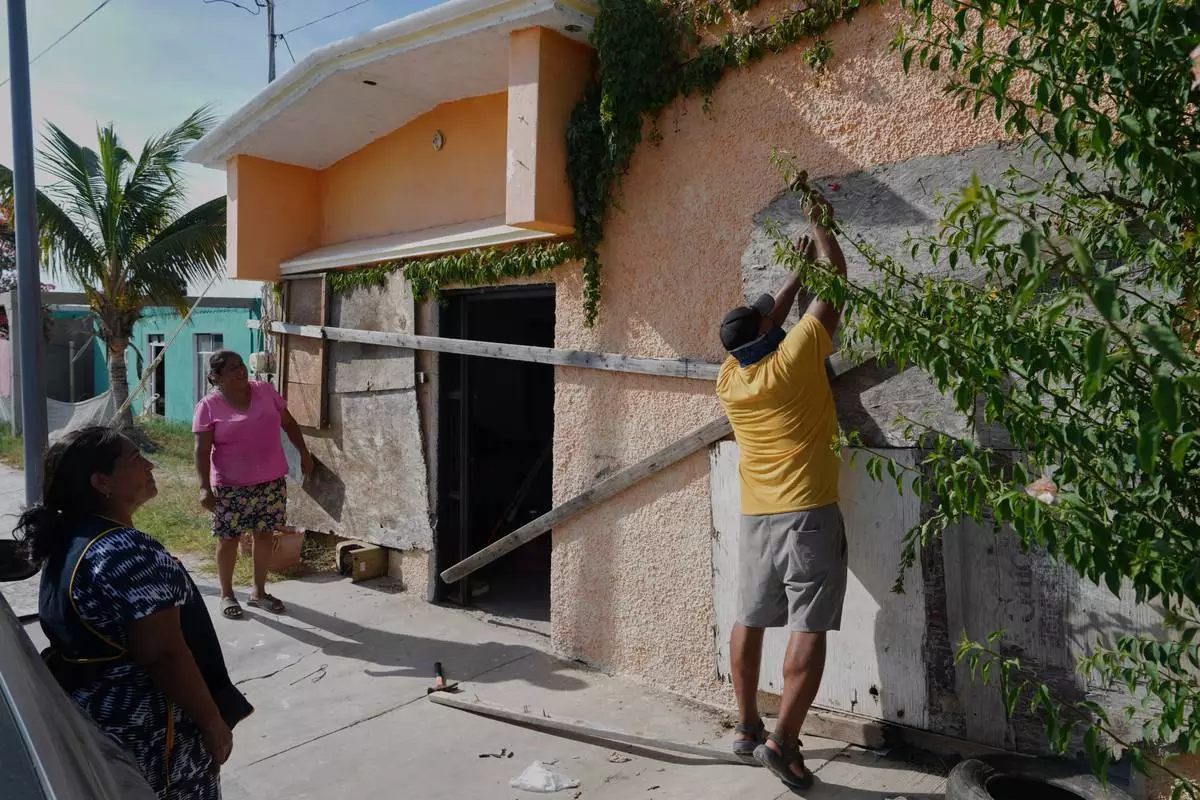
A man boards up a house's windows as Hurricane Polo approaches in Puerto San Carlos, Baja California Sur state, Mexico, Sunday, Sept. 27, 2026. (AP Photo/Eduardo Verdugo)
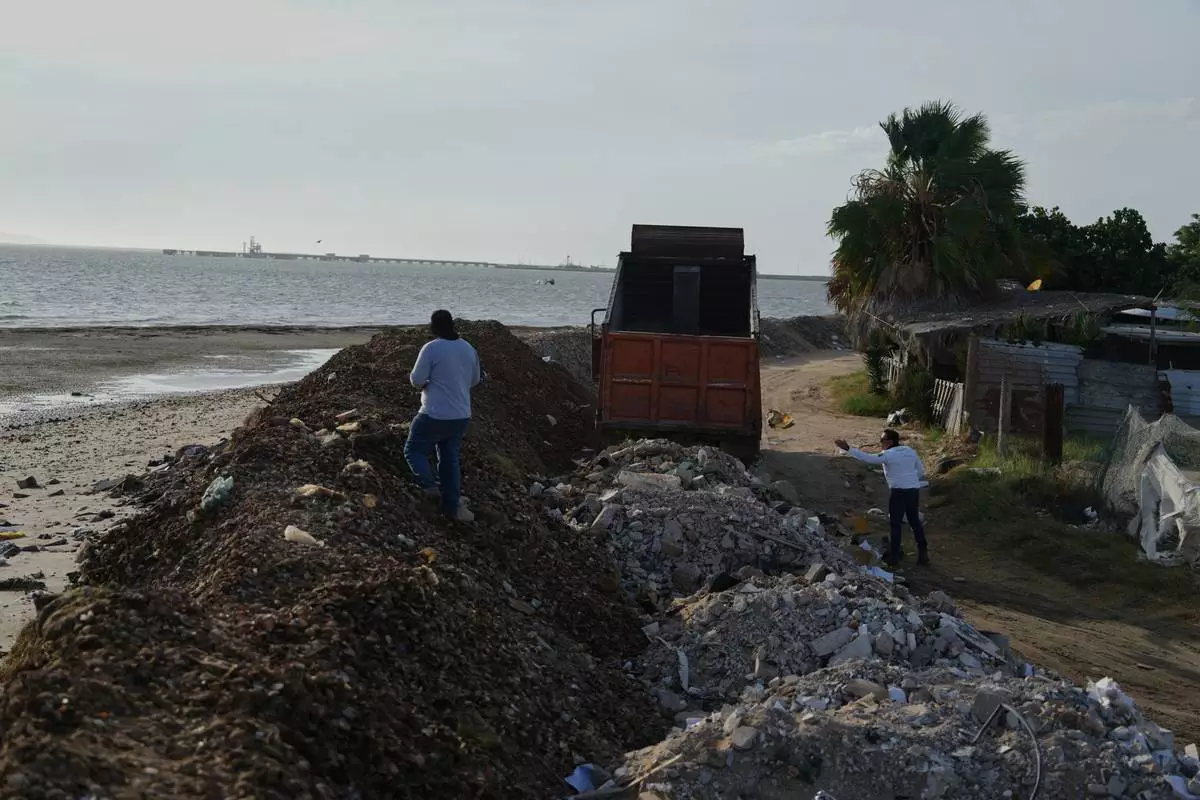
Workers build a barricade to help keep water out of their town as Hurricane Polo approaches in Puerto San Carlos, Baja California Sur state, Mexico, Sunday, Sept. 27, 2026. (AP Photo/Eduardo Verdugo)
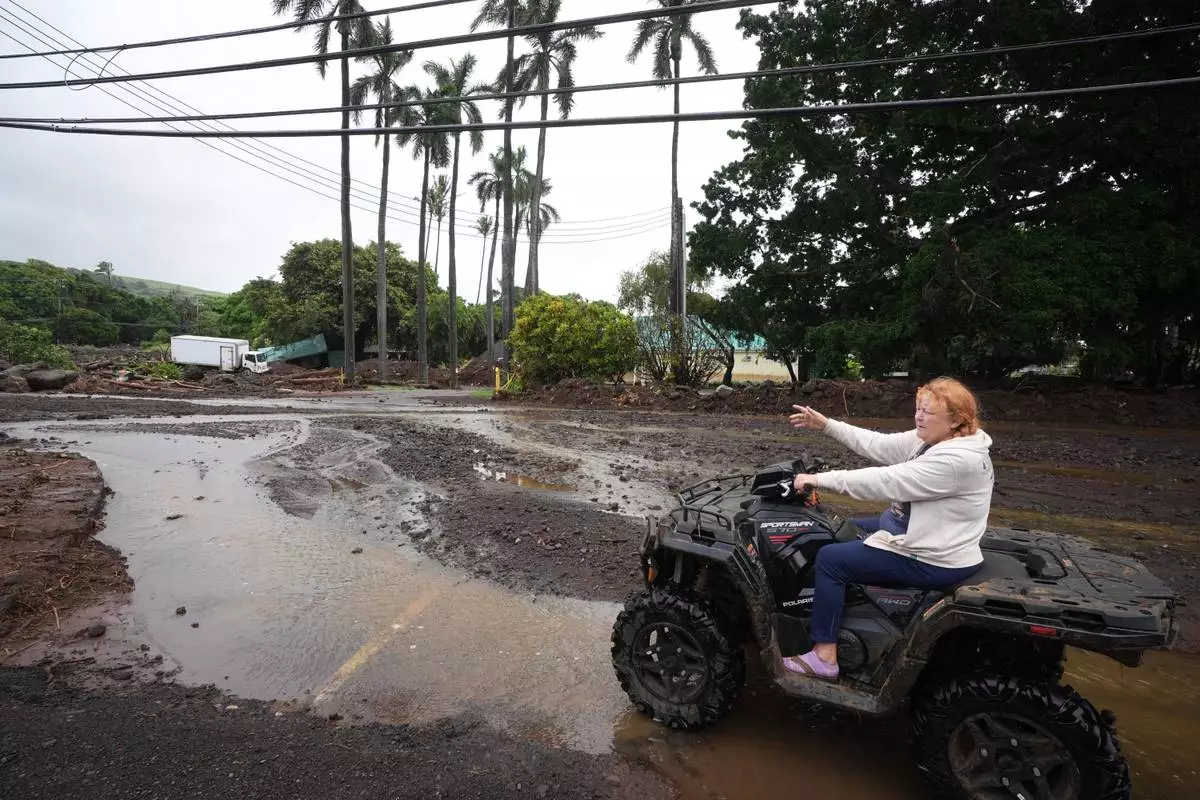
Peggy McKibbin looks at where floodwaters from nearby Hurricane Nolo run past widespread damage from last month's Hurricane Lala Sunday, Sept. 27, 2026, in Naalehu, Hawaii. (AP Photo/Gregory Bull)
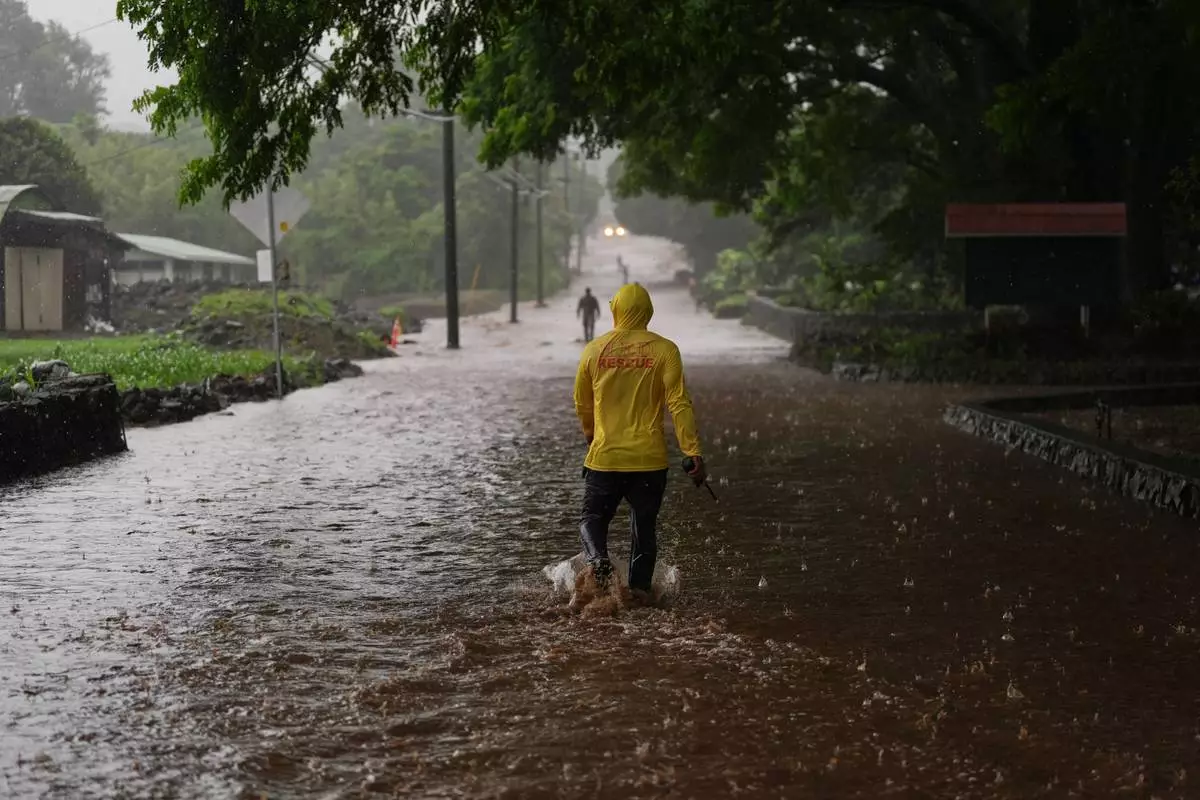
Fire Captain Lui Sales of the Hawaii Fire Department looks for residents to help as rainwater from nearby Hurricane Nolo flood a section of Mamalahoa highway Saturday, Sept. 26, 2026, near Naalehu, Hawaii. (AP Photo/Gregory Bull)
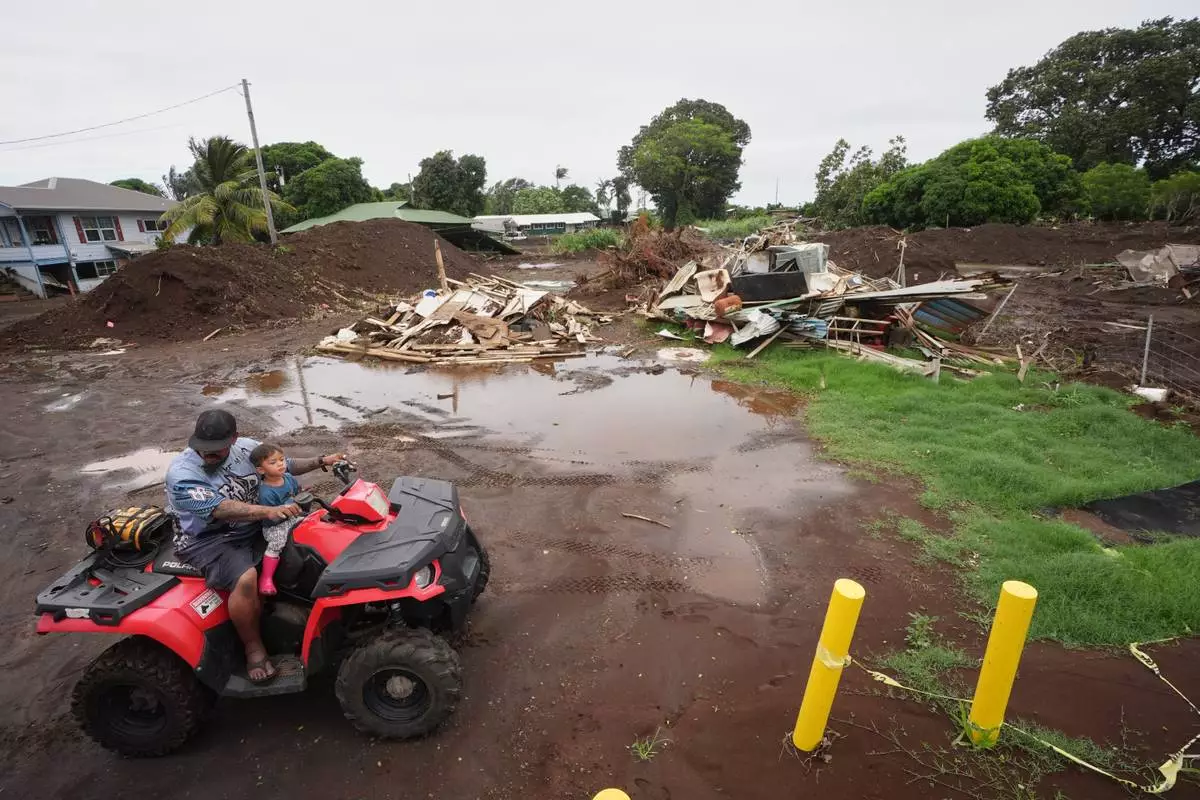
A man rides with his son near where a home was destroyed during last month's Hurricane Lala, as floodwaters from Hurricane Nolo recedes Sunday, Sept. 27, 2026, in Naalehu, Hawaii. (AP Photo/Gregory Bull)