LOS ANGELES (AP) — Actor Hayden Panettiere's ex-fiancé Wladimir Klitschko has filed an urgent petition asking that he be allowed to act as their 11-year-old daughter's temporary representative in California court to protect her inheritance after the death of her mother.
Klitschko, a Ukrainian former world champion boxer, has had full custody of the girl, Kaya, for most of her life, and she has lived with him in Ukraine. Kaya is Panettiere's sole heir. The filing in a Los Angeles County court cites items seized in a federal investigation of the actor’s death, unnamed and unauthorized people accessing her residence in Los Angeles, and valuables that are missing.
The petition says it is “urgent and essential” that Klitschko be granted the legal status of temporary guardian of his daughter's estate.
“Without an immediate appointment for these purposes, there is a high probability that property belonging to Hayden’s Estate may be lost, damaged or dissipated before a duly appointed personal representative can be in place to protect it,” the filing says.
Klitschko's lawyers filed the petition on Thursday, but it did not become publicly known until Monday, when it was reported by TMZ. The filing emphasizes that his intention is solely to protect his daughter's future assets until a permanent administrator can be put in place.
Panettiere, the former star of the TV series “Heroes” and “Nashville,” died Aug. 16 at age 36. A coroner's report obtained by The Associated Press said her death was from an accidental overdose of several drugs, including fentanyl, and she had been in rehab just weeks before. She was found unresponsive in an apartment in Greenville, South Carolina.
The petition says that federal agents have taken Panettiere’s property in an investigation, and there is no authorized person to deal with them and assure it is returned.
The filing says that before her death, Panettiere and Klitschko hired security to protect her home because an unnamed person had gained unauthorized access. The petition says it's expected the same person will continue to try to “misappropriate” property belonging to her estate.
A hearing on the issue is scheduled for Oct. 8.
In her memoir released earlier this year, Panettiere acknowledged being addicted to alcohol and having postpartum depression after her daughter's birth in 2014. Kaya went to live with Klitschko full-time when she was 2. Panettiere's father told investigators that when she died she had plans to visit her daughter in Ukraine days later.
Klitschko, 50, an Olympic gold medalist, held several heavyweight titles between 2000 and 2015. He and Panettiere began dating in 2009 and got engaged in 2013.
His older brother Vitali, also a former champion boxer, is mayor of Kyiv, the Ukrainian capital. The two brothers, sons of a Soviet major general, have worked to protect their country during its war with Russia.

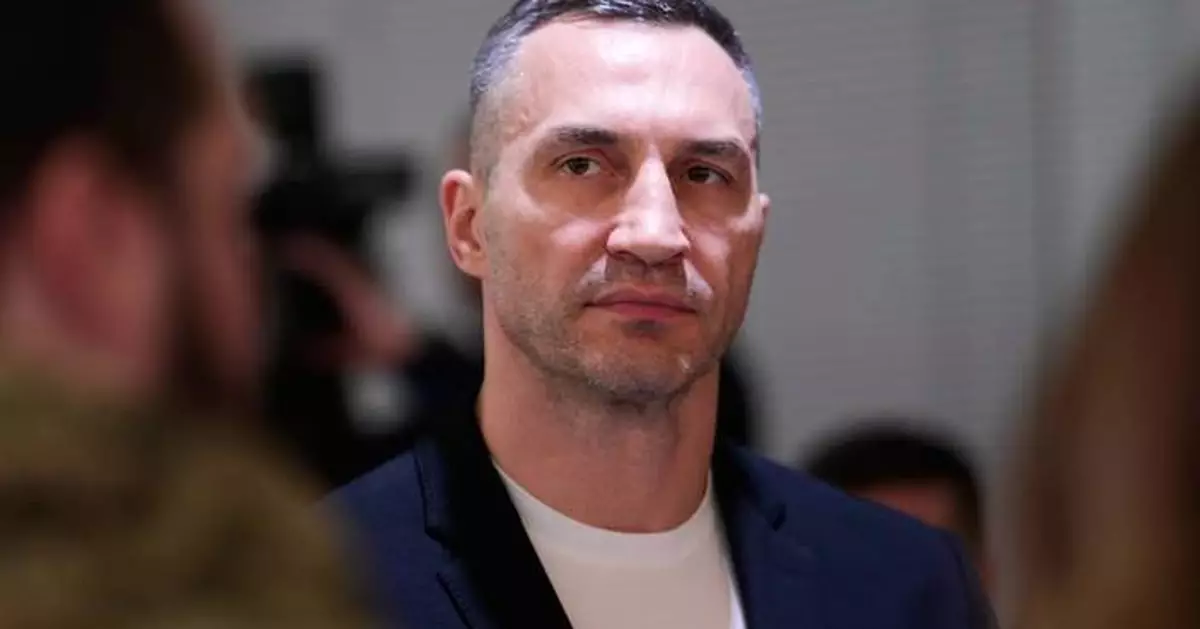
FILE - Wladimir Klitschko, former boxer and brother of Kyiv's mayor Vitali Klitschko, attends an event in Davos, Switzerland, Jan. 22, 2026. (AP Photo/Markus Schreiber, File)
WASHINGTON (AP) — The Senate passed a sweeping bipartisan bill on Monday that would regulate college sports, an attempt to end “chaos” in an industry that has been upended by skyrocketing athlete payments and near-unrestricted transfers between schools.
The overwhelming 77-22 vote to pass the legislation is the strongest effort yet by Congress to set national regulations governing payments to college athletes for their name, image and likeness and how often they can transfer. It would give the NCAA new authority over those rules and limited antitrust protections to enforce them.
The bill is the product of years of Senate negotiations that intensified after a 2025 lawsuit settlement uprooted the college sports landscape by allowing colleges to pay their players. The legislation, which would still have to pass the House, would codify the settlement into law but also establish new guardrails around the system in an attempt to rein in the runaway costs for colleges.
“It would be nice if college sports could somehow magically fix itself, but this is a matter of law, federal law, and only Congress can fix it,” said Senate Commerce Committee Chairman Ted Cruz, R-Texas, who negotiated the bill with the top Democrat on the panel, Washington Sen. Maria Cantwell.
President Donald Trump praised the bill in a social media post after the late night passage. “This is a really big deal,” he said. “It will not only save college sports, it will save the colleges themselves.”
The bill's backers — more than 70 senators from both parties — say it aims to curtail constant litigation and uncertainty across college sports for athletes, schools and fans. It would also give hundreds of thousands of athletes new health and labor protections.
But critics say the bill doesn't do enough to protect athletes or curtail the enormous sums of money flowing to coaches, colleges and conferences.
“This is a bill that essentially ensconces a system of exploitation, and it doesn’t fix the broader problems,” said Connecticut Sen. Chris Murphy, a Democrat who has worked with labor and civil rights groups to rally opposition to the bill.
The bill’s future is still unclear. It could face an uphill battle in the House, which failed repeatedly over the last year to get a different version to the floor and is in recess until after the November elections.
Lawmakers will have to start over in the next Congress if the bill doesn't pass both chambers by the end of the year.
College sports have been reeling in the wake of the 2025 court settlement allowing colleges to directly pay players for their name, image and likeness. The fallout has reshaped the industry and led to football roster payrolls that can exceed $40 million.
The bill would codify the court settlement, including a revenue cap that allows schools to share up to $21.5 million in revenue with their players. The legislation would more than double that amount for some schools, allowing up to an additional $27.5 million in payments through a retention fund — a change that helped win the support of the two largest conferences, the Big Ten and Southeastern Conference.
To help schools raise more revenue, the bill would give schools and conferences the option of pooling their TV media rights.
The legislation also aims to stabilize the NCAA transfer portal that has led to players constantly switching teams. It would restrict player transfers to one “free” move over five years without sitting out a year, with some exceptions, and also would restrict players to five years of total eligibility.
The proposed eligibility limit comes amid backlash to schools that have increasingly pushed boundaries, including LSU's now-canceled plans to place players on the roster who had participated in NFL training camps.
“That was probably like a big lamp for some people who saw it and said, ‘Oh my God, this is so out of control,’” Cantwell said in a recent interview with The Associated Press.
The bill also would restrict coaches from leaving their schools during the season, force schools that want to switch conferences to spend three years as an independent and prevent conferences from growing larger than 20 programs — an effort to prevent so-called “superleagues” from taking over sports. A last-minute amendment proposed by Florida Sen. Ashley Moody raised that cap from 19 in the original legislation.
The vote was delayed several hours on Monday as senators negotiated Moody’s amendment and others that were eventually adopted, including a provision to make it easier for athletes to sue over sexual assault and a requirement to disclose foreign financing.
The Senate rejected an amendment by Sen. John Kennedy, R-La., that would have put limits on ticket prices for fans and two by Sen. Cory Booker, D-N.J., that would have capped coaches’ salaries at $5 million a year and increased compensation for athletes who have catastrophic injuries.
The legislation includes new protections for athletes, including caps on agent fees and guarantees for health insurance and scholarships. It would also require schools to maintain a minimum number of sports and roster spots — an effort to ensure that women's and Olympic sports are not cut in favor of football, basketball and other sports that generate more revenue.
Still, some Democrats say it wouldn't do enough to limit the big money in college sports.
The legislation “places a cap on the students’ cut of the revenues, but there are no caps on coaches’ salaries or on the size of donations to athletic programs,” Murphy said last week.
Groups like the NAACP, Congressional Black Caucus and AFL-CIO have also opposed the bill, in part, because it leaves unresolved whether athletes should be considered employees with the ability to collectively bargain.
All four Black Democrats in the Senate — Booker, Raphael Warnock of Georgia, Lisa Blunt Rochester of Delaware and Angela Alsobrooks of Maryland — have opposed the bill.
Booker, who played football at Stanford in the late 1980s on a scholarship, noted the “outsized role” that Black athletes play in college sports. He said it wasn't until college athletes were able to begin to win cases in court that the power started to shift, “and now the NCAA is coming here to the United States Senate, asking for sweeping powers" to exempt antitrust laws.
“We know who this bill is protecting,” Booker said.
Despite strong bipartisan support in the Senate, the bill faces a murky path in the House.
House lawmakers won't return to Washington until mid-November, after the elections. And it's unclear what will be on Republican leaders' agenda in the chaotic last few weeks of the session.
Pressure from Trump could help push the bill to passage. But some House Republicans have insisted on language explicitly stating that athletes are not employees, which the Senate bill does not have — a key concession to Cantwell to win enough Democratic support.
After the bill's passage, Cruz said it is his hope “that we see in the House the same thing we saw in the Senate: a big bipartisan vote.”
Pells reported from Denver. Associated Press writer Michelle L. Price contributed to this report.
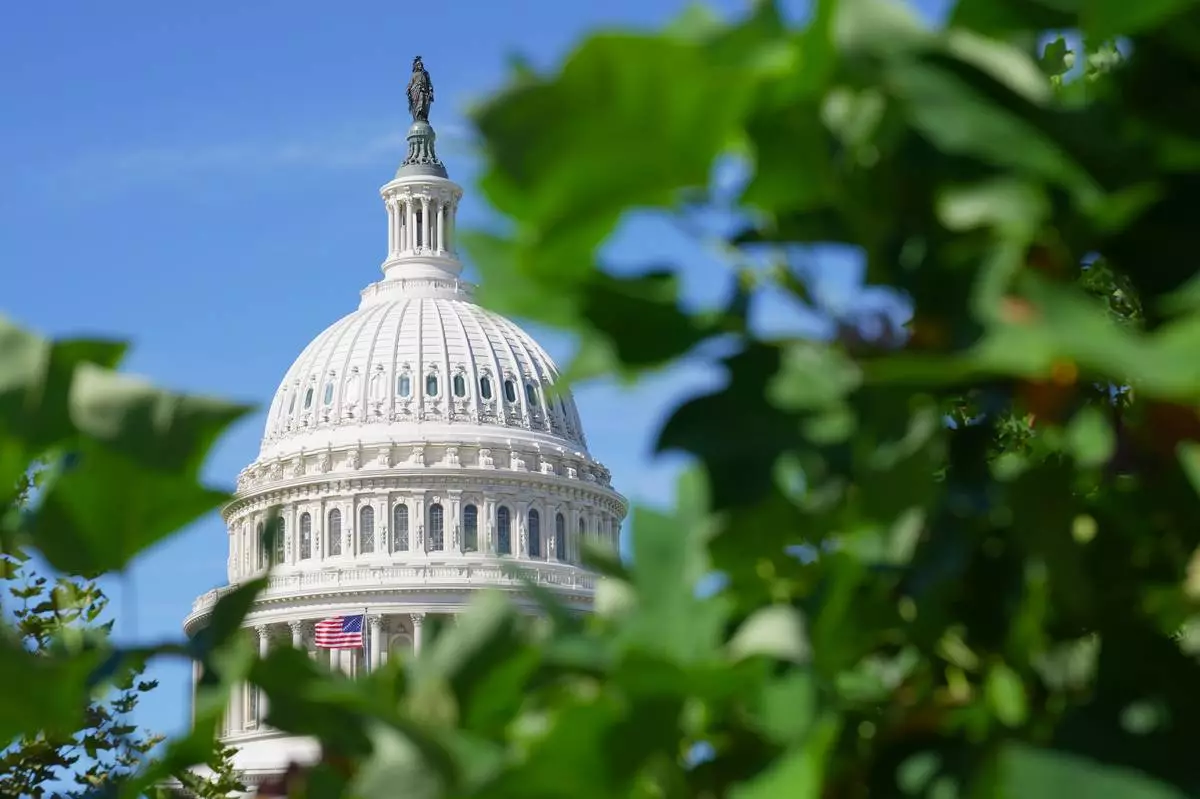
The U.S. Capitol is seen Friday, Sept. 25, 2026, in Washington. (AP Photo/Mariam Zuhaib)
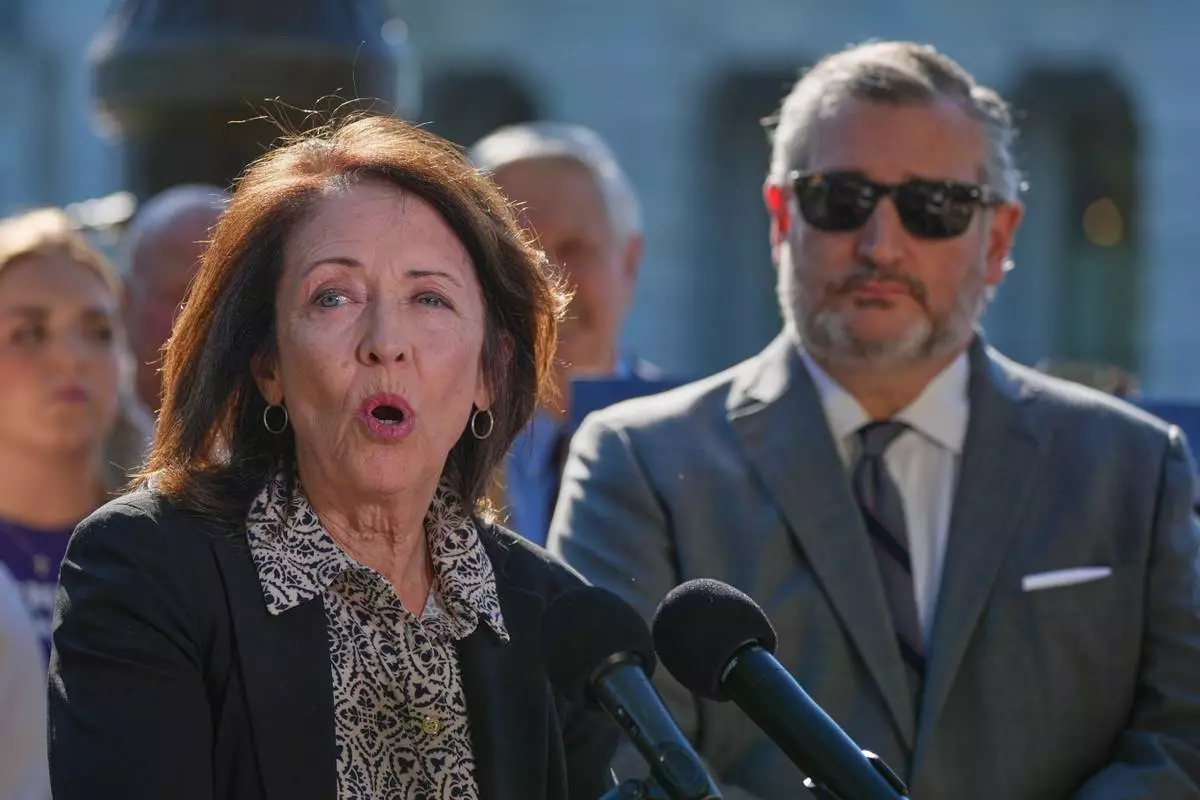
Sen. Maria Cantwell, D-Wash., left, speaks as Sen. Ted Cruz, R-Texas, right, listens during a news conference on Capitol Hill, Monday, Sept. 14, 2026, in Washington. (AP Photo/Mariam Zuhaib)