DH urges public to adopt healthy lifestyles to achieve physical fitness and protect heart in support of World Heart Day
On World Heart Day today (September 29), the Department of Health (DH) urged the public to adopt healthy lifestyles, maintain a balanced diet, refrain from smoking and drinking, and actively participate in the Primary Healthcare Co-care Network (Co-care Network) and the Life Course Preventive Care Plan, both of which were launched by the Government to holistically safeguard health and prevent cardiovascular diseases (CVDs), the world's "No. 1 killer".
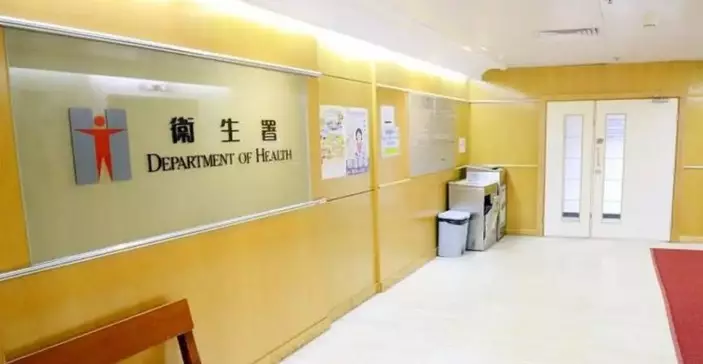
Department of Health, Photo source: reference image
According to the World Health Organization (WHO), CVDs (including heart disease and stroke) are the leading cause of death globally, claiming 17.9 million lives each year. In Hong Kong, CVDs are also among the leading causes of death. In 2025, 10119 registered deaths (provisional figures) were attributed to CVDs, accounting for around one-fifth (19.6 per cent) of all deaths. The majority of these deaths (65.2 per cent) were associated with heart disease.
"Although 'an ounce of prevention is worth a pound of cure' is a cliché, it is absolutely the primary strategy for preventing non-communicable diseases, including CVDs. Eighty per cent of CVDs are preventable through healthy eating, being physically active, and refraining from smoking and drinking, among other measures. Therefore, the Government has consistently educated the public through various channels, and has fostered a supportive environment through multidisciplinary and community-wide collaborations to encourage citizens to actively engage in physical activities. In March 2026, the DH announced the Action Plan on Weight Management. In addition to raising public awareness of weight management and a healthy diet, the action plan also encourages everyone to use 10 000 steps a day as a target to cultivate the habit of having regular physical activity. Those who are yet to join may take part in the 10 000 Steps a Day Walking Challenge via the e+Life platform of the eHealth mobile app, and explore thematic walking routes with family and friends, thereby incorporating physical activity into daily life," said the Controller of the Centre for Health Protection of the DH, Dr Edwin Tsui.
According to the DH's Health Behaviour Survey 2023, 14.8 per cent of adults performed an insufficient level of physical activities, and did not meet the WHO's recommended levels of aerobic physical activity (i.e. to engage in at least 150 to 300 minutes of physical activities of moderate intensity every week/at least 75 to 150 minutes of vigorous-intensity aerobic physical activity/an equivalent combination of moderate- and vigorous-intensity activity). Moreover, 33.9 per cent of adults sit or recline for over eight hours every day, excluding the time spent sleeping. Research reveals that sedentary behaviour or prolonged sitting increases the risks associated with CVDs. Taking a break from prolonged sitting, even by simple ways such as a short walk or standing up for a while, squatting or standing on one's tiptoes, can help reduce relevant health risks.

Photo source: reference image
In addition, reducing salt intake can effectively lower the risk of developing raised blood pressure and CVDs. According to the DH's Population Health Survey 2020-22, 83.9 per cent of people in Hong Kong aged 18 to 84 had an average of 8.4 grams of salt intake every day, above the WHO-recommended limit of less than 5g (equivalent to about one teaspoon) per day. Meanwhile, the prevalence of raised blood pressure, raised blood glucose and raised total blood cholesterol were 30 per cent, 8.6 per cent and 52.7 per cent respectively. As well, over half of Hong Kong's adult population is overweight or obese. Dr Tsui urged the public to adopt a balanced diet with at least five daily servings of fruit and vegetables, reduce fat and sugar intake, avoid smoking, and refrain from alcohol consumption.
The Government announced the launch of the Co-care Network in March 2026. Guided by the principle of "whole-person health", the Co-care Network introduces evidence-based, life-course-spanning preventive measures alongside a structured framework for regular screening and management of high-risk diseases. To achieve "early prevention, early detection and early treatment", the Chronic Disease Co-Care Scheme (CDCC Scheme) under the Co-care Network will continue to subsidise Hong Kong residents aged 45 or above with no known medical history of diabetes mellitus or hypertension. By pairing participants with a family doctor of their choice, the CDCC Scheme provides comprehensive CVD risk factor screening and management -including the "three highs" (i.e. high blood pressure, high blood sugar and high cholesterol) - in the private healthcare sector on a co-payment basis. The CDCC Scheme has demonstrated positive outcomes in both health and cost-effectiveness. Preliminary analysis by a local university research team indicates an overall improvement in participants' health conditions. Notably, after 12 months in the programme, the average systolic blood pressure among hypertensive patients decreased from 150 mmHg to 135 mmHg; the average glycated haemoglobin level of patients with diabetes mellitus decreased from 7.8 per cent to 6.7 per cent; and the average Body Mass Index of patients with prediabetes also decreased by 0.52 kg/m². Members of the public can visit the dedicated website for further details.

Photo source: reference image
Furthermore, the Primary Healthcare Commission promotes the Life Course Preventive Care Plan through District Health Centres/District Health Centre Expresses and family doctors. This initiative aims to enhance public awareness of disease prevention, foster healthy lifestyle habits, and assist citizens in formulating personalised health strategies for different life stages.
The theme of World Heart Day 2026 is "Don't Miss a Beat". To support this theme, the DH will continue to promote healthy living among the public and collaborate with community partners to foster healthy living environments. For more information, please visit the Change for Health website of the DH.
Speech by Financial Secretary at Hong Kong Global Maritime Trade Summit - Closed-Door Dialogue
Following is the speech by the Financial Secretary, Mr Paul Chan, at the Hong Kong Global Maritime Trade Summit- Closed-Door Dialogue today (November 15):
Mr John Denholm (Chairman of the International Chamber of Shipping), Excellencies, distinguished guests, ladies and gentlemen,
Welcome to Hong Kong. I thank the International Chamber of Shipping (ICS) for bringing this dialogue here for the third year, and all of you for joining us.
When this Summit met a year ago, forecasts pointed to the slowest growth in seaborne trade for years. This year, however, has turned out differently. Last month, the World Trade Organization (WTO) raised its forecast for merchandise trade growth in 2026 from 1.9 per cent to 3.9 per cent. Although crude oil exports from the Middle East fell by about a quarter in the first half of this year, global crude exports declined by only 6 per cent, as alternative suppliers, ports and corridors were identified.
That is a credit to this industry. Ships, ports and their agents and managers adapted faster than any plan could anticipate. Yet much of that adaptation was improvised, voyage by voyage and company by company. The changes now under way are too far-reaching to be managed in this way. The resilience we need has to be organised, and organised together.
A transition that is accelerating
Consider first the map of trade. Trade is becoming more regional, and Asia is leading the change. In the first 10 months of this year, trade between the Chinese Mainland and ASEAN (Association of Southeast Asian Nations) grew by 24per cent to about RMB 7.7 trillion. Around two thirds of this trade was in intermediate goods. They are components on their way to a factory, not products on their way to a shop. Supply chains are being re-aligned across borders rather than simply relocated.
Hong Kong sees this every day. Chinese Mainland companies are extending their production networks across Southeast Asia and the wider Global South, and many run their shipping, insurance and financing operations here in Hong Kong. Our own trade with ASEAN exceeded HK$1.8 trillion in the first nine months of this year, more than in any full year before. For the shipping industry, this means shorter voyages, more frequent calls and more transhipment. It also means that a port will be valued more for the connections and services it offers than the tonnage it handles.
At the same time, the green transition has also kept moving, even when regulation has paused. Negotiations on a global net-zero framework continue. Yet DNV (Det Norske Veritas), the Norwegian classification society, has recorded 364 orders for alternative-fuelled ships so far this year, 57per cent more than a year earlier. Owners clearly regard decarbonisation as a question of when and how, not whether. What they lack is certainty. DNV estimates that demand for low-emission fuels in 2030 could differ by a factor of more than five, depending on which rules are adopted. No producer can secure financing for a fuel plant when the market it would serve is that uncertain.
Hong Kong is doing what a port can do to narrow that uncertainty. Ships took on more than 382 000 tonnes of green maritime fuel, including LNG (liquefied natural gas), biodiesel and green methanol here since last year. The model we are determined to build is green fuel made in the Chinese Mainland, bunkered and traded in Hong Kong, and available to ships of every flag.
Artificial intelligence, meanwhile, is reshaping the maritime industry in two important ways. First, the cargo itself. The WTO estimates that chips, servers and other AI-related goods accounted for nearly half of the growth in the value of world merchandise trade in the first half of this year. Then, it is about how cargo is handled. The Chinese Mainland now has 60 automated terminals, more than any other country, and it aims for 90 by 2030. Yet a recent survey of the terminal industry professionals worldwide found that only 11per cent of respondents regularly measure what AI delivers, with poor data and unconnected systems among the main obstacles.
The constraint is less the algorithm than the data, and in shipping the data sits in many hands. That is why in Hong Kong, we have initiated a Port Community System (PCS). Since January this year, close to 10 000 enterprises have joined. Data entered into the system now serves the customs in both Hong Kong and the Chinese Mainland. But every voyage has two ends, and data that stops at the edge of the harbour does only half its work. The UN Trade and Development has found that, among 85 developing economies with an international seaport, only about one in three has a system of this kind, and these are the very economies into which supply chains are now being extended. On this, I applaud the efforts of the IMO (International Maritime Organization) whose digitalisation strategy takes the right approach: not one system for every port, but interoperable systems that can work together. Hong Kong's system was built to connect, and we are exploring links with more ports in the Chinese Mainland and overseas.
Information that moves a container can also move credit. Under Project CargoX, led by the Hong Kong Monetary Authority, 21 participating banks are now testing how such data, shared on a common digital platform with the owner's consent, can enable faster transaction verification than paper documents for credit assessment by the banks. In less than six months, some 10 trade finance loans have been secured on the strength of PCS's trusted cargo-flow data. The project is now being extended to cover ports in the Yangtze River Delta on the Mainland and Southeast Asia.
Building resilience together
Ladies and gentlemen, these three changes have one thing in common. Each crosses borders, and each is moving faster than the rules and relationships meant to manage it. That is the resilience gap we need to close, and I propose three ways to bridge it together.
First, we should keep our rules aligned. WTO economists estimate that a world divided into rival blocs would lose about 5per cent of its output, and that smaller and poorer economies would lose over three times as much as wealthy ones. In shipping the case is even more immediate, because a ship trades between jurisdictions for 25 years or more. We hope economies will resist protectionist measures, and will set their standards and settle their differences within global frameworks, above all at the International Maritime Organization, whose members will meet again in London in two weeks. An owner deciding which ship to order needs one answer, not several.
Second, we should turn goodwill between ports into partnerships. An IMO-backed study found that a container ship which knows in good time when its berth will be ready can save about 14per cent of its fuel on a voyage, and that begins with ports and ships exchanging a few timestamps in a common format. Partner ports can go further. They can recognise each other's standards for new fuels, so that a ship getting supplied at one end of a route can be supplied to the same standard at the other. They can alert each other early when a route is disrupted, and exchange people as well as data. Hong Kong has formed "partner port" relationships with San Antonio Port in Chile, and Dalian and Guangxi on the Mainland. We have also entered into "brother port" relationship with Shanghai last month, and will announce more partner ports this week.
Third, we should invest in people. New fuels and systems are only as safe as the crews who handle them. The BIMCO (Baltic and International Maritime Council) and the ICS estimate that the world fleet is already short of some 39 000 officers and will need about 114 000 more by 2030. Technology can be bought, but competence has to be trained, and recognised from one flag and one port to the next. Later today, the Hong Kong Maritime and Port Development Board and the ICS Academy will sign a Memorandum of Understanding to train multi-skilled maritime workforce for Hong Kong and beyond with the global standards.
Closing
Ladies and gentlemen, the ships being ordered this year will still be trading in 2050. They will outlast our terms of office and, I suspect, most of our forecasts. Whether they will sail in an open and orderly system depends less on any single economy than on the co-operation we form now, in rooms like this one. Hong Kong is determined to be a reliable partner in that endeavour.
This is a closed-door session, I hope you will speak frankly, so that we can learn from one another and strengthen the industry as a whole.
Thank you.
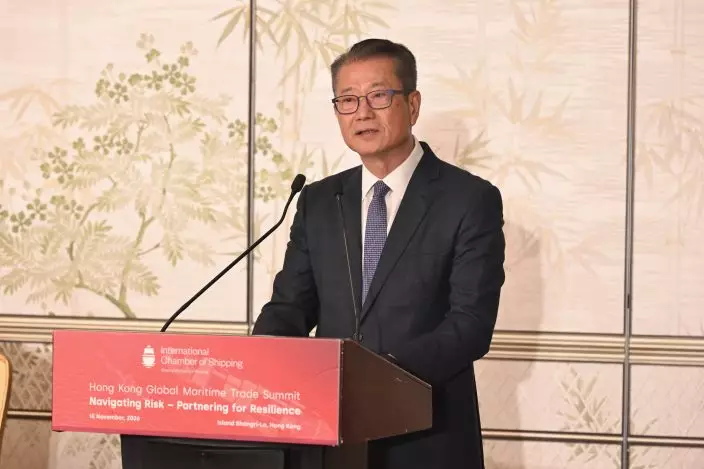
The Financial Secretary, Mr Paul Chan, speaks at the Hong Kong Global Maritime Trade Summit - Closed-Door Dialogue today (November 15). Source: HKSAR Government Press Releases