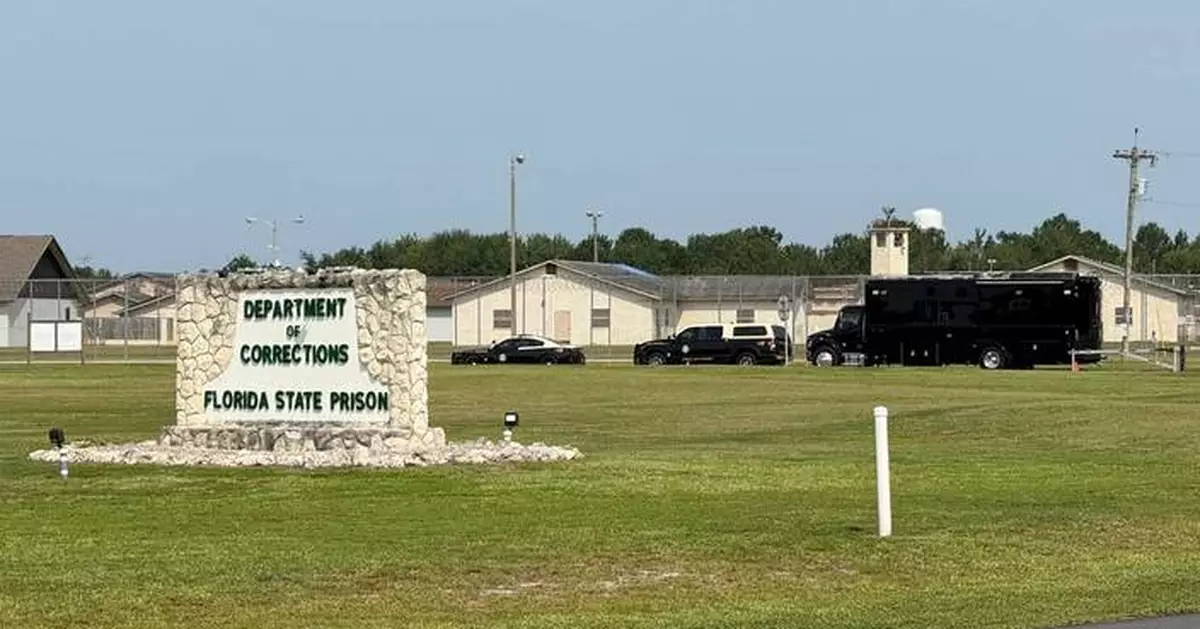
MIAMI (AP) — A 77-year-old Florida man convicted of beating a woman to death with a hammer is scheduled Tuesday to become the 16th person executed this year in the nation's busiest death chamber.
Curtis Wilkie Beasley was sentenced to death after being convicted of first-degree murder, robbery and grand theft auto in a 1995 attack on Carolyn Monfort. The Florida Supreme Court last week rejected appeals that executing a man his age who is suffering from cognitive decline would amount to cruel and unusual punishment.
Beasley, who would become Florida's seventh prisoner over the age of 70 to be executed this year, is set to receive a three-drug injection at the state prison starting at 6 p.m.
It was one of two executions scheduled this week in the U.S. Tennessee plans to execute a woman for the first time in 200 years on Wednesday by administering a lethal injection to Christa Pike, 50, who was convicted of killing a classmate in a jealous rage when they were both teens.
According to court records, Beasley had been staying at Monfort’s Dundee home, south of Orlando, in August 1995 while he was pressure washing and painting nearby apartments owned by her son-in-law. Monfort's daughter went to her home after being unable to reach her for two days and found her body in a blood-splattered laundry room.
Monfort suffered multiple blunt-force trauma injuries to the head, and a bloody hammer head was found wrapped in a towel nearby, according to investigators.
Authorities began searching for Beasley after a witness reported seeing him driving what turned out to be Monfort's car. Investigators determined Beasley had traveled to Miami and later relocated to Alabama, where he was arrested while working under a fake name for an electrical company, officials said.
Beasley was convicted of murder and sentenced to death in 1998.
A final appeal remains pending before the U.S. Supreme Court.
Beasley would be the nation’s 29th execution this year, most of which have taken place in Florida.
The state is getting closer to last year's 19 executions, which was a record in Florida since the death penalty was reinstated in 1976. In July, Florida executed two prisoners in one day, the first state in nearly a decade to do so.
Two more are scheduled for this year, but Republican Gov. Ron DeSantis has temporarily paused the next one.
William Lee Thompson, 74, is scheduled to be executed Oct. 13 for raping and fatally beating a woman at a Florida motel in 1976. After a doctor this month determined Thompson might be suffering from dementia, DeSantis ordered a panel of three psychiatrists to examine him Thursday to determine if he is competent to be executed.
DeSantis, who leaves office in January, issued similar stays in 2023 and 2025 but both executions proceeded following evaluations.
William Reaves, 77, has an Oct. 20 execution date. He was convicted of fatally shooting a deputy outside a convenience store in 1986.
All Florida executions are carried out via lethal injection of a sedative, a paralytic and a drug that stops the heart, according to the Department of Corrections.
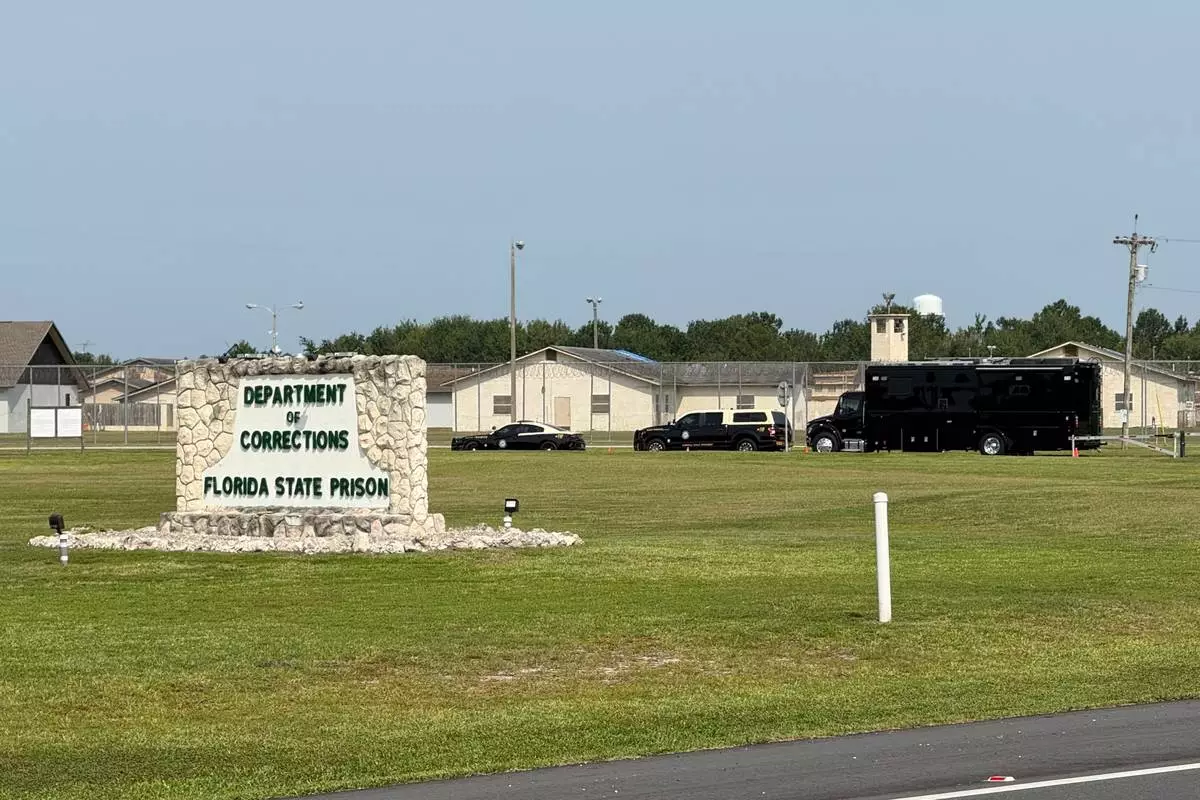
FILE - Law enforcement vehicles sit parked outside the Florida state prison in Starke, Fla., on Tuesday, July 28, 2026. (AP Photo/David Fischer, file)
PUERTO SAN CARLOS, Mexico (AP) — Wind whipped Mexico’s northern Pacific coast and water began to flood some streets Monday as Hurricane Polo bore down on Baja California Sur, threatening flash floods and mudslides. Meanwhile, Hurricane Nolo could still bring torrential rain to parts of Hawaii even as the storm edges away from the state.
In Puerto San Carlos, a fishing town of about 5,700 people, high tides and pounding waves from Polo were breaching sea barriers as residents worried for their homes in the mostly empty town. Hundreds of people in the region evacuated, hunkering down in nearby shelters in schools and other facilities.
“Civil Protection told those of us here in San Carlos to evacuate because this is a high-risk area. With the current tides, the expected waves and the wind, the earthen barriers they built (to prevent flooding) could give way,” Rocío Sánchez, a fisherwoman, said.
Polo was a Category 1 storm with top sustained winds of 75 mph (120 kph) Tuesday but is expected to weaken later on Tuesday as it moves inland, the U.S. National Hurricane Center in Miami said. It's expected to produce 6-12 inches (about 15 to 30 centimeters) of rain across parts of Baja California Sur.
Forecasters said it would hit the Mexican mainland after lashing Baja California Sur, and that life-threatening winds and flash floods were expected. It could bring heavy rain and flooding to parts of the U.S. Southwest later in the week.
The government of the northern Mexican state of Sonora on Monday night announced it would suspend all “nonessential” activities, including school, sports and nonessential work, in the state capital and more than a dozen municipalities due to the incoming hurricane.
Residents in Baja California Sur were anxiously bracing themselves. Margarita Bobadilla and her family were sheltered in a local school, saying it was safer than weathering the storm in her wooden house.
“Material things can be replaced, but family can’t. My children and I decided to come here last night, and now we’re waiting to see what happens.”
Others lingered in their mostly emptied town of Puerto San Carlos, crossing their fingers the light flooding and powerful winds would be the worst of Polo.
Laura Velázquez, national coordinator of Mexico’s Civil Protection Agency, reported that Polo would make landfall later in the afternoon. With Polo approaching Mexico, the Mexican navy said it had personnel ready across the northern Pacific coast and deployed three vessels that could ship aid to coastal communities isolated by the storm. Local authorities along the Baja California Peninsula said they had shelters at the ready.
At a Monday morning news briefing, Velázquez urged residents to stay off the streets and seek shelter if their homes are at risk. She said travel will be suspended in the area where the hurricane was expected to make landfall and that ports across the region would be closed.
At the same time, Tropical Storm Rachel was brewing over Mexico’s southwest coast. The hurricane center said Tuesday that Rachel had maximum sustained winds of 60 mph (96.6 kph) and was located about 265 miles (425 kilometers) southwest of Lazaro Cardenas. No coastal watches or warnings were in effect, but the center said Rachel is forecast to become a hurricane during the next day or so.
Storm activity in the Pacific has been above average during what is already the peak of hurricane season, according to National Weather Service lead forecaster Bob Oravec. He said that pattern is consistent with El Niño years, when the Pacific often sees more tropical storms and hurricanes.
While Polo is slated to weaken over northern Mexico, tropical weather was also supposed to deal a one-two punch to the U.S. Southwest.
The region has already been saturated by heavy rain over the past months, and regions like New Mexico and Grand Canyon were hit by devastating floods earlier this month. Now, the remnants of Polo are forecast to track east across the region, expected to douse Arizona, Utah, New Mexico and Texas with inches of rain.
That’s a good chunk of the 8-12 inches (about 20-30 centimeters) the arid area of canyons and rocky expanses with little vegetation usually gets in a year. Such terrain is already conducive to flash flooding, sudden torrents that can sweep down canyons and other low-lying areas with little warning. The new tropical weather adds more risk, said Andrew Mangham, senior service hydrologist for the National Weather Service in Albuquerque.
“We’re getting caught up here in a very, very short time,” Mangham said. “And that’s not really what we want. We want nice rains, you know, all summer long.”
Nolo, meanwhile, was well southwest of Hawaii and moving away from the Big Island as the weekend drew to a close. The Category 3 storm drenched communities in south and southeastern parts of the Big Island over the weekend, prompting some highway closures on Saturday evening and Sunday as rushing water and boulders blocked roadways.
Maximum sustained winds were near 115 mph (185 km/h), with higher gusts, the hurricane center said Tuesday, but the storm is forecast to weaken over the next couple of days.
Hawaii National Guard members rescued 19 people from flooding over the weekend, the U.S. National Guard said in a post on Facebook.
Damage assessments are still underway as Nolo moves northwest. While it's keeping its distance from the main Hawaiian Islands, it's approaching Papahanaumokuakea Marine National Monument, a marine conservation area northwest of the islands, according to the National Hurricane Center. It could bring dangerous conditions to the area starting Tuesday, the center reported.
Thousands of households and businesses on Maui lost power for a time, but by Monday afternoon, service had been restored to nearly all of them, according to poweroutage.us. The majority of the outages were related to storm damage, according to statements from Hawaiian Electric.
Hawaii residents were still recovering from several other natural events this year, including spring Kona low storms, a May earthquake, Hurricane Lala in August and Hurricane Lowell in September. Those events affected more than 1,290 homes, according to the state, and caused nearly $700 million in damage and recovery costs.
Janetsky reported from Mexico City. Photojournalist Eduardo Verdugo contributed from Puerto San Carlos, Mexico, reporter Julie Walker reported from New York, reporter Mead Gruver reported from Fort Collins, Colorado. Videojournalist Eugene Garcia and photographer Gregory Bull contributed from Hilo, Hawaii.
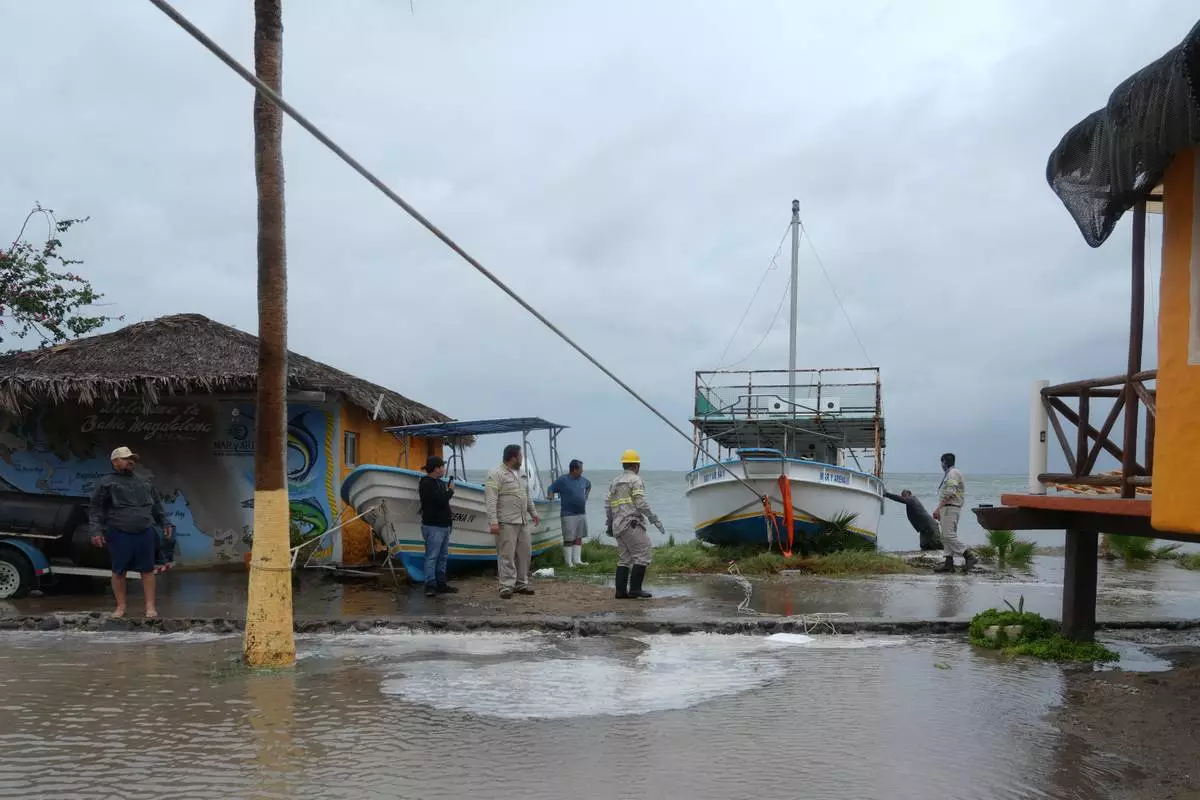
Workers pull a boat to shore as Hurricane Polo approaches Puerto San Carlos, Baja California Sur state, Mexico, Monday, Sept. 28, 2026. (AP Photo/Eduardo Verdugo)
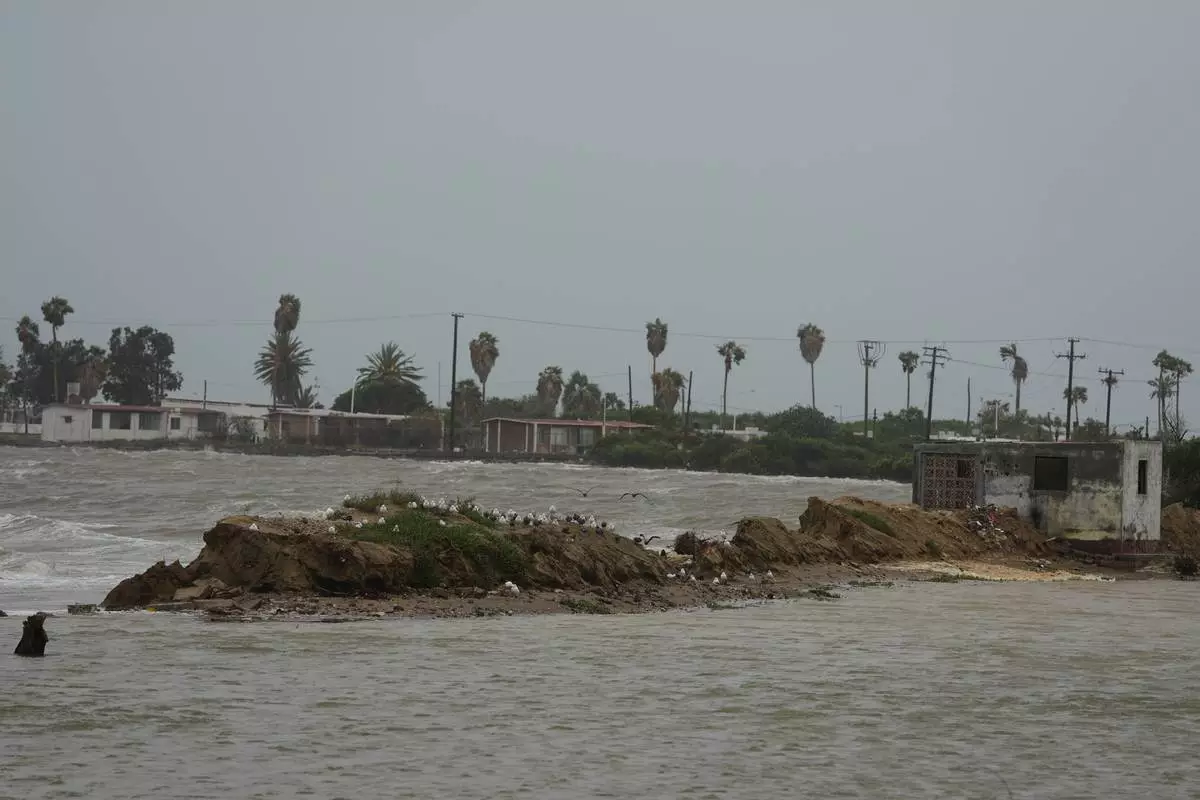
Water surges along the coast as Hurricane Polo approaches Puerto San Carlos, in the state of Baja California Sur, Mexico, Monday, Sept. 28, 2026. (AP Photo/Eduardo Verdugo)
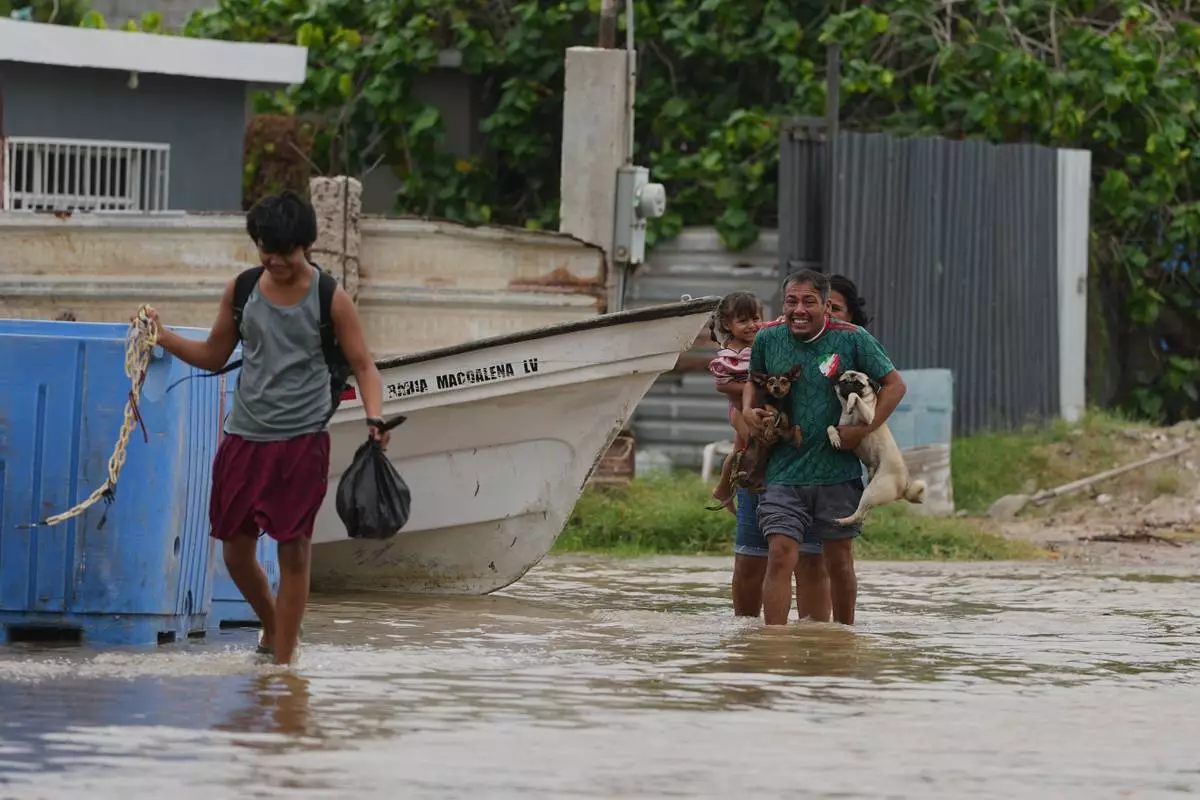
People evacuate their homes as Hurricane Polo approaches Puerto San Carlos, Baja California Sur state, Mexico, Monday, Sept. 28, 2026. (AP Photo/Eduardo Verdugo)
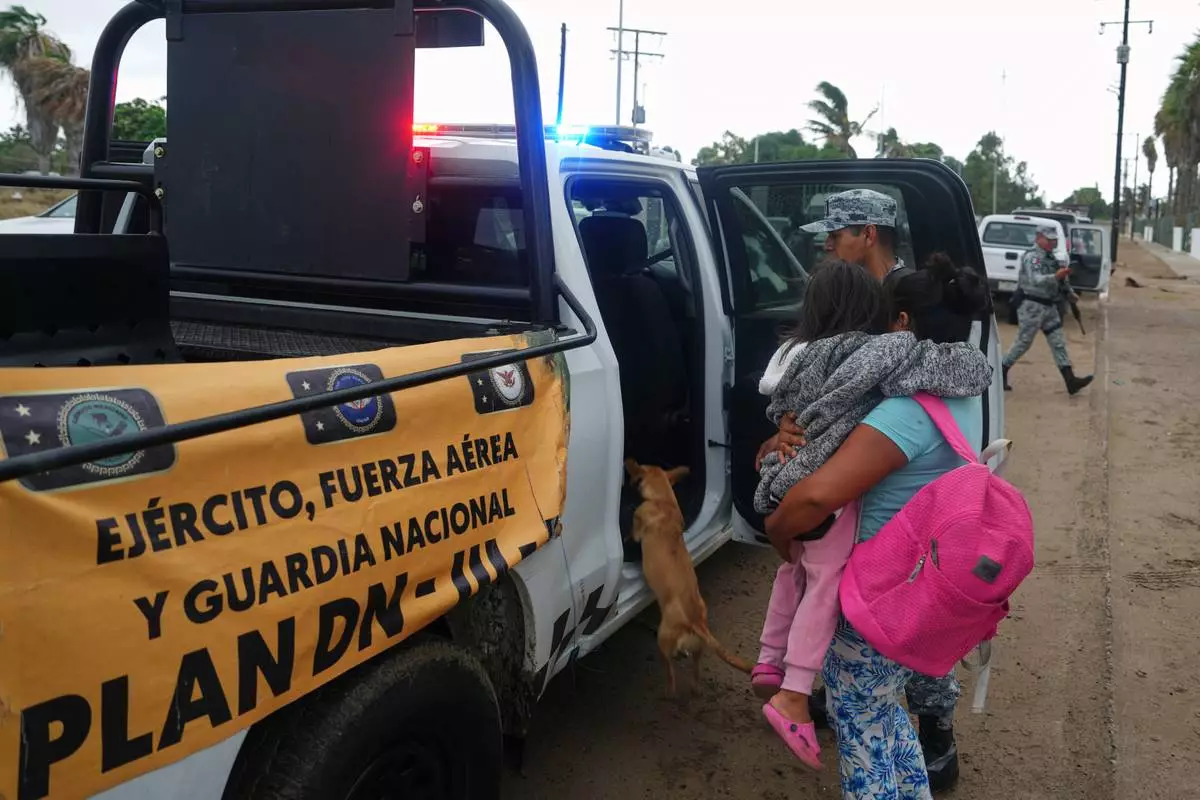
Residents are evacuated by the Army as Hurricane Polo approaches Puerto San Carlos, Baja California Sur state, Mexico, Monday, Sept. 28, 2026. (AP Photo/Eduardo Verdugo)
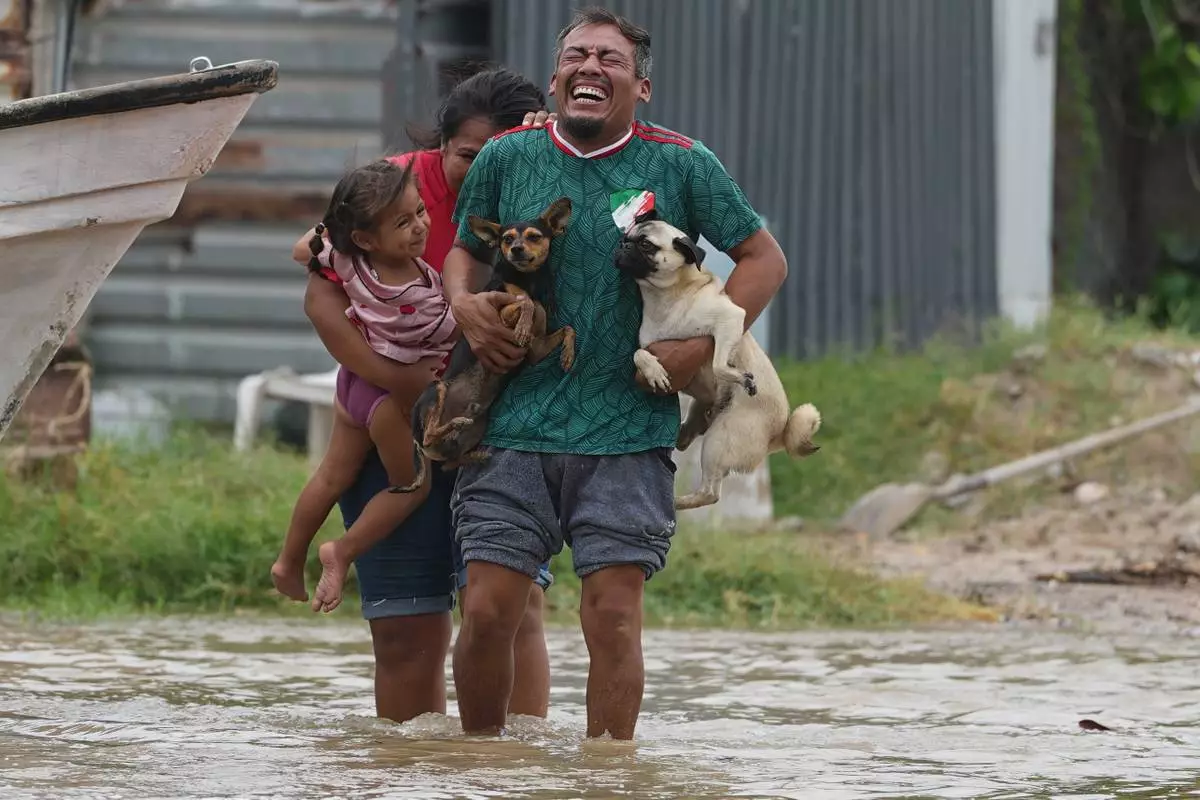
People evacuate their homes as Hurricane Polo approaches Puerto San Carlos, Baja California Sur state, Mexico, Monday, Sept. 28, 2026. (AP Photo/Eduardo Verdugo)
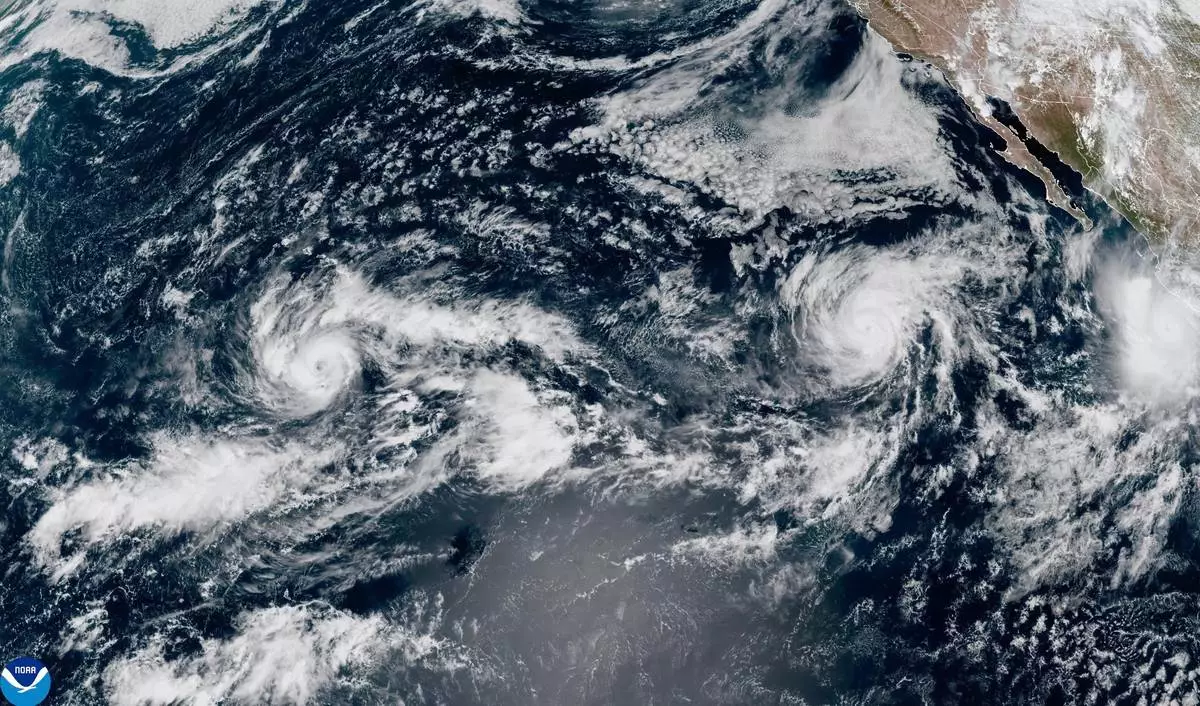
This satellite image provided by NOAA shows Tropical Storm Nolo, left, south of Hawaii; Hurricane Odalys, middle, and Hurricane Polo, right, off the coast of Mexico, in the Pacific Ocean on Thursday, Sept. 24, 2026. (NOAA via AP)
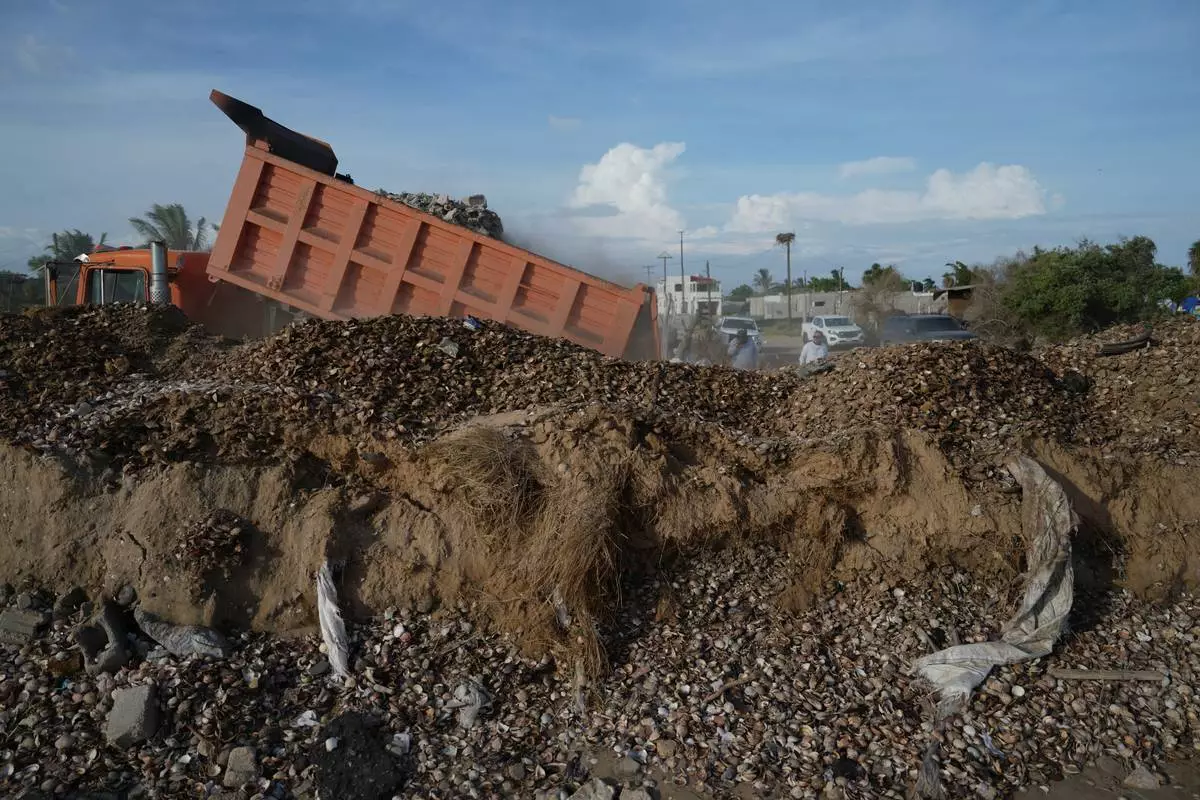
Workers build a barricade to help keep water out of their town as Hurricane Polo approaches in Puerto San Carlos, Baja California Sur state, Mexico, Sunday, Sept. 27, 2026. (AP Photo/Eduardo Verdugo)
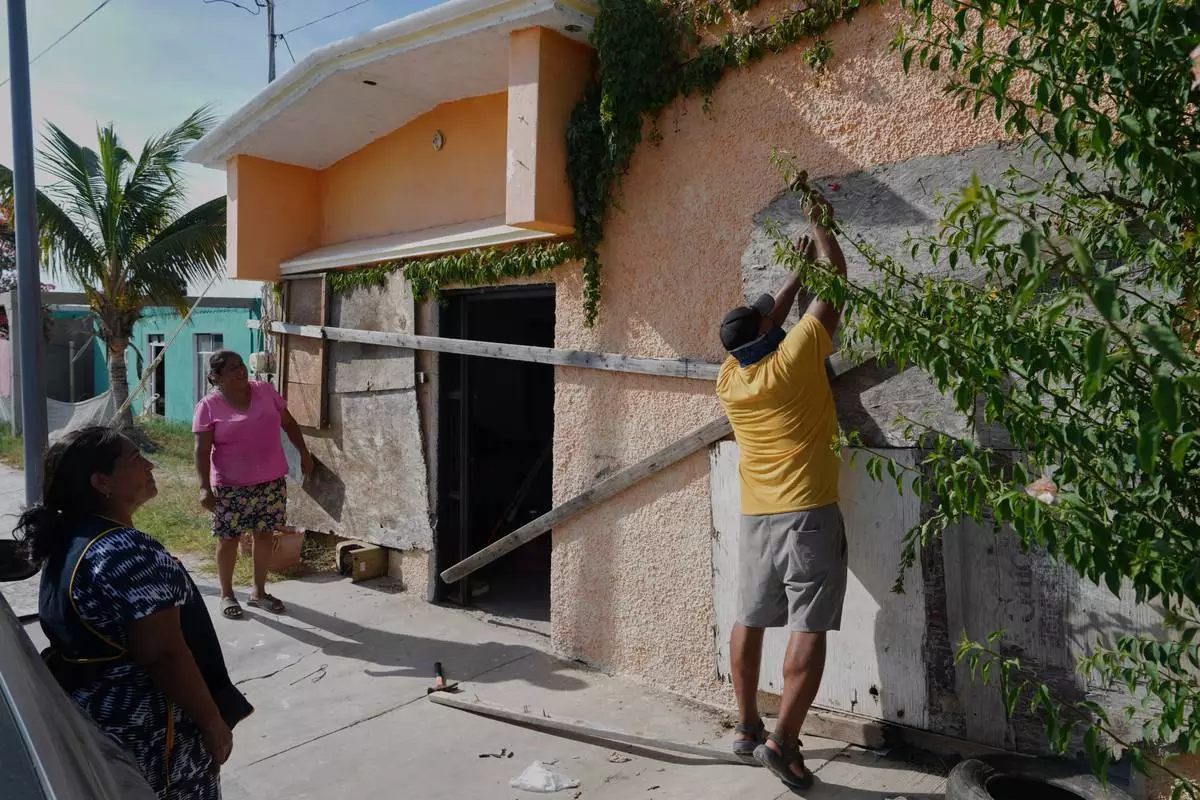
A man boards up a house's windows as Hurricane Polo approaches in Puerto San Carlos, Baja California Sur state, Mexico, Sunday, Sept. 27, 2026. (AP Photo/Eduardo Verdugo)
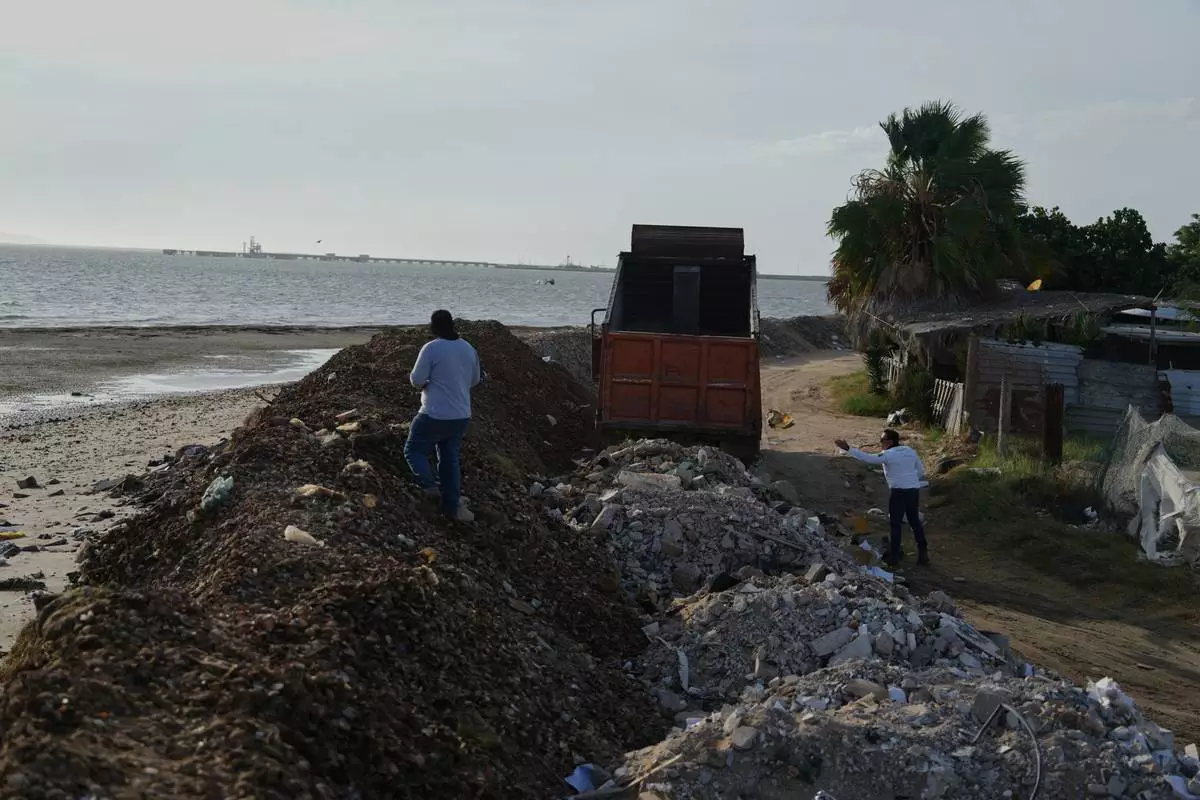
Workers build a barricade to help keep water out of their town as Hurricane Polo approaches in Puerto San Carlos, Baja California Sur state, Mexico, Sunday, Sept. 27, 2026. (AP Photo/Eduardo Verdugo)
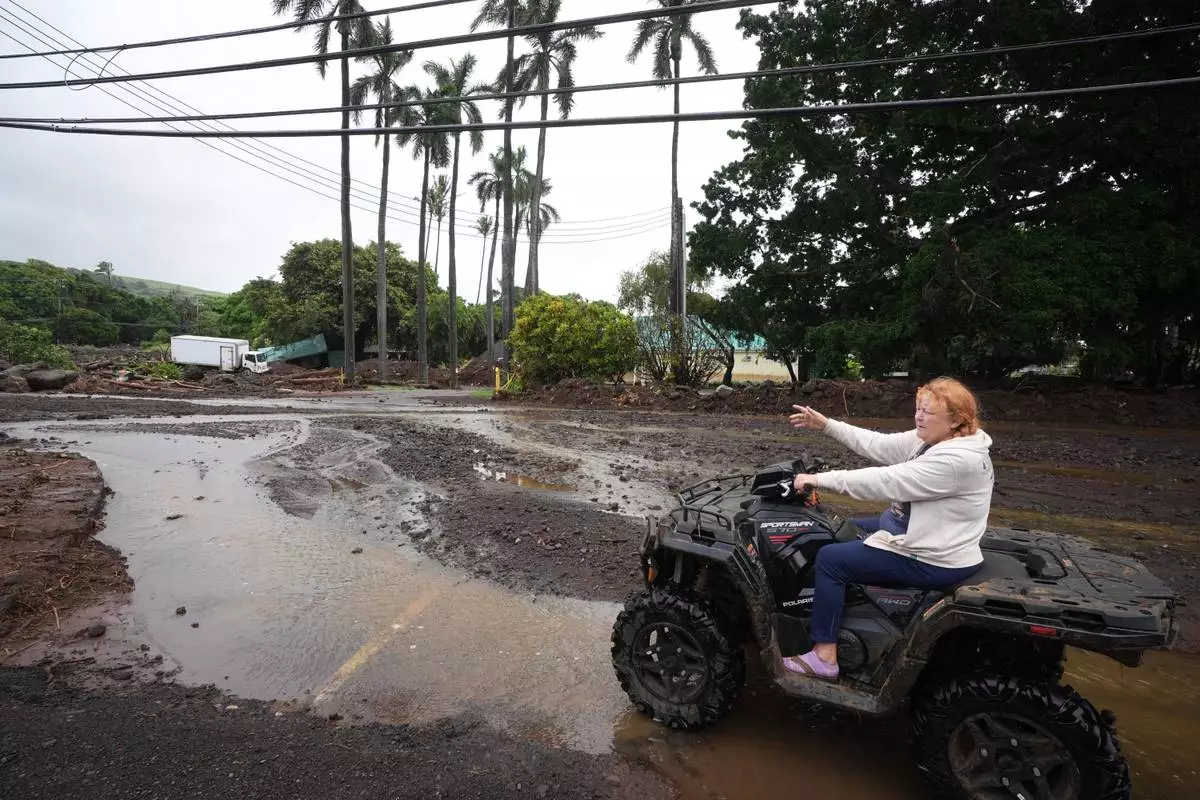
Peggy McKibbin looks at where floodwaters from nearby Hurricane Nolo run past widespread damage from last month's Hurricane Lala Sunday, Sept. 27, 2026, in Naalehu, Hawaii. (AP Photo/Gregory Bull)
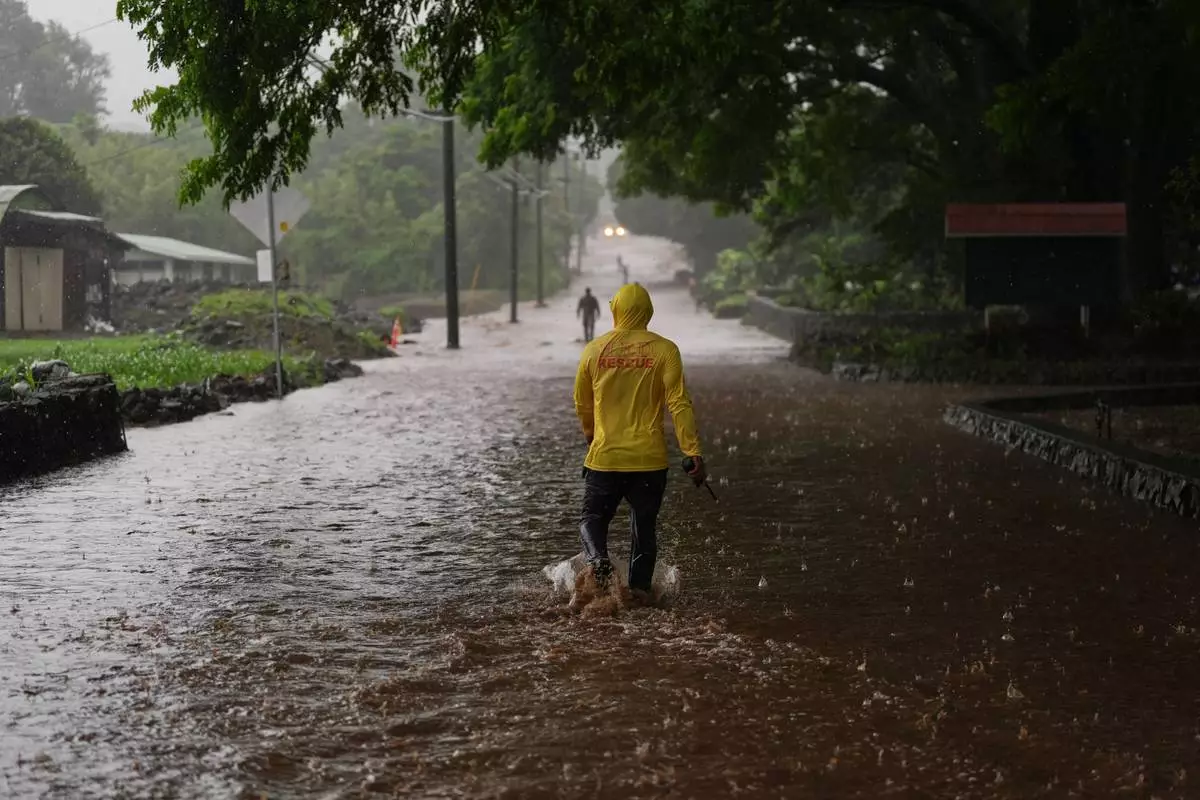
Fire Captain Lui Sales of the Hawaii Fire Department looks for residents to help as rainwater from nearby Hurricane Nolo flood a section of Mamalahoa highway Saturday, Sept. 26, 2026, near Naalehu, Hawaii. (AP Photo/Gregory Bull)
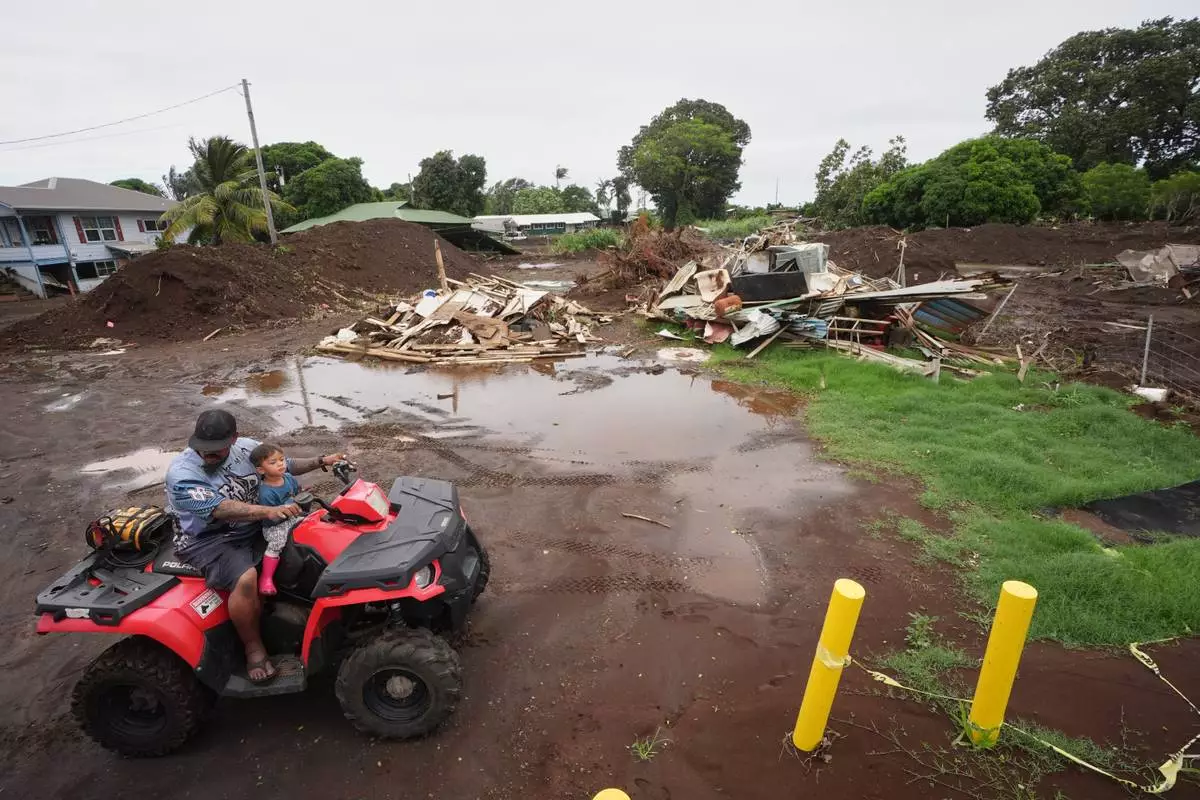
A man rides with his son near where a home was destroyed during last month's Hurricane Lala, as floodwaters from Hurricane Nolo recedes Sunday, Sept. 27, 2026, in Naalehu, Hawaii. (AP Photo/Gregory Bull)