HO CHI MINH CITY, Vietnam, Sept. 28, 2026 /PRNewswire/ -- JustMarkets, a multi-asset CFD broker, has released an analysis of volatility-based instruments and the practical factors CFD traders may consider before trading them. According to the analysis, without volatility there may be little room for short-term trading — one of the reasons volatility-based instruments may attract attention from CFD traders seeking markets with distinct price behavior.
Unlike conventional assets, which can experience price fluctuations triggered by economic data releases, companies' financial performance, central bank actions, or geopolitical events, volatility-based instruments may be constructed around specific market behavior.
What May Draw the Attention of Active CFD Traders
JustMarkets notes that exposure to price movement is the first factor.
Conventional markets experience calm and volatility based on liquidity, trading sessions, releases, and news. Meanwhile, volatility-based instruments exhibit specific characteristics, relevant for active CFD traders using technical strategies like momentum, breakout, and intraday-range approaches. Another factor is trading availability. Depending on the instrument, volatility-based instruments trade outside conventional exchange hours, giving CFD traders flexibility in timing analysis and trading. However, price movement alone does not mean improved conditions.
Increased Volatility Brings Higher Risk
Volatility can work in both directions. An instrument that can move quickly in a trader's favor can also move quickly against the position. When trading leveraged CFDs, risk management becomes one of the most important factors.
Leverage allows CFD traders to control larger market exposure with limited margin. However, leverage also increases market exposure, capital volatility, and the potential for losses, and can lead to greater losses during adverse price movements.
Before placing a trade on any CFD instrument, traders should understand its price behavior, spreads, commissions, margin requirements, trading hours, overnight costs, and other factors.
JustMarkets notes that the key question before making a trading decision is not "Is this instrument volatile?" but rather "Does this kind of volatility fit my trading and risk management strategy?"
What to Check Before Trading
Before choosing a volatility-based CFD, traders may consider several practical factors:
- Price behavior: how quickly and how often the instrument moves.
- Trading costs: spreads, commissions, and potential overnight charges.
- Leverage and margin: how much market exposure the position creates.
- Trading hours: when the instrument is available for trading.
- Risk tolerance: whether the instrument's volatility aligns with the trader's strategy and acceptable level of risk.
Shifting Focus to Market Behavior
For active CFD traders, an instrument's price behavior may be just as important as the asset class it belongs to.
Depending on their strategy, scalpers may focus more on short-term price movements, spreads, and execution, while day traders may pay closer attention to intraday volatility and trading costs. Swing traders, meanwhile, may also consider how price behavior develops over a longer holding period, as well as potential overnight costs.
The same principle applies to the CFD markets offered by JustMarkets. CFD traders can choose among CFDs on different types of global markets and assess instruments based on their trading approach.
Volatility-based instruments may offer CFD traders more trading opportunities, but they also carry higher risk. Volatility should never be seen as a shortcut to profits.
For CFD traders, understanding an instrument's price behavior and how it aligns with their trading strategy comes first.
JustMarkets aims to provide a convenient and transparent trading environment for CFD traders.
Risk Warning:
Trading Forex and CFDs involves significant risk and can result in the loss of your invested capital. This article is for informational purposes only and does not constitute investment advice.
** This press release is distributed by PR Newswire through automated distribution system, for which the client assumes full responsibility. **

JustMarkets Explores What CFD Traders May Consider When Trading Volatility-Based Instruments
- Contributing to Singapore's sustainable digital infrastructure initiative -
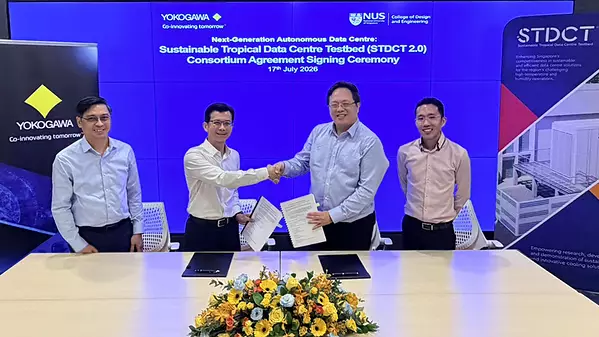
TOKYO and SINGAPORE, Sept. 29, 2026 /PRNewswire/ -- Yokogawa Electric Corporation (TOKYO: 6841) announces that its subsidiary Yokogawa Engineering Asia Pte. Ltd. has joined the Sustainable Tropical Data Centre Testbed Phase 2.0 (STDCT 2.0) Consortium, an initiative led by the College of Design and Engineering (CDE) at the National University of Singapore (NUS). Through participation in this initiative, Yokogawa will leverage its deep industrial automation heritage and leadership in autonomous operations to enhance operational efficiency, asset reliability, and energy optimization across the next-generation data center environments.
Driven by the rapid adoption of generative AI and cloud services, demand for data centers is growing worldwide. At the same time, industry faces significant challenges regarding energy consumption, operational resilience, and workforce constraints. These energy and operational challenges are even more pronounced in tropical regions such as Singapore, where hot and humid conditions place greater demands on cooling systems and energy efficiency, making sustainable data center innovation a crucial matter.
Singapore has identified the data center industry as one of its strategic growth sectors and is advancing plans to develop Jurong Island as a hub for next-generation data centers, an initiative led by government agency for industrial infrastructure, JTC Corporation, with a projected capacity of up to 700 megawatts.
STDCT 2.0 is a testbed initiative that brings together partners from academia, industry, and government to develop and evaluate advanced energy management and cooling technologies and establish a sustainable operating model suitable for AI data centers in a tropical climate. Beyond technology deployment and validation, Yokogawa will also work with the consortium to explore a joint research agenda to address emerging challenges where existing commercial solutions are insufficient to meet the demands of data center operators.
Through its participation in STDCT 2.0, Yokogawa aims to further strengthen its AI-powered technological capabilities and R&D expertise to develop comprehensive solutions that will support Singapore's journey towards a sustainable digital economy and also enhance the efficient and stable operation of AI data centers worldwide.
Professor Lee Poh Seng, Director of STDCT and Head, Department of Mechanical Engineering, College of Design and Engineering at NUS, said, "AI is fundamentally changing the design and operation of data centers. As rack densities rise and infrastructure becomes increasingly complex, improving individual components will no longer be enough, we need to optimize the data center as an integrated system spanning computing, power, cooling, controls and operations. STDCT 2.0 provides a real-world platform to bring these domains together and validate solutions under the demanding conditions of a tropical climate. Yokogawa's deep expertise in measurement, industrial automation and autonomous operations adds an important capability to this effort. Through this partnership, we hope to develop and demonstrate new approaches that make AI data centers not only more energy- and resource-efficient, but also more intelligent, resilient and scalable for deployment in Singapore and other tropical markets."
Kin Wah Chay, President and CEO of Yokogawa Engineering Asia, commented, "This initiative reflects Yokogawa's vision of enabling industrial autonomy and extending our expertise into the rapidly evolving digital infrastructure sector. We are honored to join the STDCT 2.0 Consortium and work alongside leading partners to accelerate and co-innovate solutions for next-generation AI data centers. Leveraging decades of experience in industrial automation and energy management, we aim to help drive smarter, more efficient, and sustainable data center operations in tropical regions."
For more information
Yokogawa's Data Center Solutions: https://www.yokogawa.com/industries/data-centers/
About the Sustainable Tropical Data Centre Testbed (STDCT)
The Sustainable Tropical Data Centre Testbed (STDCT) is a joint research initiative led by the National University of Singapore (NUS) and hosted by its College of Design and Engineering, in collaboration with leading industry partners.
STDCT 2.0 focuses on developing energy-efficient data centre designs that can operate reliably in tropical climates. The programme serves as a live testbed to evaluate, validate, and deploy sustainable innovations that reduce energy and water consumption while supporting dense, AI-driven operations.
For more information, visit https://cde.nus.edu.sg/stdct/
About Yokogawa
Yokogawa provides advanced solutions in the areas of measurement, control, and information to customers across a broad range of industries, including energy, chemicals, materials, pharmaceuticals, and food. Yokogawa addresses customer issues regarding the optimization of production, assets, and the supply chain with the effective application of digital technologies, enabling the transition to autonomous operations.
Founded in Tokyo in 1915, Yokogawa continues to work toward a sustainable society through its 18,000+ employees in a global network of 136 companies spanning 63 countries.
For more information, visit www.yokogawa.com
| The names of corporations, organizations, products, services and logos herein are either registered trademarks or trademarks of Yokogawa Electric Corporation or their respective holders. |
The names of corporations, organizations, products, services and logos herein are either registered trademarks or trademarks of Yokogawa Electric Corporation or their respective holders.
** This press release is distributed by PR Newswire through automated distribution system, for which the client assumes full responsibility. **
Yokogawa to Assist the Scale Up of Tropical Climate AI Data Center Testbed into a Multi-megawatt Pilot Facility