WASHINGTON (AP) — Americans’ confidence in the economy sank to the lowest level in more than a decade this month as prices remain elevated and wages stagnate amid the ongoing Iran war.
The Conference Board said Tuesday that its consumer confidence index tumbled 6.7 points to 81.9 in September, down from 88.6 in August. That’s the lowest reading in the board's survey since April 2014 and below the lowest level reached during the pandemic.
Respondents’ views of their present situation fell by 7.9 points to 109.3. Their short-term outlook also slid, falling 5.9 points to 63.6.
Americans remain flustered by the economy after five years of elevated inflation, potentially posing a risk to President Donald Trump and Republicans in the midterm elections, which are a little more than a month away.
Write-in responses to the board’s survey, collected from September 1-23, were mostly pessimistic this month, with frequent references to the high cost of gas, goods and services.
“The Consumer Confidence Index deteriorated notably in September, following two prior months of softening,” said Dana Peterson, the Conference Board’s chief economist, adding that consumers’ views of current business conditions became negative for the first time since September 2024.
Trump has continued to blame high prices on his predecessor, Democrat Joe Biden, yet inflation has risen since Trump’s inauguration last year.
Earlier this month, the government reported that consumer inflation accelerated last month and gas prices spiked as fighting in the Middle East dragged on. The consumer price index rose 3.4% last month compared with a year ago, the Labor Department said Friday, just like July. But inflation quickened month to month as costs jumped 0.4% from July, quadrupling the 0.1% registered in the previous month.
The Federal Reserve two weeks ago raised its benchmark interest rate for the first time since 2023 in an effort to quell stubbornly high inflation, and the central bank signaled another rate hike could occur later this year.
The quarter-point increase lifted the Fed’s key rate to about 3.9% and, over time, could result in higher borrowing costs for mortgages, auto loans and credit cards.
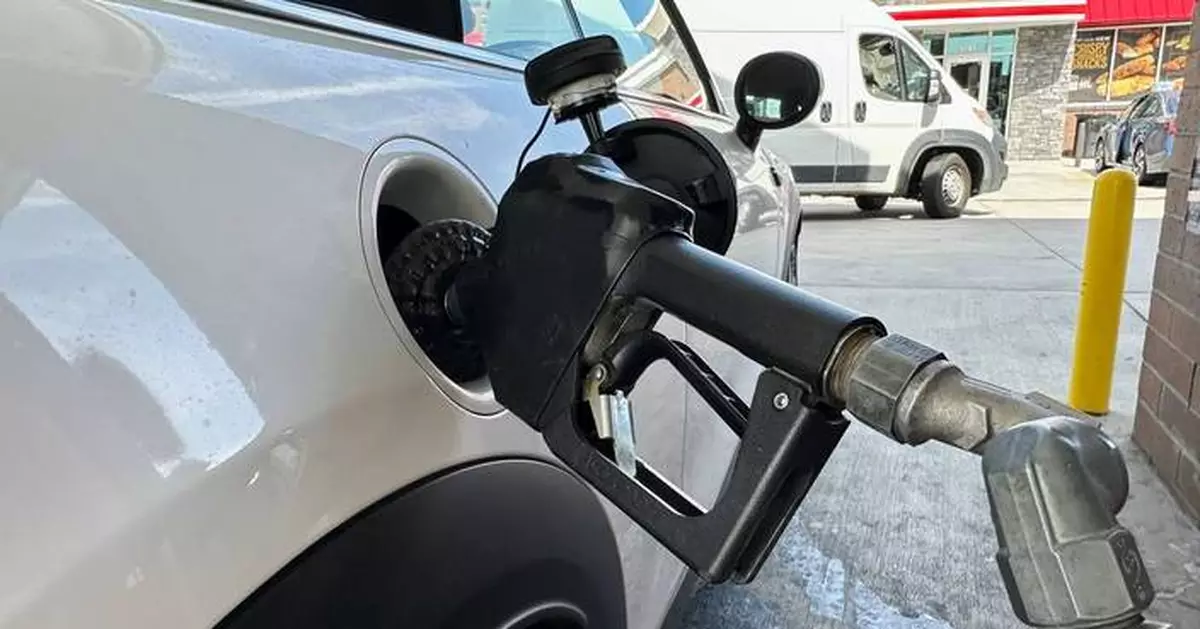
Gasoline prices — which currently average $4.46 for a gallon of regular — are not all that is rising. Prices for appliances, car repairs, and wireless phone services also jumped in August.
The most recent measure of the Federal Reserve’s preferred inflation gauge — the personal consumption expenditures price index — was up 3.7% in June from a year earlier. That was down from May’s 4.1% year-over-year increase but up from 2.8% before the Iran war began on Feb. 28. It was 2.5% when Trump was inaugurated in January 2025.
The government issues its August PCE data Wednesday.
Consumers’ views of the current labor market also worsened in September, but remained in positive territory, the board said. Respondents broadly said they expected their household incomes to rise, but not as much as in previous months.
The U.S. labor market bounced back in August as employers added a surprising 162,000 jobs, ending a summer of lackluster hiring. The unemployment rate remained at a low 4.1%, but some of that can be attributed to significant numbers of people giving up on their search for employment in previous months.
Inflation has dominated conversations this year in business and households, and meager pay raises have made rising prices more painful for many. Average hourly wages rose 3.1% last month from a year earlier, the weakest year-over-year increase since May 2021.
The government issues its September jobs report on Friday.
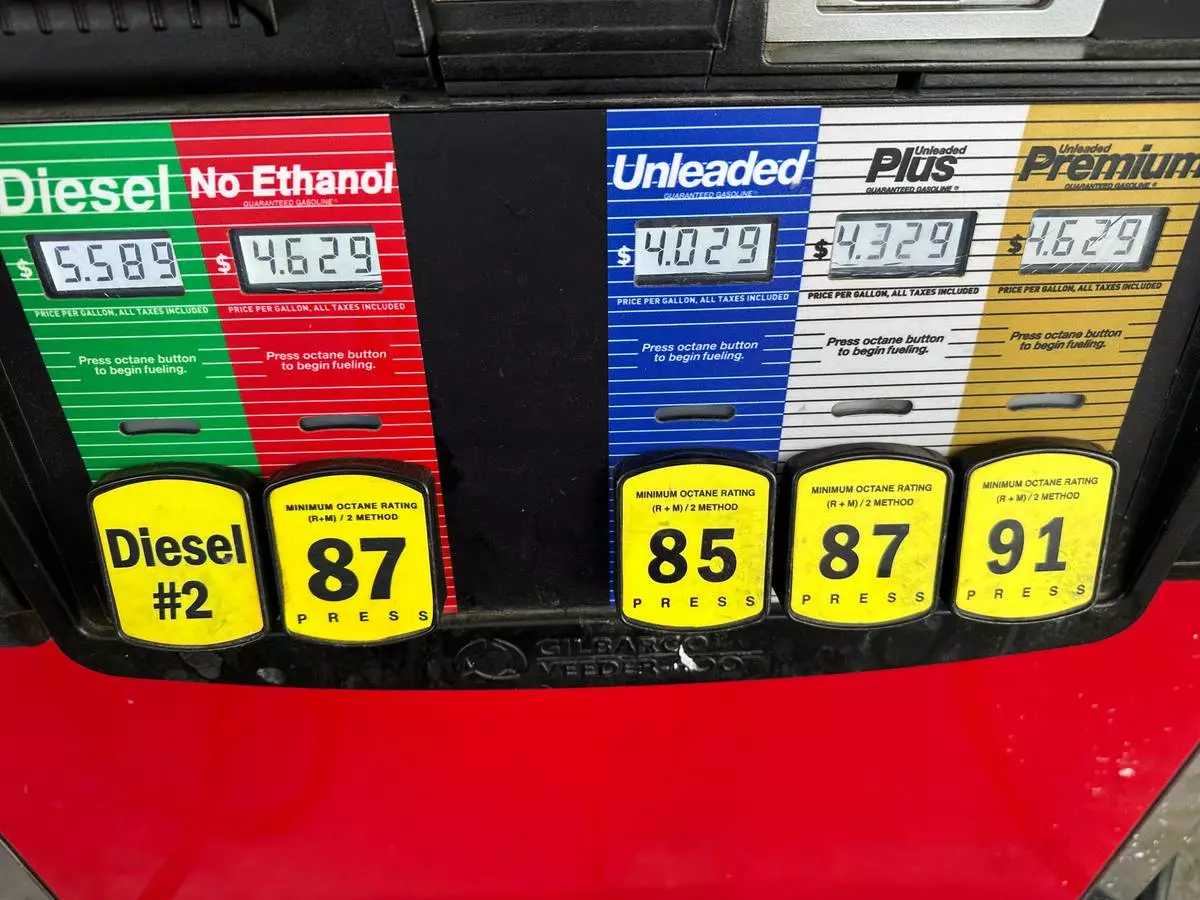
The per-gallon prices are displayed above the various grades of fuel available at a pump at a QuikTrip gasoline station Tuesday, Sept. 15, 2026, in Greenwood Village, Colo. (AP Photo/David Zalubowski)
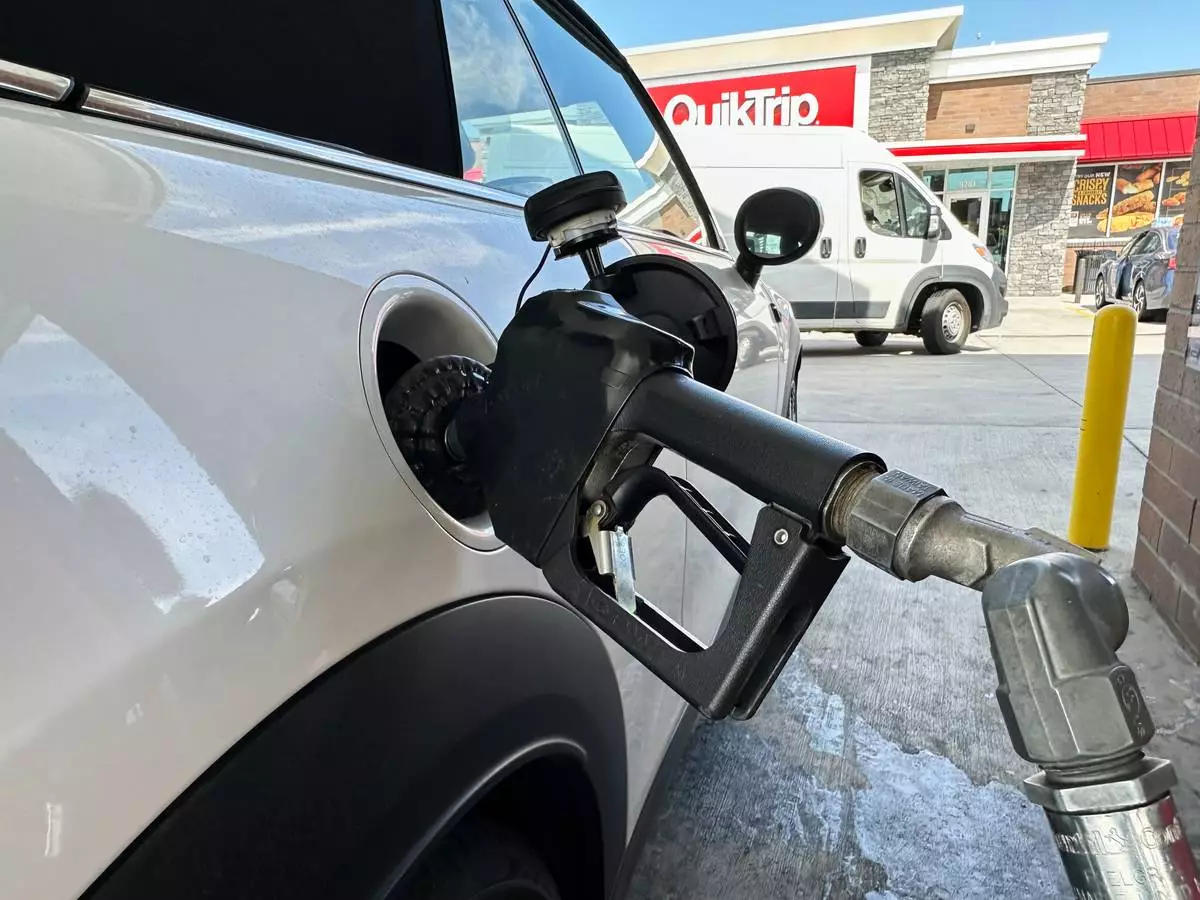
A motorist fills up the fuel tank of a vehicle at a QuikTrip gasoline stop Tuesday, Sept. 15, 2026, in Greenwood Village, Colo. (AP Photo/David Zalubowski)
INDIANAPOLIS (AP) — Gordon Johncock, a two-time Indianapolis 500 champion and winner of 25 career IndyCar races, has died. He was 90.
Johncock died from natural causes Monday at his home in South Branch, Michigan, a spokesman for the family told The Associated Press.
A statement from Indianapolis Motor Speedway and INDYCAR President J. Douglas Boles about two-time Indianapolis 500 winner and 1976 INDYCAR SERIES champion Gordon Johncock, who died Monday, Sept. 28 in South Branch, Michigan, at age 90:
“Gordon Johncock was known for his hard-charging, no-nonsense style of racing, and he left a lasting legacy on both Indianapolis Motor Speedway and IndyCar," series President J. Douglas Boles said Tuesday. "Remembered as much for his quiet life away from racing, Gordon left a lasting impact on the world of motorsports. Our thoughts and prayers are with his family and friends.”
Johncock competed in one of IndyCar's golden eras. He raced annually at The Brickyard against the likes of four-time winners A.J. Foyt, Rick Mears and Al Unser, three-time winners Bobby Unser and Johnny Rutherford and 1969 race winner Mario Andretti, among others.
And yet, with so many big personalities in the series then, Johncock managed to carve out his own niche with his small-town roots and penchant for wearing flannel shirts and jeans. He won the 1976 USAC title in an IndyCar.
But he was best known for his Indy 500 wins. His first came in 1973, one of the most tragic months in the history of Indianapolis Motor Speedway. His second came in 1982 when he outdueled Mears to the finish line for what was then the closest winning margin in race history at 0.16 seconds. It's still the seventh-closest.
“By far the biggest thrill of my racing career was winning Indianapolis in 1982," Johncock once said. “The way it happened, the competition, so many near wins after 1973 and it all came together and the car lasted in 1982. Plus, I’ve got amazing respect for Rick Mears — one of the very best. He was never my teammate, but I think we could have been good ones.”
The month of May in 1973 was marred by rain, which forced the race to be run over three days and shortened to 133 of 200 laps; two horrific crashes resulted in the deaths of drivers Art Pollard and Swede Savage, Johncock's teammate with Patrick Racing who was severely injured in the race. Savage was pronounced dead in early July.
A pit crew member for Patrick Racing also died after being hit by a fire truck responding to Savage's crash, And driver David “Salt” Walther suffered severe burns when his car burst into flames as it hit the catch fence in the front straightaway as the race began, injuring nearly a dozen fans.
Yet Johncock, who started 11th, overcame the chaos and was one of just two cars on the lead lap when more rain forced the race to be stopped.
“I didn’t feel that race was given to us,” Johncock once told Autoweek. “If we had only led one or two laps and happened to be settin’ there when they stopped it and won it that way, then I guess you wouldn’t have earned it very well."
Boles noted the importance of that terrible month in his statement about Johncock.
“While his 1973 Indianapolis 500 victory was overshadowed by tragedy, that race was an inflection point for safety, leading to a vital shift in track engineering and regulations,” he said. “Gordon was unable to truly celebrate his first win, so that made his second win in 1982, following a thrilling duel with Rick Mears, all the more memorable. His victory is one of the iconic moments in the history of the speedway.”
Johncock started driving the family's John Deere tractor in Hastings, Michigan, when he was 5 years old. He joined the IndyCar Series in 1964 and finished fifth in the 500 as a rookie in 1965. Johncock wound up competing in the 500 24 times, tied for fifth-most. He made three starts on the front row, nine times on the second row and completed 7,895 miles while leading a total of 339 laps. He finished third in the 500 in 1976 and 1978, and had two fourth place finishes.
From 1964-92, Johncock made 262 career IndyCar starts and retired twice.
In 1967, he joined Foyt as the sport’s only owner/driver and he was one of the last living drivers to have competed in both the front- and rear-engine IndyCar eras. And like drivers from that generation, he also competed in NASCAR, making 21 starts, including three at the Daytona 500 where he finished fifth in 1973.
Johncock was inducted into the IMS Hall of Fame in 1997 and the International Motorsports Hall of Fame in 1999.
Away from the track, Johncock loved farming and the forestry business — which explained his clothing choice and why people referred to his fashion choices as “Johncock casual.”
He is survived by his wife, Sue; three daughters, two sons, two stepdaughters, 12 grandchildren, 17 great-grandchildren and one great-great grandchild.
See AP’s full auto racing coverage here
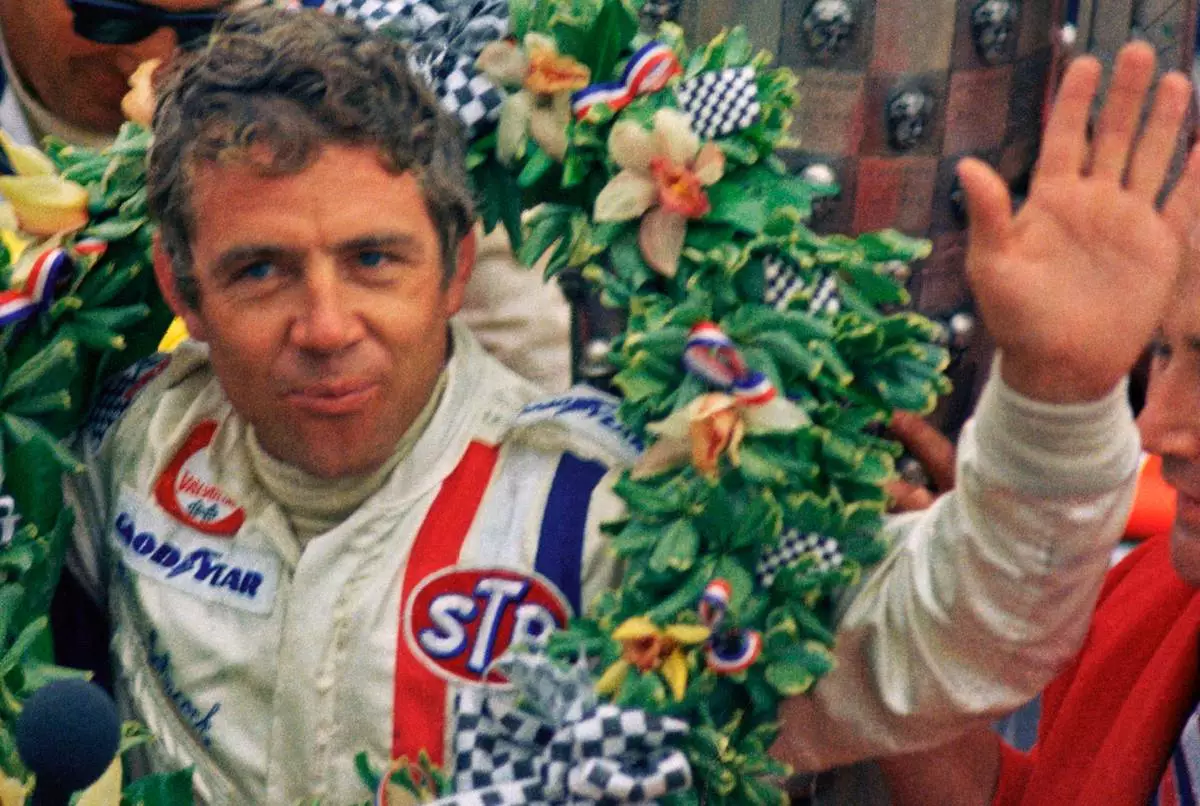
FILE - Gordon Johncock wears a wreath after winning the Indianapolis 500 auto race, May 30, 1973. (AP Photo, File)