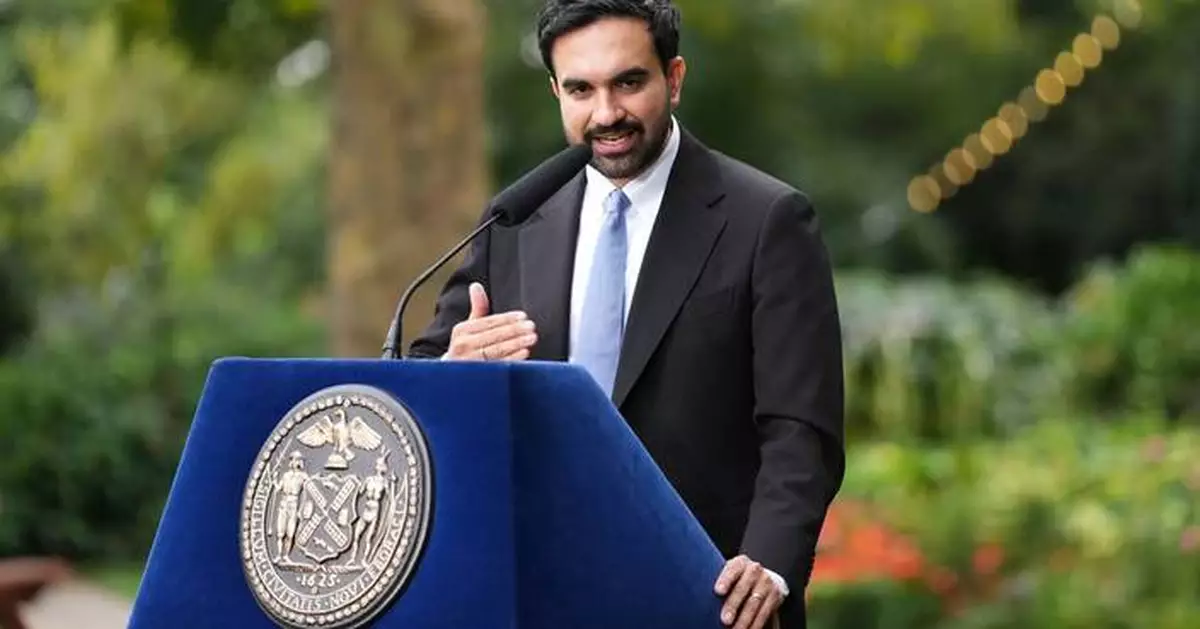
NEW YORK (AP) — Mayor Zohran Mamdani debuted a sweeping plan Tuesday to combat antisemitism and hate crimes against Jewish people in New York City, moving to assuage concerns from critics who see his steadfast denunciations of Israel as antisemitic.
The strategy includes increased security funding for synagogues, an increased focus on folding Jewish history into public school education, and a pledge to highlight important Jewish cultural and religious sites in the mayor's day-to-day governance of the city.
Mamdani said the overarching goal of the initiative was to “confront the scourge of antisemitism now and in the future,” noting that Jewish people make up only 12% of the city's population but are the victims of around half the city's reported hate crimes.
“This is not only unacceptable, it's something we all have an obligation to change. And City Hall will lead the way,” he said in a video.
Mamdani, a Democrat and the city's first Muslim mayor, has long been a vocal supporter of Palestinian civil rights and has accused the Israeli government of committing a genocide in Gaza. He has said his criticism of Israel does not amount to antisemitism, though his opponents have argued his heated rhetoric around the conflict has made Jewish people feel unsafe in the city.
The plan announced Tuesday amounts to the mayor's most forceful attempt to address concerns over antisemitism, with Mamdani promising to “build a city where Jewish New Yorkers are not only safe but celebrated.”
City Hall will increase grant funding to community organizations that focus on hate crime prevention and survivor support. It will also work with public schools to address complaints of discrimination and launch public awareness campaigns on the city's human rights law and how to report suspected discrimination.
Ofir Akunis, Israel's consul general in New York, said the mayor's position on Israel has endangered Jewish New Yorkers.
“Until you recognize that your language against the Jewish State, which you don’t recognize as the homeland of the Jewish people, is the fundamental reason for the rise of antisemitism in New York City, it will continue to increase,” Akunis wrote on X.
Mamdani faced a barrage of criticism during his campaign last year after he declined to disavow the phrase “globalize the intifada,” a slogan some see as a call to violence against Jews, though he did not use the phrase and later said he would discourage others from saying it.
He has also faced questions over a decision in June to skip an annual parade honoring Israel, which has long been a must-attend event for politicians in the city.
Prime Minister Benjamin Netanyahu dedicated a portion of an address at the United Nations last week to assailing Mamdani, accusing him of spreading lies about Israel and calling him “the antisemitic mayor of New York.”
Mamdani has repeatedly called for Netanyahu to be arrested under a warrant from the International Criminal Court alleging war crimes in Gaza.
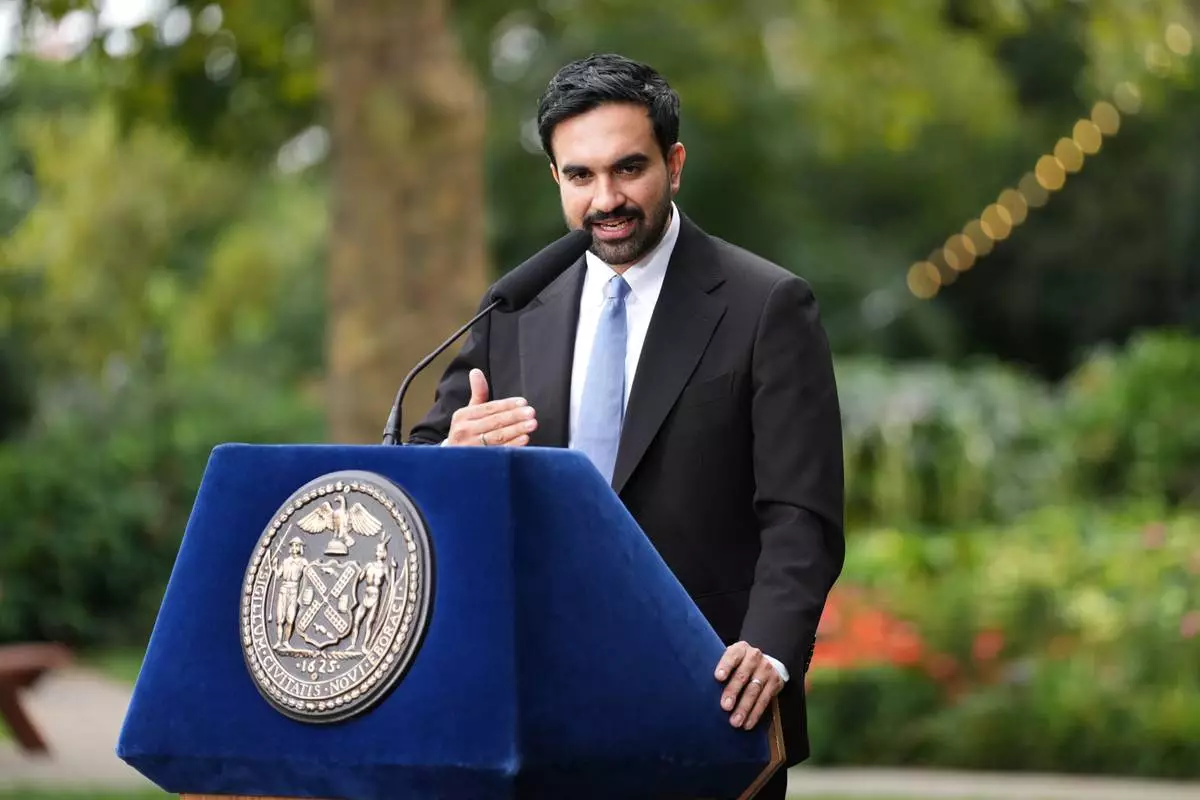
New York City Mayor Zohran Mamdani speaks to media after his meeting with President Donald Trump, Monday, Sept. 21, 2026, in New York. (AP Photo/Adam Gray)
Iran’s currency fell to a new record low on Tuesday, with traders in Tehran exchanging more than 2.5 million rials to the U.S. dollar in a stark reflection of how the war in the Middle East has steadily eroded the Iranian economy.
The latest decline came just 27 days after the rial hit its previous record low of 2.2 million to the dollar on Sept. 2. The currency has repeatedly reached new lows since the war began in February.
The Iranian economy has been under duress for years in the face of international sanctions. But a U.S. naval blockade on Iranian oil and new sanctions imposed since the start of the war have sent it into free fall.
Meanwhile, Iran’s top diplomat said indirect negotiations with the United States aimed at reopening the critical Strait of Hormuz have become “more serious,” while the Iranian Revolutionary Guard Corps’ chief spokesman Gen. Hossein Mohebbi on Tuesday called on Americans to take to the streets and protest the conflict.
Foreign Minister Abbas Araghchi told Iranian media late on Monday that the “current focus is solely on the Strait of Hormuz,” the chokepoint of the war.
Araghchi made the comments shortly before departing New York — where he attended last week’s gathering of world leaders at the U.N. General Assembly — and after meeting with Pakistani and Qatari mediators.
Araghchi said the Qatari intermediaries were expected to soon engage with the U.S. side.
“They are set to raise the matter with the American side once more, after which the final U.S. response will be conveyed to us,” Araghchi said. “If there is a response, the Qataris will convey it to us and a decision will be made in Tehran on that basis.”
Officials, including from the U.S., have confirmed to The Associated Press that mediators are working with Iran and the U.S. on trying to broker a deal to end the fighting and open the strait.
The mediation efforts continue even after U.S. President Donald Trump earlier this week spurned an Iranian proposal to reopen the strait in seven days if the U.S. agreed to lift its blockade of Iranian ports, release frozen Iranian assets and waive sanctions on Iranian oil sales, among other conditions.
The Trump administration said Tuesday that 10 individuals and entities based in Iran, Hong Kong and Pakistan now face sanctions over accusations of procuring weapons and weapon components for Iran’s defense ministry as it fights its now seven-month war against the U.S.
The United States is targeting people and companies around the globe that it accuses of being financial facilitators or enablers of Iran’s military supply chain, pushing ahead with economic warfare against Tehran at a time when renewed diplomacy between the two countries remains uncertain.
The latest action by the Treasury Department is part of the administration’s “Operation Economic Outcast” campaign, aimed at severing “critical financial lifelines” for the already heavily sanctioned Iranian government.
“Treasury will not tolerate any support to the regime and will continue to identify, expose, and isolate Iran’s enablers,” Treasury Secretary Scott Bessent said in a statement.
The Iranian Revolutionary Guard Corps on Tuesday made an appeal to everyday Americans to push their government to end the U.S. war against Iran, a provocative message that comes just weeks before critical midterm elections in the United States.
Mohebbi, the Guard spokesman, read a letter during a news conference in Iran's capital, Tehran, appealing to Americans to pressure their government and claiming that the only way for the war to end is for Washington to admit defeat and leave the Mideast.
Mohebbi’s remarks come as Trump’s Republican Party faces fierce headwinds as it looks to maintain control of Congress. But polling shows the war has darkened the American electorate’s mood ahead of the Nov. 3 election in which elevated gasoline prices, a byproduct of the conflict, loom large.
Mohebbi also accused the U.S. of using Iran’s nuclear program as a ruse to “plunder Iran’s wealth” and to turn the country “back into a colony.”
He added that the U.S. and others failed in their belief that military and economic action would get Tehran to submit and that Washington “has no choice but to acknowledge defeat and leave the region.”
“This is how the war will end,” he said.
Trump and his top aides are insistent that Iran’s economy cannot sustain a conflict much longer and have expressed confidence that Tehran will be forced to capitulate.
The U.S. president predicted soon after launching the war that the conflict would last a matter of weeks. More recently, he’s said that the war will likely end after the November elections in the U.S.
U.S. Secretary of State Marco Rubio in a Monday appearance on Fox News said Iran was heading toward an economic “cataclysm.” Administration officials say that a combination of new sanctions and a U.S. naval blockade aimed at preventing Iranian oil from going to market are having the intended effect.
“And so when you’re denying them money through oil sales and sanctions, you’re not just punishing them,” Rubio said. “You are preventing them from getting access to money that they will use to try and kill Americans and others around the world and their own people and build weapons and threaten the world and ultimately break out to a nuclear weapon program."
In a separate development, a crucial oil pipeline in Saudi Arabia that was shuttered by the kingdom earlier this month after coming under attack is once again operating, according to a Saudi government official.
The official, who was not authorized to comment publicly and spoke on condition of anonymity, said operations are near pre-attack levels and that the pipeline should be running at full capacity within a few weeks.
The kingdom relies on the East-West Pipeline, which runs the breadth of the country, to move its crude from oil processing facilities on the Gulf to ports on its western, Red Sea coast. From there it can be put on tankers for export.
Saudi Arabia blamed an Iran-backed militia in Iraq for the drone attack that forced the temporary shutdown of the 1,200-kilomeer (745-mile) pipeline.
Satellite imagery indicated tankers on Sunday loaded some 12.5 million barrels of oil at the Yanbu export terminal, which is supplied by the East-West Pipeline, and the nearby terminal at Al Muajjiz, the data and analytical firm Kpler said in a report.
Associated Press writer David McHugh in Frankfurt, Germany contributed reporting.
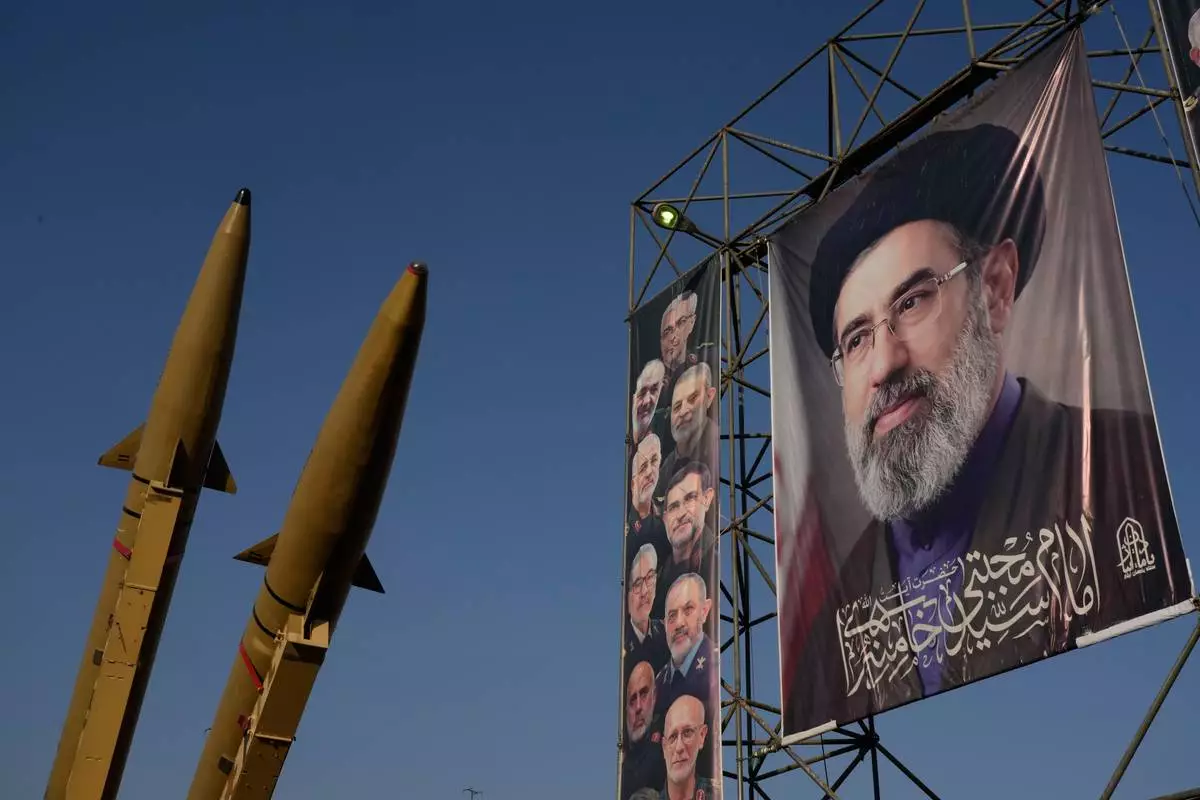
Iranian missiles and banners showing portraits of the Iranian Supreme Leader Ayatollah Mojtaba Khamenei, right, and the late armed forces commanders, who were killed in Israeli and U.S. strikes, are displayed in a military exhibition commemorating the anniversary of the start of the 1980-88 Iraq-Iran war at Baharestan Square, in Tehran, Monday, Sept. 28, 2026. (AP Photo/Vahid Salemi)
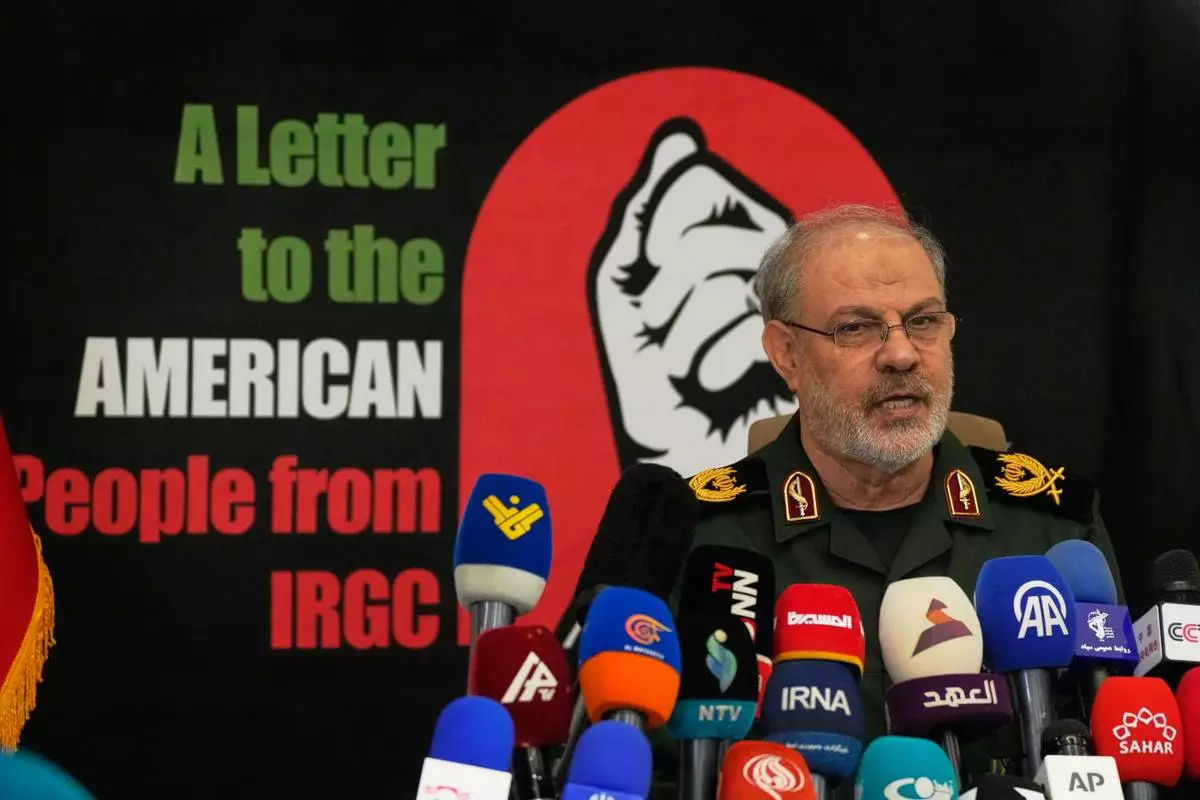
Iran's Revolutionary Guard spokesman Gen. Hossein Mohebbi speaks during a news conference in Tehran, Iran, Tuesday, Sept. 29, 2026. (AP Photo/Vahid Salemi)
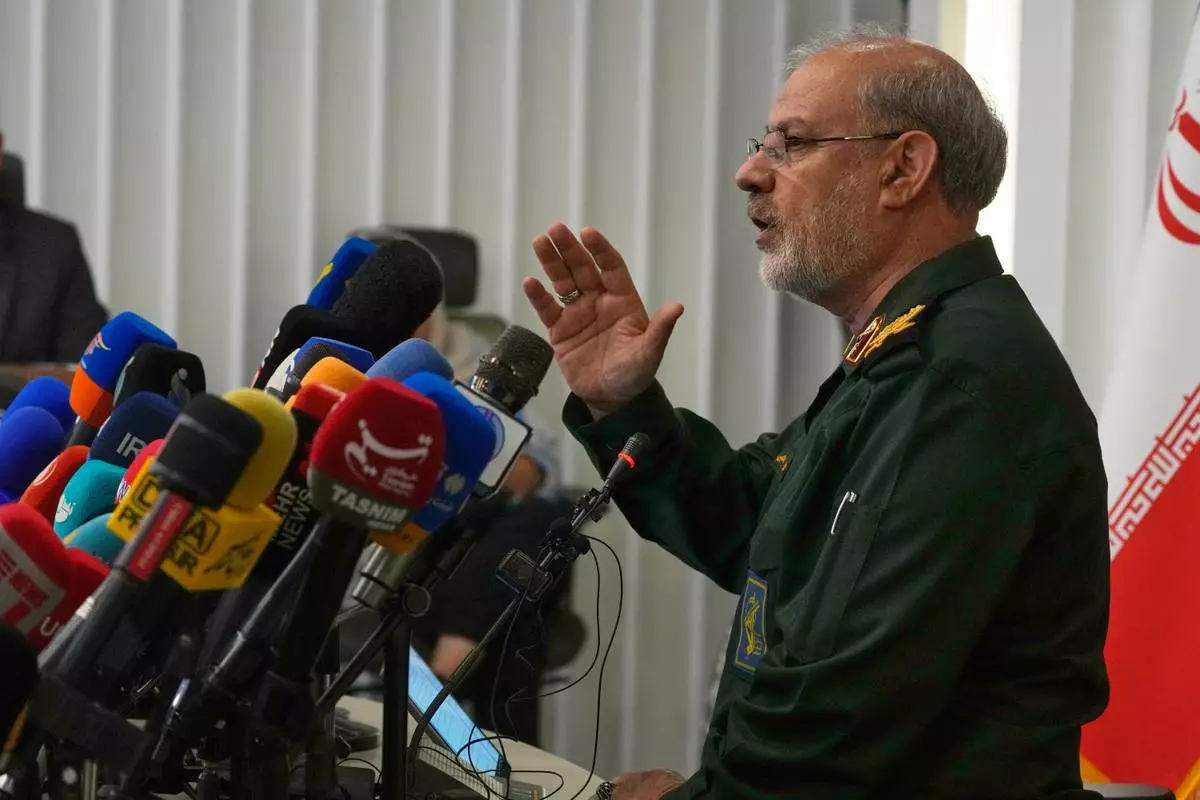
Iran's Revolutionary Guard spokesman Gen. Hossein Mohebbi speaks during a news conference in Tehran, Iran, Tuesday, Sept. 29, 2026. (AP Photo/Vahid Salemi)
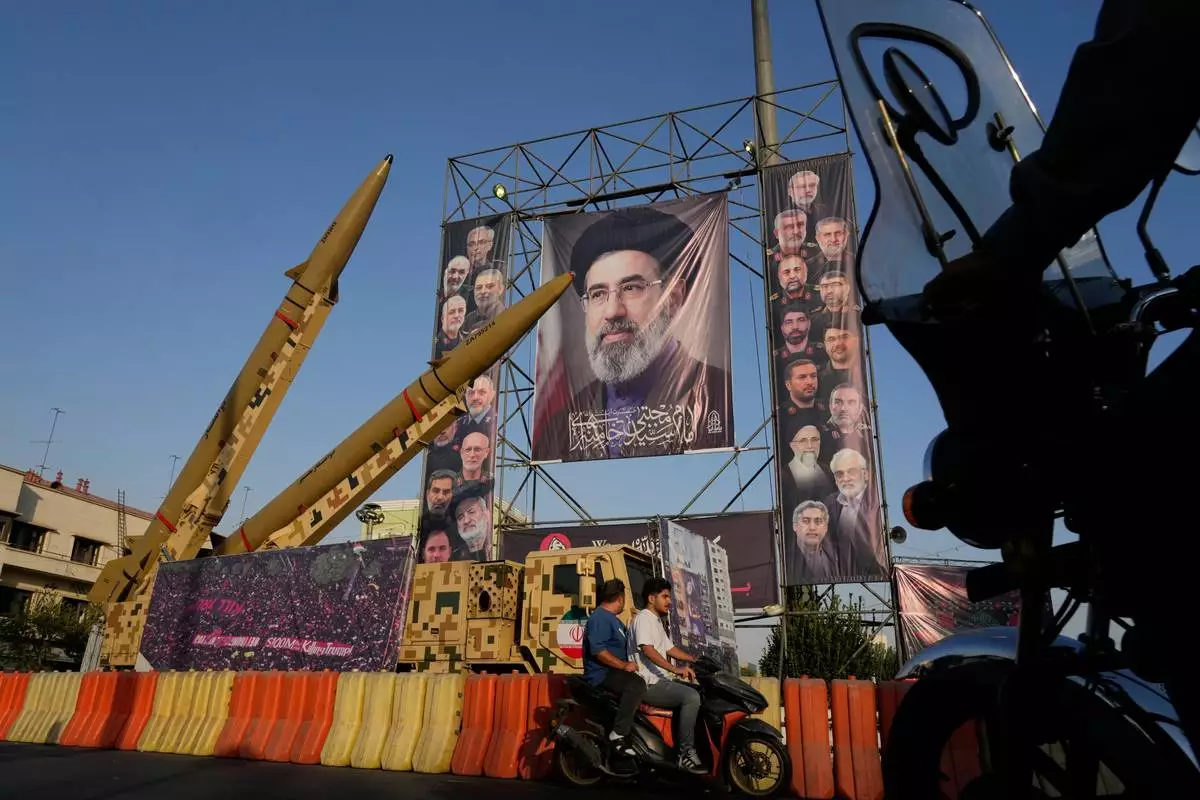
Motorbikes drive past Iranian missiles and banners showing portraits of the Iranian Supreme Leader Ayatollah Mojtaba Khamenei, center, and the late armed forces commanders and nuclear scientists, who were killed in Israeli and U.S. strikes, displayed in a military exhibition commemorating the anniversary of the start of the 1980-88 Iraq-Iran war at Baharestan Square, in Tehran, Monday, Sept. 28, 2026. (AP Photo/Vahid Salemi)