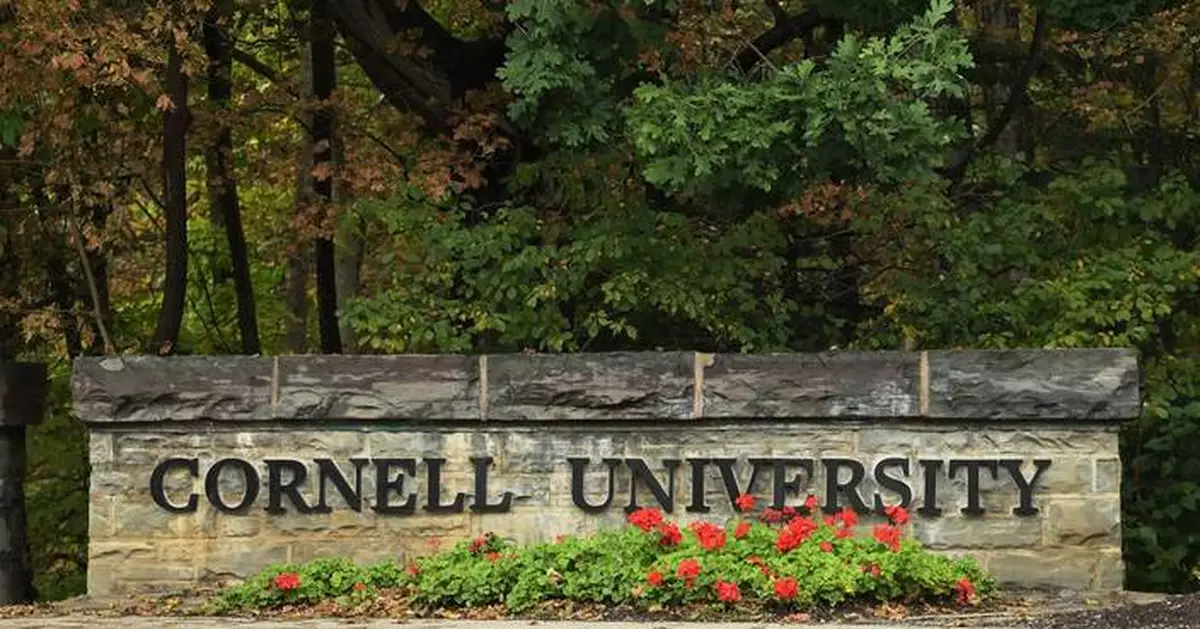
A woman's account of being sexually assaulted at a Cornell University fraternity house has advocates and lawmakers renewing their criticism of a New York law that makes it more difficult to prosecute people who have taken advantage of others too intoxicated to consent to sex.
Under state law, rape charges generally need to involve force or a clear refusal of sex, unless the victim is physically helpless due to being unconscious, or mentally incapacitated due to being drugged without their consent.
Those limitations have led to something nicknamed the “voluntary intoxication loophole.” Prosecutors can't easily bring charges against someone who engaged in sex with someone who voluntarily became intoxicated to the point where their ability to say “yes” or “no” to sex was compromised.
Tompkins County District Attorney Matthew Van Houten cited that law as he defended his office's initial decision not to file criminal charges against any of the men sued by a woman who says she was the victim of a gang rape at Cornell in 2024.
Van Houten said that in her sworn statement to campus police in 2024, the woman didn't allege that she became intoxicated against her will, or was physically forced into sex or was unconscious when it happened.
“That’s victim blaming, straight up,” in state law, said Stefan Turkheimer, vice president of public policy for RAINN, the largest anti-sexual violence organization in the U.S. “It prevents a lot of cases from coming forward, where prosecutors are reluctant to try to push forward on a case where the person is incapacitated due to voluntary intoxication.”
New York state lawmakers have considered bills to change the law over the years, though the proposals have stalled, despite support from prominent district attorneys and advocates.
Jeffrey Dinowitz, a state Assembly member who has sponsored such measures starting back in 2019, said the Cornell case is “exactly the type of situation this legislation would address” and hoped that there would be additional urgency in the coming legislative session to change the law.
“It’s just outrageous and it makes me angry that we haven’t passed this yet,” he said, adding that “it would at least ensure that the survivor would get justice.”
The woman, identified only by a pseudonym in the civil lawsuit, filed the complaint Sept. 16, saying she was sexually assaulted at the Chi Phi fraternity house on the Ivy League campus in October 2024 after being pressured into snorting ketamine, smoking marijuana and drinking alcohol. She became completely incapacitated while frat members were sexually assaulting her, the lawsuit alleges.
Van Houten has since reopened the investigation, saying he would consider presenting the case to a grand jury for their consideration. But in a written statement issued Monday, he said his initial decision not to charge relied heavily on a statement the woman gave to police that was given to his office, in which he said she had described some of the male students exhibiting incapacitation but not herself.
Police have not released that document, and the prosecutor's statement only included sparse redacted pieces of that document in his explanation.
New York is one of 19 states with rape or sexual assault laws that consider intoxicated victims to be mentally incapacitated only if they became drunk or were drugged without their knowledge or consent, according to research by The Associated Press and a report published in The Journal of the American Academy of Psychiatry and the Law.
Many of those laws have been in place for a long time. But states have been gradually moving to change them.
After the Minnesota Supreme Court overturned a sexual misconduct conviction in 2021 because the incapacitated victim had voluntarily become intoxicated, the state legislature revised its laws later that year to allow charges to be brought no matter whether an incapacitated victim had voluntarily or involuntarily become intoxicated. Michigan made a similar revision to its sexual assault laws in 2023, and Texas followed in 2025.
“That business of whether the victim was voluntarily intoxicated or involuntarily intoxicated should really not matter in the vast majority of cases, if not all of them,” said Chinmoy Gulrajani, a psychiatry professor at the University of Minnesota who has researched state sexual assault laws. That’s because “the assailant should have known that this is not a person who is in their right state of mind.”
Turkheimer said these laws can have a disproportionate effect on campuses, where people may be experiencing alcohol or drugs in social settings for the first time. He said mental incapacitation laws aren’t about someone having just a few drinks, but about situations in which a person has lost the capacity to consent.
“The movement is, to look at a person who is incapacitated, regardless of how they got there, and actually give that person protection," he said. “This is a situation where a person has reached a state where they lack the capacity to consent. And in that situation, the law should be protecting those people because they simply can’t protect themselves.”
Associated Press reporter Anthony Izaguirre in New York contributed to this report.
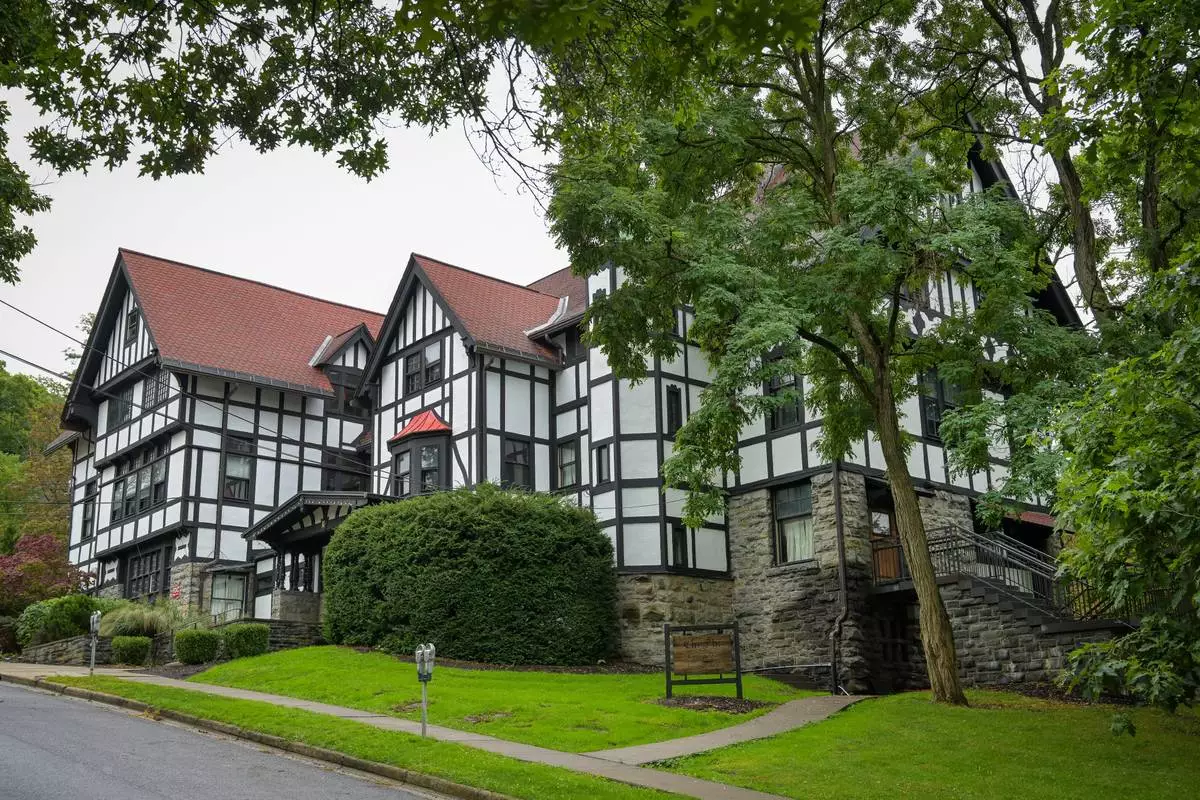
The Chi Phi fraternity house at Cornell University in Ithaca, N.Y., Monday, Sept. 28, 2026. (AP Photo/Heather Ainsworth)
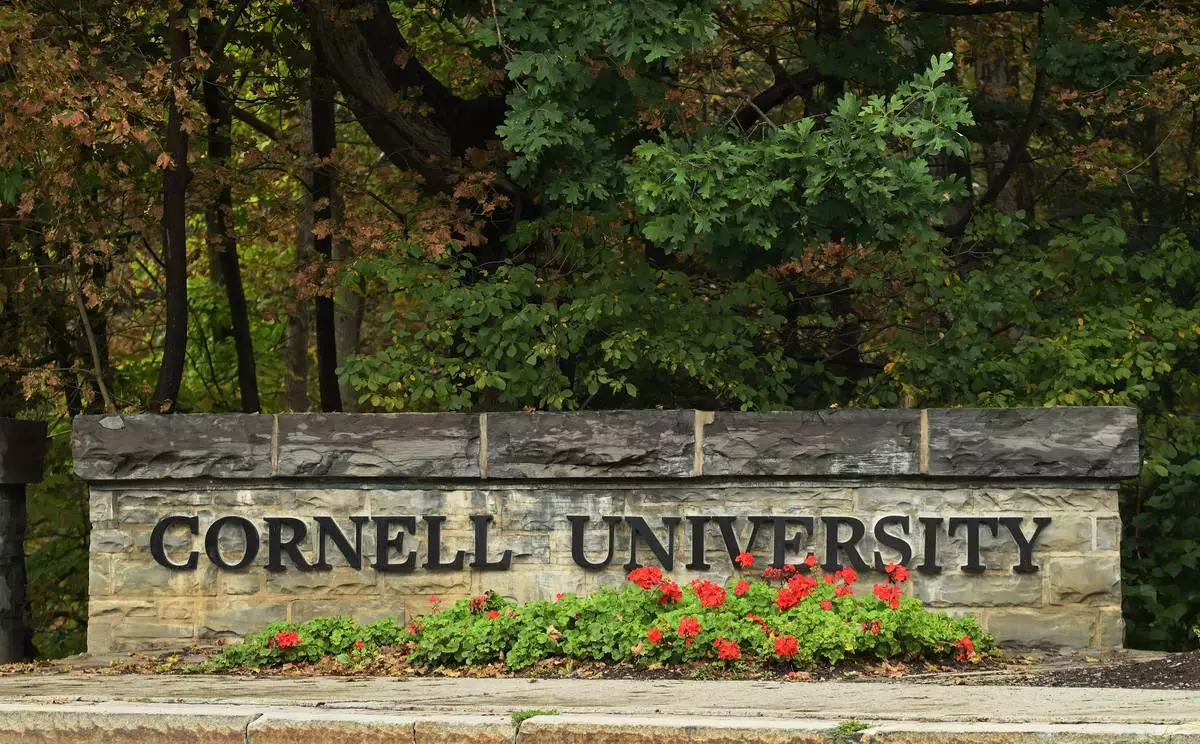
A Cornell University sign stands in Ithaca, N.Y., Monday, Sept. 28, 2026. (AP Photo/Heather Ainsworth)
WASHINGTON (AP) — Sipping tea from beer mugs with his coworkers, Kyle Bos listed the ways his life is changing.
Bos has two daughters, with a third due in January. At the grocery store, five items cost as much as a full cart once did. And on Wednesday, Bos and nearly 1,400 other people were laid off from their jobs at what had been the Navistar truck factory in southwestern Ohio.
The layoffs — occurring just three days before Donald Trump’s rally on Saturday at a nearby high school — were large enough to basically erase an entire year of job growth in the greater Dayton, Ohio area. And they are one reason why Bos, 30, plans to spend the final weeks before the November election canvassing votes for Democrats.
Asked how many times he voted for Trump, Bos held up three tattooed fingers. But he said he’s done with the president.
“Something has to change politically in this country,” said Bos, a member of the United Auto Workers who identifies as a centrist.
This year’s election is a test for the working-class coalition that lifted Trump into the White House and gave majorities to Republicans in the House and Senate. The outcome will be decided in places like Dayton, which once sprouted factories but shed about half of its 90,000 factory jobs since 1990 after the North American Free Trade Agreement and trade with China made it cheaper to buy auto parts from abroad.
Trump’s blunt talk and status as a celebrity businessman initially helped him around Dayton, where voters sensed that politics as usual had failed them. But voters this year are disgruntled about inflation and the war in Iran.
An Ohio race could help determine control of the Senate. Republican Sen. Jon Husted is facing a challenge from former Democratic Sen. Sherrod Brown, who is trying to harness that disenchantment as he attempts a comeback two years after losing his seat.
Americans increasingly blame Trump for the high cost of living with just 17% approving of his handling of the issue. Trump didn’t talk about grocery prices or gas prices or layoffs at his Saturday night rally in Vandalia, part of what he says will be a 32-day marathon of rallies to try to convince the public that the economy is better than they think.
“The fake news media, they refuse to talk about our record-setting numbers. So tonight, if you don’t mind, I’m going to do it myself,” he told the rally.
Trump has largely sneered at concerns about affordability, but he is promising to give people $5,000 checks if Republicans win the House and Senate next month— something Bos said he found offensive.
“It feels like a bribe, a slap in the face, and, like, that we’re all ignorant,” Bos said.
In the 1990s, as steady paychecks vanished, drug addiction and crime increased. Things seemed to hit bottom after the 2008 financial crisis, prompting Phil Plummer — who was then Montgomery County Sheriff — to enter politics.
“My jail was 40% drug addicts, 50% mental health patients, 10% criminals,” said Plummer, the Montgomery County GOP chairman who has been a Republican state representative since 2019. “We got it upside down — that’s what drove me to the state house.”
Plummer is now on the ballot for the Ohio state Senate and said he thinks Trump is what keeps the GOP’s coalition of businesses and working-class families together.
In recent years, the local economy has improved as the Wright-Patterson Air Force Base steadily added government workers. The base has drawn new aerospace companies to the area such as Joby Aviation, Electra and the Sierra Nevada Corporation.
“In economic development, it takes time, and you have got to give it a little bit of time to bake, and then once it does, then you’re going to have something special,” said Jeff Hoagland, CEO of the Dayton Development Coalition.
Trump pointed to the $850 million investment by aircraft maker Electra — along with a new project in Ohio from Stellantis and a Friday announcement from Bayer for a $2.2 billion drug plant near Columbus — as evidence his policies were creating jobs.
But at the former Navistar plant, Trump's broad tariffs never boosted demand and the plant’s former owner, International Motors, chose to offload the facility.
Trump’s major legislative achievement — the One Big, Beautiful Bill — contributed little to people’s take-home pay, even as it temporarily stripped taxes from tips and overtime.
“We weren’t getting a lot of overtime because of the economy,” said Marianne Donnelly, who drove a forklift at the factory. “There just wasn’t any to be had, very little to be had.”
Laid-off workers like Donnelly say they expect to be rehired in six to 12 months by Roshel, a Canadian manufacturer of armored vehicles, which is buying the plant. Roshel said in a statement that it’s “working with everyone involved not only to protect the current workforce, but to more than double it over the coming years through a phased process.”
On the Monday before the layoffs, Morgan Hughes and JoJo Burkhard were knocking on doors in Kettering, a Dayton suburb. They were trying to convince union members and retirees to vote for Democrats.
The Navistar job had helped Hughes, 35, buy a house at age 21 and work alongside her father. Burkhard said inflation had made it easier to swing voters to their side.
“It isn’t a hard pitch at all,” she said. “And even if they don’t want to stay Democratic long term, they’ll at least give the candidates a chance this election, which could be a turning point for us.”
After a morning of talking to voters, the pair settled down at a Chinese restaurant for some potstickers and the weight of the week hit them.
Burkhard cracked open a fortune cookie and tears began to well up. The layoffs meant no work for her, her boyfriend and her mother — and the words in small print almost seemed prophetic.
Her fortune read: “You’ll find your inner strength to overcome challenges.”
AP writer Seung Min Kim in Vandalia, Ohio, contributed to this report.
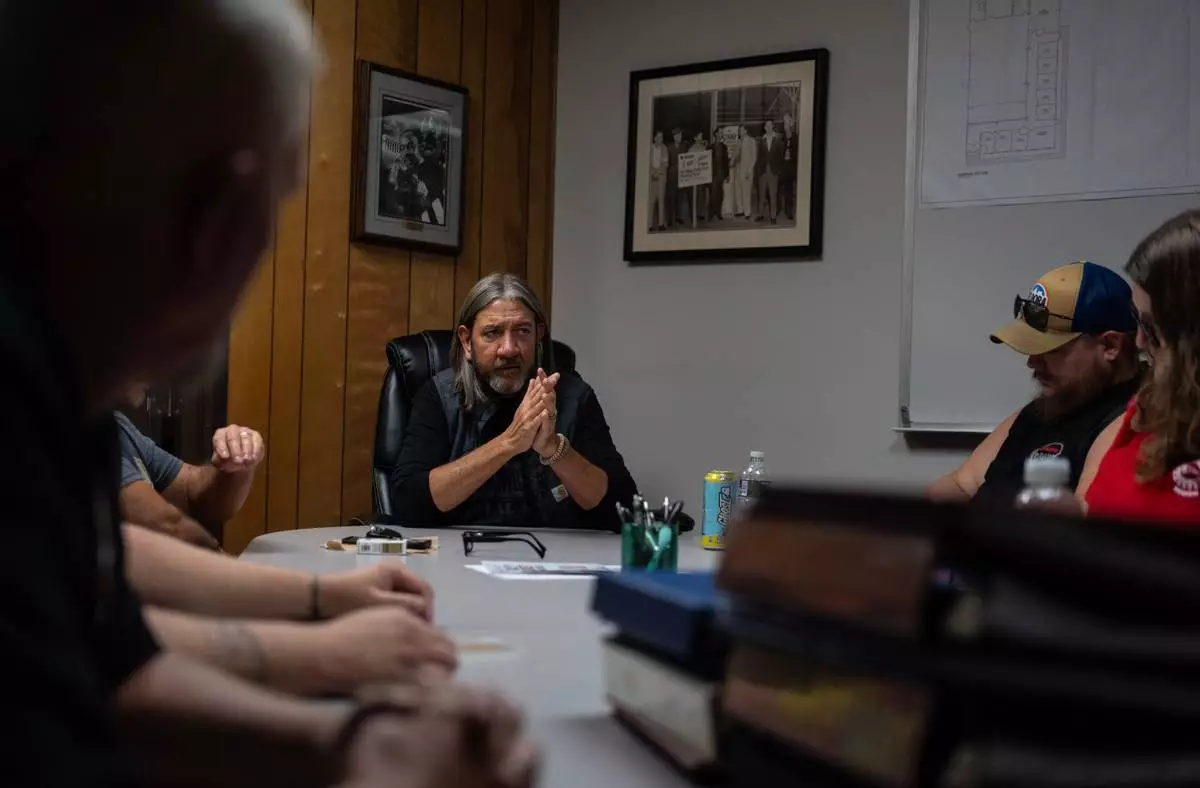
Chris Blizard, president of UAW Local 402, center, speaks during a UAW Local 402 board meeting at the union hall in Springfield, Ohio, Wednesday, Sept. 30, 2026, old Navistar's last day at its Springfield plant. (AP Photo/Carolyn Kaster)
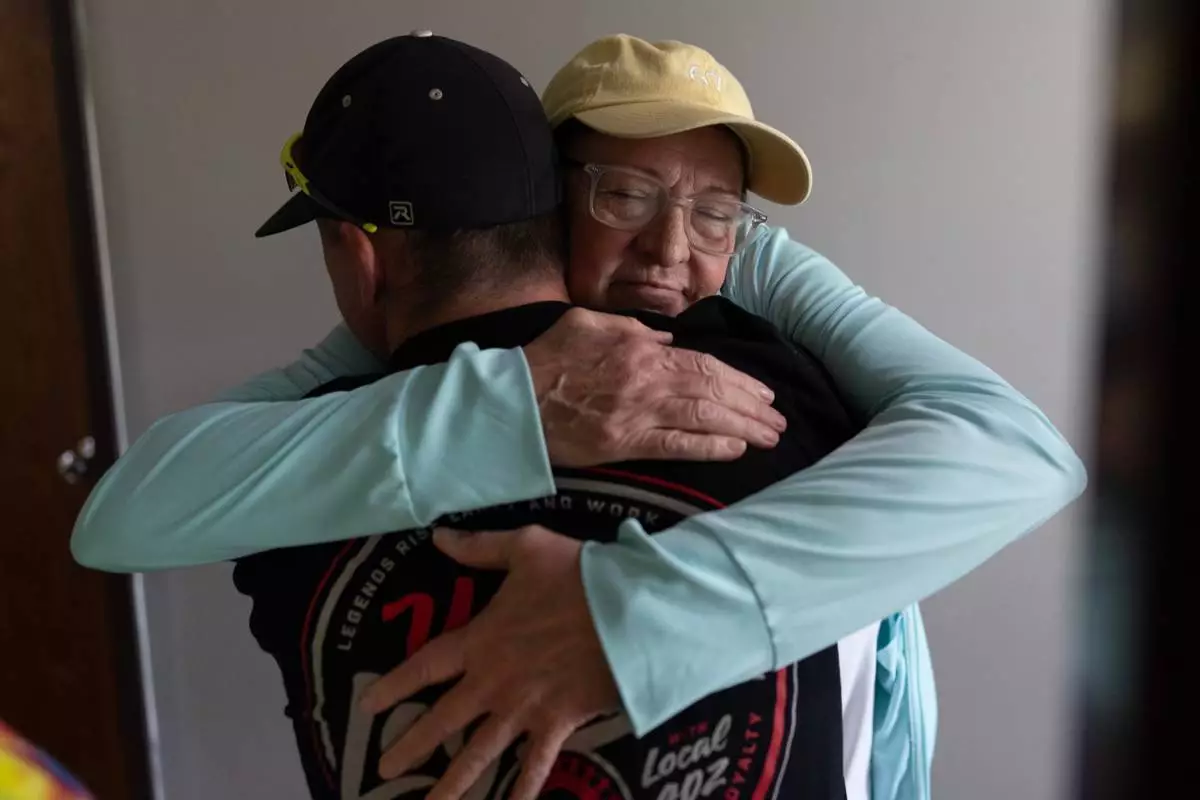
UAW Local 402 members, Brad Cloud, left, and Marianne Donnelly, right, embrace at the union hall, in Springfield, Ohio, Wednesday, Sept. 30, 2026, old Navistar last day at its Springfield plant. (AP Photo/Carolyn Kaster)
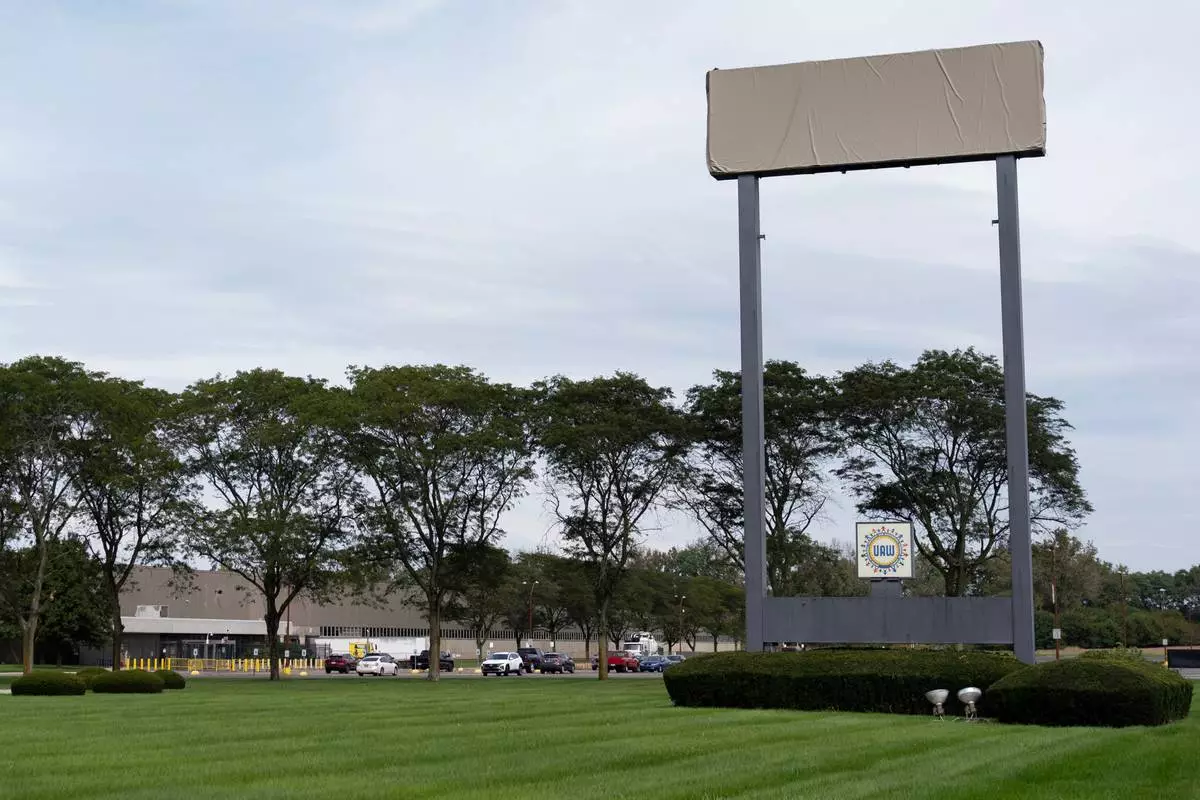
A UAW sign is posted outside old Navistar's plant in Springfield, Ohio, Wednesday, Sept. 30, 2026. (AP Photo/Carolyn Kaster)
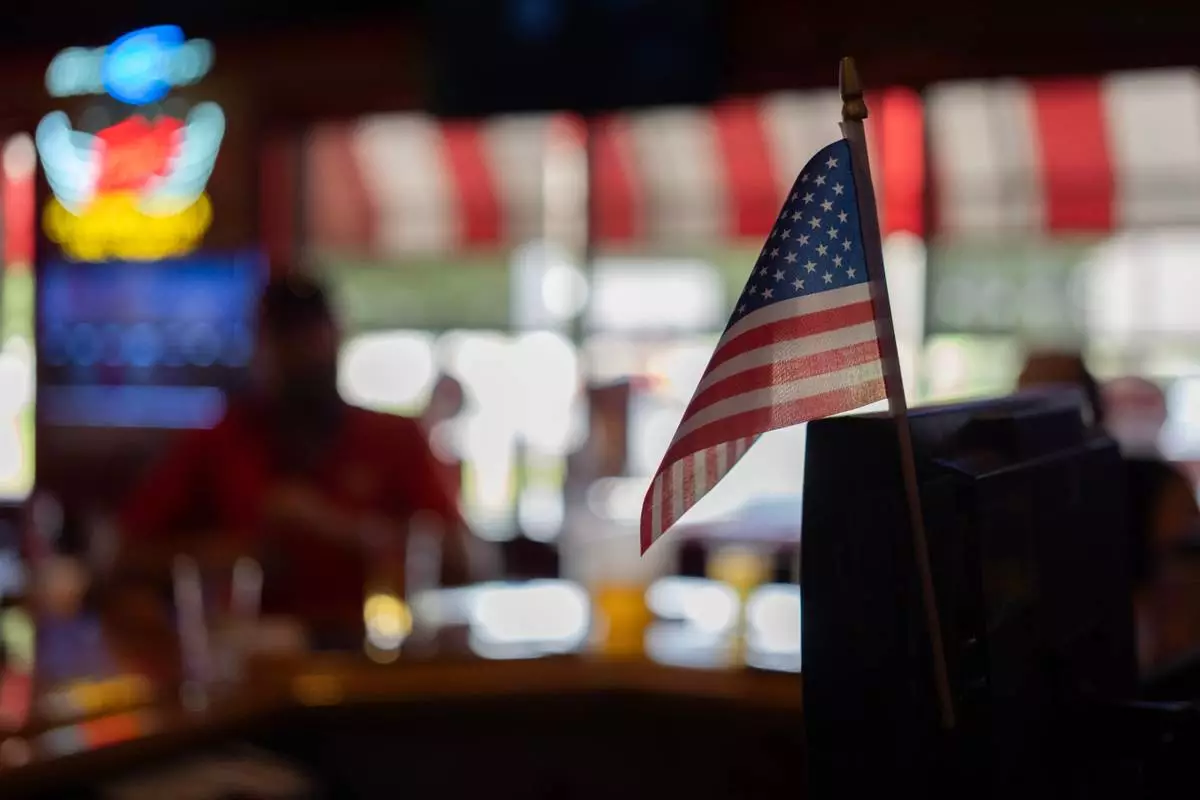
An American flag is posted on the register at Fricker's restaurant and bar in Springfield, Ohio, on Wednesday, Sept. 30, 2026, as UAW Local 402 members have a drink on old Navistar's last day at its Springfield plant. (AP Photo/Carolyn Kaster)
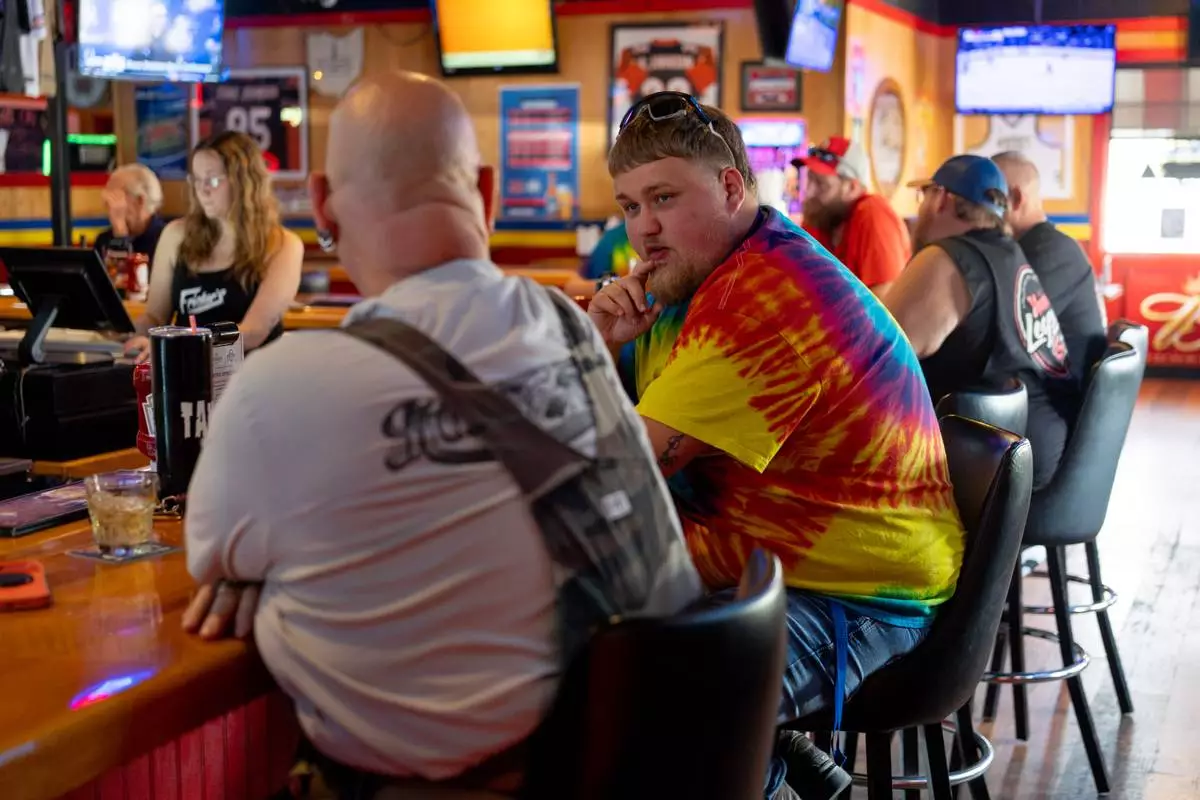
UAW Local 402 member Kyle Bos, right, has beer with Hal "Tank" Dunithan, left, and fellow UAW Local 402 members at Fricker's restaurant and bar in Springfield, Ohio, on Wednesday, Sept. 30, 2026, on old Navistar's last day at its Springfield plant. (AP Photo/Carolyn Kaster)