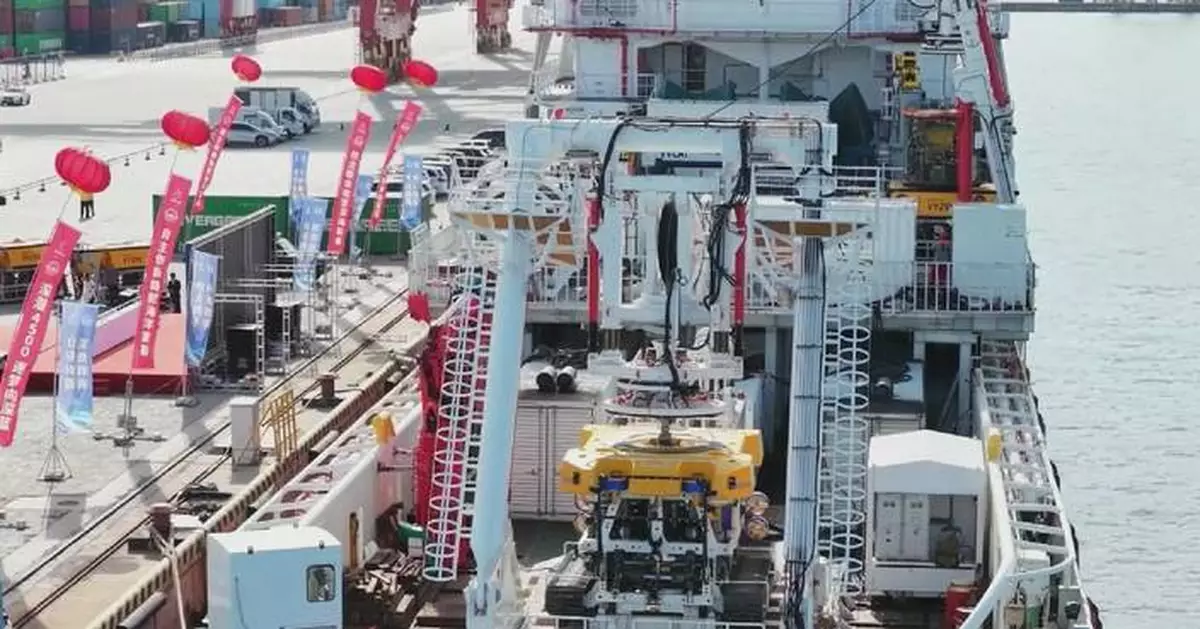
China's domestically developed 4,500-meter-class deep-sea robotic vehicle set sail from the Weihai Port, east China's Shandong Province, to jointly conduct scientific exploration in the South China Sea with the Weihai branch of the Harbin Institute of Technology.
The robot is equipped with a self-developed seven-axis multifunction hydraulic manipulator, with over 30 key technological problems solved in the process of its development, including deep-sea pressure sealing, high-power deep-water propulsion, long-distance underwater communication, and multi-modal autonomous navigation. The robot is capable of performing complex tasks such as deep-sea oil and gas development, underwater pipeline inspection, mineral resource exploration, scientific sampling, and emergency salvage.
This joint expedition aims to test full-system performance of the equipment under real-world conditions, further improve the deep-sea equipment verification system, and bridge the gap from laboratory research to industrial application. It will provide crucial domestically produced support to safeguard China's deep-sea resource security and advance its marine power ambitions.
"This 4,500-meter deep-sea robot's core hardware and software are fully domestically controlled. Moving forward, we will continue to reduce the application costs of domestic deep-sea equipment," said Tao Zewen, project R and D lead.
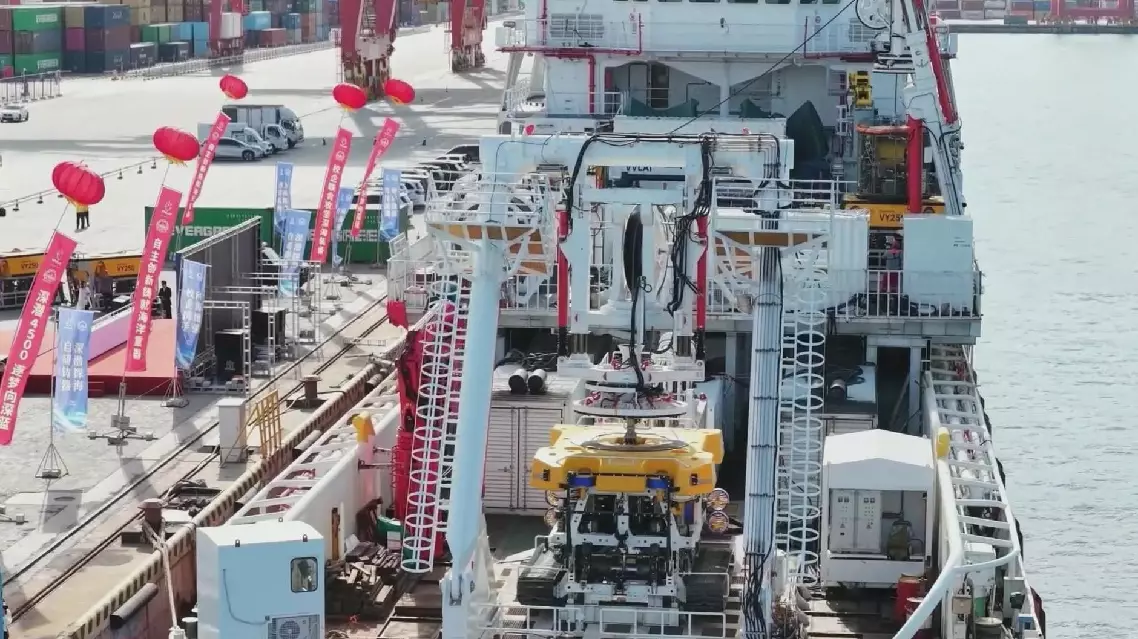
China launches deep-sea robot for South China Sea exploration