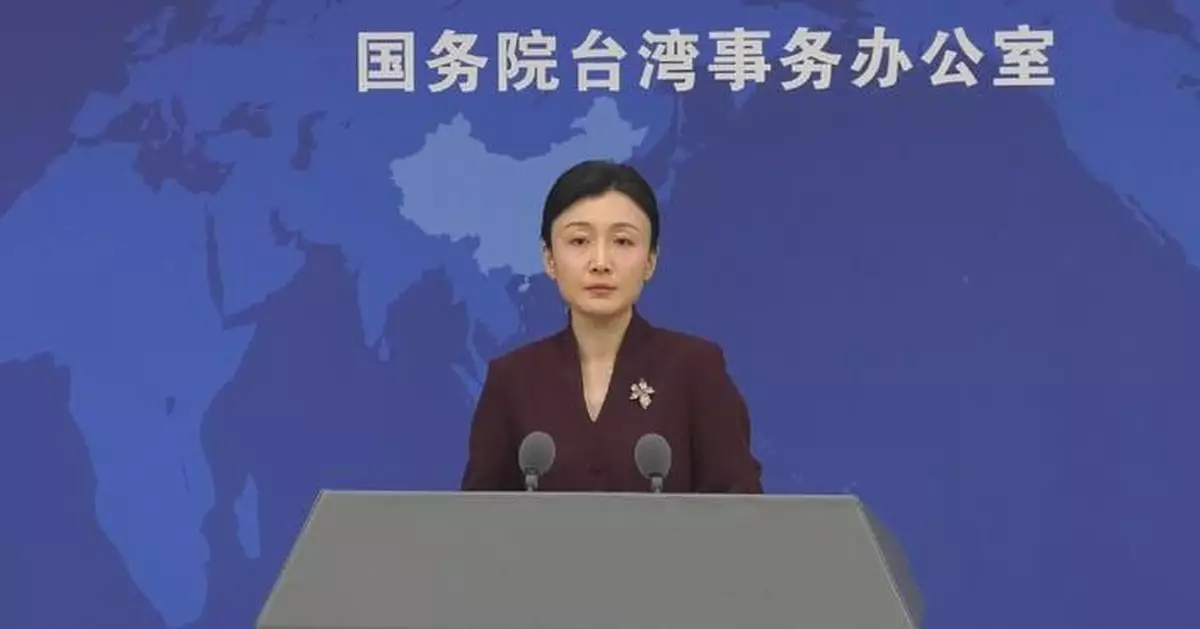
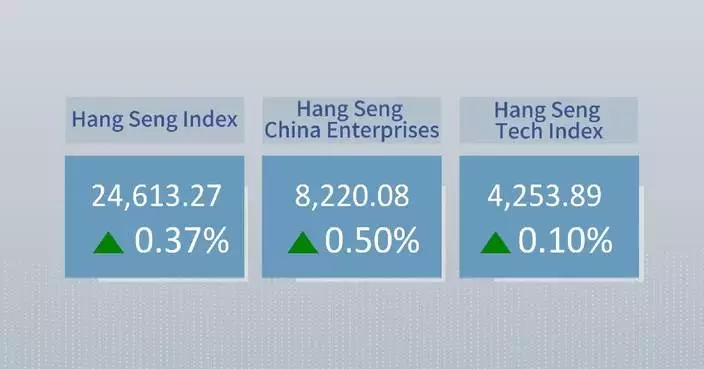
A Chinese central government spokeswoman on Wednesday criticized the decision of Taiwan's Democratic Progressive Party (DPP) authorities to boost defense spending massively in 2027, calling it a "self-destructive" effort that cannot spare the island's separatist forces from inevitable defeat.
Taiwan's leader Lai Ching-te has announced plans to allocate more than 1.3 trillion New Taiwan dollars (about 40.8 billion U.S. dollars) for defense in the coming year, funding weapons procurement, international cooperation and local defense industries, with a particular focus on drones and robotics.
In response, Zhang Han, spokeswoman for the State Council Taiwan Affairs Office, said the move will only harm the interests of people on the island and plunge Taiwan into greater danger.
"A massive defense budget will not only squeeze out public welfare and social spending at the expense of the local people's vital interests, but also push Taiwan step by step toward an even more dangerous situation, which would risk reducing people on the island to cannon fodder for the sake of the separatist agenda. Such a self-destructive move, which harms and ultimately ruins the island, will inevitably face strong opposition. No matter how many budgets Lai Ching-te allocates or how many weapons are procured, separatists in Taiwan cannot escape the inevitable fate of defeat," said Zhang at a press briefing in Beijing.
The spokeswoman rejected recent remarks made by Lin Chia-lung, head of Taiwan's "external affairs authority," regarding the UN General Assembly Resolution 2758. The resolution, adopted in 1971, decided to restore all its rights to the People's Republic of China and to recognize the representatives of its Government as the only legitimate representatives of China to the United Nations.
"The historical context is crystal clear, and the legal facts are beyond dispute. The DPP authorities' repeated distortion of and attacks on UNGA Resolution 2758, in a futile attempt to challenge the authority of the United Nations and the post-war international order, will never succeed," Zhang said.
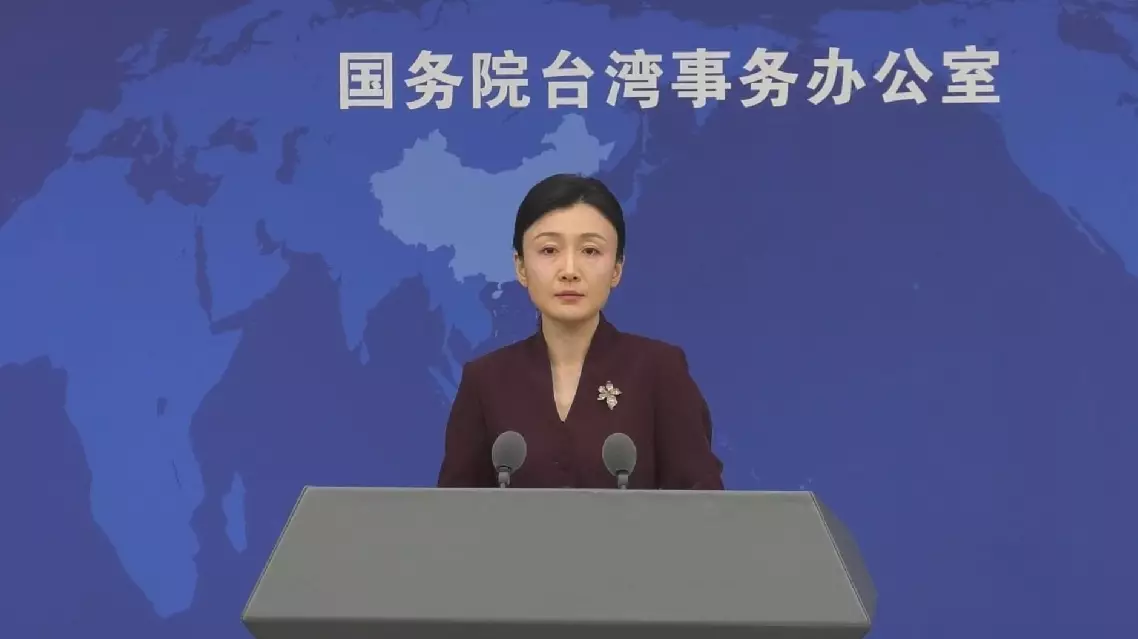
Central gov't spokeswoman warns Lai Ching-te of self-destruction over defense budget
The U.S.-led coalition concluded its military mission in Iraq on Wednesday, marking the end of more than two decades of Western military presence that began with the 2003 invasion.
Iraqi Prime Minister Ali al-Zaidi on Wednesday announced the conclusion of the U.S.-led international coalition's mission to combat the Islamic State (IS) in Iraq.
On the same day, the Pentagon said the United States and its allies have officially ended Operation Inherent Resolve against the IS in Iraq.
To mark the occasion, the Iraqi government declared a four-day official holiday from September 30 to October 3, designated as "Sovereignty Day" celebrations.
"For Iraq, the withdrawal of U.S. forces means that national sovereignty is further fully implemented. Iraq will be able to decide its own stance independently. This is something to be happy about and an important moment of national significance," said Majid Al-Hasnawi, a resident.
Iraqi analysts echoed hopes that regaining full autonomy will accelerate domestic recovery.
"I think at this current time, the withdrawal of U.S. forces and international coalition troops will help promote the reconstruction process. Because the Iraqi people will rely on their own country's talents and institutions, and the people of this country will drive the national reconstruction themselves," said Faisal Radi, an economist.
The drawdown follows years of shifting security dynamics. The U.S. launched the Iraq War in 2003 and carried out a broad withdrawal in late 2011, leaving only a residual force.
In 2014, the Islamic State group seized vast territories across Iraq's west and north. The U.S.-led coalition to combat the extremist group was subsequently formed and deployed forces to Iraq.
In 2024, the U.S. and Iraq agreed on a two-phase transition to conclude the coalition's mission.
"Ending the foreign military presence is an important political decision made and being implemented by Iraq. The problem is that a foreign military presence may provide room for intervention in Iraq's domestic political affairs, and this kind of interference in Iraq's internal affairs is something the Iraqi side cannot accept," said Salah Boushi, director of the Iraq Center for Strategic Affairs.
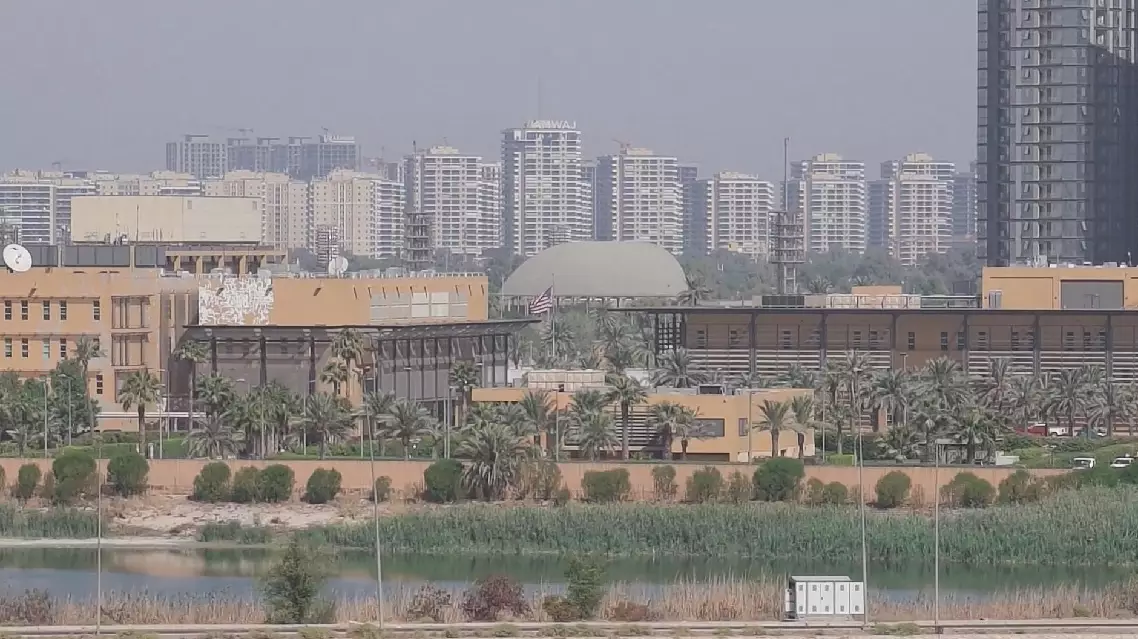
U.S.-led coalition concludes military mission in Iraq