The People's Bank of China (PBOC), China's central bank, announced a raft of strengthened support measures on Tuesday, including making adjustments to several monetary policy tools in an effort to promote innovation-driven, high-quality and sound economic development.
The new measures included cutting the one-year interest rate of the pledged supplementary lending (PSL) facility from 1.75 percent to 1.5 percent to better incentivize policy banks to support the real economy and serve national strategies.
The central bank will also allow the PSL to support more areas, especially the "six networks" initiative, which involves the construction of water networks, new-type power grids, computing power networks, next-generation communication networks, urban underground pipeline networks and logistics networks, according to a statement on its website.
The PSL adjustment measures will encourage policy banks to increase financial support for the construction of the "six networks" with a view to expanding effective investment and tapping the potential of domestic demand, the statement said.
Established by the Chinese central bank in 2014, the PSL allows the central bank to extend loans to policy banks. It is mainly used to provide funding support for government-backed projects such as the renovation of urban residential communities, construction of underground pipelines and corridors, and major water conservancy projects.
The decision to further adjust and improve several monetary policy tools aims to create an appropriate monetary and financial environment for steady economic growth, high-quality development and stable operation of financial markets, the statement said.
The latest measures came after Chinese Premier Li Qiang chaired a State Council executive meeting on Monday, which urged efforts to strengthen and improve the effectiveness of macro policies and promote effective investment, and achieve the country's annual economic and social development goals.
China has targeted 2026 growth at 4.5 to 5 percent and will strive for better results in practice. In the first half of 2026, the country's gross domestic product grew 4.7 percent.
The central bank has also decided to increase the quota of the relending facility for sci-tech innovation and technological upgrades by 200 billion yuan (about 30 billion U.S. dollars).
After the adjustment, this quota will rise from 1.2 trillion yuan to 1.4 trillion yuan. The statement said that this will help guide banks to increase lending to small and medium-sized sci-tech enterprises and better support enterprises in expanding equipment renewal investment in key areas.
Another measure announced Tuesday is that the central bank has decided to increase the quota of the relending facility to better support agriculture and small and micro businesses by 500 billion yuan, out of which 300 billion yuan is dedicated to financial support for private firms.
After the adjustment, the quota for private enterprises will increase to 1.3 trillion yuan from one trillion yuan, according to the statement.
The private enterprise relending facility was introduced in January this year with an initial quota of one trillion yuan. It is designed to encourage financial institutions to better support private micro, small and medium-sized enterprises.
Since the start of this year, the PBOC has introduced a series of structural monetary policy measures to strengthen support for key areas by cutting rates, expanding quotas and broadening the scope of its policy tools.
These measures are designed to provide market-based incentives for financial institutions to channel credit to key sectors and weak links, according to Xie Guangqi, head of the PBOC's monetary policy department.
The PBOC, based on macroeconomic conditions, price trends and the needs of macroeconomic regulation, will continue to use a combination of monetary policy tools to keep liquidity ample, properly regulate interest rates, and serve the high-quality development of the real economy, the statement said.
Also on Tuesday, China's finance ministry, together with the central bank and the National Financial Regulatory Administration, announced that starting Oct. 1, 2026, China will implement interest subsidies for housing loans, with a tentative implementation period of one year.
The State Council executive meeting held a day earlier revealed that the government will examine and roll out policies and measures aimed at stabilizing the real estate market and promoting employment and income growth.
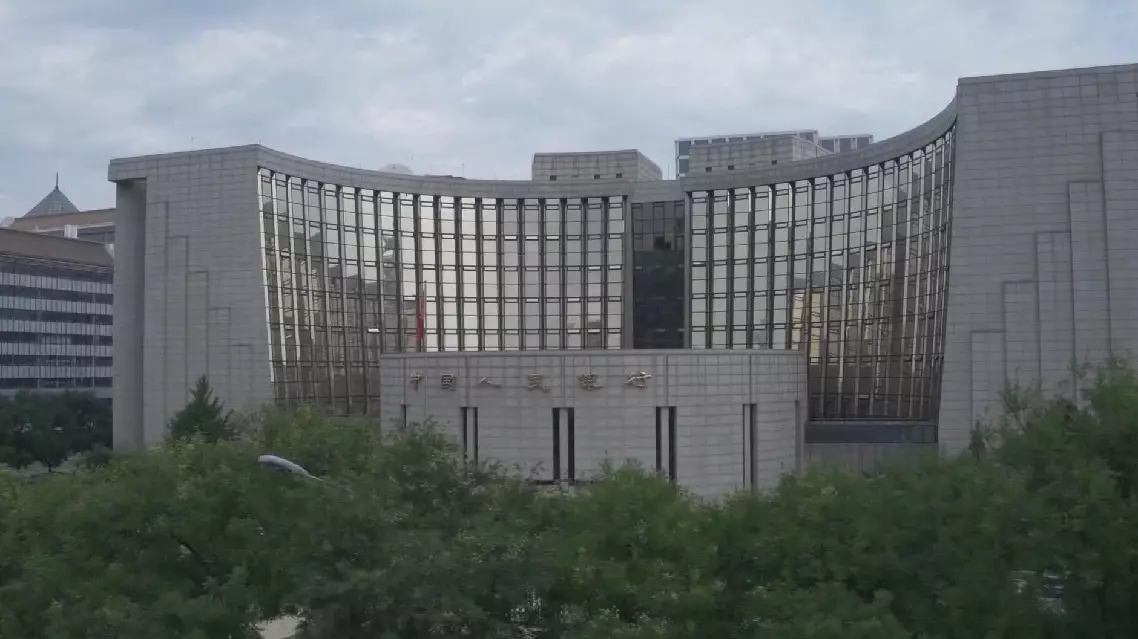
China's central bank announces enhanced financial support for economy