SACRAMENTO, Calif.--(BUSINESS WIRE)--Sep 30, 2026--
A new report commissioned by the Campaign for College Opportunity and the Latino Working Class Project (LWCP) finds meaningful progress for Latinx students alongside persistent barriers to college access, degree attainment, and economic mobility. With nearly 15 million Latinx residents, California cannot reach its 70% postsecondary attainment goal or meet workforce needs without improving these outcomes. The State of Higher Education for Latinx Californians, the final report in the Campaign’s three-part 2026 series, examines the pathway from high school preparation through college completion and employment.
This press release features multimedia. View the full release here: https://www.businesswire.com/news/home/20260930763916/en/
Key findings include:
“California has proven that when we remove barriers and invest intentionally in students, we change lives. Now we must build on that progress by bringing proven reforms to scale and creating clear, connected pathways that ensure Latinx students not only get to college, but thrive, earn a degree, and turn their talent into economic opportunity and a better future.”
—Jessie Ryan, President, The Campaign for College Opportunity.
“Higher education is a powerful pathway to economic mobility, but that promise remains out of reach for too many Latino working-class Californians. This research offers a roadmap for removing barriers and expanding opportunity.”
—Mike Madrid, Executive Director, Latino Working Class Project
“As a first-generation Latina student, pursuing higher education has always meant creating opportunities not just for myself, but for my family. Transitioning into a four-year university, I faced challenges related to finances, navigating complex systems, and balancing responsibilities, but mentorship and culturally affirming spaces reminded me that I belonged. My goal is to use my education to uplift my community and advocate for more equitable opportunities for students like me.”
—Naomi Hernandez, Santa Clara University Graduate and Master’s Student in Clinical Mental Health Counseling at Palo Alto University; Former LEAF Student
The report calls on California to expand A–G and dual-enrollment access, preserve test-free admissions, simplify transfer, improve financial aid completion and affordability, expand work-based learning, and strengthen institutional accountability and Latinx representation.
The full report is available on The Campaign’s website at: https://collegecampaign.org/the-state-of-higher-education-for-latinx-californians-2026
About the Campaign for College Opportunity
The Campaign for College Opportunity is a nonprofit 501(c)(3) broad-based, nonpartisan coalition of business, education, and civil rights leaders, committed to advancing racial and economic justice in California. Through advocacy and research, the Campaign works to build a more equitable, affordable, and workforce-connected higher education system. The Campaign champions student-centered higher education policy transformation and the dismantling of inequitable systems to eliminate educational, income, and wealth inequities and achieve racial equity and economic justice for Californians. For more information, visit www.CollegeCampaign.org, or follow us on Instagram and LinkedIn.
About the Latino Working Class Project
The Latino Working Class Project is a nonpartisan initiative dedicated to understanding, elevating, and advancing the priorities of California’s Latino working-class communities. Through research, polling, regional convenings, coalition building, and public policy development, LWCP works to ensure their voices and lived experiences help shape California’s economic future. It brings together leaders across sectors to develop practical solutions that expand economic opportunity and upward mobility.
Learn more at latinoworkingclass.com Follow LWCP on LinkedIn, Instagram (@latinoworkingclassproject), and X (@LatinosWorking).

State of Higher Education for Latinx Californians report cover.
NASHVILLE, Tenn. (AP) — Tennessee's execution of Christa Gail Pike for a murder she committed at age 18 was halted Wednesday about an hour before it was set to begin, as a federal appeals court sought to review whether her allegations of childhood sexual abuse and rape were fully considered at her sentencing.
Pike, now 50, and her boyfriend were convicted of the 1995 stabbing and beating of 19-year-old Colleen Slemmer, their classmate at a job training facility in Knoxville. She would have been the first woman executed in Tennessee in at least 200 years.
The 6th Circuit U.S. Court of Appeals halted the execution on a 2-1 vote after execution witnesses and others gathered at the Riverbend Maximum Security Institution in Nashville.
Tennessee’s attorney general immediately appealed the stay to the U.S. Supreme Court. Witnesses and media remained at the prison in case the high court allows the execution to proceed. Media witnesses were brought into the prison about 10:15 a.m. to wait, but then were let back out into a parking lot after about 90 minutes.
More than 30 people, some wearing shirts that said “Love Heals,” gathered in a fenced-in area outside the prison while police on horses watched nearby.
The case garnered widespread attention at the time of the killing in part because a pentagram that was carved on Slemmer’s body and other elements of the crime stoked fears of Satan worship during the “satanic panic” of the 1980s and 1990s.
As the execution date drew near, it renewed debate over the death penalty for young offenders.
Pike does not deny committing the killing, but her supporters argue the state should consider Pike’s age at the time, mental illness and a history of severe sexual abuse that included being raped from the time she was a toddler. Assistant Federal Defender Stephen Ferrell said Pike’s death sentence is an outlier because other 18-year-olds in Tennessee have had such sentences vacated.
After the killing, Pike was diagnosed with bipolar disorder and post-traumatic stress disorder. In her clemency petition she said she only wanted to fight Slemmer but killed her in a frenzied attack when she couldn’t “put the brakes on.”
“I was a mentally ill 18-year-old kid. It took me numerous years to even realize the gravity of what I’d done. Even more to accept how many lives I affected. I took the life of someone’s child, sister, friend. It sickens me now to think I had the ability to commit such a crime,” Pike said in a statement.
Slemmer’s mother wants the lethal injection to go forward, saying she has waited decades to see Pike’s sentence carried out.
“Every time I think about it, I think about Colleen feeling that pain and trying to get up and run,” May Martinez told The Associated Press in a telephone interview on Saturday.
Martinez said a group helped raise money so she and her husband could travel from Florida to witness the execution. She didn't respond to a message Wednesday after the execution was halted.
Martinez said her daughter's age should matter too in deciding Pike's fate.
“Not a day goes by, or a minute goes by that I do not think about Colleen. Holidays are the worst,” she said, noting that her daughter would have turned 51 earlier in September.
The killing rocked the city of Knoxville. Prosecutors said Pike, fearing Slemmer was trying to steal her boyfriend, lured her to a wooded area on Jan. 12, 1995. Pike cut Slemmer with a box cutter and beat her with a large chunk of asphalt. Shipp, Pike’s boyfriend, has admitted that he was the one who carved a pentagram, a star-shaped symbol associated with Satan, into her body.
Shipp was 17 when the crime happened and received a sentence of life in prison with the possibility of parole. Pike was the only one sentenced to death.
Tennessee has not executed a woman for at least 200 years, according to Robin M. Maher, executive director of the Death Penalty Information Center. Older records can be spotty, though, so it’s difficult to know precise details about the last woman who was put to death there.
It's a rarity across the U.S. Since 1976, 18 women have been put to death in the country, representing about 1% of all executions, according to the center.
Most recently, Missouri in 2023 executed Amber McLaughlin for a 2003 killing, in what is believed to be the first execution of a transgender woman in the U.S. In 2021, the federal government executed Lisa Montgomery, marking the first time in nearly seven decades that the U.S. government put a female inmate to death.
Pike would be the 30th person executed in the U.S. this year. Florida carried out its 16th execution of 2026 on Tuesday.
Associated Press journalists Jeffrey Collins in Columbia, South Carolina, and Ed White in Detroit contributed to this report.

Leslie Brown, right, stands with others in the area reserved for people in favor to the death penalty outside Riverbend Maximum Security Institution before the planned execution of Christa Pike, Wednesday, Sept. 30, 2026, in Nashville, Tenn. (AP Photo/George Walker IV)

Kathleen Walter prays in the area reserved for people opposed to the death penalty outside Riverbend Maximum Security Institution before the planned execution of Christa Pike, Wednesday, Sept. 30, 2026, in Nashville, Tenn. (AP Photo/George Walker IV)
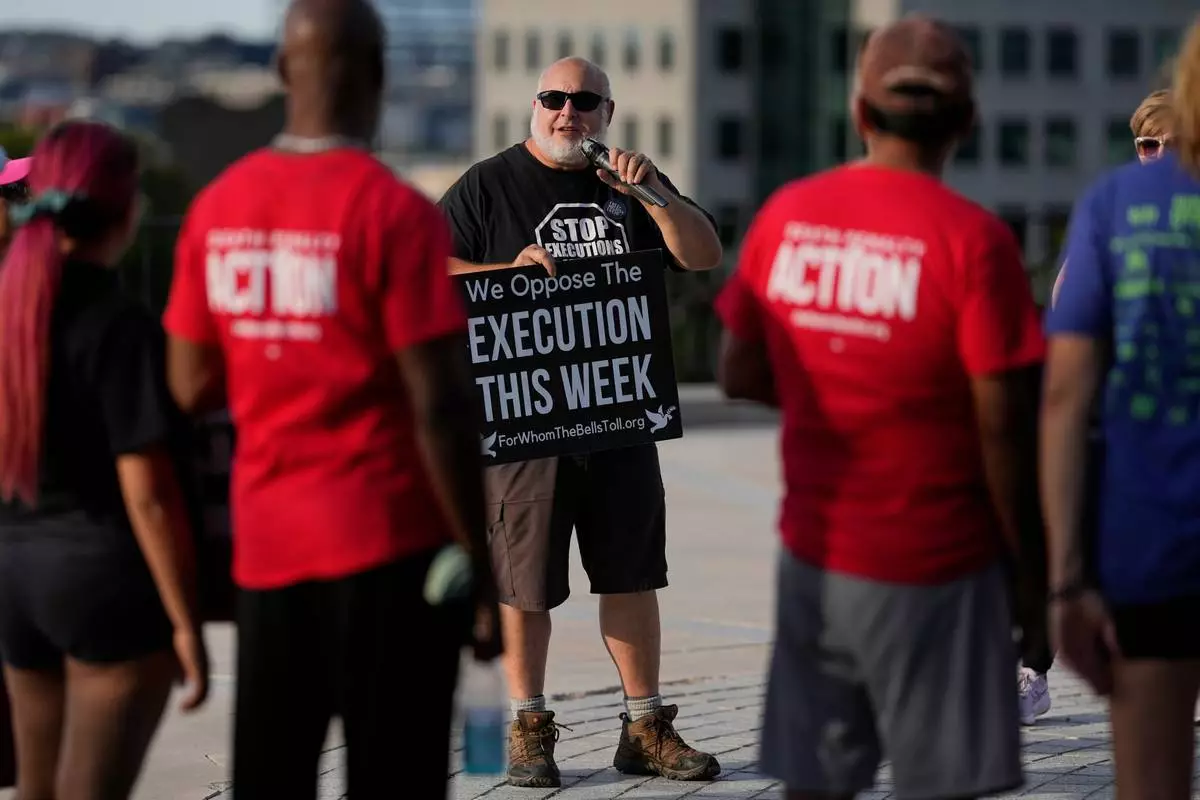
Abraham Bonowitz speaks during a March 4 Mercy protest against the death penalty at the Tennessee State Capitol, Sunday, Sept. 27, 2026, in Nashville, Tenn. ahead of the Sept. 30th scheduled execution of Christa Pike. (AP Photo/George Walker IV)

Alonzo Hughes participates in a March 4 Mercy protest against the death penalty at the Tennessee State Capitol, Sunday, Sept. 27, 2026, in Nashville, Tenn. ahead of the Sept. 30th scheduled execution of Christa Pike. (AP Photo/George Walker IV)

In this image from video provided by WBIR-TV, Christa Pike cries after being sentenced to death on March 30, 1996 in Knoxville, Tenn. (WBIR-TV via AP)
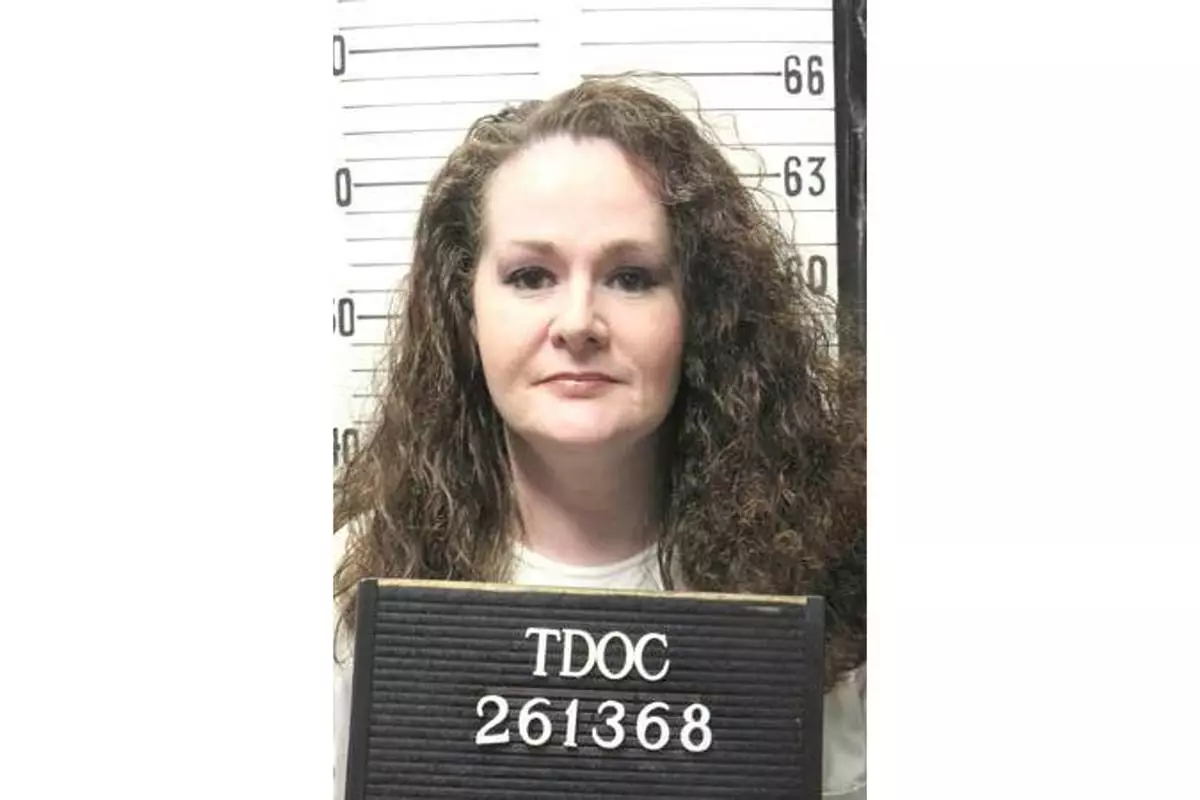
This photo provided by the Tennessee Department of Correction shows Christa Pike on Jan. 12, 2023. (TDOC via AP)