POTCHEFSTROOM, South Africa (AP) — Australia avoided a 3-0 clean sweep against South Africa after winning a rain-affected third and final cricket ODI by 45 runs via the DLS Method on Wednesday.
South Africa, which had already sealed the series with victories in Durban and Johannesburg, ended up on 145-4 in 28 overs. The rain started at 8.30pm local time with the home team well behind on DLS and the umpires then called the game off at 9.30pm.
Click to Gallery
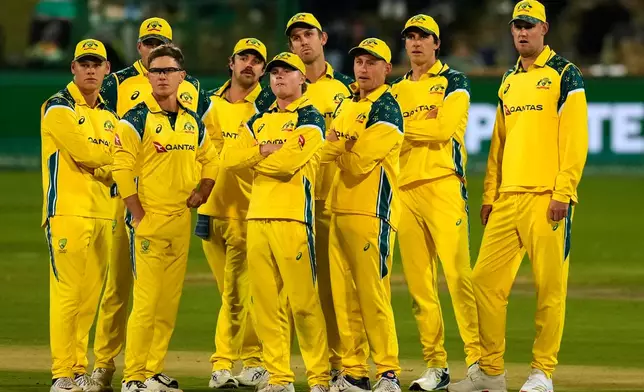
Australia's players watch a review on a big electronic screen during the third one day international cricket match between South Africa and Australia, in Potchefstroom, South Africa, Wednesday, Sept. 30, 2026. (AP Photo/Themba Hadebe)
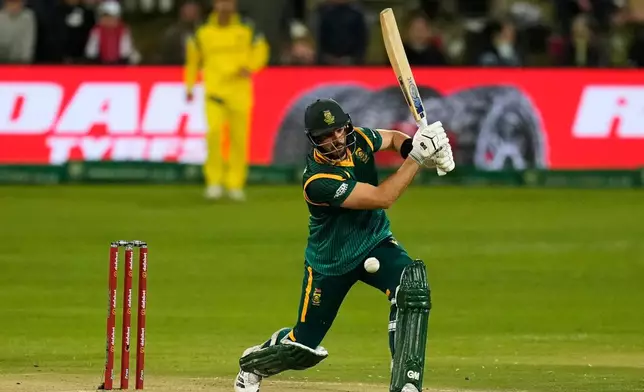
South Africa's Aiden Markram plays a shot during the third one day international cricket match between South Africa and Australia, in Potchefstroom, South Africa, Wednesday, Sept. 30, 2026. (AP Photo/Themba Hadebe)
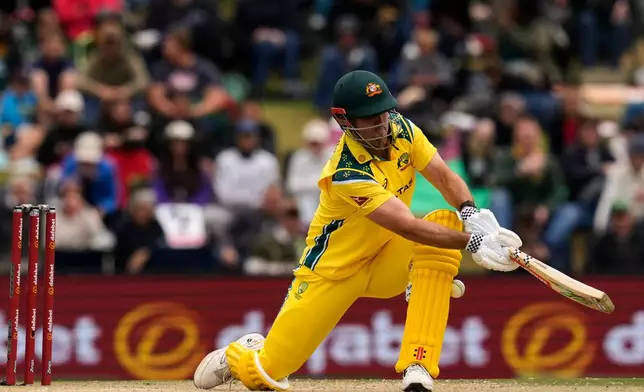
Australia's captain Mitchell Marsh plays a LBW during the third one day international cricket match between South Africa and Australia, in Potchefstroom, South Africa, Wednesday, Sept. 30, 2026. (AP Photo/Themba Hadebe)
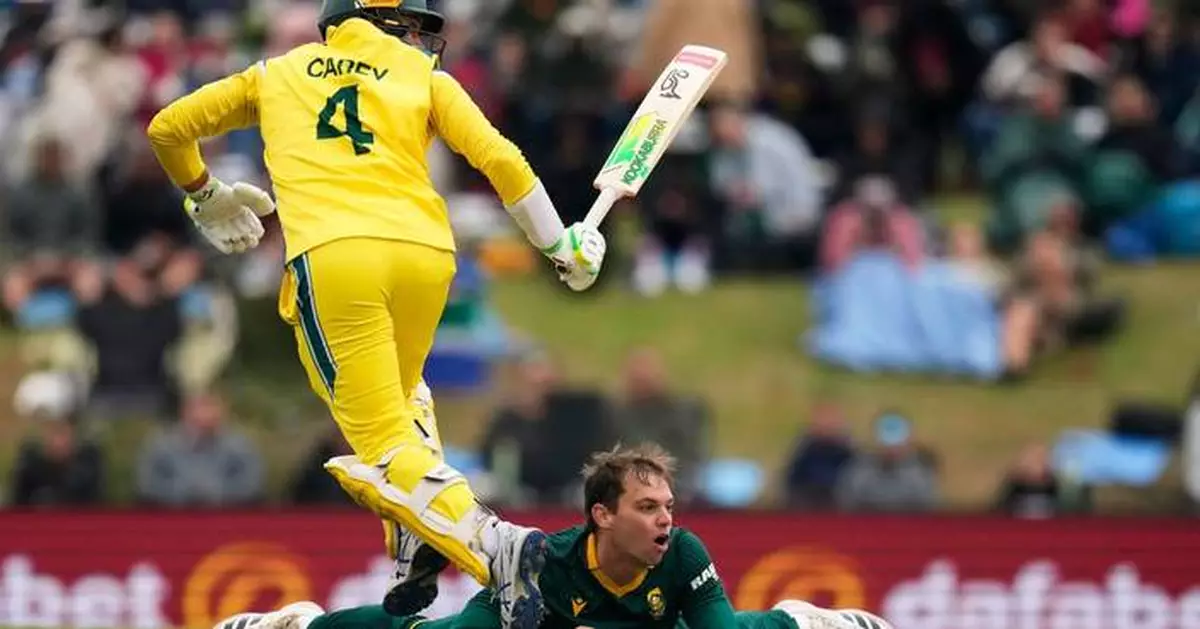
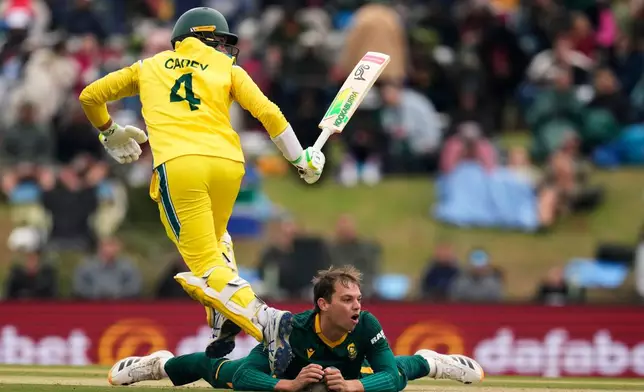
South Africa's Tristan Stubbs falls to the ground as runs are scored by Australia's Alex Carey, from his delivery during the third one day international cricket match between South Africa and Australia, in Potchefstroom, South Africa, Wednesday, Sept. 30, 2026. (AP Photo/Themba Hadebe)
Australia had earlier posted 322-9 on the back of captain Mitchell Marsh’s third successive half century and Alex Carey's 74 off 88 balls.
Fast bowler Xavier Bartlett then continued to shine with the new ball and leg-spinner Adam Zampa hit the right lengths as both grabbed two wickets.
South Africa made five changes with the century-makers at Johannesburg – captain Temba Bavuma and David Miller – rested.
Quinton de Kock, who scored 14 and 15 in his last two innings, fell for a five-ball duck in Bartlett’s first over and stand-in captain Aiden Markram, who had won the toss and elected to field, was out lbw for 15 as South Africa slipped to 30-2.
Ryan Rickelton (71 not out) and Matthew Breetzke (25) then put on 72 for the third wicket.
Pat Cummins, playing only his third ODI since winning the 2023 World Cup in India, was welcomed by Rickelton with a pulled six over mid-wicket.
Zampa troubled the batters with his sharp leg-spin and googlies. Rickelton successfully overturned an lbw decision off the Australian bowler but Zampa continued to pose problems.
Zampa struck in the 18th over when Carey carried out a smart stumping to remove Breetzke. Tristan Stubbs, one of the changes made by South Africa, perished for 14 when he misread Zampa’s googly and was out lbw.
The Australian bowlers kept pressing and allowed Rickelton and Corbin Bosch to add only 20 runs in six overs before the rain arrived.
Earlier, Marsh’s ultra-aggressive approach in the powerplay led to his 56 and provided Australia with another brisk start of 78, while opening partner Travis Head scored a better than run-a-ball 24.
Carey and Oliver Peake (48) then consolidated with a 73-run fourth-wicket stand.
Bosch dragged South Africa back in the death overs with the wickets of Carey and Cameron Green. The all-rounder ended up with 4-60 while Gerald Coetzee and Lizaad Williams picked up two wickets each.
See AP’s full cricket coverage here
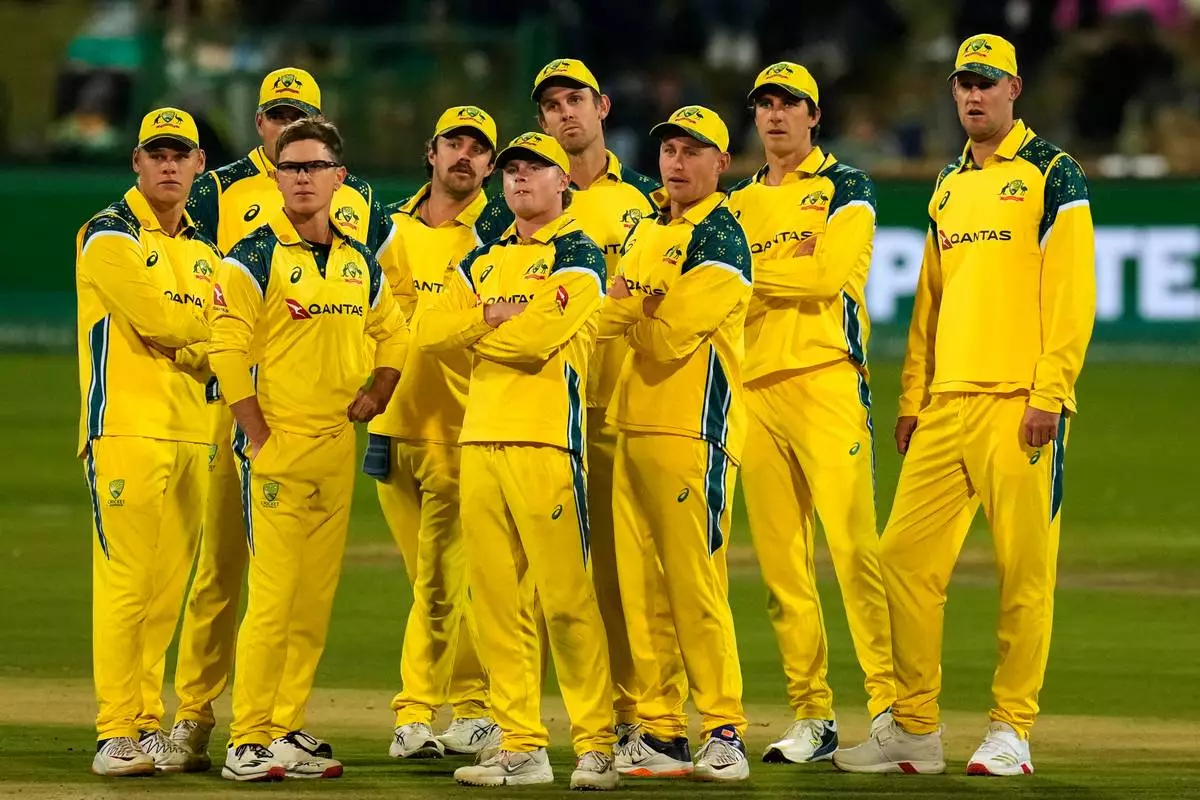
Australia's players watch a review on a big electronic screen during the third one day international cricket match between South Africa and Australia, in Potchefstroom, South Africa, Wednesday, Sept. 30, 2026. (AP Photo/Themba Hadebe)
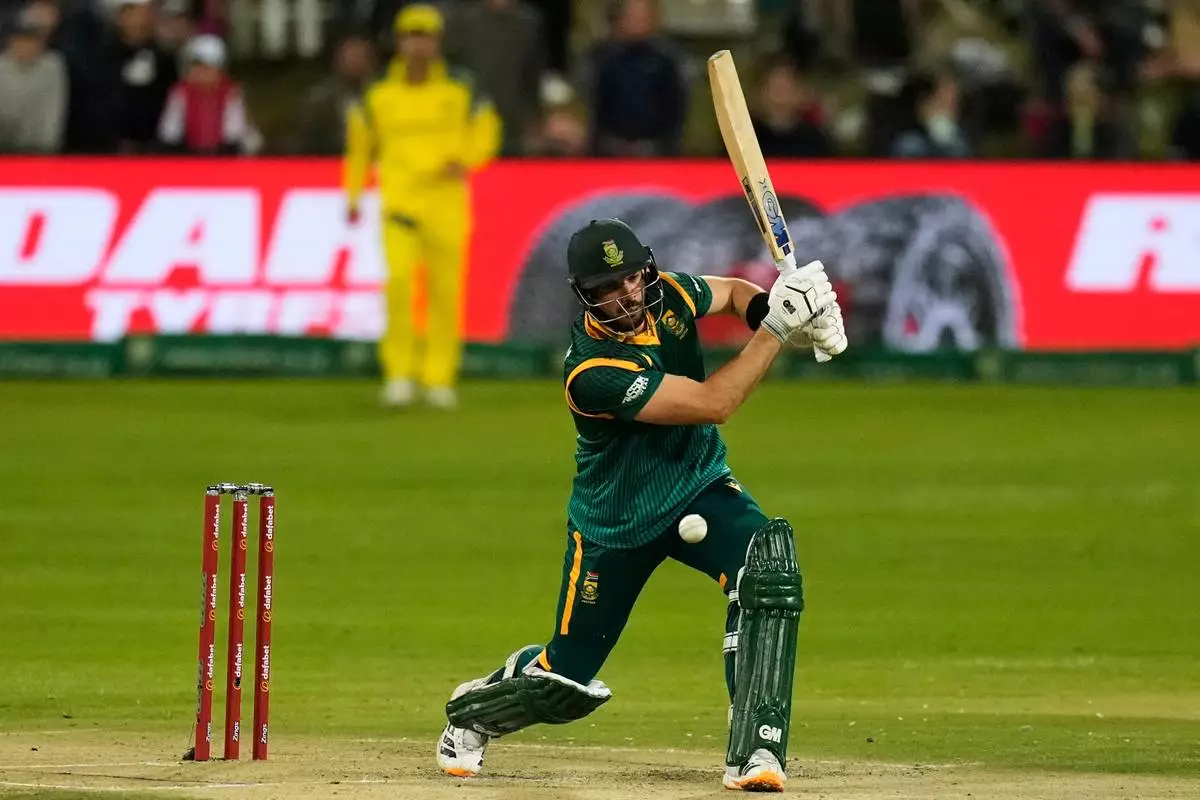
South Africa's Aiden Markram plays a shot during the third one day international cricket match between South Africa and Australia, in Potchefstroom, South Africa, Wednesday, Sept. 30, 2026. (AP Photo/Themba Hadebe)
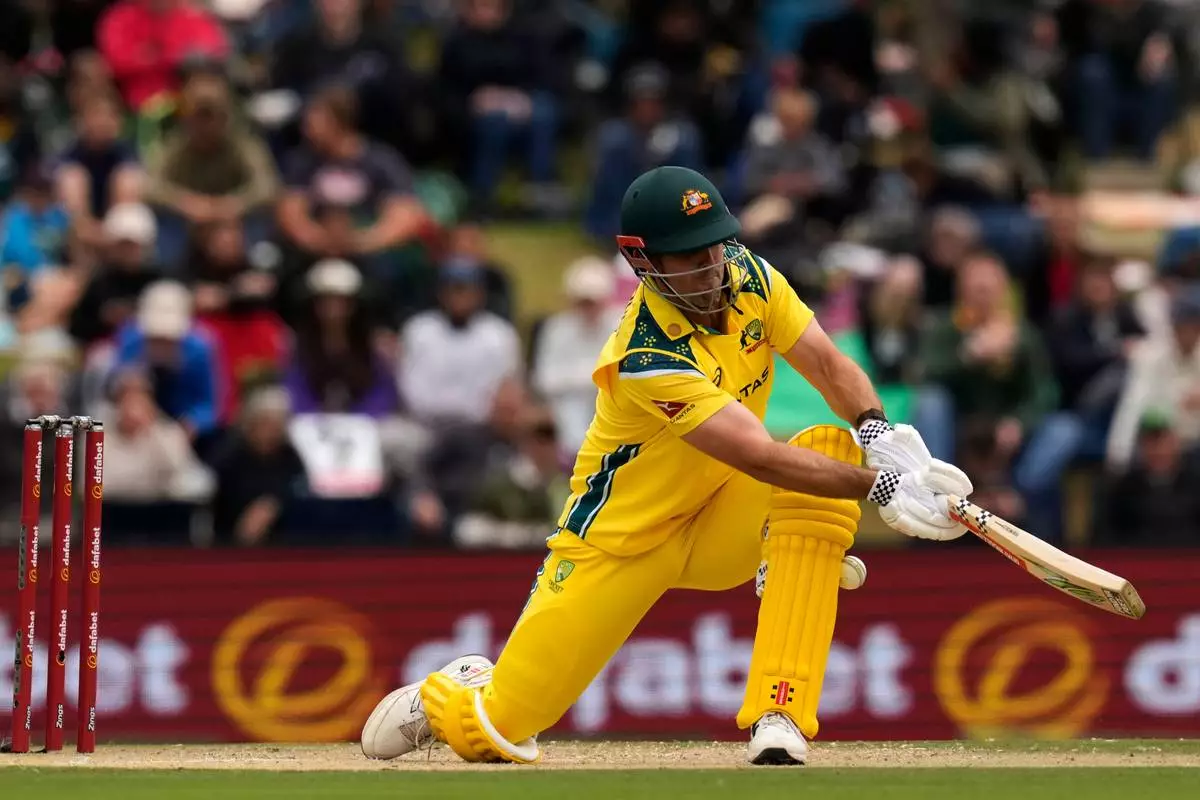
Australia's captain Mitchell Marsh plays a LBW during the third one day international cricket match between South Africa and Australia, in Potchefstroom, South Africa, Wednesday, Sept. 30, 2026. (AP Photo/Themba Hadebe)
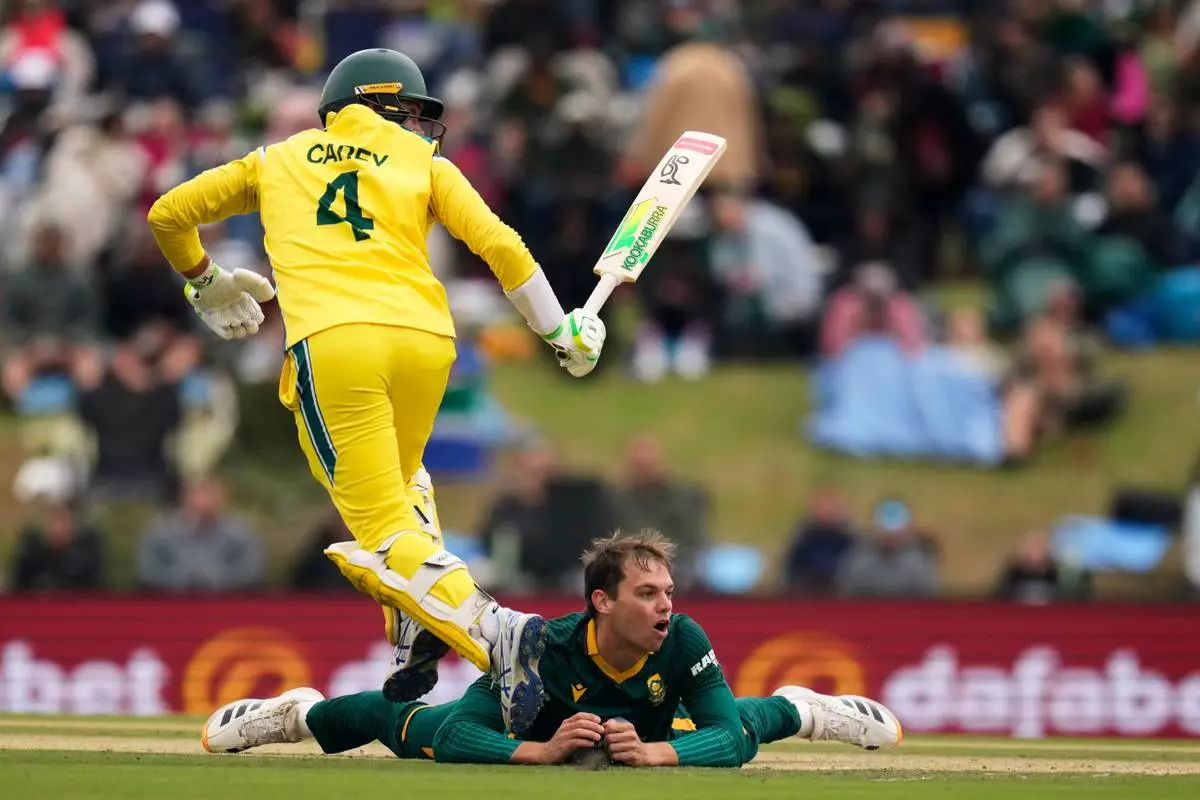
South Africa's Tristan Stubbs falls to the ground as runs are scored by Australia's Alex Carey, from his delivery during the third one day international cricket match between South Africa and Australia, in Potchefstroom, South Africa, Wednesday, Sept. 30, 2026. (AP Photo/Themba Hadebe)
QUANTICO, Va. (AP) — Defense Secretary Pete Hegseth confirmed Wednesday that the U.S. military will cut 20% of its generals and admirals as he made a series of announcements about a new drone command and more in what he called his “State of the Force” address.
Hegseth was speaking to junior officers and enlisted leaders at the Marine Corps Base Quantico in Virginia, the second year in a row that he has given such an address. This time, the U.S. military is seven months into a war with Iran with no clear end in sight, has captured Venezuelan leader Nicolás Maduro and killed more than 200 people in strikes on alleged drug trafficking boats in Latin America, among other actions worldwide.
The speech is not a usual fixture among Pentagon leaders. While Hegseth’s predecessors have regularly addressed troops and top officers, they have traditionally done so in small or private settings.
The Pentagon chief, however, again led with how he has drastically retooled the U.S. military by targeting what he calls “woke” culture — through a rollback of diversity programs, a review of ground combat units with female troops and a new screening program for “testosterone deficiency” among male personnel.
Pentagon officials had previewed that Hegseth would announce more cuts to the number of generals and admirals. He directed all military services to double the 10% reduction he ordered last spring for roughly 800 flag and general officer positions, making it a total 20% decrease to be completed by Jan. 1, 2027.
“I call it accountability and long overdue,” he said.
The Pentagon chief announced the creation of a new four-star command to oversee the rollout of autonomous and robotic capabilities in what he called “the fastest peacetime shift in modern military history.”
The rollout comes a month after officials said an Army unit based in Europe that specialized in drone warfare had been directed to return to being a traditional infantry batallion, ending its efforts to learn and use the battlefield technology.
A bipartisan group of U.S. lawmakers subsequently asked the Army to explain the order, given that the world’s battlefields are rapidly evolving and military tactics increasingly rely on uncrewed systems to fight.
The announcement of the new drone command comes with the U.S. in a stalemate with Iran over control of the Strait of Hormuz, a vital energy shipping corridor. The war has forced American forces in the region to expend hundreds of expensive missile interceptors to defend against Iran’s missile and drone attacks, which have still managed to kill and wound U.S. troops.
Hegseth repeated claims that the U.S. military has destroyed Iran's navy, air force and defense systems as well as many of its leaders and its industrial base. But the Islamic Republic has continued intermittently to launch drone and missile attacks against at U.S. or allied bases in the region, while maintaining its ability to strike commercial and military ships in the Strait of Hormuz.
During his speech, Hegseth touted the Trump administration’s major investments in the defense industry and push for contractors to speed up their work to expand the nation’s weapons arsenals. But experts say U.S. military contractors will need at least three years to replenish stockpiles of key weapons systems used heavily in the Iran war.
Members of Congress have criticized the war and the drawdown of munitions stockpiles,and some called the latest cuts to the general ranks a “purge” of the military’s top ranks that will take years to rebuild.
“He’s got some kind of like deep-seated grievance about leadership in the military,” said Sen. Mark Kelly, D-Ariz., a former Navy combat pilot and NASA astronaut, who has been critical of Hegseth. “He’s purging a generation of great leaders of the military, and it’s going to take a generation to recover from it.”
Republican Sen. Mike Rounds of South Dakota, a member of the Senate Armed Services Committee, said he wanted to understand Hegseth’s reasoning behind the decision.
“If it’s simply a matter of eliminating a very heavy top, there may be some validity to it, but I want to see it first,” Rounds said.
Trump or Hegseth already have fired or pushed to retire more than two dozen military leaders since taking office, including the Army’s top uniformed officer, Gen. Randy George, a move that angered both Republicans and Democrats in Congress. The departures also have included a number of senior officers who are women or people of color.
As part of last year’s cuts, Hegseth ordered the active duty military to shed 20% of its four-star general officers — the highest-level leaders — and the National Guard to shed 20% of its top positions, but it is unclear if all those cuts have been made. The new cuts could include any one-star general or above, or an officer of equivalent Navy rank.
The number of general officer positions in the military is set by law, but it is possible to let positions remain unfilled by not submitting replacements to Congress.
Finley reported from Washington. Kinnard reported from Columbia, South Carolina. Associated Press writer Lisa Mascaro contributed to this report.
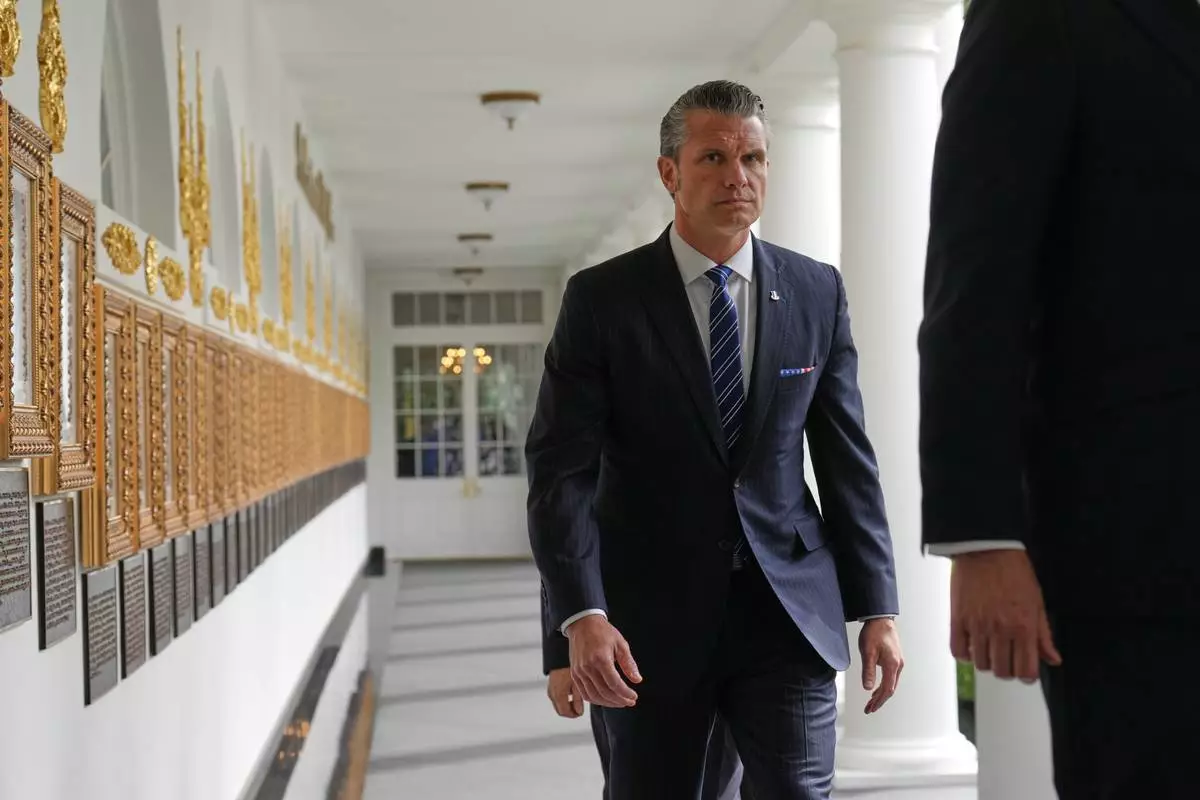
Defense Secretary Pete Hegseth walks along the Colonnade before President Donald Trump and China's President Xi Jinping at the White House, Thursday, Sept. 24, 2026, in Washington. (AP Photo/Jacquelyn Martin)