Human rights advocates asked a United Nations panel to intervene Wednesday to help end a new U.S. government practice of withholding from families and lawyers the whereabouts of thousands of detainees facing deportation.
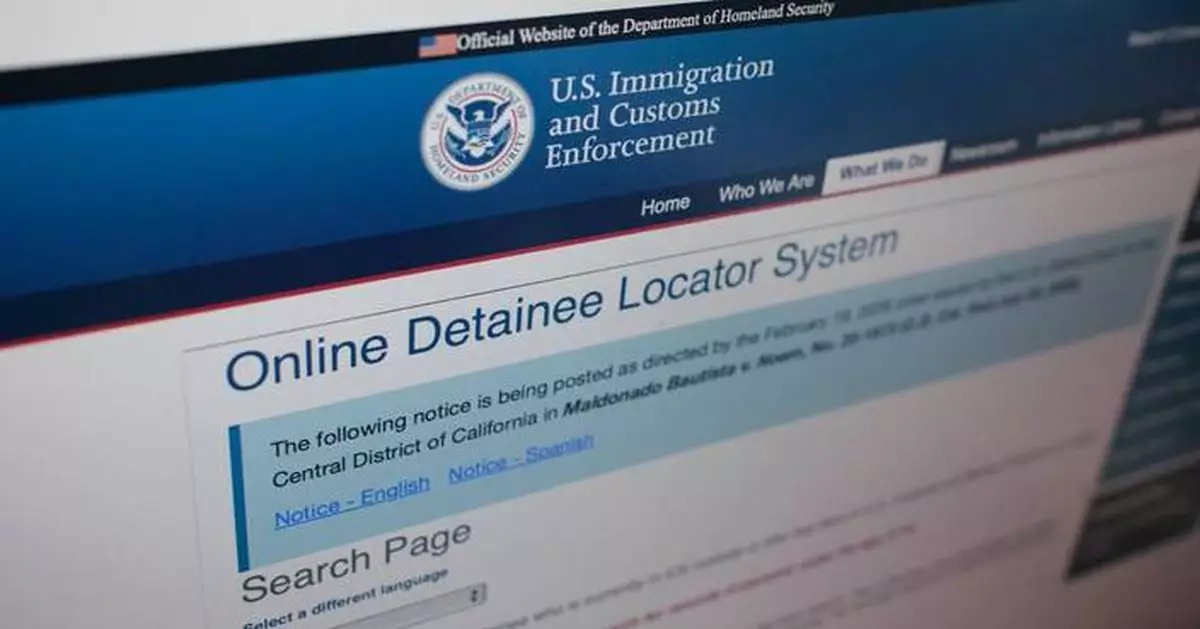
U.S. Immigration and Customs Enforcement removed the names of detainees with final removal orders from its Online Detainee Locator System on Sept. 15 in an apparent effort to speed up their deportations. The change, which ICE did not announce and has not explained, applies to more than 16,000 of the nearly 69,000 detainees who are in ICE custody.
The move has interfered with detainees' ability to challenge looming deportations by impeding access to their lawyers while devastating families who lost track of their loved ones, immigration lawyers say.
A coalition of more than 30 groups who advocate for noncitizens in the U.S. petitioned the U.N.’s Working Group on Enforced or Involuntary Disappearances to declare the policy a violation of international law and to push for its end.
“A system with no transparency is a system with no accountability, and that should terrify all of us,” said Sarah Decker, an attorney at the Robert & Ethel Kennedy Human Rights Center, one of the petition's signatories. “Disappearing people into a network of remote detention sites, hiding their whereabouts, and cutting off their access to outside help is the definition of an enforced disappearance."
Separately, on Wednesday, more than 45 House Democrats led by Reps. Luz Rivas and Veronica Escobar urged ICE to restore the names to the locator, calling the practice of concealing them “contrary to foundational principles of the American legal system.”
ICE's parent agency denied Wednesday that its practices amount to disappearing people, saying all detainees “have opportunities to communicate with their family members and lawyers.”
“The appropriate process due to an illegal alien with final deportation orders is removal, plain and simple,” the Department of Homeland Security said in a statement. “That said, DHS has a stringent law enforcement assessment in place that abides by due process under the U.S. Constitution.”
Detainees can typically call relatives if they have money in their commissary accounts, while calls to their legal representatives are supposed to be free.
Approximately 1.4 million people living in the U.S. are subject to final orders of removal. That typically means an immigration judge has ruled they should be deported and the decision has been upheld on appeal or not appealed. They still have several legal options to challenge their detention and deportation. Federal judges have ruled thousands of times that detainees should be released or granted bond hearings.
The petition to the U.N. said the policy has already “obstructed legal counsel from accessing their clients in detention, preventing interventions to seek immigration relief, challenge unconstitutional detention, and block unlawful deportations.”
It cited examples of several detainees, including a mother and 7-year-old daughter who were challenging their detention at a Texas facility but lost access to their lawyers as they faced deportation to Venezuela. Only after a judge ordered ICE to disclose their whereabouts did the agency do so, about 18 hours later, and release them from custody, the petition said.
One man reported intense stress and that the “darkest thoughts imaginable went through" his mind after the whereabouts of his elderly disabled mother were abruptly removed from the system, according to the petition.
The petition said ICE's online locator, launched in 2010, has become “an even more crucial tool” as President Donald Trump's administration has carried out a sweeping campaign to arrest and deport people who are in the country illegally. It noted that the U.N. working group had lobbied for the locator’s creation and its 2024 expansion to include people detained by the Border Patrol.
The petition asked the U.N. group to urge ICE to publicly list all detainees’ locations within an hour of their arrest and give detainees’ lawyers 24 hours’ notice before a transfer. The U.N. group, which was formed in 1980, helps families locate loved ones who have reportedly been subjected to enforced disappearance by government agents. It has five members and is currently chaired by Grazyna Baranowska of Poland.
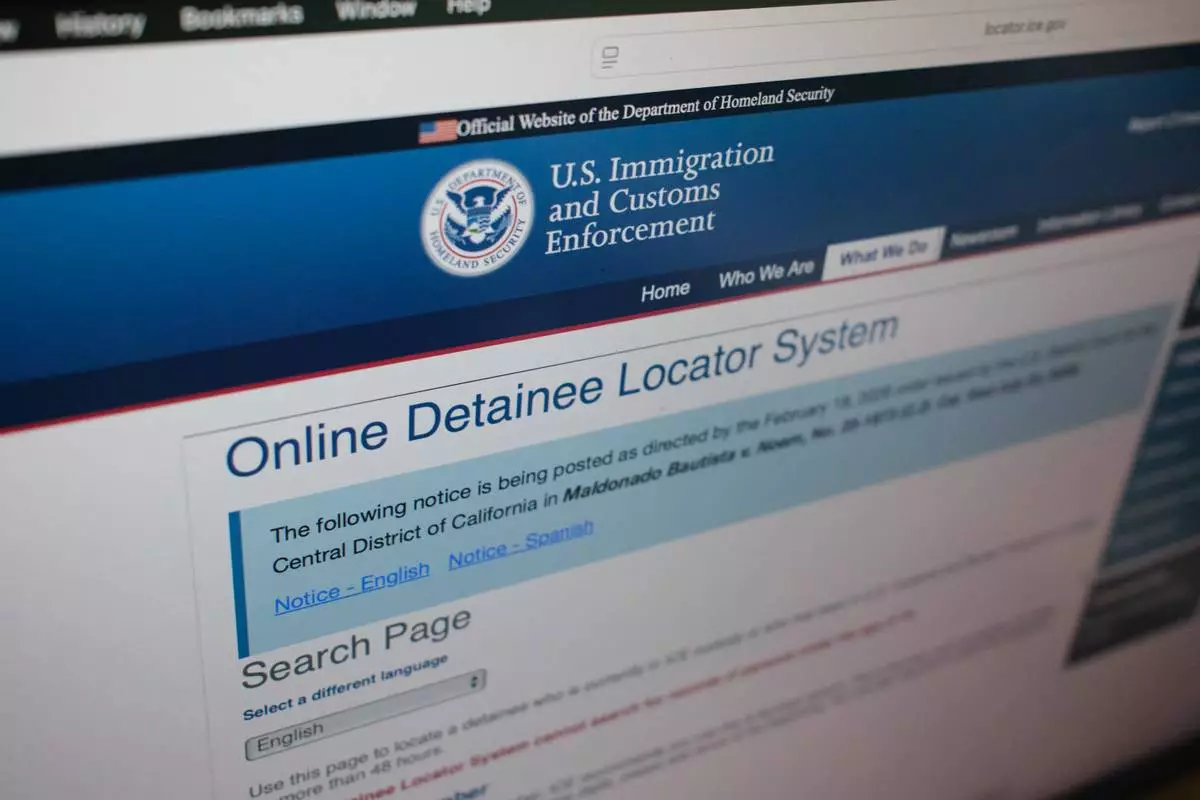
The U.S. Immigration and Customs Enforcement website used to locate someone in immigration detention is displayed, Monday, Sept. 21, 2026, in New York. (AP Photo/Rachel Leathe)
NASHVILLE, Tenn. (AP) — Tennessee's execution of Christa Gail Pike for a murder she committed at age 18 was halted Wednesday shortly before it was set to begin, as a court sought to review whether her allegations of childhood sexual abuse were fully considered at her sentencing.
Pike, now 50, and her boyfriend were convicted of the 1995 stabbing and beating of 19-year-old Colleen Slemmer, their classmate at a job training facility in Knoxville.
The 6th Circuit U.S. Court of Appeals halted Pike's execution on a 2-1 vote about an hour before the scheduled execution time, as witnesses and others gathered at the Riverbend Maximum Security Institution in Nashville. Tennessee has not executed a woman in at least 200 years.
The case garnered widespread attention at the time of the killing in part because a pentagram that was carved on Slemmer’s body and other elements of the crime stoked fears of Satan worship during the “satanic panic” of the 1980s and 1990s.
Tennessee’s attorney general immediately appealed the stay to the U.S. Supreme Court. Witnesses and media remained at the prison while the high court considered whether to allow the execution to proceed.
The state's execution order expires at midnight, said Kelley Henry, a Nashville-based attorney experienced with Tennessee death penalty law. If time runs out and the stay is lifted, the Tennessee Supreme Court would need to set a new execution date.
In its appeal to the U.S. Supreme Court, the attorney general's office wrote that halting the execution at the last moment traumatized Slemmer’s family and rewarded “abusive delay tactics” by Pike’s attorneys.
Pike does not deny committing the killing, but her supporters argue the state should consider her age at the time, her mental illness and her allegations of severe sexual abuse that included being raped from the time she was a toddler.
“It is inconceivable that in the 21st century, the criminal justice system is poised to execute a survivor of rape and child sexual abuse whose jury never had the opportunity to consider those facts in weighing the defendant’s moral culpability,” her attorneys wrote in a filing to the U.S. Supreme Court.
As the execution date drew near, Pike's case renewed debate over the death penalty for young offenders.
Assistant Federal Defender Stephen Ferrell said Pike’s death sentence is an outlier because other 18-year-olds in Tennessee have had such sentences vacated.
After the killing, Pike was diagnosed with bipolar disorder and post-traumatic stress disorder. In her clemency petition, she said she only wanted to fight Slemmer but killed her in a frenzied attack when she couldn’t “put the brakes on.”
“I was a mentally ill 18-year-old kid. It took me numerous years to even realize the gravity of what I’d done. Even more to accept how many lives I affected. I took the life of someone’s child, sister, friend. It sickens me now to think I had the ability to commit such a crime,” Pike said in a statement.
Slemmer’s mother wants the lethal injection to go forward, saying she has waited decades to see Pike’s sentence carried out.
“Every time I think about it, I think about Colleen feeling that pain and trying to get up and run,” May Martinez told The Associated Press in a telephone interview on Saturday.
Martinez said a group helped raise money so she and her husband could travel from Florida to witness the execution. She didn't respond to a message Wednesday after the execution was halted.
Martinez said her daughter's age also should matter in deciding Pike's fate.
“Not a day goes by, or a minute goes by that I do not think about Colleen. Holidays are the worst,” she said, noting that her daughter would have turned 51 earlier in September.
The killing rocked the city of Knoxville. Prosecutors said Pike, fearing Slemmer was trying to steal her boyfriend, lured her to a wooded area on Jan. 12, 1995. Pike cut Slemmer with a box cutter and beat her with a large chunk of asphalt. Shipp, Pike’s boyfriend, has admitted that he was the one who carved a pentagram, a star-shaped symbol associated with Satan, into her body.
Shipp was 17 when the crime happened and received a sentence of life in prison with the possibility of parole. Pike was the only one sentenced to death.
Tennessee has not executed a woman for at least 200 years, according to Robin M. Maher, executive director of the Death Penalty Information Center. Older records can be spotty, though, so it’s difficult to know precise details about the last woman who was put to death there.
Since the Supreme Court reinstated the death penalty in 1976, 18 women have been put to death in the U.S., representing about 1% of all executions, according to the center.
Most recently, Missouri in 2023 executed Amber McLaughlin for a 2003 killing, in what is believed to be the first execution of a transgender woman in the U.S. In 2021, the federal government executed Lisa Montgomery, marking the first time in nearly seven decades that the U.S. government put a female inmate to death.
Pike would be the 30th person executed in the U.S. this year after Florida carried out an execution on Tuesday.
Associated Press journalists Jeffrey Collins in Columbia, South Carolina, and Ed White in Detroit contributed to this report.

May Martinez, left, mother of murder victim Colleen Slemmer, walks out of Riverbend Maximum Security Institution during a stay of the planned execution of Christa Pike, Wednesday, Sept. 30, 2026, in Nashville, Tenn. (AP Photo/George Walker IV)
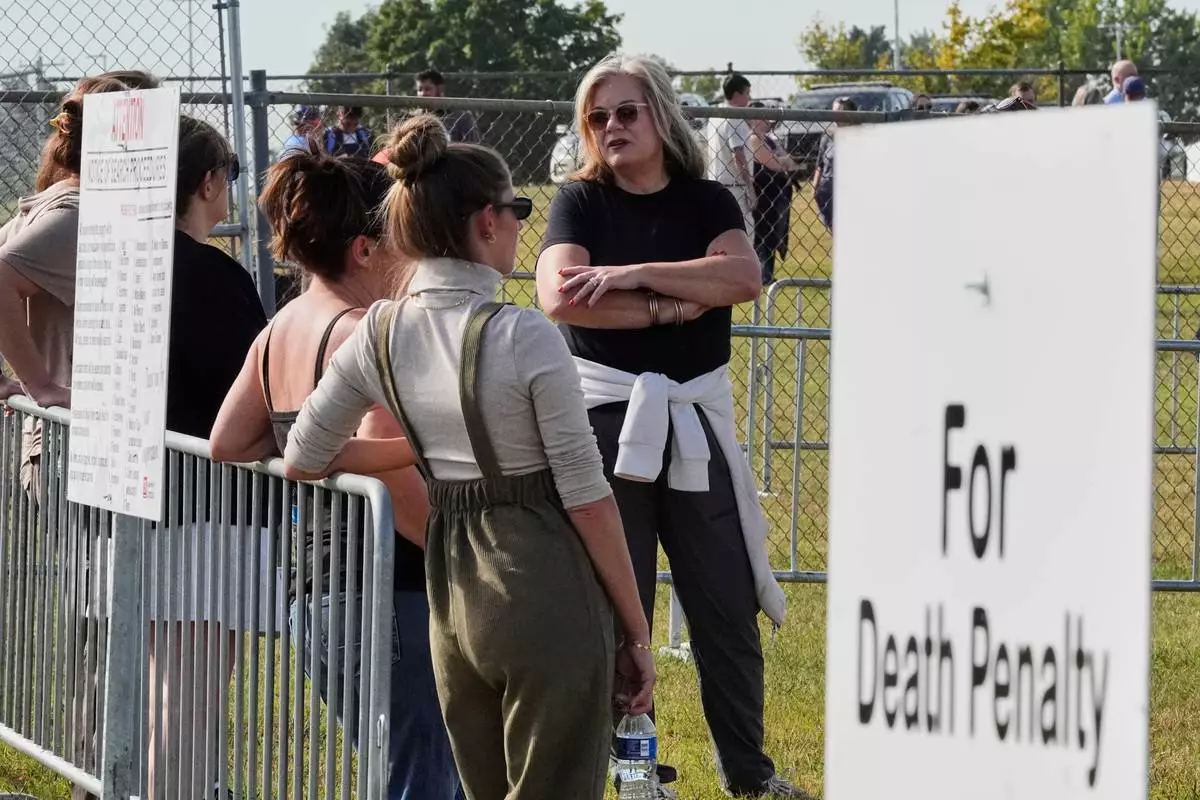
Leslie Brown, right, stands with others in the area reserved for people in favor to the death penalty outside Riverbend Maximum Security Institution before the planned execution of Christa Pike, Wednesday, Sept. 30, 2026, in Nashville, Tenn. (AP Photo/George Walker IV)

Kathleen Walter prays in the area reserved for people opposed to the death penalty outside Riverbend Maximum Security Institution before the planned execution of Christa Pike, Wednesday, Sept. 30, 2026, in Nashville, Tenn. (AP Photo/George Walker IV)
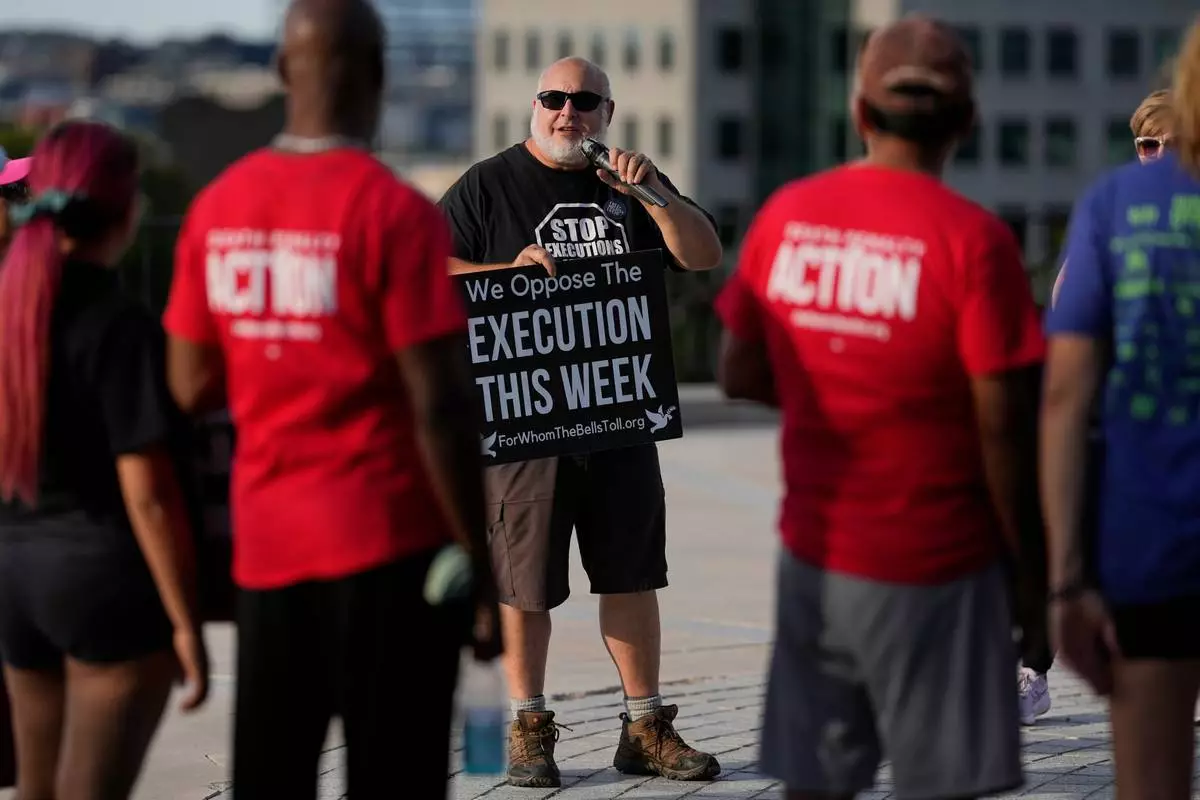
Abraham Bonowitz speaks during a March 4 Mercy protest against the death penalty at the Tennessee State Capitol, Sunday, Sept. 27, 2026, in Nashville, Tenn. ahead of the Sept. 30th scheduled execution of Christa Pike. (AP Photo/George Walker IV)

Alonzo Hughes participates in a March 4 Mercy protest against the death penalty at the Tennessee State Capitol, Sunday, Sept. 27, 2026, in Nashville, Tenn. ahead of the Sept. 30th scheduled execution of Christa Pike. (AP Photo/George Walker IV)

In this image from video provided by WBIR-TV, Christa Pike cries after being sentenced to death on March 30, 1996 in Knoxville, Tenn. (WBIR-TV via AP)
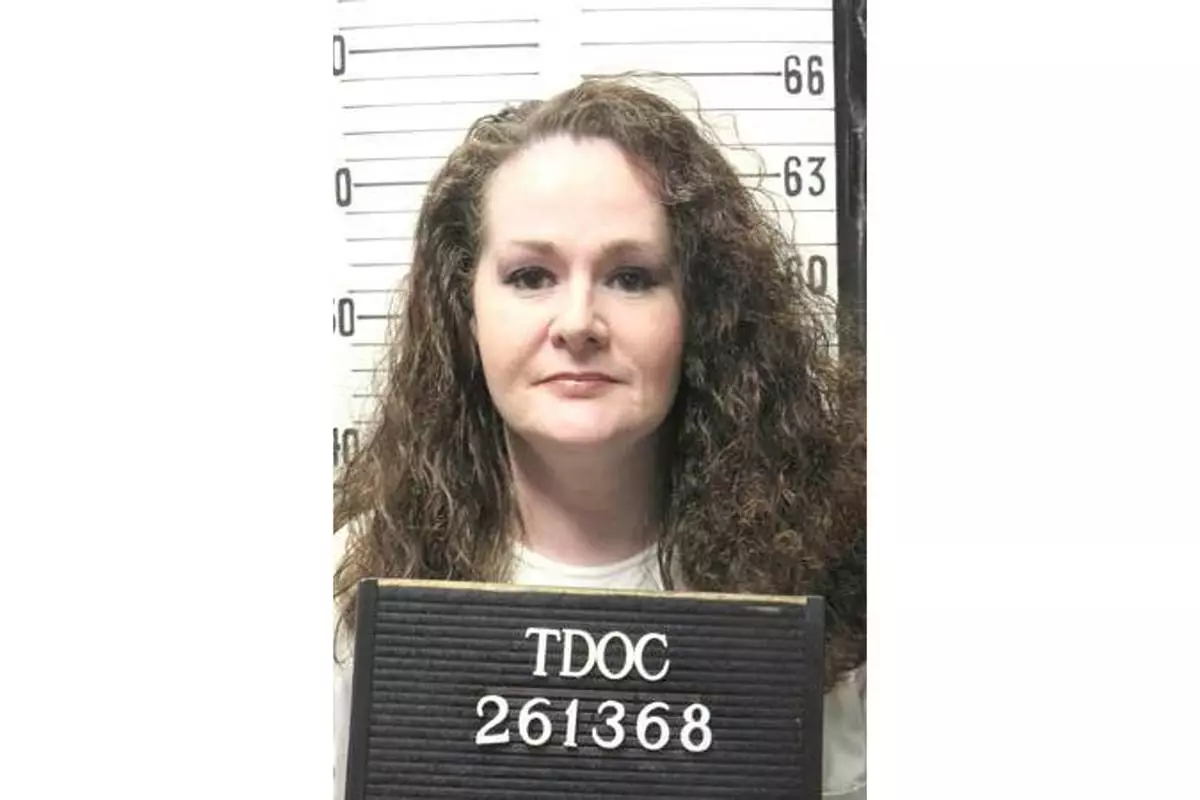
This photo provided by the Tennessee Department of Correction shows Christa Pike on Jan. 12, 2023. (TDOC via AP)