WASHINGTON (AP) — Secretary of State Marco Rubio ordered Iran’s foreign minister and his delegation to the U.N. General Assembly to leave New York earlier than they had planned, two U.S. officials said Wednesday.
The Trump administration had granted visas, albeit with severe restrictions, to Iran’s president and foreign minister and their delegations to attend the annual meeting of world leaders despite the hostilities between the two countries.
While President Masoud Pezeshkian left New York a day after speaking at the United Nations last week, Foreign Minister Abbas Araghchi had remained behind ostensibly to participate in indirect talks with the U.S. on opening the Strait of Hormuz, ending the conflict and resuming negotiations over Iran’s nuclear program.
According to some accounts, Araghchi had planned to stay in New York until Wednesday.
After little progress was made in weekend meetings between Iranian and Qatari mediators, Rubio lost patience and told the Iranians on Monday that Araghchi and his delegation had to leave New York immediately, according to the two officials, who were familiar with the decision and spoke on condition of anonymity to discuss an internal administration process.
Rubio, according to one official, determined that the Iranians had “overstayed their welcome” and that since the high-level meetings at the U.N. were over, they should leave.
Ararghchi and his team departed New York very early Tuesday.
The Iranian U.N. delegation on Wednesday denied that they were ordered to leave.
“The Iranian delegation left New York on Monday evening, in accordance with the schedule that had also been communicated to the U.S. Department of State in advance on September 17,” the delegation wrote on its official X account. “Having achieved nothing, the State Department has resorted to propagating baseless and worthless news.”
Rubio’s decision was first reported by Axios.

Secretary of State Marco Rubio, addresses members of the audience ahead of President Donald Trump's scheduled remarks at the Andrew W. Mellon Auditorium, Tuesday, Sept. 29, 2026, in Washington. (AP Photo/Mark Schiefelbein)

Iran's Foreign Minister Abbas Araghchi speaks to the media during the 81st session of the United Nations General Assembly at United Nations headquarters, Friday, Sept. 25, 2026. (AP Photo/Yuki Iwamura)
NASHVILLE, Tenn. (AP) — Tennessee officials were unable to put Christa Gail Pike to death for a 1995 murder Wednesday, media witnesses said, after the lethal injection was halted for hours as courts considered a last-minute appeal of what would have been the state’s first execution of a woman in at least 200 years.
Pike, 50, had been scheduled for execution for a killing she committed at age 18 after the U.S. Supreme Court overturned an appeals court ruling that stopped the lethal injection just an hour before it was to start.
Officials appeared to give Pike two doses of pentobarbital.
At 7:46 p.m. prison officials closed the curtain to the media room. They raised the curtain three minutes later. Pike could be heard loudly snoring, and the curtain was closed again at 8:06 pm.
Pike continued to be heard snoring behind the closed curtain until the microphone was cut off at about 8:53 p.m. At that time there was an announcement to escort media witnesses out of the area.
Tennessee Department of Correction spokesman Dorinda Carter told media witnesses she was unable to immediately provide information about what happened.
Lawyers for Pike filed an emergency motion late Wednesday to the U.S. Supreme Court seeking to immediately halt and stay the execution, saying she was in “unnecessary agony” and it was violating her right to be executed free of cruel and unusual punishment. They also filed motions in the Sixth Circuit court and district court.
The motion also asserted that the Department of Correction should begin lifesaving measures. “Failure to provide such care constitutes deliberate indifference to legitimate, serious medical needs.”
Pike and her boyfriend were convicted of the fatal stabbing and beating in 1995 of 19-year-old Colleen Slemmer, their classmate at a job training facility in Knoxville. The case garnered widespread attention in part because a pentagram that was carved on Slemmer’s body and other elements of the crime stoked fears of Satan worship during the “satanic panic” of the 1980s and 1990s.
She was initially scheduled to be put to death in the morning, and witnesses had already gathered at the Riverbend Maximum Security Institution in Nashville when the 6th Circuit U.S. Court of Appeals voted 2-1 to issue a stay. That court said a delay was needed to consider whether Pike’s allegations of childhood sexual abuse were fully considered at her sentencing.
But later in the day, the U.S. Supreme Court cleared the way for the execution to proceed. The Supreme Court’s conservative majority did not explain their order, while the three liberal members signed a dissent that said Pike’s claims deserved a closer look.
A spokesperson for the Tennessee Department of Correction then said it would proceed with the execution ahead of a midnight cutoff.
After the stay was issued, Tennessee’s attorney general immediately appealed to the U.S. Supreme Court. Witnesses and media remained at the prison while the high court considered the case.
The attorney general's office said in its appeal that halting the execution at the last moment traumatized Slemmer’s family and rewarded “abusive delay tactics” by Pike’s attorneys.
Supreme Court Justice Sonia Sotomayor wrote in the dissent that the decision to vacate the stay interfered with the Sixth Circuit court's handling of the case and “unnecessarily prevents that court from giving due consideration to Pike’s claim.”
Pike does not deny committing the killing, but her supporters argue the state should consider her age at the time, her mental illness and her allegations of severe sexual abuse that included being raped from the time she was a toddler.
“It is inconceivable that in the 21st century, the criminal justice system is poised to execute a survivor of rape and child sexual abuse whose jury never had the opportunity to consider those facts in weighing the defendant’s moral culpability,” her attorneys wrote in a filing.
As the execution date drew near, the case renewed debate over the death penalty for young offenders.
Assistant Federal Defender Stephen Ferrell said Pike’s death sentence is an outlier because other 18-year-olds in Tennessee have had such sentences vacated.
After the killing, Pike was diagnosed with bipolar disorder and post-traumatic stress disorder. In her clemency petition, she said she only wanted to fight Slemmer but killed her in a frenzied attack when she couldn’t “put the brakes on.”
“I was a mentally ill 18-year-old kid. It took me numerous years to even realize the gravity of what I’d done. Even more to accept how many lives I affected. I took the life of someone’s child, sister, friend. It sickens me now to think I had the ability to commit such a crime,” Pike said in a statement.
Slemmer’s mother wants the lethal injection to go forward, saying she has waited decades to see Pike’s sentence carried out.
“Every time I think about it, I think about Colleen feeling that pain and trying to get up and run,” May Martinez told The Associated Press in a telephone interview on Saturday.
Martinez said a group helped raise money so she and her husband could travel from Florida to witness the execution. She didn't respond to a message Wednesday after the execution was halted.
Martinez said her daughter's age also should matter in deciding Pike's fate.
“Not a day goes by, or a minute goes by that I do not think about Colleen. Holidays are the worst,” she said, noting that her daughter would have turned 51 earlier in September.
The killing rocked the city of Knoxville. Prosecutors said Pike, fearing Slemmer was trying to steal her boyfriend, lured her to a wooded area on Jan. 12, 1995. Pike cut Slemmer with a box cutter and beat her with a large chunk of asphalt. Shipp, Pike’s boyfriend, has admitted that he was the one who carved a pentagram, a star-shaped symbol associated with Satan, into her body.
Shipp was 17 when the crime happened and received a sentence of life in prison with the possibility of parole. Pike was the only one sentenced to death.
Tennessee has not executed a woman for at least 200 years, according to Robin M. Maher, executive director of the Death Penalty Information Center. Older records can be spotty, though, so it is difficult to know precise details about the last woman who was put to death there.
Since the Supreme Court reinstated the death penalty in 1976, 18 women have been put to death, representing about 1% of all executions, according to the center.
Most recently, in 2023, Missouri executed Amber McLaughlin for a 2003 killing, in what is believed to be the first execution of a transgender woman in the U.S. In 2021 the federal government executed Lisa Montgomery, marking the first time in nearly seven decades that it put a female inmate to death.
Pike would be the 30th person executed in the U.S. this year after Florida carried out an execution on Tuesday.
Associated Press writers Jeffrey Collins in Columbia, South Carolina, Ed White in Detroit and Hallie Golden in Seattle contributed.

May Martinez, left, mother of murder victim Colleen Slemmer, walks out of Riverbend Maximum Security Institution during a stay of the planned execution of Christa Pike, Wednesday, Sept. 30, 2026, in Nashville, Tenn. (AP Photo/George Walker IV)
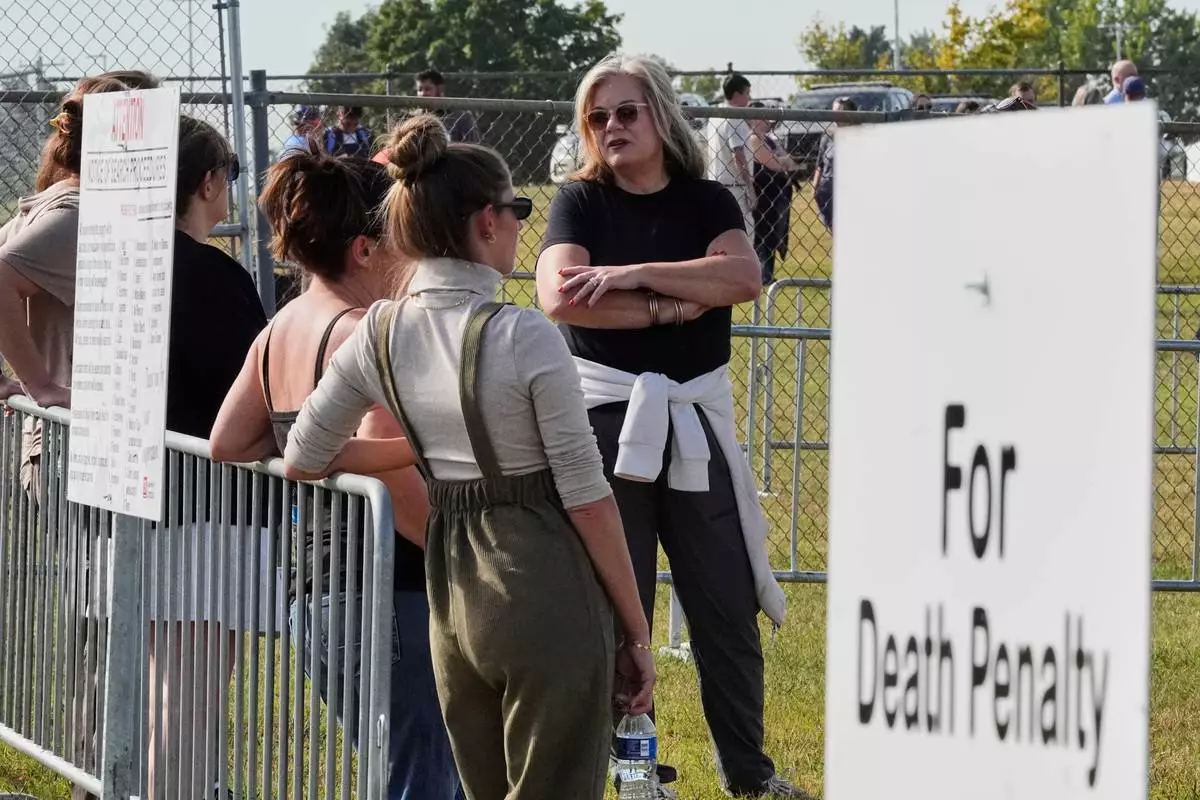
Leslie Brown, right, stands with others in the area reserved for people in favor to the death penalty outside Riverbend Maximum Security Institution before the planned execution of Christa Pike, Wednesday, Sept. 30, 2026, in Nashville, Tenn. (AP Photo/George Walker IV)

Kathleen Walter prays in the area reserved for people opposed to the death penalty outside Riverbend Maximum Security Institution before the planned execution of Christa Pike, Wednesday, Sept. 30, 2026, in Nashville, Tenn. (AP Photo/George Walker IV)
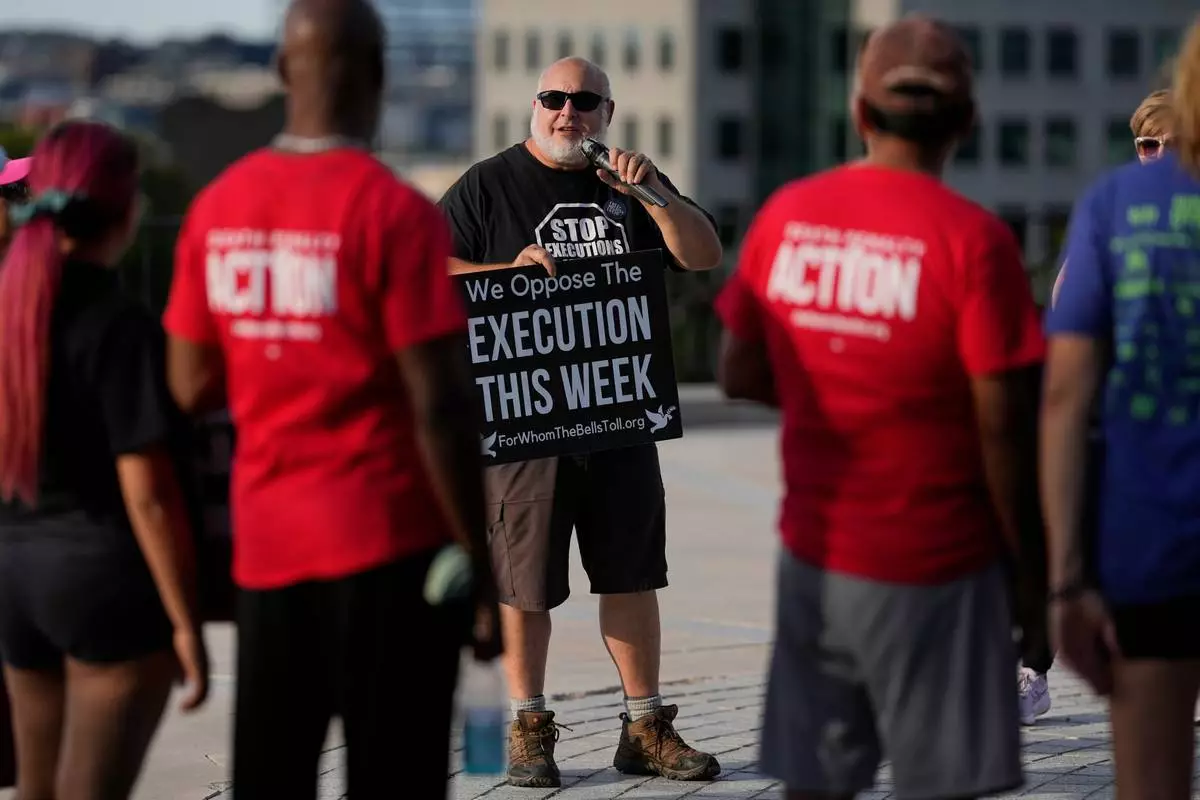
Abraham Bonowitz speaks during a March 4 Mercy protest against the death penalty at the Tennessee State Capitol, Sunday, Sept. 27, 2026, in Nashville, Tenn. ahead of the Sept. 30th scheduled execution of Christa Pike. (AP Photo/George Walker IV)

Alonzo Hughes participates in a March 4 Mercy protest against the death penalty at the Tennessee State Capitol, Sunday, Sept. 27, 2026, in Nashville, Tenn. ahead of the Sept. 30th scheduled execution of Christa Pike. (AP Photo/George Walker IV)
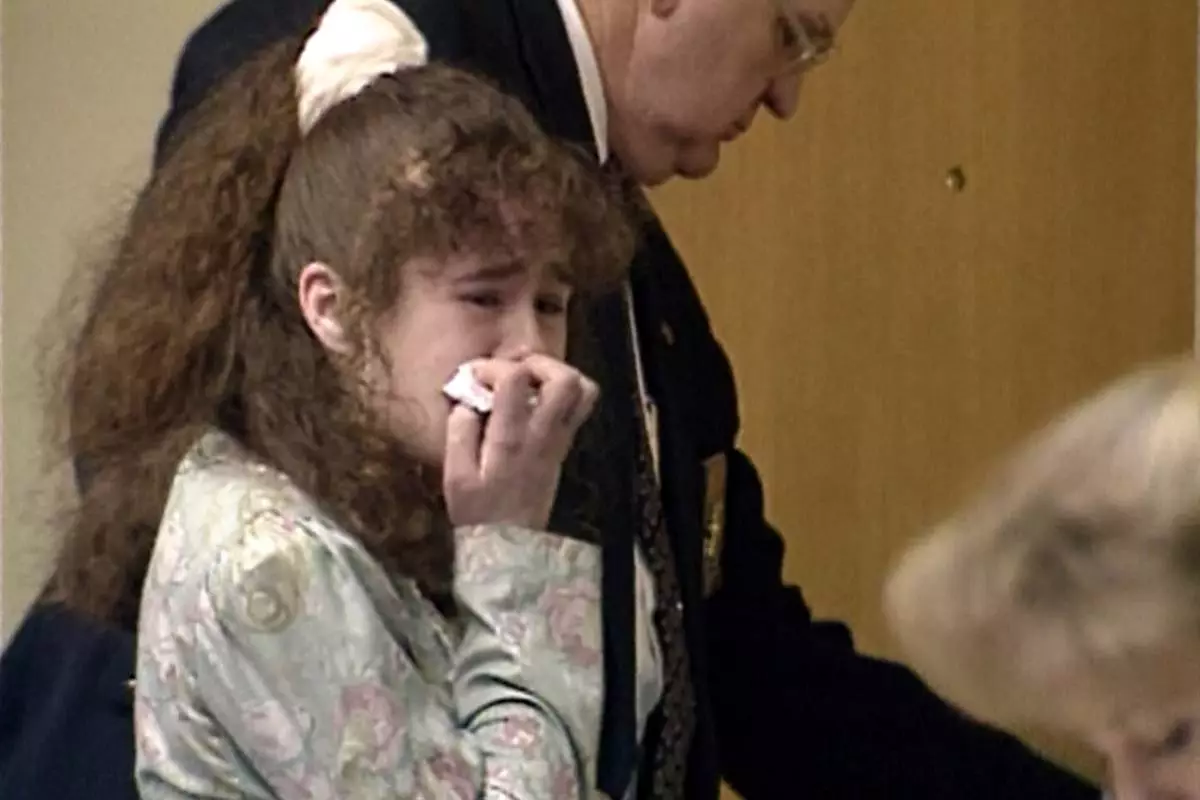
In this image from video provided by WBIR-TV, Christa Pike cries after being sentenced to death on March 30, 1996 in Knoxville, Tenn. (WBIR-TV via AP)
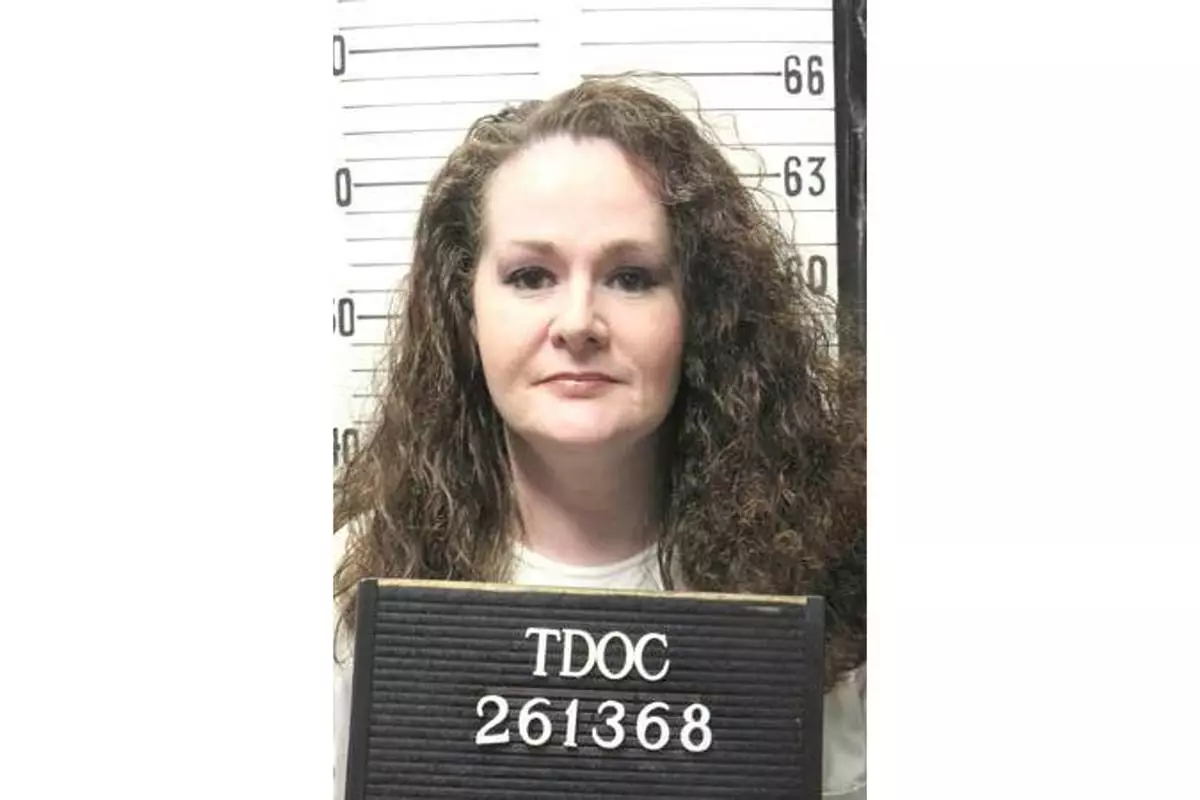
This photo provided by the Tennessee Department of Correction shows Christa Pike on Jan. 12, 2023. (TDOC via AP)