LINKÖPING, Sweden--(BUSINESS WIRE)--Oct 1, 2026--
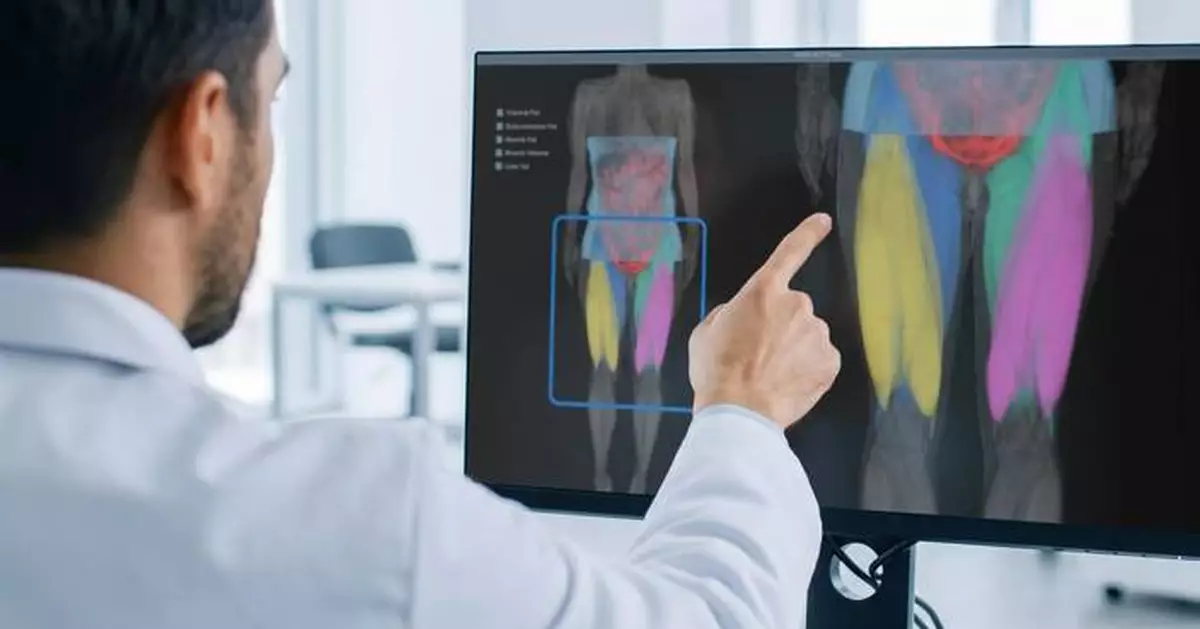
As obesity treatment continues to evolve, understanding what happens to muscle during weight loss is becoming increasingly important. At the 62nd Annual Meeting of the European Association for the Study of Diabetes (EASD),AMRA Medical Chief Scientific Officer Dr. Jennifer Linge will present how advanced MRI-based analysis can provide a more detailed view of changes in muscle composition during obesity treatment.
This press release features multimedia. View the full release here: https://www.businesswire.com/news/home/20260930545312/en/
The presentation addresses an increasingly important question in obesity research: what happens to muscle as people lose weight? Understanding muscle composition changes is important because muscle health is about more than muscle size alone. Research using AMRA’s MRI-derived biomarkers has shown that muscle fat infiltration and muscle volume Z-score are independently associated with long-term outcomes, including all-cause mortality, and physical function, with stronger associations typically observed for muscle fat infiltration.
AMRA’s technology enables researchers to quantify these characteristics independently. Muscle fat infiltration provides insight into the amount of fat within muscle while muscle volume Z-score measures muscle volume relative to a person’s body size. Together, these measures can provide a more detailed picture of muscle change than body weight, BMI and lean mass combined.
“Body weight and lean mass does not tell us what is happening to muscle during weight loss,” said Dr. Jennifer Linge, Chief Scientific Officer at AMRA Medical. “Quantitative MRI allows us to look directly at, as well as inside, the muscle and separately measure changes in its volume and composition. This provides researchers with a deeper, and more relevant, level of information for understanding how the body responds during obesity treatment.”
Previous obesity treatment studies using MRI have shown that improvements in muscle composition can occur alongside a reduction in muscle volume. The data Dr. Linge will be presenting at the meeting highlights the value of advanced MRI in revealing how the treatment can affect muscle—changes that are not apparent from assessing magnitude of weight loss and lean mass.
Dr. Linge will present “COURAGE Body Composition: Muscle Composition Assessed by MRI” as part of the EASD symposium, “Preserving muscle during GLP-1 RA treatment: insights from the trevogrumab COURAGE study,” on Thursday, October 1, in Milan, Italy.
For AMRA, the presentation reflects a longstanding focus on developing and validating quantitative MRI biomarkers that enable pharmaceutical companies and clinical researchers to characterize changes in muscle and fat more precisely. As obesity treatments advance, these technologies can help researchers move beyond how much weight is lost toward a more detailed understanding of what is changing inside the body during treatment .
To learn more about AMRA’s quantitative MRI solutions for obesity and metabolic research, visit our Research Services page.
AboutAMRA Medical
AMRA Medical is a global leader in health informatics, pioneering the field of fat and muscle analysis with proprietary, MRI-based technologies. Our gold-standard platform delivers highly precise and standardized biomarkers, providing an advanced understanding of metabolic and musculoskeletal health that surpasses conventional measures of muscle and fat. These insights play a critical role in optimizing clinical trial design, improving endpoint selection, and supporting data-driven decision-making in both research and clinical practice.
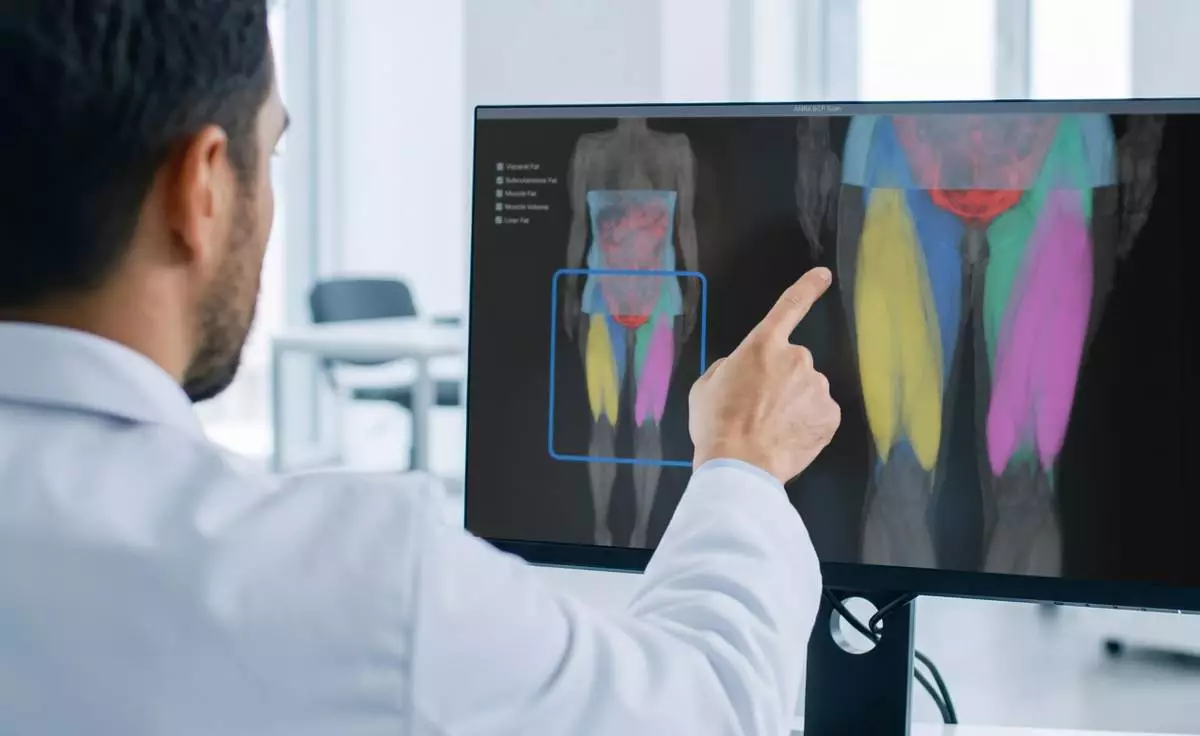
Advanced MRI-based analysis can provide a more detailed view of changes in muscle composition during obesity treatment
ZURICH, Switzerland (AP) — Glaciers in Switzerland – the home to the most in the Alps – lost 5.5% of their ice volume this year, the second-biggest percentage drop on record due to heat waves and low winter snowfall, experts report.
“Alpine glaciers have no chance of surviving in the long term under such conditions,” the GLAMOS Swiss glacier monitoring service and Swiss Academy of Sciences said in a statement released Thursday.
The trend has worsened in recent years: Over the past five years alone, the volume of ice in Switzerland has declined by nearly a fifth, the experts say.
The report testifies to the latest concerns that global warming is wreaking havoc on Europe, the world’s fastest-warming continent.
“The warming that we are experiencing now can be attributed 100% to anthropogenic climate change. It’s as simple as that,” said Matthias Huss, who heads GLAMOS. “Without human emissions or fossil fuels we wouldn’t have any warming at the moment.”
The record retreat of glacier ice in Switzerland came in 2022, when summer heat, low winter snowfall and an unusual smattering of reddish dust blown in from the Sahara darkened the glaciers and caused them to absorb more heat.
Huss said the snow cover in winter was important for two reasons.
“On the one hand, it protects the bare ice from melting. The longer you have snow, the longer you avoid the loss of old ice,” said Huss in an interview at the Federal Polytechnic Institute ETHZ, where he is a glaciology professor.
“On the other hand, the snow is important also for generating new food for the glacier. The more snow you have, the higher the potential to keep some of the snow at high elevation and to form new ice,” Huss added.
The great thaw in Europe’s legendary Alps is not alone: Experts say global warming helped to destabilize a Himalayan slope that collapsed in August and unleashed catastrophic and deadly flooding across Nepal. Satellites have shown vast shrinkage of glaciers in places like Greenland and Antarctica over the last half-century or so.
In Switzerland, in absolute terms, volume lost has been less than that in 2003, but the percentage decline this year is greater. That’s because the total volume today is roughly a third of that 23 years ago. Back then, the relative loss was 3.5% of total ice volume in Swiss glaciers.
Such accelerated ice melt has had an impact in Switzerland — the loss of 2.2 trillion liters (581 billion gallons) from July to September amounts to four times the annual consumption of water in the country of about 9.1 million people. Switzerland gets more than half of its electricity from hydropower.
But the impact of accelerated glacier melt ripples far beyond: Switzerland is the water tower of Europe, and feeds some of the continent’s most important rivers: The Danube, Po, Rhine and Rhone.
The experts say the “extreme melting” faced by Switzerland’s glaciers this year included a decline in the average thickness of individual glaciers between 2-1/2 to 4 meters (about 8-13 feet) — and a reduction of up 10 meters (33 feet) on the tongue of some glaciers.
The expert teams have fanned out to assess runoff and crevices caused by the running water through the glaciers, in part by dumping red dye into the streams to track the water flows.
The Allalin, Clarident, Rhone and Aletsch glaciers — Aletsch being the largest in the Alps — were among the glaciers to experience their biggest melt on record this year.
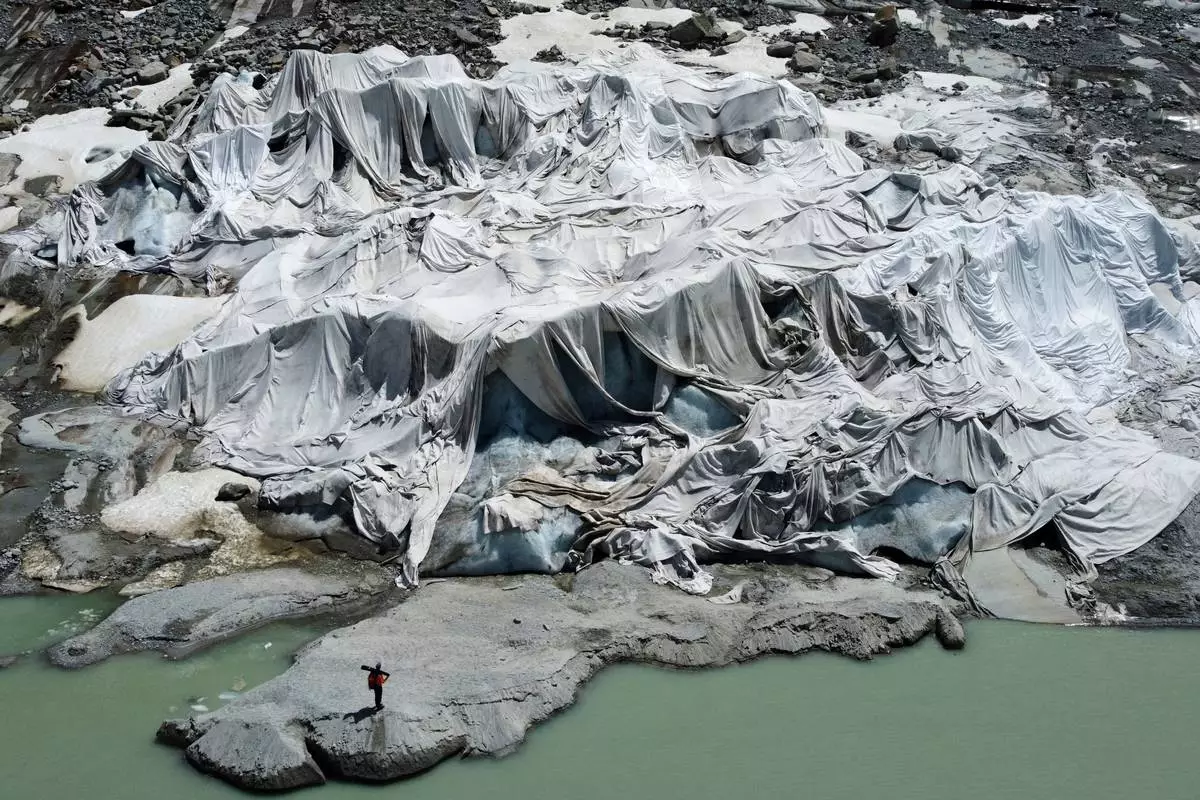
FILE — The Rhone Glacier near Goms, Switzerland, is partially covered with sheets as Matthias Huss, head of the Swiss glacier monitoring group GLAMOS, stands nearby, on June 10, 2025. (AP Photo/Matthias Schrader, File)
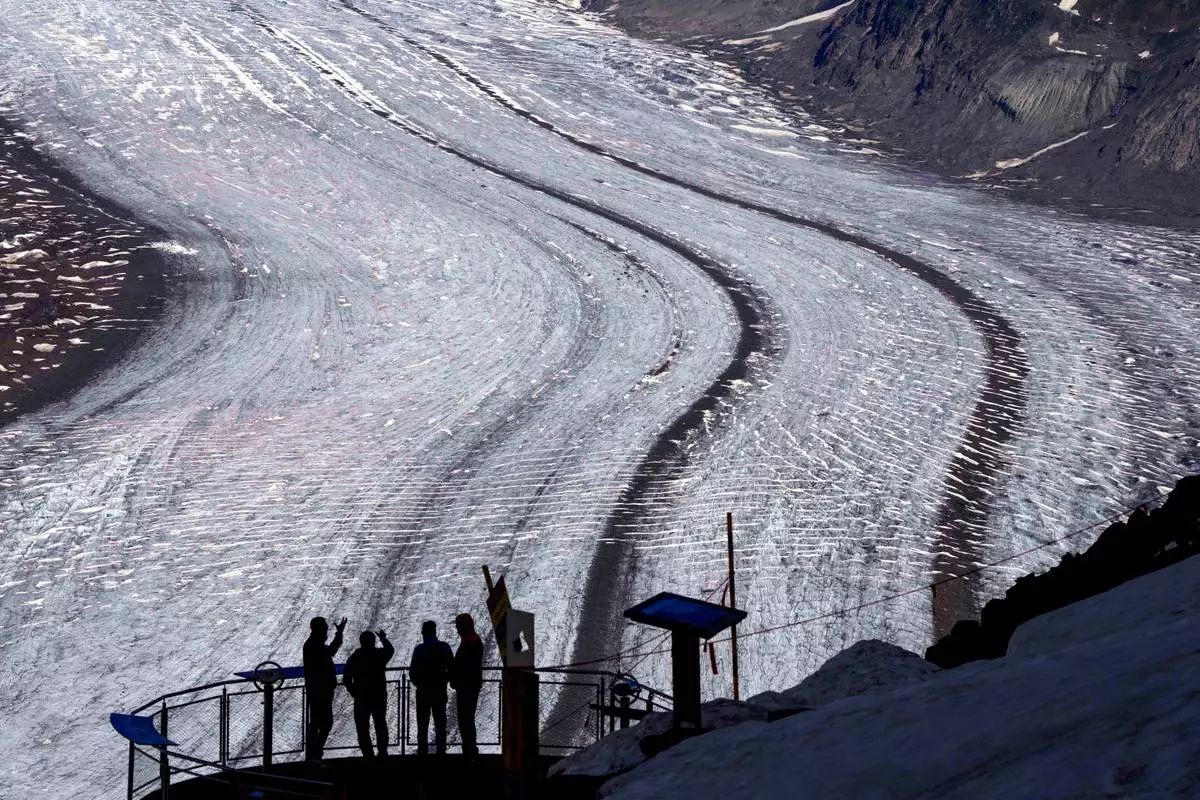
FILE — People enjoy the view at the Aletsch Glacier near Goms, Switzerland, June 14, 2023. (AP Photo/Matthias Schrader, File)
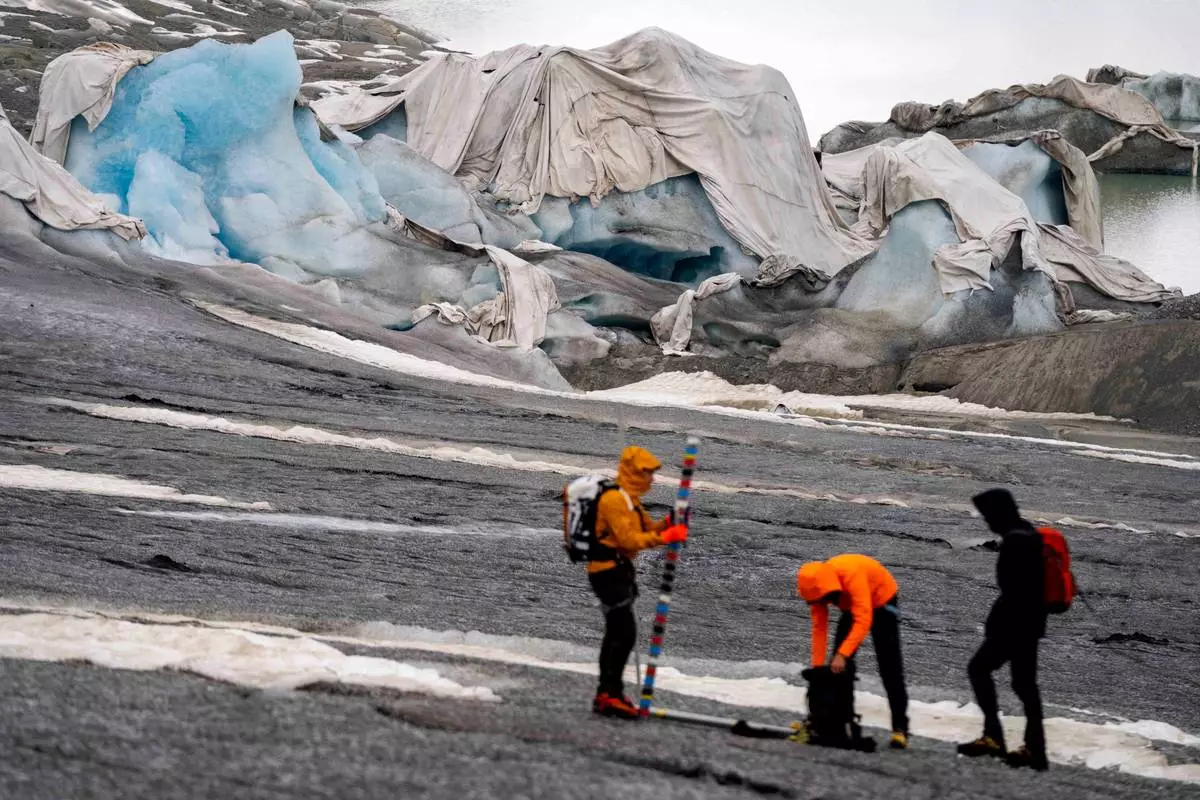
FILE — Swiss Federal Institute of Technology glaciologist and head of the Swiss measurement network 'Glamos', Matthias Huss, center, and his assistants arrive at the Rhone glacier near Goms, Switzerland, June 16, 2023. (AP Photo/Matthias Schrader)
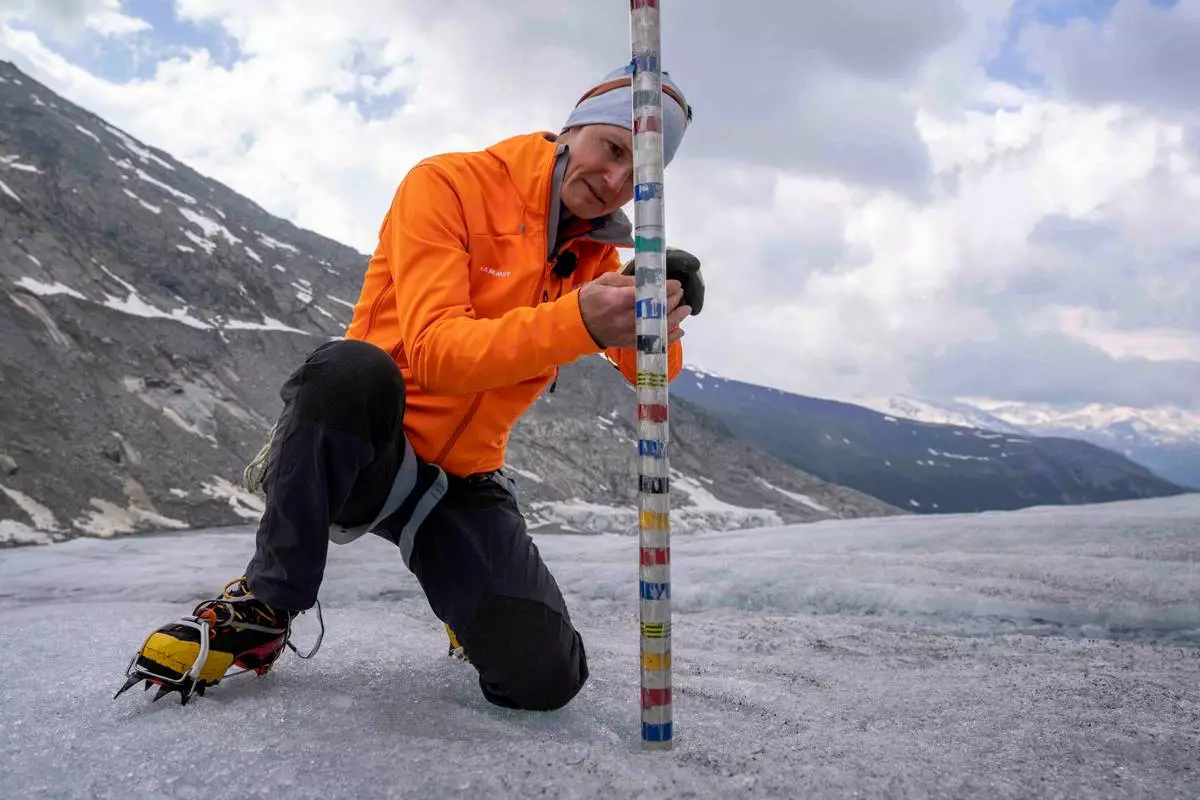
FILE - ETH (Swiss Federal Institute of Technology) glaciologist and head of the Swiss measurement network Glamos, Matthias Huss, checks the thickness of the Rhone Glacier near Goms, Switzerland, June 16, 2023. (AP Photo/Matthias Schrader, File)
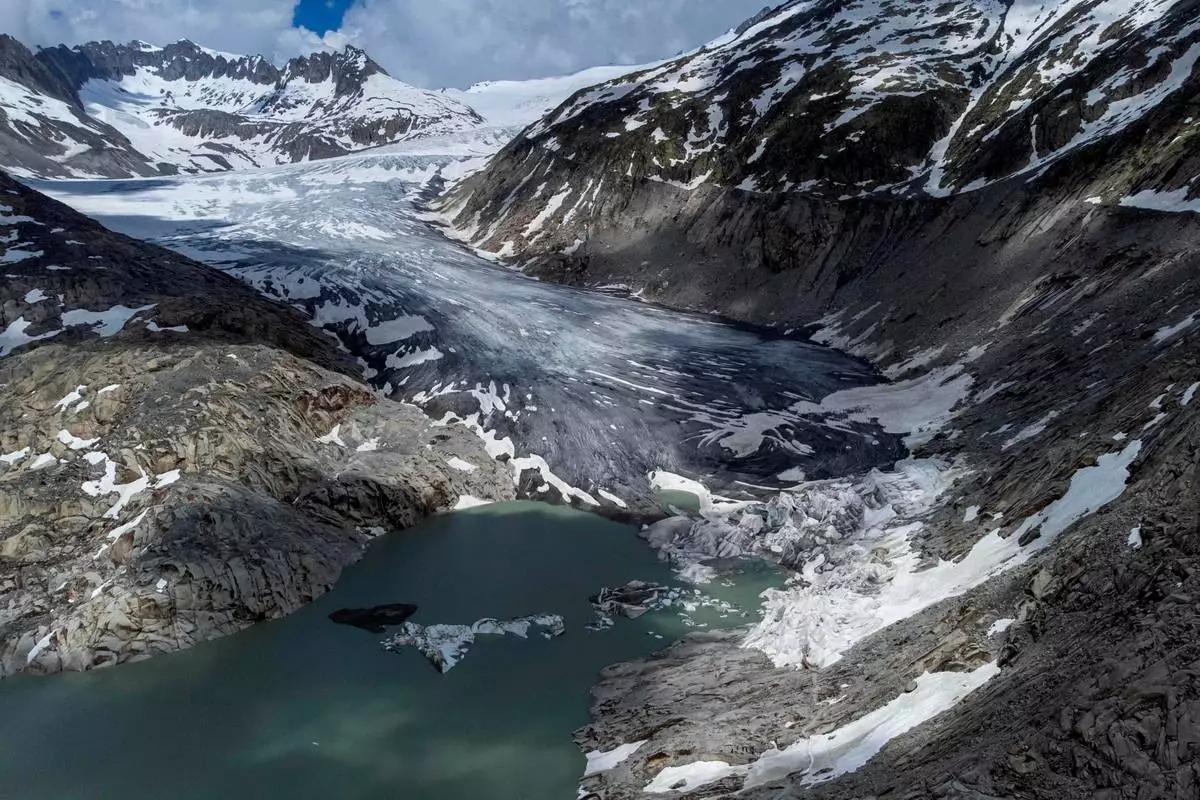
FILE — A lake of meltwater has formed on the tongue of the Rhone glacier near Goms, Switzerland, June 13, 2023. (AP Photo/Matthias Schrader, File)