Skip to Content Facebook Feature Image

Susan G. Komen® Launches new Breast Honesty™ Platform to Confront the Urgent Realities of Breast Cancer and Challenges us to do Better

Business

Susan G. Komen® Launches new Breast Honesty™ Platform to Confront the Urgent Realities of Breast Cancer and Challenges us to do Better
Business

Business

Susan G. Komen® Launches new Breast Honesty™ Platform to Confront the Urgent Realities of Breast Cancer and Challenges us to do Better

2026-10-01 20:03 Last Updated At:20:10

DALLAS--(BUSINESS WIRE)--Oct 1, 2026--

Susan G. Komen®, the world’s leading nonprofit breast cancer organization, today launched “ Don’t Fail the Girls,” a new national campaign calling on the public to make ending deaths from breast cancer urgent for a new generation. The campaign is built on Komen’s Breast Honesty™ platform, which empowers people to have open, honest conversations about breast health, understand their personal risk and push for timely, high-quality care for everyone.

This press release features multimedia. View the full release here: https://www.businesswire.com/news/home/20261001605314/en/

“Breast cancer is not over. It is pervasive and this year will be responsible for nearly 43,000 deaths in the U.S. We’re losing someone’s mother, daughter, sister, father, friend or colleague — someone you know and love,” said Amber Guild, CEO of Susan G. Komen. “That is the urgency of this moment — and it underscores the importance of the work that remains to be done. We still see people diagnosed too young, too late or without access to the high-quality care they need and deserve. And we still have unacceptable disparities in who survives. ‘Don’t Fail the Girls’ is our call to make these truths impossible to ignore, and to bring new urgency to the fight to create a future where no one dies from breast cancer.”

Despite decades of progress, breast cancer remains one of the nation's most urgent health challenges and shows no signs of stopping. Nearly 325,000 women and men in the U.S. are expected to be diagnosed with breast cancer this year, and about every 12 minutes, someone will die from breast cancer.

The disease knows no bounds, whether it be age, gender, race or geography. It is rising faster among women under 50 than over 50 in the U.S., including many who believe they are too young to be at risk. Black women in the U.S. continue to face delays in diagnosis, inequitable access to care and differences in treatment, and higher incidence of aggressive types of breast cancer, among other factors, making them on average about 40% more likely to die from breast cancer than white women. This means that in some communities the mortality rate is even higher. Metastatic breast cancer (MBC), also known as stage 4 breast cancer, is the most advanced stage of the disease and is responsible for nearly all breast cancer deaths. An estimated 170,000 people in the U.S. are living with metastatic breast cancer.

The “Don’t Fail the Girls” campaign, a charge to all to stand with those facing breast cancer now, and do better for everyone who may face it next, comes to life through three key campaign elements:

Since its founding in 1982, Komen has invested more than $1.1 billion in breast cancer research and is the largest nonprofit funder of breast cancer research after the U.S. government and has contributed to nearly 4,300 scientific discoveries and played a role in 31 of the 32 FDA-approved breast cancer drugs developed over the past three decades. These breakthroughs are giving people with early stage and metastatic breast cancers more time, more options and more hope. Komen has also invested approximately $2.7 billion in patient support and advocacy programs worldwide, helping millions of people access high-quality care. But despite this progress, breast cancer remains one of the nation’s most urgent health challenges. Progress alone isn’t enough when families continue to lose loved ones every day — we have to move faster and turn what we’ve learned into more lives saved.

Every person who donates, volunteers, registers for an event or joins the conversation helps fund groundbreaking research, supports people impacted by breast cancer today and fuels advocacy that improves access to high-quality care. To join the movement, donate or connect with a patient navigator through Komen’s Patient Care Center, visit Komen.org or call 1-877 GO KOMEN (1-877-465-6636).

About Susan G. Komen®

Susan G. Komen® is the world’s leading nonprofit breast cancer organization, working toward a future where no one dies from breast cancer. Komen has an unmatched, comprehensive 360-degree approach to fighting this disease across all fronts and supporting millions of people in the U.S. and in countries worldwide. We advocate for patients, drive research breakthroughs, improve access to high-quality care, offer direct patient support and empower people with trustworthy information. Founded by Nancy G. Brinker, who promised her sister, Susan G. Komen, that she would end the disease that claimed Suzy’s life, Komen remains committed to supporting those affected by breast cancer today, while tirelessly searching for tomorrow’s cures. Visit komen.org or call 1-877 GO KOMEN. Connect with us on social at www.komen.org/contact-us/follow-us/.

Susan G. Komen® Launches new Breast Honesty™ Platform to Confront the Urgent Realities of Breast Cancer and Challenges us to do Better

Susan G. Komen® Launches new Breast Honesty™ Platform to Confront the Urgent Realities of Breast Cancer and Challenges us to do Better
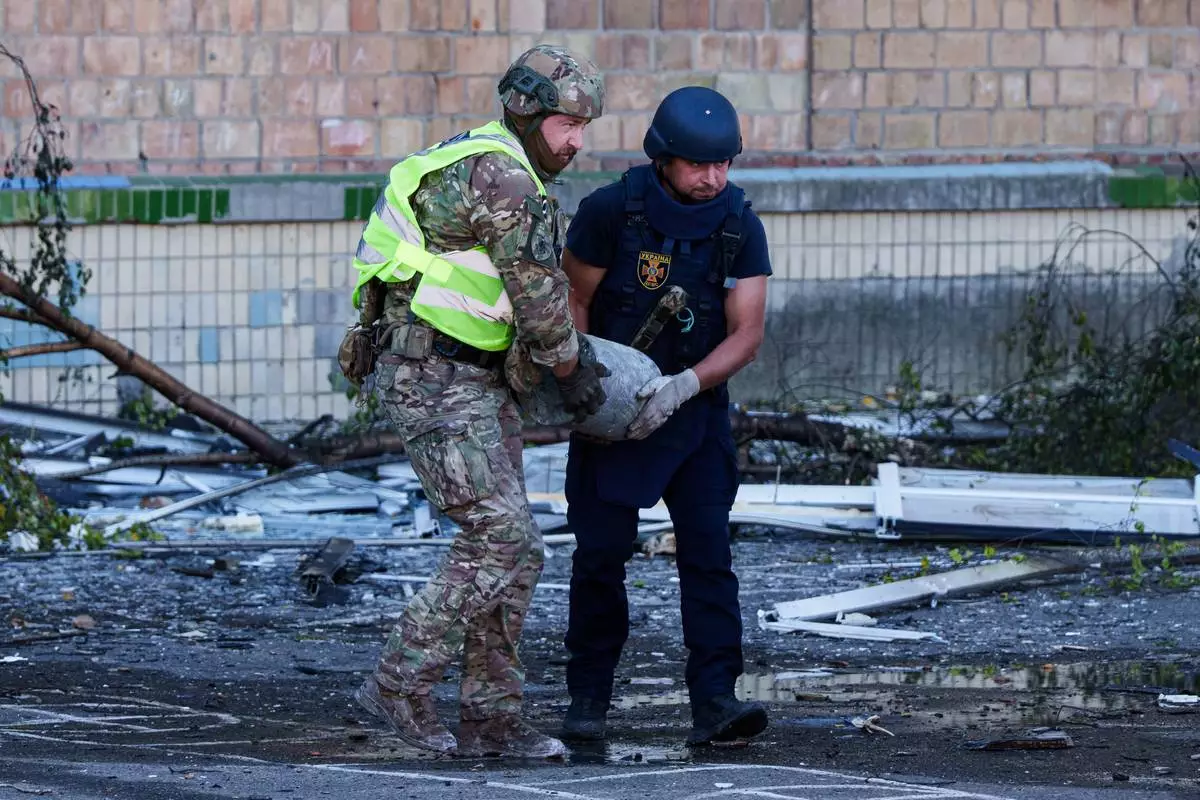
KYIV, Ukraine (AP) — A Russian drone struck a school in Kyiv on Thursday, city officials said, as the Ukrainian capital endured another day of relentless aerial attacks.

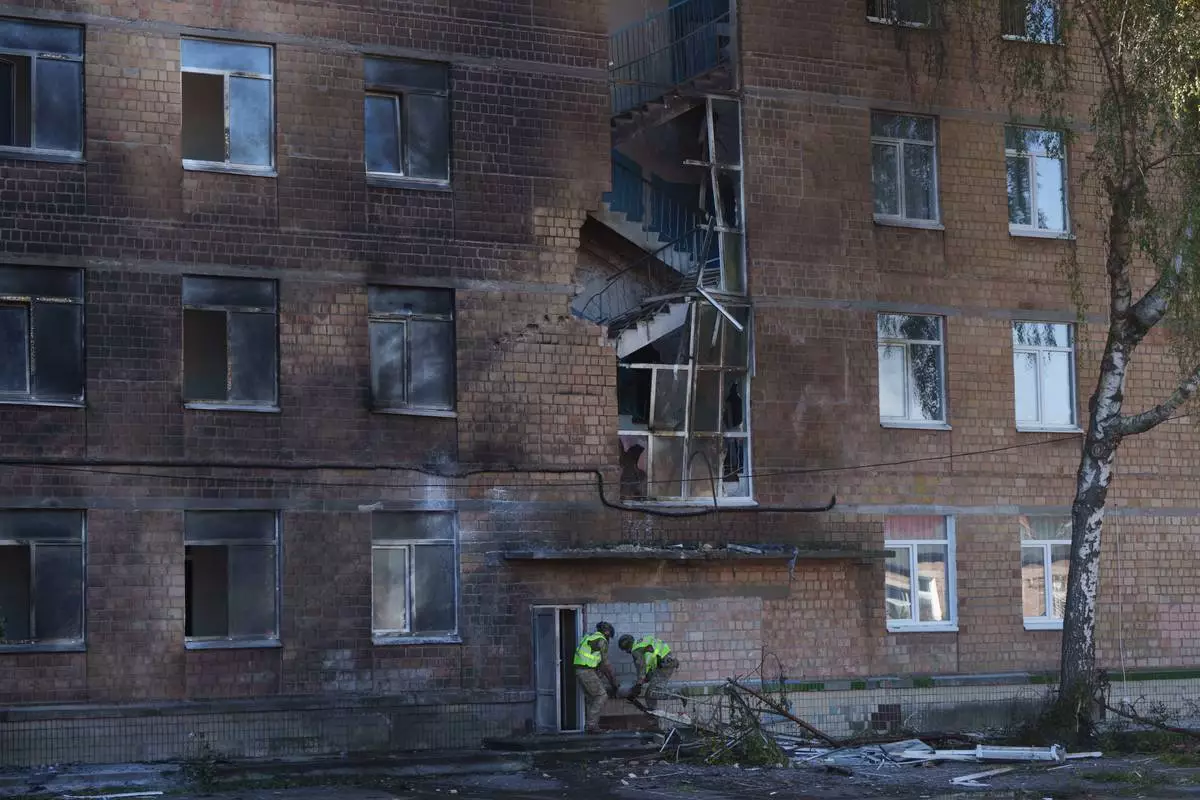
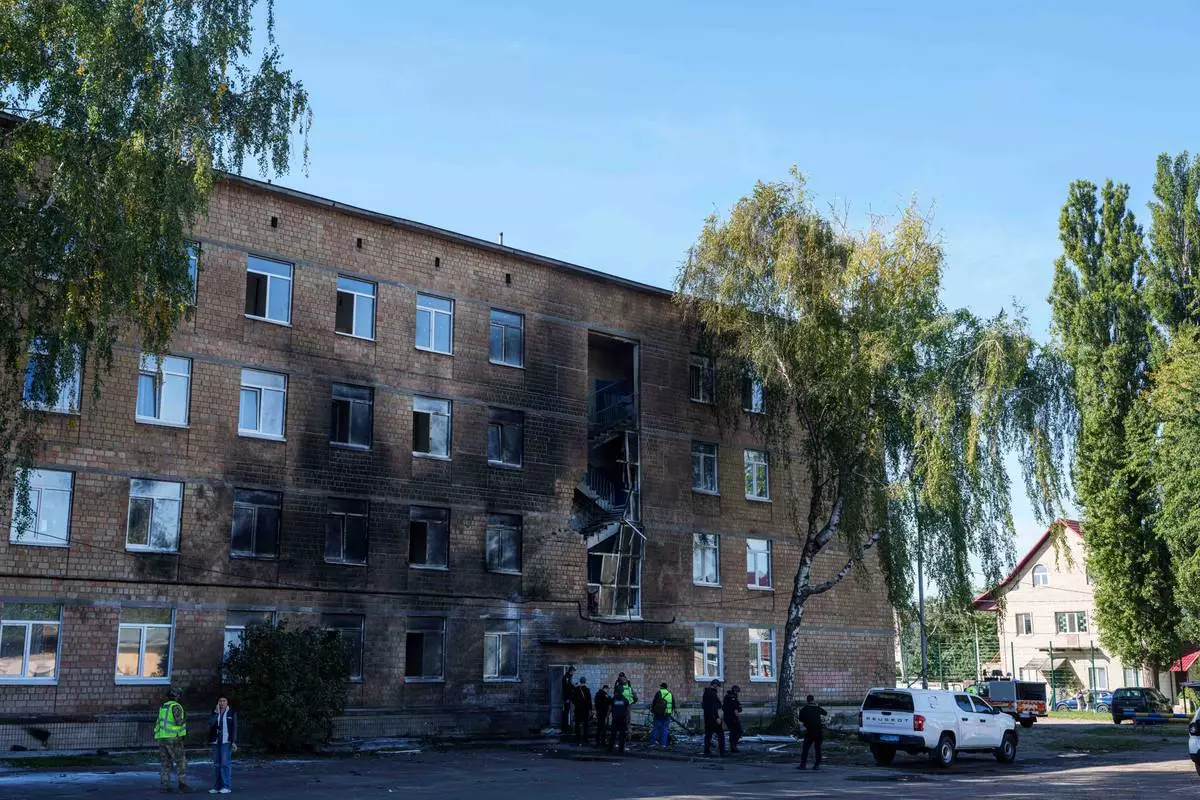
Children and staff at the school were in shelters when the drone hit, Mayor Vitalii Klitschko said, and its warhead didn’t explode. No casualties were reported, but the building’s brick facade showed a large hole, revealing a staircase, and burn marks alongside smashed windows.

Kyiv has felt like a city under siege in recent weeks, with repeated air raid alerts, punctuated by loud explosions from drone and missile strikes. The onslaught aims to terrorize civilians, officials and analysts say, and break their will to resist 4½ years after Russia’s full-scale invasion.

The strain is showing. Maryna Lystopad, 35, said her hair has started falling out due to the stress from escalating attacks and never knowing where the next attack will hit.

"It’s really horrible. I can’t take it anymore. I think, I think that soon we’re all going to leave. I’m really not doing well,” she told The Associated Press. “I’m constantly anxious. I can’t relax. I keep thinking that if something happens, if something hits, one of my relatives could be killed.”

Lystopad said she recently had to travel to another part of Kyiv and had been “genuinely stressed" the whole way there.

“I kept checking, like, whether anything was flying in, where it was going, where am I supposed to go? Where am I supposed to run?” she said.

The front line in eastern and southern Ukraine hasn’t seen major shifts since last year, but the country is struggling to fend off Russia’s intensified aerial attacks on cities that include ballistic missiles and high-flying jet-powered drones.

In response, Ukraine has fired its long-range drones at manufacturing plants deep inside Russia and has targeted Russia’s drone launch sites. Ukrainian President Volodymyr Zelenskyy said Thursday that Kyiv’s forces struck a site in Russia’s southwestern Oryol region that is used to store and launch attack drones.

To turn the tide, Ukraine needs U.S.-made Patriot missiles that can effectively defend against ballistic missiles, but they are in short supply since the Iran war began. A plan to produce them inside Ukraine could take years to bear fruit.

Kyiv is racing to produce interceptors that can bring down fast-moving jet-propelled drones as the swift cycle of military innovation during the war continues.

Ukraine also wants tougher sanctions imposed on Russia to prevent it from getting key high-tech components for its arsenal.

Britain on Thursday imposed sanctions on 31 Russian individuals, entities and ships it says are linked to disinformation, attempts to avoid energy sanctions and the mistreatment of Ukrainian civilians in areas seized in the war by Russia.

Moscow, meanwhile, is pressing its advantage before Ukraine comes up with an answer to the latest challenges.

Two Russian drones hit an important bridge across the Dnipro River in Kyiv on Thursday, Klitschko said, with traffic suspended until a safety inspection could be done.

Ukrainian officials didn’t report any energy infrastructure being hit Thursday, a day after what officials said was the biggest Russian attack on the power grid since spring.

Wednesday's barrage marked “the beginning of Russia’s strike campaign aimed at degrading Ukraine’s energy security ahead of winter … and forcing Ukraine to capitulate,” said the Institute for the Study of War, a Washington-based think tank.

Russia is expected to step up attacks on the electricity supply as the weather gets colder. It was 19 degrees Celsius (66 F) in Kyiv on Thursday, and mild temperatures were set to continue.

In a surprise development, Russia for the first time on Wednesday used a jet-powered drone fitted with a warhead designed to sever high-voltage pylons, said Serhii Beskrestnov, an adviser to Zelenskyy on defense technology.

AP reporter Volodymr Yurchuk in Kyiv contributed.

Follow the AP’s coverage of the war in Ukraine at https://apnews.com/hub/russia-ukraine

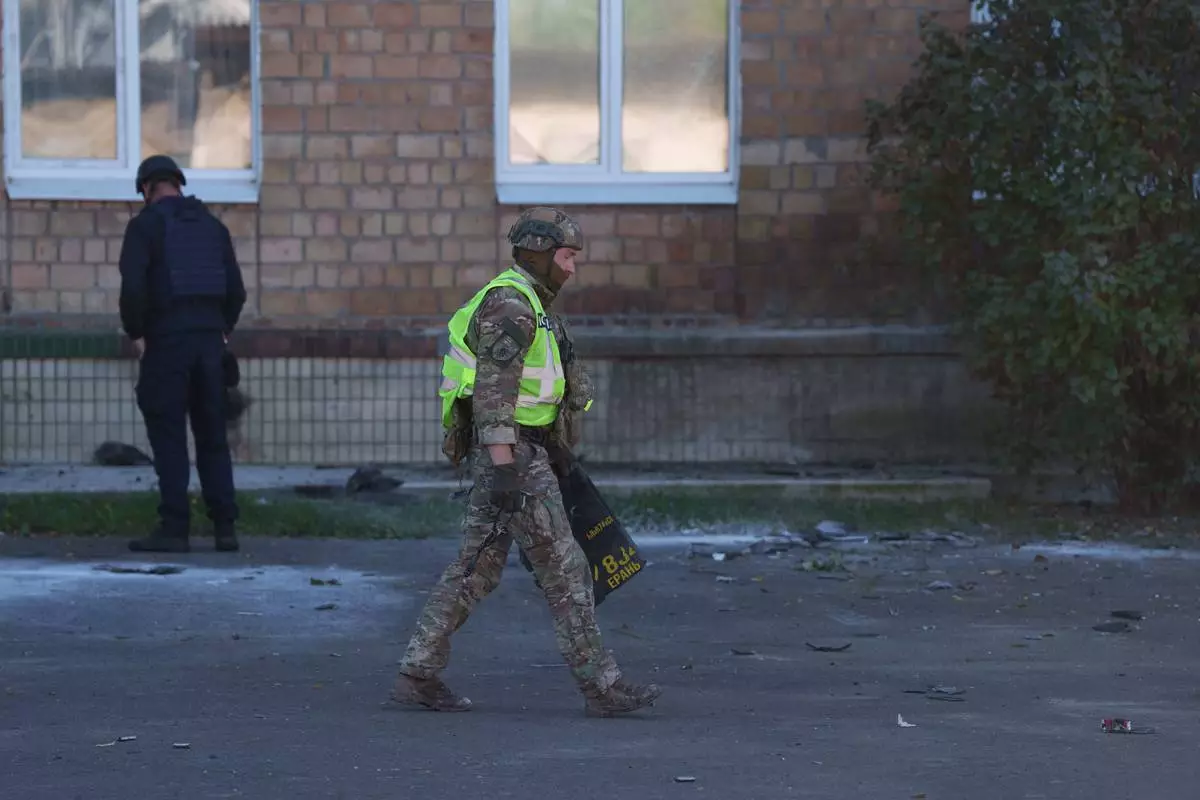
A police officer carries fragments of a Shahed drone in front of a school damaged by a Russian strike in Kyiv, Ukraine, Thursday, Oct. 1, 2026. (AP Photo/Evgeniy Maloletka)

A police officer carries fragments of a Shahed drone in front of a school damaged by a Russian strike in Kyiv, Ukraine, Thursday, Oct. 1, 2026. (AP Photo/Evgeniy Maloletka)

A police officer and a rescue worker carry an unexploded warhead from a Shahed drone out of a school damaged by a Russian strike on Kyiv, Ukraine, Thursday, Oct. 1, 2026. (AP Photo/Evgeniy Maloletka)

A police officer and a rescue worker carry an unexploded warhead from a Shahed drone out of a school damaged by a Russian strike on Kyiv, Ukraine, Thursday, Oct. 1, 2026. (AP Photo/Evgeniy Maloletka)

Police officers carry an unexploded warhead from a Shahed drone out of a school damaged by a Russian strike on Kyiv, Ukraine, Thursday, Oct. 1, 2026. (AP Photo/Evgeniy Maloletka)

Police officers carry an unexploded warhead from a Shahed drone out of a school damaged by a Russian strike on Kyiv, Ukraine, Thursday, Oct. 1, 2026. (AP Photo/Evgeniy Maloletka)

Police officers look at a school damaged by a Russian drone strike in Kyiv, Ukraine, Thursday, Oct. 1, 2026. (AP Photo/Evgeniy Maloletka)

Police officers look at a school damaged by a Russian drone strike in Kyiv, Ukraine, Thursday, Oct. 1, 2026. (AP Photo/Evgeniy Maloletka)

Recommended Articles