Skip to Content Facebook Feature Image

Canada fast-tracks Pacific oil pipeline to reduce US dependence as Alberta separation vote nears

News

Canada fast-tracks Pacific oil pipeline to reduce US dependence as Alberta separation vote nears
News

News

Canada fast-tracks Pacific oil pipeline to reduce US dependence as Alberta separation vote nears

2026-10-02 02:56 Last Updated At:03:00

TORONTO (AP) — Canadian Prime Minister Mark Carney on Thursday fast-tracked a proposed million-barrel-a-day oil pipeline to the Pacific Coast, a bid to reduce the country’s dependence on the United States and mend relations with oil-rich Alberta as separatists push for a referendum on leaving Canada.

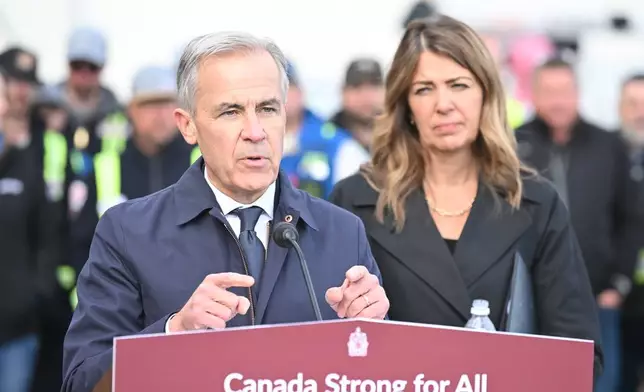
Carney, appearing with Alberta Premier Danielle Smith in Fort McMurray in the heart of Canada’s oil sands, designated the pipeline, now called Pacific Link, a project of national interest under legislation his government enacted to accelerate major infrastructure projects.

More Images
Prime Minister Mark Carney speaks as Alberta Premier Danielle Smith listens during a news conference in Fort McMurray, Alberta, Canada, on Thursday, Oct. 1, 2026, regarding the Pacific Link pipeline project. (Greg Halinda/The Canadian Press via AP)
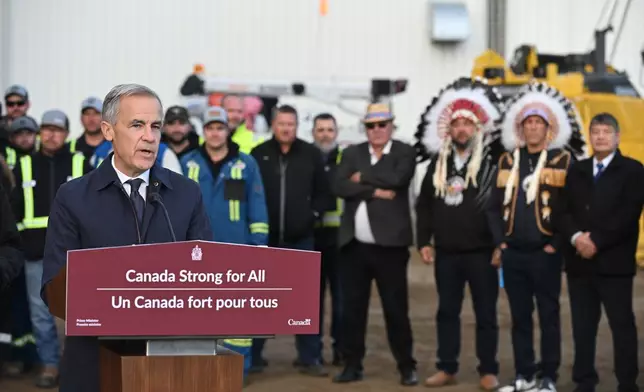
Prime Minister Mark Carney speaks as Alberta Premier Danielle Smith listens during a news conference in Fort McMurray, Alberta, Canada, on Thursday, Oct. 1, 2026, regarding the Pacific Link pipeline project. (Greg Halinda/The Canadian Press via AP)
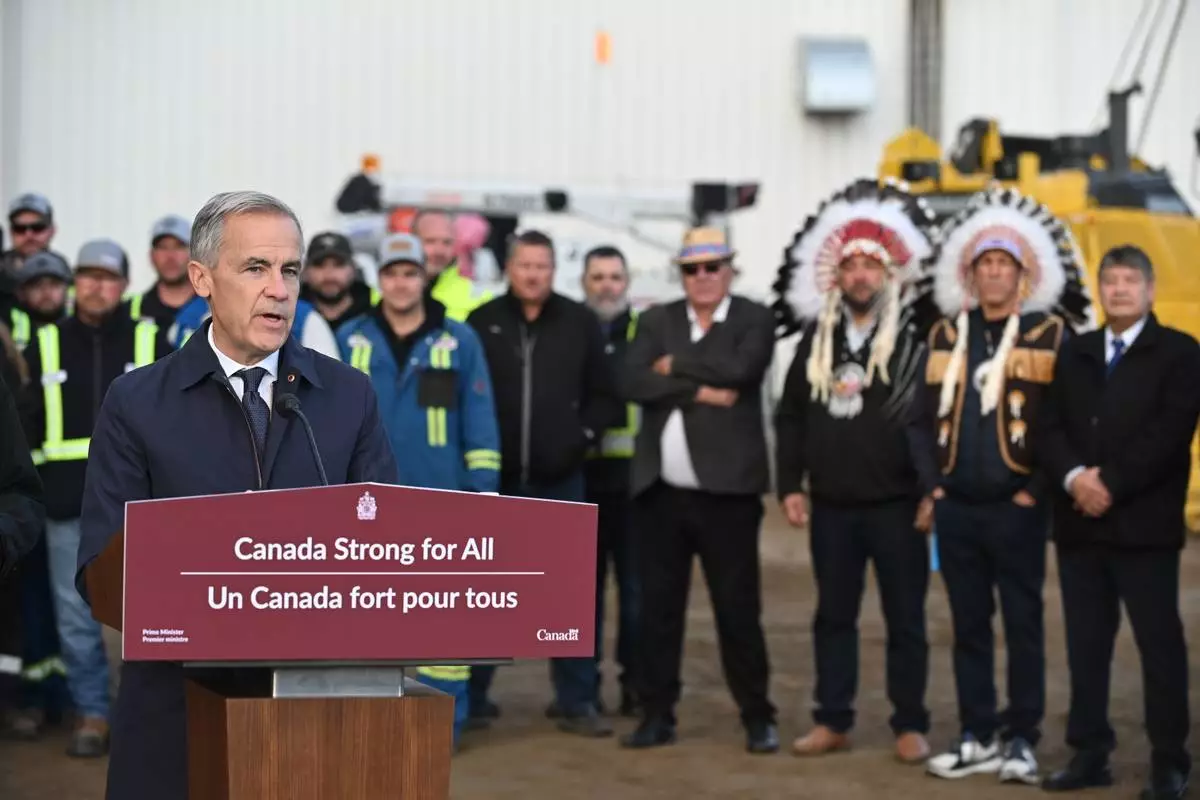
Prime Minister Mark Carney speaks during a news conference in Fort McMurray, Alberta, Canada, on Thursday, Oct. 1, 2026, regarding the Pacific Link pipeline project. (Greg Halinda/The Canadian Press via AP)

Prime Minister Mark Carney speaks during a news conference in Fort McMurray, Alberta, Canada, on Thursday, Oct. 1, 2026, regarding the Pacific Link pipeline project. (Greg Halinda/The Canadian Press via AP)

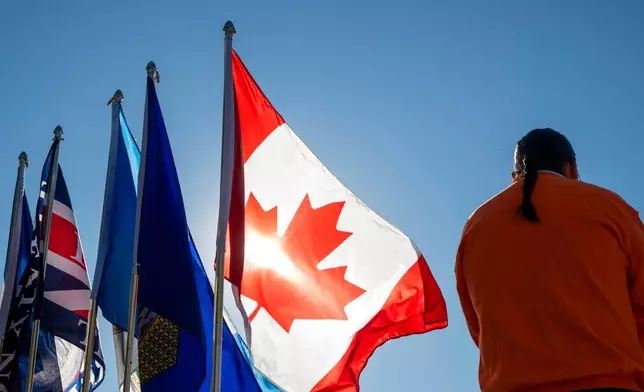
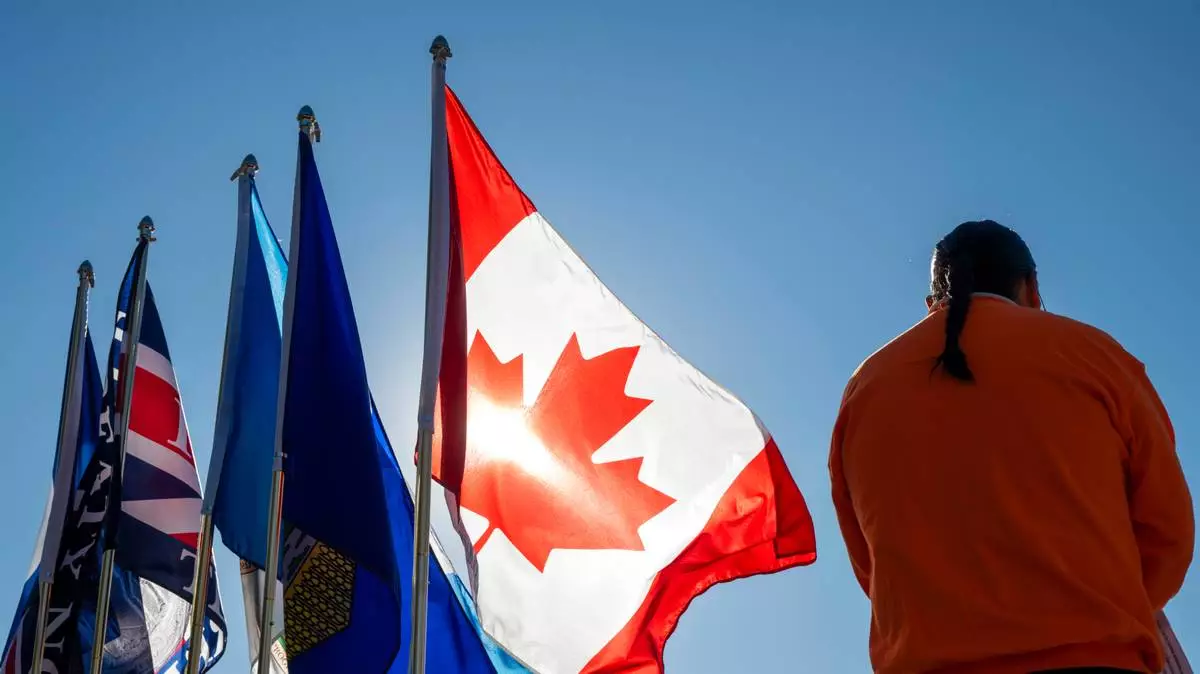
Flags fly at the National Day for Truth and Reconciliation event, Wednesday Sept. 30, 2026, in Edmonton, Alberta. (John Ulan/The Canadian Press via AP)
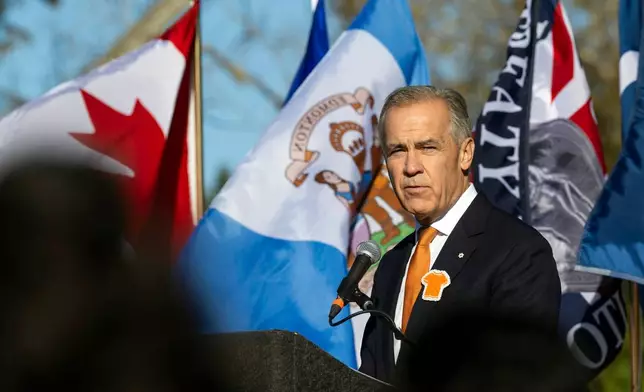
Flags fly at the National Day for Truth and Reconciliation event, Wednesday Sept. 30, 2026, in Edmonton, Alberta. (John Ulan/The Canadian Press via AP)
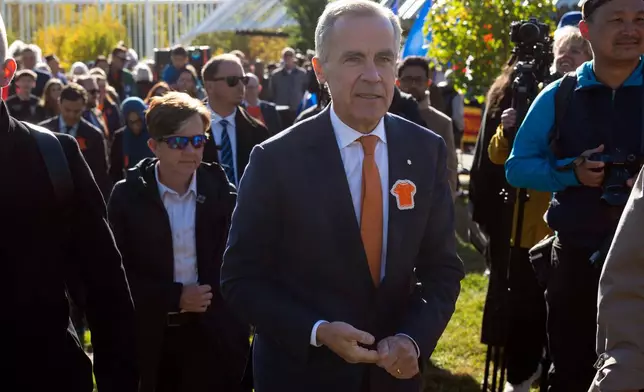
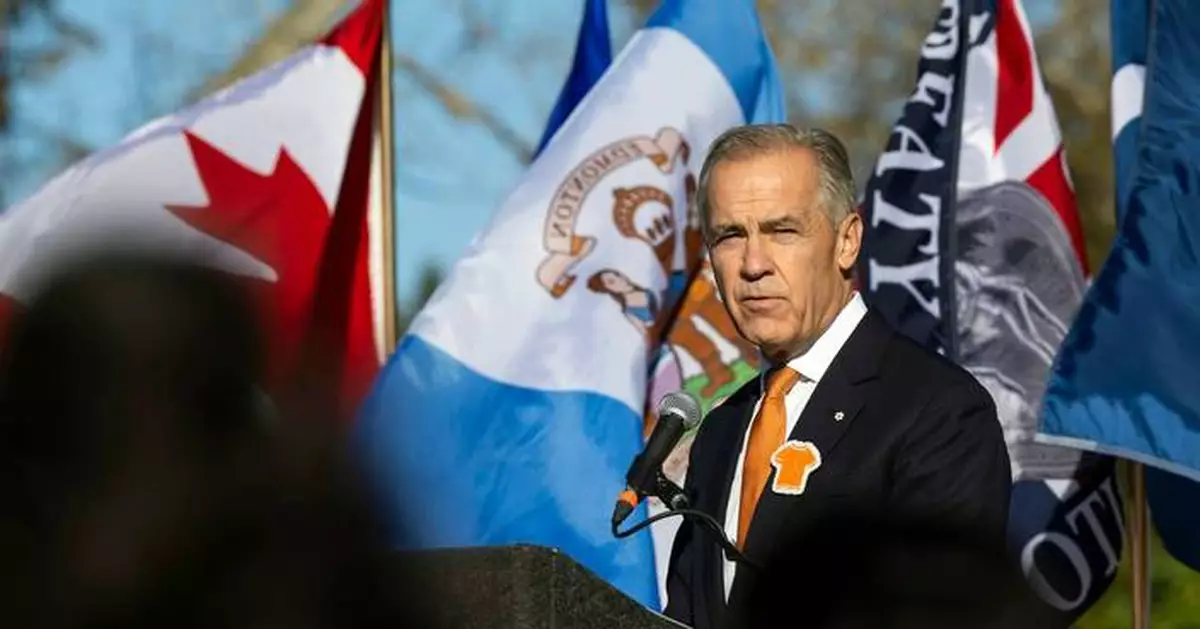
Canada Prime Minister Mark Carney, right, attends the National Day for Truth and Reconciliation event, Wednesday Sept. 30, 2026, in Edmonton, Alberta. (John Ulan/The Canadian Press via AP)
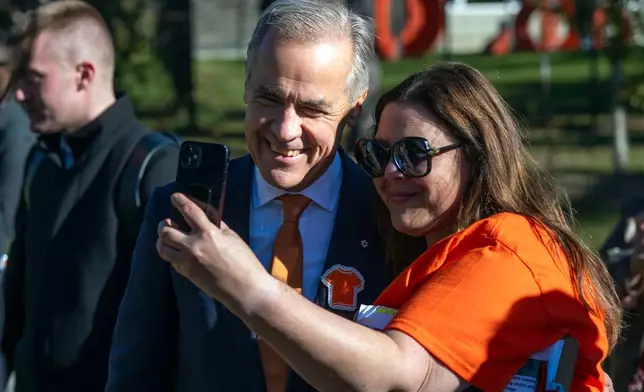
Canada Prime Minister Mark Carney, right, attends the National Day for Truth and Reconciliation event, Wednesday Sept. 30, 2026, in Edmonton, Alberta. (John Ulan/The Canadian Press via AP)
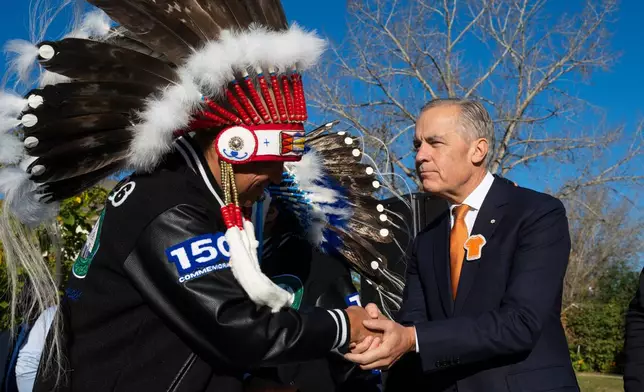
Canada Prime Minister Mark Carney attends the National Day for Truth and Reconciliation event, Wednesday Sept. 30, 2026, in Edmonton, Alberta. (John Ulan/The Canadian Press via AP)

Canada Prime Minister Mark Carney attends the National Day for Truth and Reconciliation event, Wednesday Sept. 30, 2026, in Edmonton, Alberta. (John Ulan/The Canadian Press via AP)

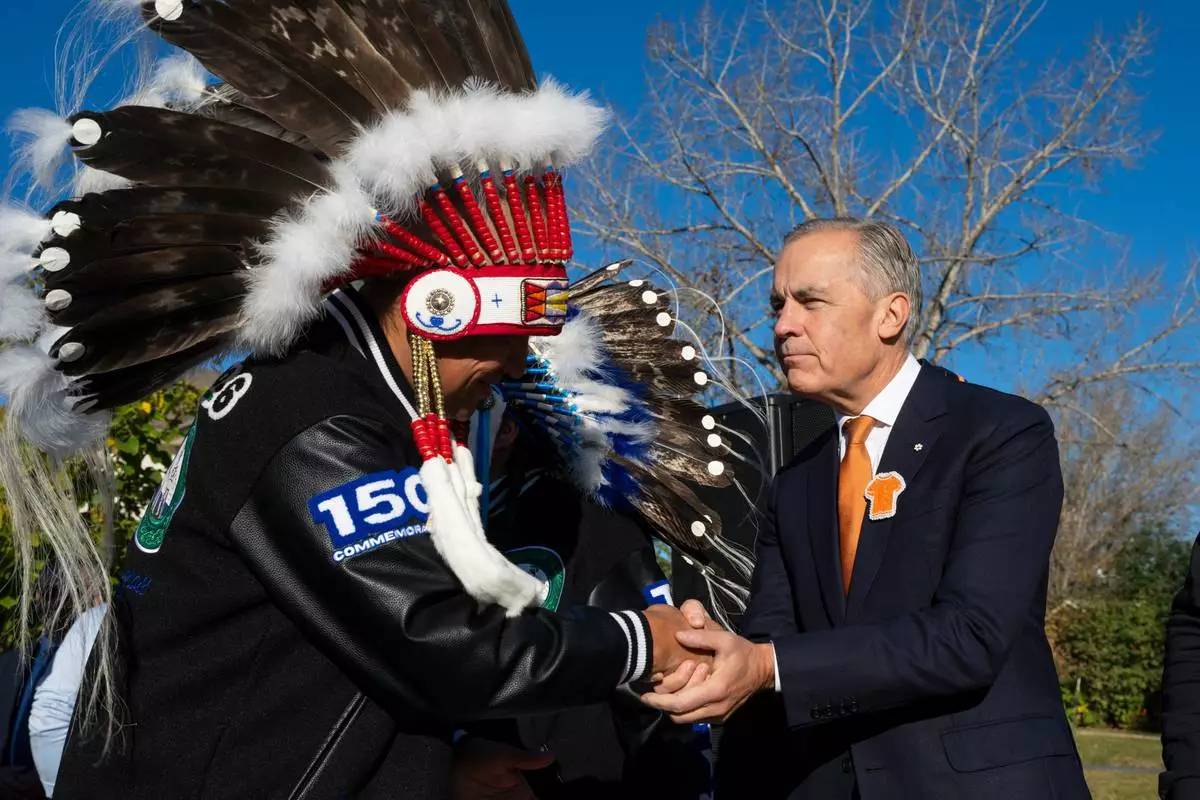
Canada Prime Minister Mark Carney, left, poses at the National Day for Truth and Reconciliation event, Wednesday Sept. 30, 2026, in Edmonton, Alberta. (John Ulan/The Canadian Press via AP)

Canada Prime Minister Mark Carney, left, poses at the National Day for Truth and Reconciliation event, Wednesday Sept. 30, 2026, in Edmonton, Alberta. (John Ulan/The Canadian Press via AP)

Canada Prime Minister Mark Carney attends the National Day for Truth and Reconciliation event, Wednesday Sept. 30, 2026, in Edmonton, Alberta. (John Ulan/The Canadian Press via AP)

Canada Prime Minister Mark Carney attends the National Day for Truth and Reconciliation event, Wednesday Sept. 30, 2026, in Edmonton, Alberta. (John Ulan/The Canadian Press via AP)

Alberta is holding a public vote on Oct. 19 on whether to hold a referendum on leaving Canada. Smith has long complained that Carney’s predecessor, Justin Trudeau, hindered Alberta’s energy industry and fueled separatist sentiment.

Smith said she would vote to keep Alberta in Canada and called the roughly 22% support for separation in a recent poll “still too high for my liking.”

“I don’t like the fact that that many of our fellow citizens have given up on Canada,” Smith said, adding that the pipeline was an example of how “cooperative federalism can work in action.”

Asked what message Albertans considering separation should take from the announcement, Carney said it demonstrated that “Canada is working” and showed what the country could achieve by acting together.

Ian Brodie, a University of Calgary political science professor and former chief of staff to Conservative Prime Minister Stephen Harper, said the announcement could still help separatists by underscoring Alberta’s dependence on Ottawa.

“There’s no reason this pipeline couldn’t have been fast-tracked in July, so we’ve lost three months in the project,” Brodie said. “It’s a reminder that Alberta has to have a sympathetic prime minister in order to grow its oil sector. We don’t control our fate.”

“Today, 90% of Alberta’s oil goes to the United States,” Carney said. “Pacific Link will materially reduce that dependence by allowing Canada to export an additional 1 million barrels a day to growing markets in Asia.”

Carney said Pacific Link was part of a broader effort to make Canada less dependent on the United States and achieve “greater strategic autonomy, so we can continue to live our lives as we choose.” Carney has set a goal of doubling Canada’s non-U.S. exports over the next decade.

The government said 90.1% of Canadian crude exports went to the U.S. last year, calling the country’s reliance on U.S.-bound infrastructure a “structural vulnerability.”

It said Pacific Link, combined with optimization of the Trans Mountain system, could reduce Canada’s fixed pipeline dependence on the U.S. from about 82%-83% of capacity to 65%-70%.

The push comes as U.S. President Donald Trump’s trade war and threats against Canadian sovereignty have prompted Carney to reduce Canada’s long-standing economic dependence on its southern neighbor.

The proposed 1,250-kilometer (775-mile) pipeline would run from Bruderheim, northeast of Edmonton, Alberta, to a deepwater port near Delta, British Columbia. It would largely follow the existing Trans Mountain corridor and load crude onto tankers bound for global markets.

The project is expected to cost $25 billion to $31 billion and still faces major questions about financing and whether producers will commit to using it.

The designation does not amount to final project approval. Carney said proponents still have to settle engineering, costs, environmental conditions and other requirements before a final decision to proceed.

The federal government and Alberta government are putting up roughly US$2.8 billion before the main private investor has committed its construction share.

Calgary-based Pembina Pipeline Corp. has a 10% economic interest in the project but has not yet put up its share of construction costs. A federal official said Pembina would decide whether to make that investment at or before a final investment decision.

Asked how much federal taxpayers could ultimately contribute to the project, Carney did not provide a figure but said, “The Canadian taxpayer is going to make a lot of money off this pipeline.”

An open season to determine how much pipeline capacity oil producers are willing to contract is expected next spring. Officials said there is significant interest but acknowledged that fast-tracking the project does not guarantee it will ultimately secure enough shippers or financing to proceed.

A senior government official said a faster approval process could attract more private investment, while greater access to Asia would give Canadian producers more leverage with buyers.

The official noted that the Trans Mountain expansion took 14 years from the project’s launch in 2010 until first oil flowed in 2024.

The pipeline also faces significant Indigenous and environmental concerns.

The government acknowledged that most Indigenous communities consulted were not prepared to support listing the project based on the information available, citing unanswered questions about routing, environmental effects, marine shipping and treaty rights. Carney said the “real intensive consultation process will begin now.”

Canada, Alberta and the project owners have committed to offering Indigenous communities a minimum 10% ownership interest in the pipeline.

Carney said construction of the Pathways carbon-capture project would be a prerequisite for Pacific Link. The government says Pathways and other measures would reduce oil sands emissions by 16 million metric tons annually.

The government acknowledged, however, that the pipeline is expected to enable increased oil production and additional emissions.

Carney said the government wants final regulatory conditions in place by September 2027, clearing the way for construction. The pipeline is targeted to begin operating around 2032 or 2033.
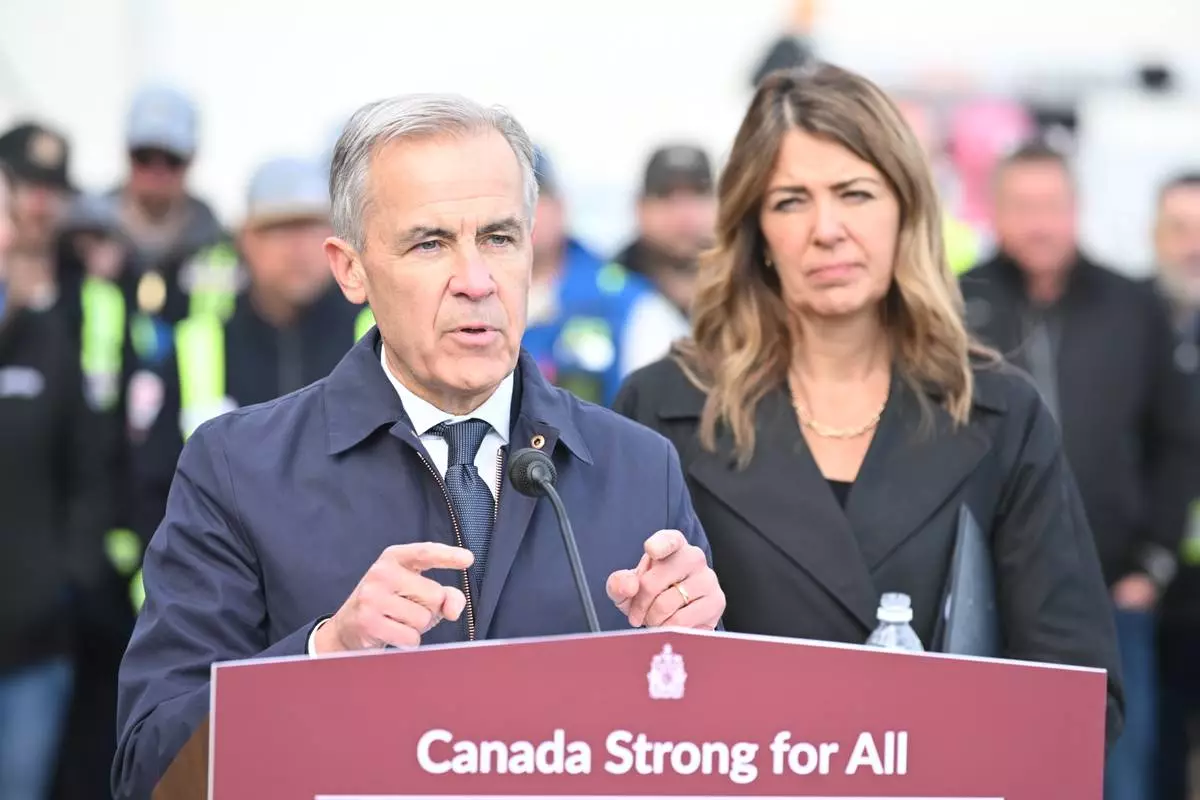
Prime Minister Mark Carney speaks as Alberta Premier Danielle Smith listens during a news conference in Fort McMurray, Alberta, Canada, on Thursday, Oct. 1, 2026, regarding the Pacific Link pipeline project. (Greg Halinda/The Canadian Press via AP)
Prime Minister Mark Carney speaks as Alberta Premier Danielle Smith listens during a news conference in Fort McMurray, Alberta, Canada, on Thursday, Oct. 1, 2026, regarding the Pacific Link pipeline project. (Greg Halinda/The Canadian Press via AP)
Prime Minister Mark Carney speaks during a news conference in Fort McMurray, Alberta, Canada, on Thursday, Oct. 1, 2026, regarding the Pacific Link pipeline project. (Greg Halinda/The Canadian Press via AP)

Prime Minister Mark Carney speaks during a news conference in Fort McMurray, Alberta, Canada, on Thursday, Oct. 1, 2026, regarding the Pacific Link pipeline project. (Greg Halinda/The Canadian Press via AP)

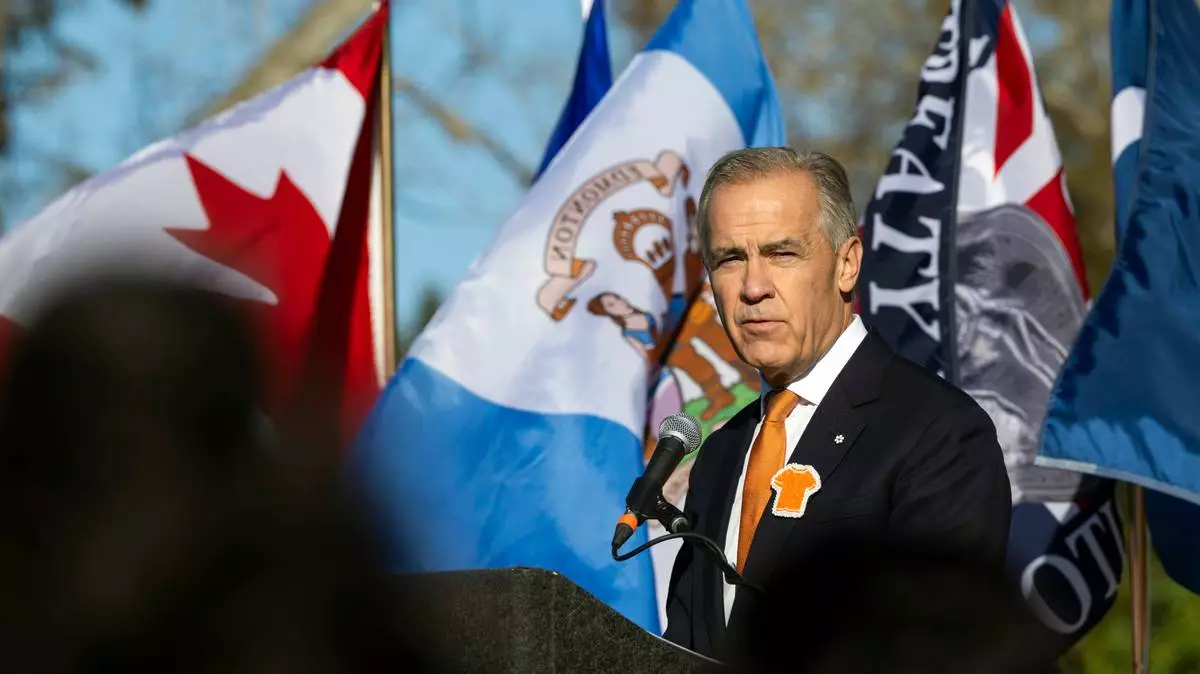
Flags fly at the National Day for Truth and Reconciliation event, Wednesday Sept. 30, 2026, in Edmonton, Alberta. (John Ulan/The Canadian Press via AP)
Flags fly at the National Day for Truth and Reconciliation event, Wednesday Sept. 30, 2026, in Edmonton, Alberta. (John Ulan/The Canadian Press via AP)
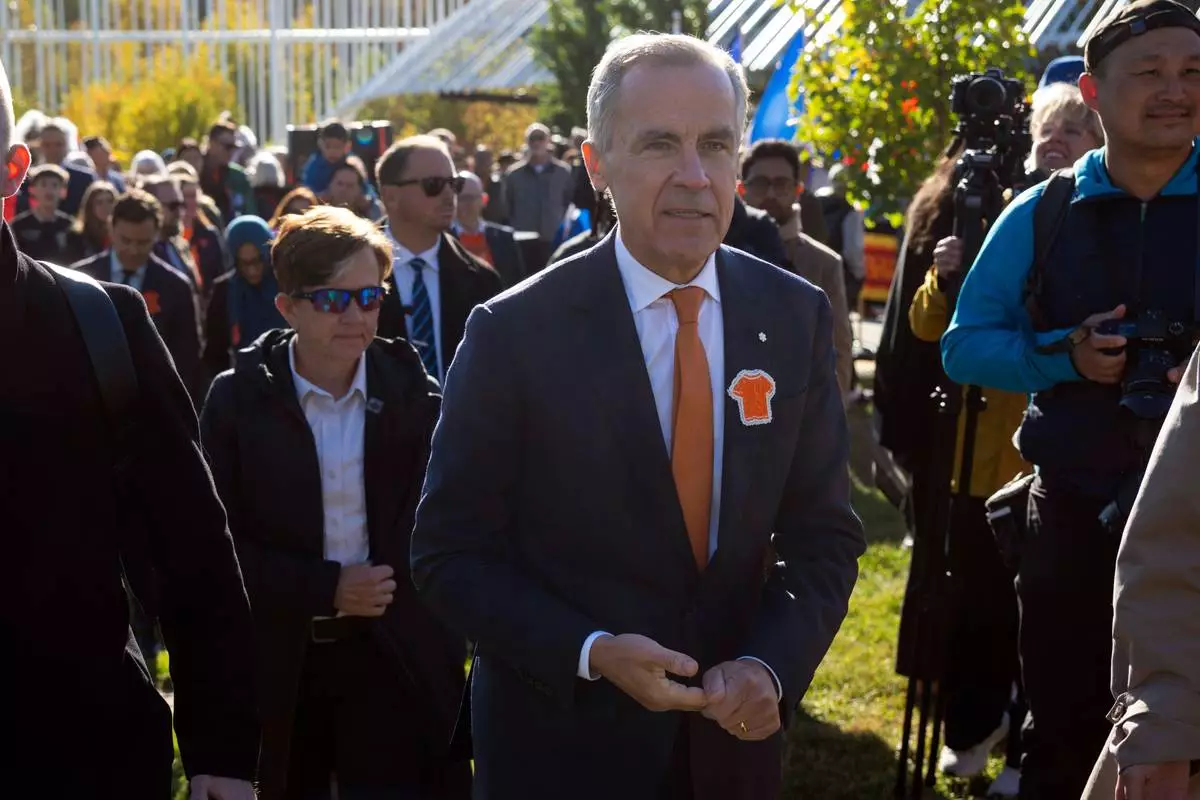
Canada Prime Minister Mark Carney, right, attends the National Day for Truth and Reconciliation event, Wednesday Sept. 30, 2026, in Edmonton, Alberta. (John Ulan/The Canadian Press via AP)
Canada Prime Minister Mark Carney, right, attends the National Day for Truth and Reconciliation event, Wednesday Sept. 30, 2026, in Edmonton, Alberta. (John Ulan/The Canadian Press via AP)
Canada Prime Minister Mark Carney attends the National Day for Truth and Reconciliation event, Wednesday Sept. 30, 2026, in Edmonton, Alberta. (John Ulan/The Canadian Press via AP)


Canada Prime Minister Mark Carney attends the National Day for Truth and Reconciliation event, Wednesday Sept. 30, 2026, in Edmonton, Alberta. (John Ulan/The Canadian Press via AP)
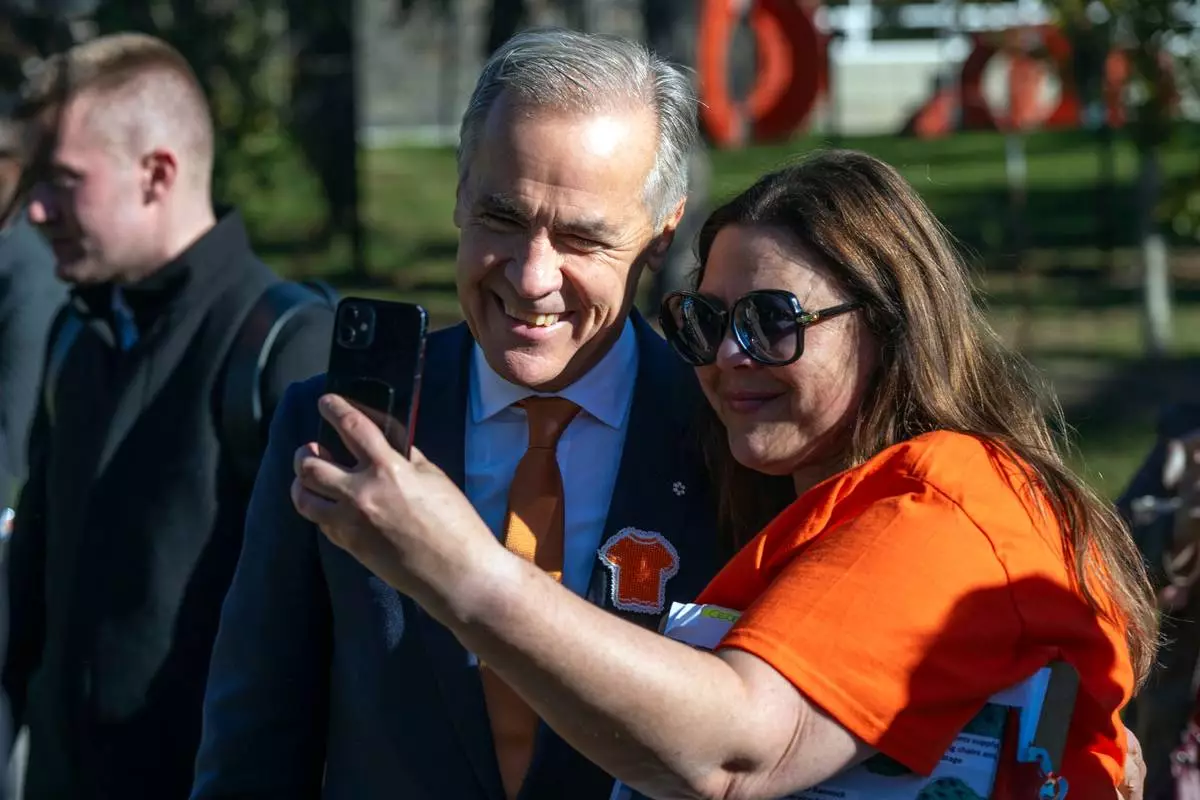
Canada Prime Minister Mark Carney, left, poses at the National Day for Truth and Reconciliation event, Wednesday Sept. 30, 2026, in Edmonton, Alberta. (John Ulan/The Canadian Press via AP)
Canada Prime Minister Mark Carney, left, poses at the National Day for Truth and Reconciliation event, Wednesday Sept. 30, 2026, in Edmonton, Alberta. (John Ulan/The Canadian Press via AP)
Canada Prime Minister Mark Carney attends the National Day for Truth and Reconciliation event, Wednesday Sept. 30, 2026, in Edmonton, Alberta. (John Ulan/The Canadian Press via AP)

Canada Prime Minister Mark Carney attends the National Day for Truth and Reconciliation event, Wednesday Sept. 30, 2026, in Edmonton, Alberta. (John Ulan/The Canadian Press via AP)
U.S. President Donald Trump says it's “possible” he may ramp up bombing of Iran after the Nov. 3 midterm elections and that he rejected Iran's latest peace offer because it's not good enough.

Fighting between Houthi rebels and government forces overnight stirred fears that the Iran-backed rebels may be advancing toward Taiz City in southwestern Yemen.

Here is the latest news from the Middle East on Thursday. Full coverage is available here.

Three ships that together carry over 7,000 sailors and 2,000 Marines are heading to the Middle East, a U.S. official said.

That includes the recently deployed USS Theodore Roosevelt carrier strike group and the USS Makin Island amphibious readiness group. It could mean three carriers are in the region as early as the end of October, according to the official, who spoke on condition of anonymity to discuss sensitive military operations.

That would be an unusually high U.S. naval presence of more than 20,000 sailors and Marines and hundreds of aircraft. It comes as the war with Iran stretches past seven months. The Navy previously had three carriers in the Middle East in April -- the first time since 2003.

The USS George H.W. Bush and the USS George Washington are there now, along with the USS Boxer amphibious readiness group. The Pacific-based Washington had moved to the Middle East to relieve the long-deployed USS Abraham Lincoln.

—

By Konstantin Toropin

Trump said in a Time magazine interview published Thursday that he won't now accept proposals from Iran that “he wouldn't have approved a year ago.”

He left open the possibility of resuming bombing Iran after the Nov. 3 election. He refused to offer details, telling journalists, "I can’t tell you that because look, you know, you’re asking, where are you going to bomb?”

The U.S. president told Time magazine that he only heard about those reports on the same day that the Sept. 28 interview was conducted with Time reporters, adding “I can't imagine this.”

Trump said had Israeli Prime Minister Benjamin Netanyahu been forewarned, “he would have done something about it" or "would have had people at least alert.”

An Israeli newspaper reported that Netanyahu was directly warned by the president of the United Arab Emirates that Hamas was planning a major offensive just days before the militant group attacked on Oct. 7, 2023.

Netanyahu strongly rejected the report.

In the same Time magazine interview, Trump repeatedly avoided answering directly whether Netanyahu should be reelected in elections later this month.

Trump said that he's “not involved in politics anymore” and touted his own record on Israel.

But he said Netanyahu shouldn't be underestimated even if "people have written off Bibi many, many times, just like they’ve written off me many, many times.”

Of Netanyahu’s opponent, Gadi Eisenkot, Trump said: “I don’t hear bad things about him.”

The Trump administration on Thursday announced sanctions on Iran's automotive and rail industries in attempts to get the country to capitulate, citing entities based in Indonesia, the UAE and Germany, among other countries.

Two of Iran’s largest auto manufacturers, Iran Khodro Co. and SAIPA Iranian Automobile Manufacturing Co., were sanctioned alongside several foreign companies that provide auto parts and raw materials.

The actions by the U.S. Treasury come as Trump officials highlight how Iran's currency has fallen to new record lows. The administration credits the continued erosion of the Iranian economy to its months-long economic campaign and has no plans to cease the financial penalties anytime soon even as negotiations between the two countries have restarted.

Iran-backed Houthi rebels clashed with government forces overnight into Thursday in residential neighborhoods in eastern Taiz, located about 100 kilometers (60 miles) from Mokha, which the Houthis seized last month.

A main road linking Taiz and Aden was cut off due to the latest clashes.

Al-Thawra Hospital, located a few kilometers from the clashes, received six bodies and 35 wounded people Thursday, according to hospital manager Abdelrahman al-Sabry.

The official told The Associated Press by phone Thursday the number of dead and wounded was similar to those in early September, when fighting was intense before clashes de-escalated.

Renewed violence in Yemen has killed hundreds and displaced tens of thousands. The Houthis captured the strategic city of Mokha and a number of Red Sea islands last month, extending their reach to the key maritime waterway of the Bab el-Mandeb Strait.

It was the Houthis’ biggest land grab in years and ended a 2022 ceasefire that largely stopped major fighting in Yemen’s 12-year civil war.

Meanwhile, the Saudi-led coalition fighting the Houthis said Thursday the rebels targeted a power distribution station in the area of Medina two days earlier. The strike shut down a transformer, but didn't affect the power grid. The Houthis have yet to respond to the claim.

By Marzouk al-Jaberi and Fatma Khaled

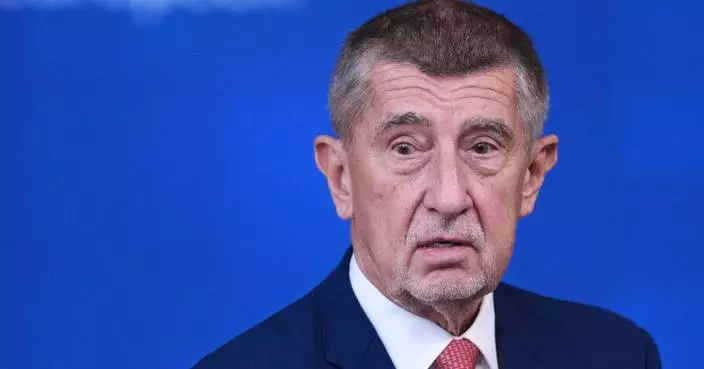
Iran's Foreign Ministry summoned Britain’s ambassador in Tehran on Thursday to “strongly protest” allegations by British Prime Minister Andy Burnham linking Iran to a sabotage plot at RAF Fairford, Iranian state television reported.

The ministry dismissed allegations that Iran was connected to the alleged plot as “baseless” and called on the British government to provide an official explanation and change its approach toward Iran.

Iranian Foreign Minister Abbas Araghchi had also posted on X that the U.K. was "barking up the wrong tree.”

Netanyahu told Fox News Thursday that the suspect in the FlyDubai incident was an Omani national who got through a loophole in Israeli constraints barring pilots from countries like Oman that don’t have diplomatic relations with Israel.

He said both countries are “interested in making sure this doesn’t happen again" and warned that “it might be attempted again because we have indications that Iran and its proxies are trying to conduct attacks against Israel and Israelis right now in this election season.”

This report will be updated throughout the day as new developments emerge.

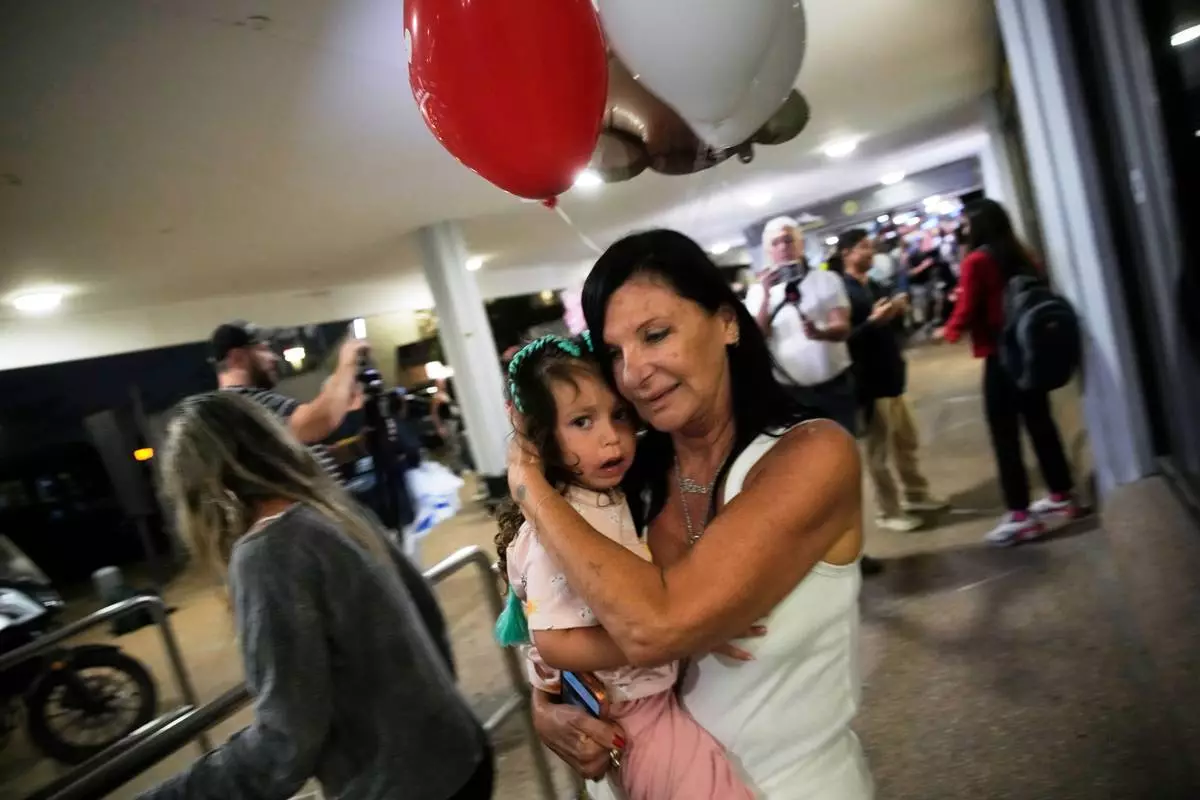
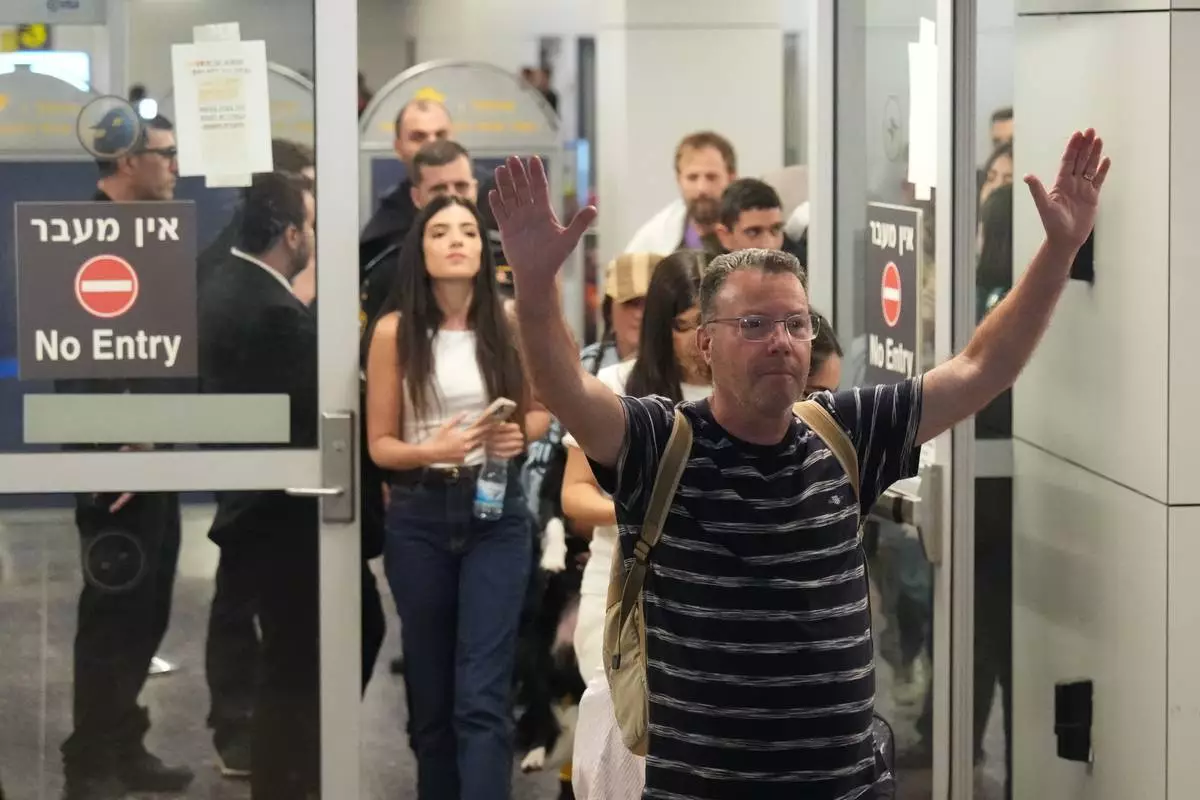
Passengers who experienced an emergency landing in Saudi Arabia, during a flight on FlyDubai plane, arrive at Ben Gurion International Airport, near Tel Aviv, Israel, Wednesday, Sept. 30, 2026. (AP Photo/Ariel Schalit)

Passengers who experienced an emergency landing in Saudi Arabia, during a flight on FlyDubai plane, arrive at Ben Gurion International Airport, near Tel Aviv, Israel, Wednesday, Sept. 30, 2026. (AP Photo/Ariel Schalit)

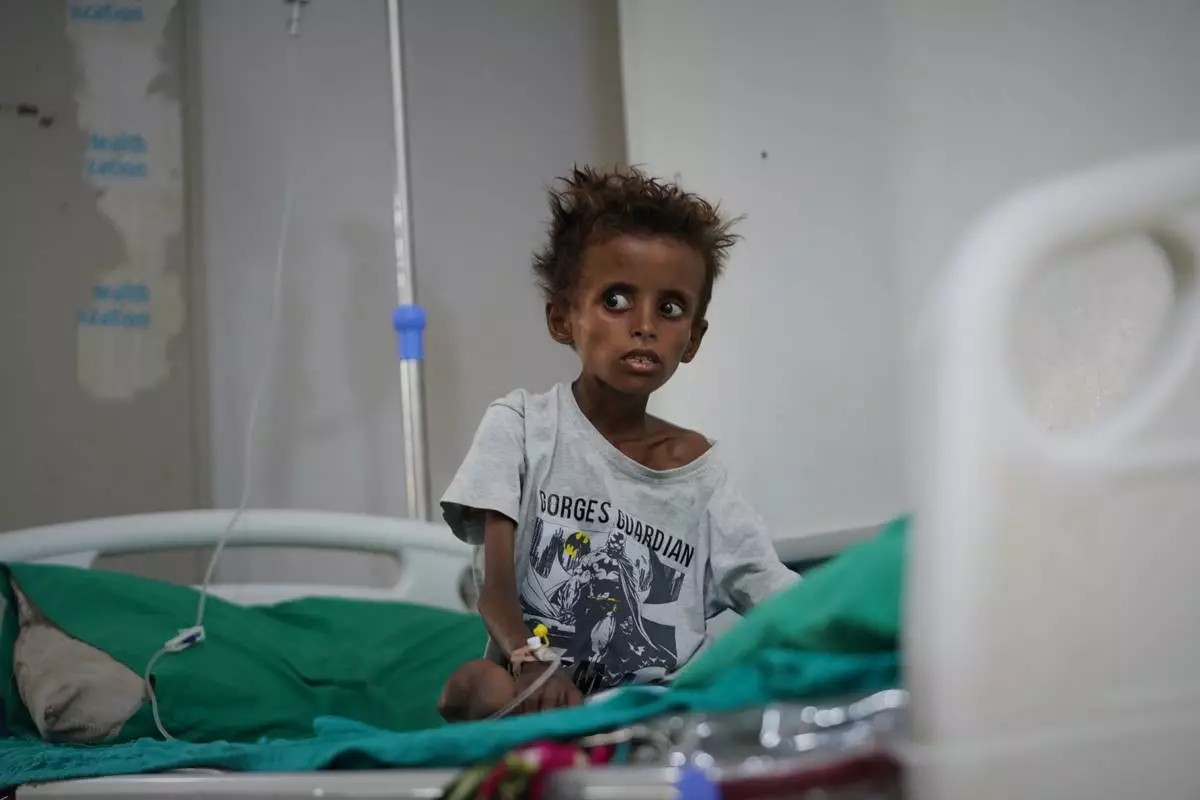
Tarek al-Salami, 7, who was displaced from the city of Mokha and is showing symptoms of malnutrition, sits on a bed while receiving treatment at a therapeutic feeding center in Buraiqa, on the western outskirts of Aden, Yemen, Tuesday, Sept. 22, 2026. (AP Photo/Abdulnasser Alseddik)

Tarek al-Salami, 7, who was displaced from the city of Mokha and is showing symptoms of malnutrition, sits on a bed while receiving treatment at a therapeutic feeding center in Buraiqa, on the western outskirts of Aden, Yemen, Tuesday, Sept. 22, 2026. (AP Photo/Abdulnasser Alseddik)

Israeli passengers who had been aboard a FlyDubai aircraft that made an emergency landing in Saudi Arabia are welcomed at the arrivals gate at Ben Gurion International Airport near Tel Aviv, Israel, Wednesday, Sept. 30, 2026. (AP Photo/Ohad Zwigenberg)

Israeli passengers who had been aboard a FlyDubai aircraft that made an emergency landing in Saudi Arabia are welcomed at the arrivals gate at Ben Gurion International Airport near Tel Aviv, Israel, Wednesday, Sept. 30, 2026. (AP Photo/Ohad Zwigenberg)

Israeli passenger Haim Lazarovich, who experienced an emergency landing in Saudi Arabia, during a flight on FlyDubai plane, arrives at Ben Gurion International Airport, near Tel Aviv, Israel, Wednesday, Sept. 30, 2026. (AP Photo/Ariel Schalit)

Israeli passenger Haim Lazarovich, who experienced an emergency landing in Saudi Arabia, during a flight on FlyDubai plane, arrives at Ben Gurion International Airport, near Tel Aviv, Israel, Wednesday, Sept. 30, 2026. (AP Photo/Ariel Schalit)

Israeli passenger Yaniv Hayoun, with blood stains on his shirt, who was aboard a Flydubai aircraft that made an emergency landing in Saudi Arabia, is welcomed at the arrivals gate at Ben Gurion International Airport near Tel Aviv, Israel, Wednesday, Sept. 30, 2026. (AP Photo/Tomer Appelbaum)

Israeli passenger Yaniv Hayoun, with blood stains on his shirt, who was aboard a Flydubai aircraft that made an emergency landing in Saudi Arabia, is welcomed at the arrivals gate at Ben Gurion International Airport near Tel Aviv, Israel, Wednesday, Sept. 30, 2026. (AP Photo/Tomer Appelbaum)

Recommended Articles