Skip to Content Facebook Feature Image

New ICE guidance bans high-speed car chases and sets tighter rules for traffic stops, a memo shows

News

New ICE guidance bans high-speed car chases and sets tighter rules for traffic stops, a memo shows
News

News

New ICE guidance bans high-speed car chases and sets tighter rules for traffic stops, a memo shows

2026-10-02 02:36 Last Updated At:02:41

U.S. Immigration and Customs Enforcement officers have been ordered not to engage in high-speed car chases and to make vehicle stops only if they have completed specific training, under new internal guidance issued after several drivers were shot in encounters with ICE.

A memo sent to officers in ICE’s Enforcement and Removal Operations division and obtained by The Associated Press warned they are not authorized to chase vehicles that fail to pull over under any circumstances. Instead, officers should take down the vehicles’ information for further investigation, according to the memo signed by ICE’s executive associate director Marcos D. Charles and dated Wednesday.

The new guidance comes after ICE-initiated vehicle stops have repeatedly escalated when drivers have refused to cooperate or tried to flee. ICE agents have fired their guns during more than a dozen such encounters since last year, killing at least four people and wounding several others.

President Donald Trump's administration has faced internal tension over how to handle traffic stops, which are seen as particularly high-risk encounters.

After fatal shootings of drivers in Maine and Texas in July, ICE officers were directed to temporarily pause most vehicle stops. But the next day, Trump went on social media to direct the agency to continue traffic stops, calling them “one of ICE’s most important and effective Crime Fighting tools.”

ICE has faced intense pressure from the White House to deport more people who are in the country illegally, and its arrests have reached record numbers. At the same time, the agency's rapid hiring spree last year resulted in some poorly vetted and trained officers hitting the streets.

ICE and the Department of Homeland Security had no immediate comment on the policy guidance.

The new memo outlines steps intended to improve the safety of vehicle stops for ICE officers, drivers they are targeting, their passengers and the public.

The memo told ICE’s field office directors that they must ensure vehicles used for traffic stops have lights and sirens that let the public know they are law enforcement vehicles when activated. All officers on the scenes of vehicle stops must wear and activate their body cameras, under the guidance.

In addition, only officers who have completed one of five specific agency training courses can conduct vehicle stops. Officers who have not completed the training courses can only participate in vehicle stops “in a support capacity” as passengers and cannot be the drivers of any of the vehicles involved.

The guidance says ICE officers can continue to use a controversial technique known as pinning, which is defined as “using a vehicle or physical barrier to trap or stop a car,” but only if they have received special training. Similarly, only trained officers can use spike strips that deflate tires to prevent drivers from fleeing.

The memo came the day that courtroom testimony highlighted ways in which two ICE officers involved in a vehicle stop, pursuit and shooting that wounded a delivery driver in Austin last month would not have complied with the new guidance.

During a bond hearing for Wilber Rafael Garces Perez, testimony showed that the officer who shot him wasn’t wearing a body-worn camera. The ICE officer who did have a camera was driving in a separate car and turned it off during the pursuit.

Prosecutors presented surveillance video that showed an ICE agent chasing Garces Perez at high speeds through residential streets after he fled an initial traffic stop.

Garces Perez faces federal assault charges after investigators say he struck an ICE officer with his driver’s side mirror. That officer then shot into Perez's vehicle, lodging a bullet in his back, officials say.

Attorneys for Garces Perez have called the charges against him “retaliation” and have argued that the camera footage was inconclusive because it didn’t fully capture the moment when he allegedly tried to flee.

Associated Press reporter Anna Wilder contributed to this report from Austin, Texas.
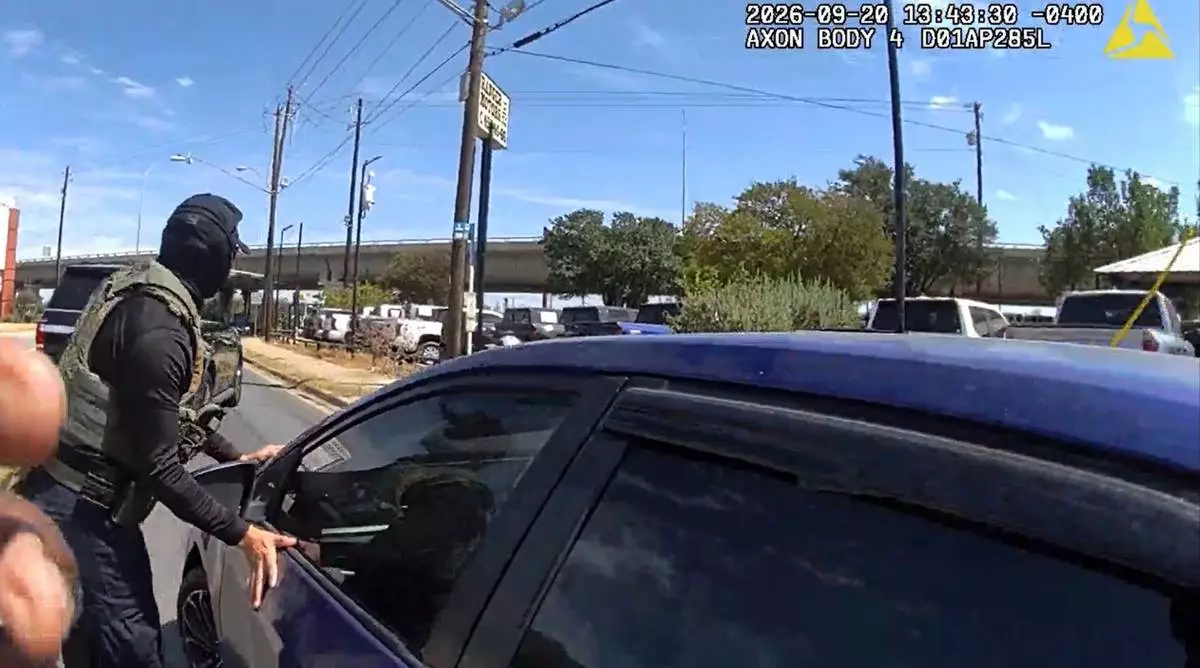
This image made from Immigration and Customs Enforcement (ICE) body camera footage shows an ICE officer stopping Wilber Rafael Garces Perez on Sunday, Sept. 20, 2026, in Austin, Texas. (Immigration and Customs Enforcement via AP)

This image made from Immigration and Customs Enforcement (ICE) body camera footage shows an ICE officer stopping Wilber Rafael Garces Perez on Sunday, Sept. 20, 2026, in Austin, Texas. (Immigration and Customs Enforcement via AP)
MEXICO CITY (AP) — Another storm strengthened into a Category 2 cyclone off Mexico's Pacific coast on Thursday morning at the same time northern Mexico and parts of the U.S. Southwest were reeling from flooding and damage from the remnants of Hurricane Polo earlier this week.

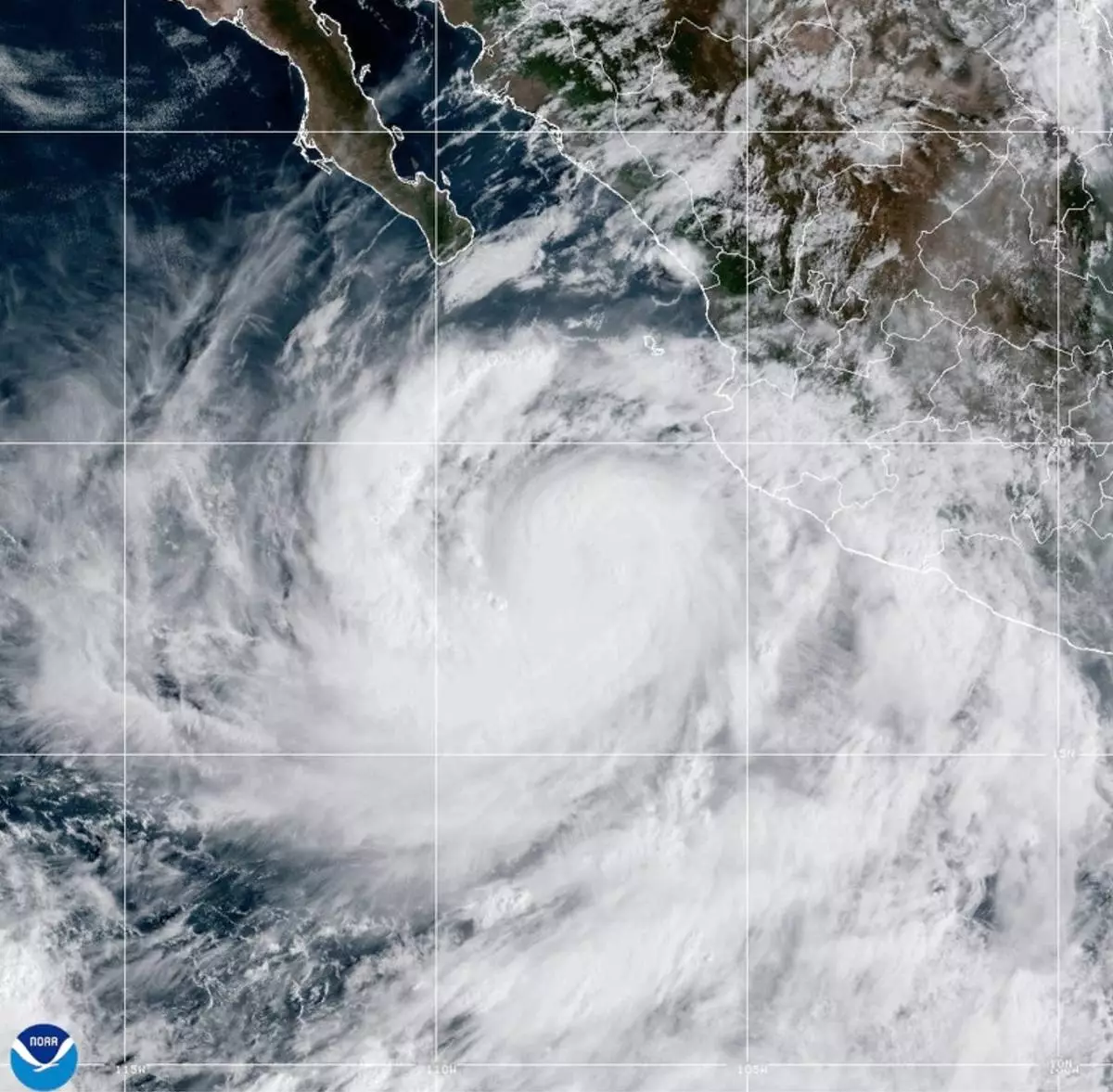
Hurricane Rachel was located about 230 miles (370 kilometers) off the southern tip of Baja California on Thursday, chugging forward at 6 mph (9 kph) as a powerful hurricane, according to the National Hurricane Center. The center reported winds of 105 mph (165 kph).

Rachel was projected to move along the Mexican coastline before veering west in the Pacific.

Mexican authorities said Thursday that, as Hurricane Rachel moves across the Pacific, they remain on alert because of forecasts of very heavy rain in the states of Baja California Sur, Sinaloa, and Jalisco, and the possibility of landslides, rising river levels, overflowing rivers and flooding in low-lying areas.

On Wednesday night, the U.S. Embassy in Mexico warned U.S. citizens in Cabos San Lucas, a popular vacation destination for Americans, of beach and port closures and deadly rip currents.

The Pacific has seen an unusually busy hurricane season, which experts have attributed to El Niño, which has fueled crippling droughts in Mexico and Central America and floods in other parts of the region. In the Pacific, it has resulted in warmer waters and wind patterns that act as fodder for hurricanes. Tropical Storm Nolo continued its northwest approach away from Hawaii on Thursday, though the National Weather Service said it could strengthen into a hurricane by the weekend.

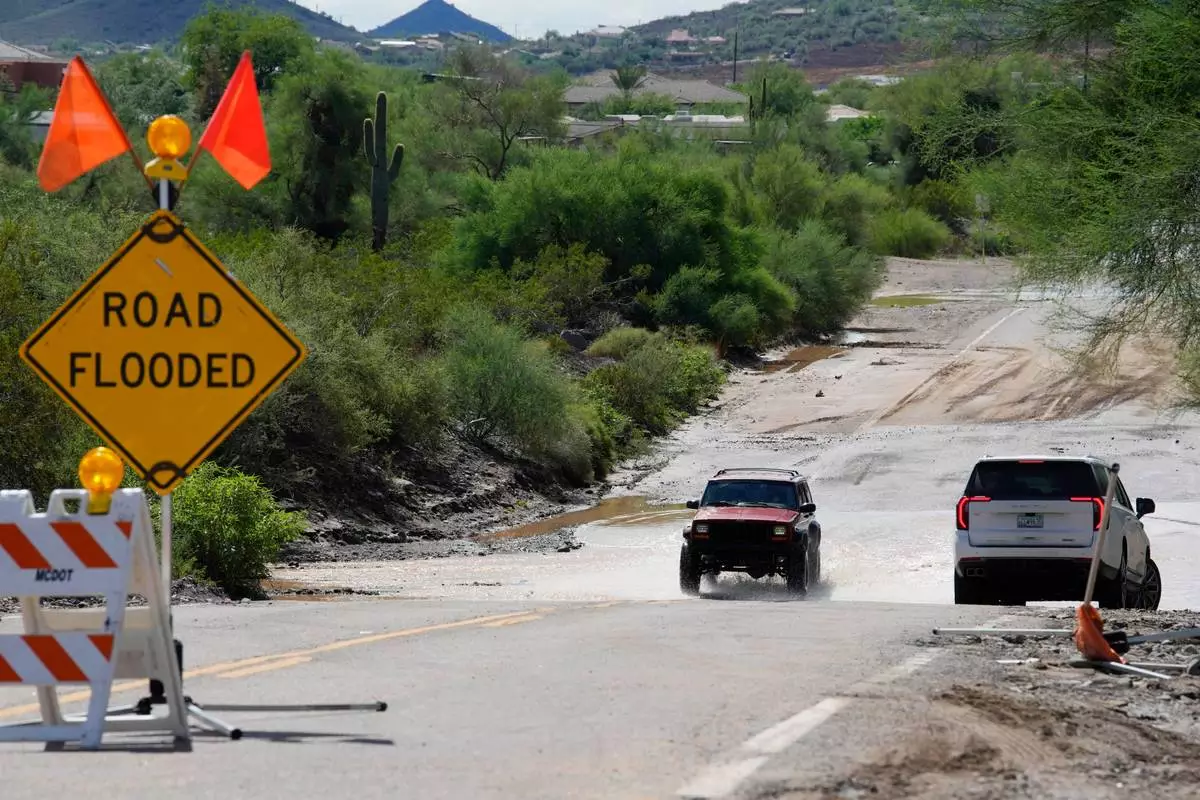
The region from eastern Colorado to northern Illinois, along with parts of Texas and Oklahoma, was still under flood watch Thursday as storm remnants continued to batter the region, flooding streets and neighborhoods and setting off water rescues.

Wednesday was the wettest day on record for Lincoln, Nebraska, which received 6.1 inches of rainfall, according to the University of Nebraska-Lincoln Climate Office. In Omaha, which received 4.7 inches of rain Wednesday, the fire department said it responded to 80 water rescues over a three-hour period ending early Thursday. Some floodwaters reached depths of 8 feet.

In Chicago, a wastewater treatment and stormwater management utility urged residents to conserve water use to prevent flooding and stormwater backup.

“We encourage everyone to conserve water when possible to create more capacity in our systems,” utility President Kari K. Steele said in a statement Wednesday.

In Kansas, Gov. Laura Kelly issued an emergency proclamation on Wednesday ahead of the storms that allows state resources to assist first responders in hard-hit communities.

Vehicles navigate on a road after torrential rains moved through the Phoenix metro area, Tuesday, Sept. 29, 2026, in Anthem, Ariz. (AP Photo/Ross D. Franklin)

Vehicles navigate on a road after torrential rains moved through the Phoenix metro area, Tuesday, Sept. 29, 2026, in Anthem, Ariz. (AP Photo/Ross D. Franklin)

This satellite image from the National Oceanic and Atmospheric Administration shows Hurricane Rachel in the Pacific Ocean on Wednesday, Sept. 30, 2026. (National Oceanic and Atmospheric Administration via AP)

This satellite image from the National Oceanic and Atmospheric Administration shows Hurricane Rachel in the Pacific Ocean on Wednesday, Sept. 30, 2026. (National Oceanic and Atmospheric Administration via AP)

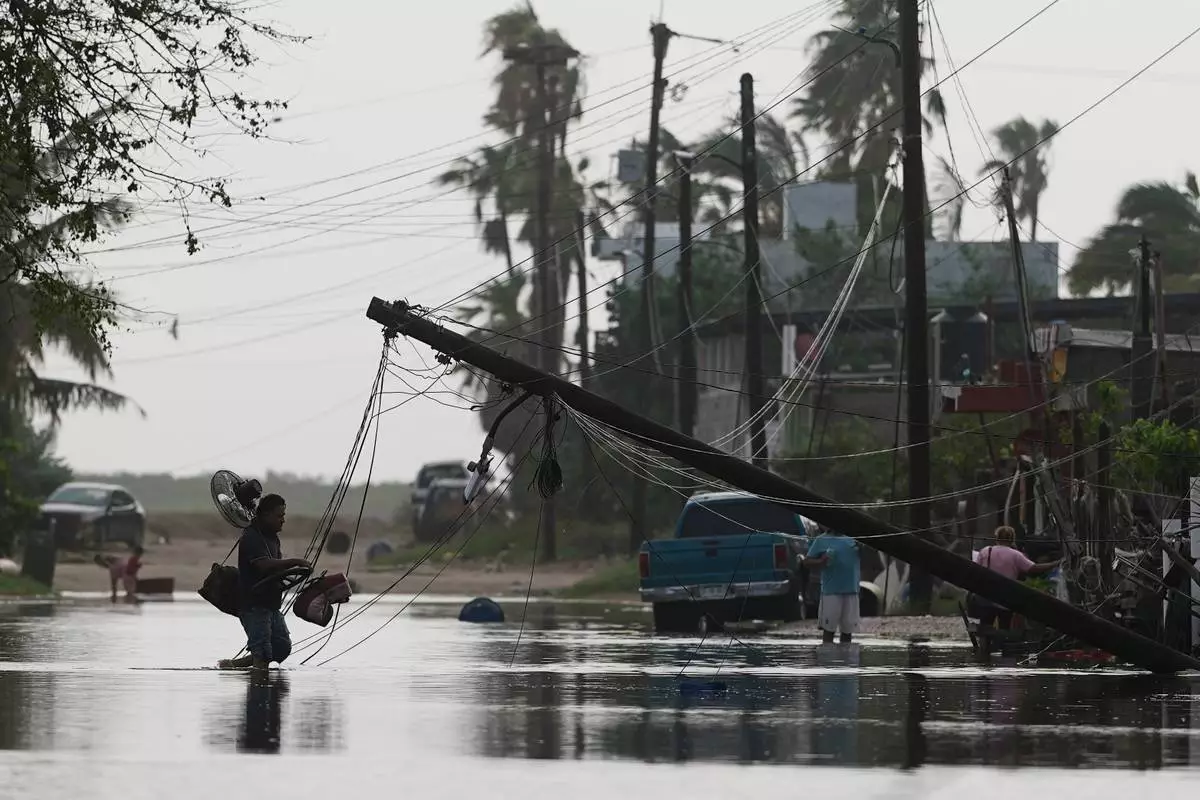
A man carries items through floodwater past downed electric lines after the passing of Hurricane Polo in Puerto San Carlos, Baja California Sur state, Mexico, Tuesday, Sept. 29, 2026. (AP Photo/Eduardo Verdugo)

A man carries items through floodwater past downed electric lines after the passing of Hurricane Polo in Puerto San Carlos, Baja California Sur state, Mexico, Tuesday, Sept. 29, 2026. (AP Photo/Eduardo Verdugo)

Recommended Articles