BALTIMORE (AP) — Gov. Wes Moore of Maryland is forming a bipartisan group of governors to respond to mounting concerns about the threats posed by artificial intelligence as he argued that states need to fill a void left by the federal government's inaction on the issue.
In an interview, Moore, a Democrat, criticized President Donald Trump's meeting with AI executives at the White House this week as a “billionaire boys club." He was also critical of Congress for leaving Washington until after next month's midterms without addressing the rapidly evolving technology.
“The federal government has a unique leadership role that they have to play and that includes both the White House and Congress,” Moore said after speaking at an innovation conference in Baltimore. “In the absence of that, the governors cannot just sit on our hands.”
Moore is the chair of the National Governors Association this year and said his co-chair, Republican Gov. Mike Braun of Indiana, would partner with him in developing an AI framework. Other governors from both parties are planning to participate, Moore said.
Increasingly dire warnings from tech executives that AI could pose an existential threat to humanity have tested the ability of governments at all levels to respond nimbly to fast-moving developments. So far, states have been more active than the federal government, but their power is limited when it comes to dealing with a technology that spans the country and the globe.
In the past month, governors in Maryland, California, Illinois, Oregon and Virginia have issued executive orders or taken other steps intended to create some standards for the technology. Republicans have been among those taking action at the state level with governors including Spencer Cox of Utah and Greg Abbott of Texas cracking down on data center development.
However, the action has been much slower in Washington. Sen. Bernie Sanders, I-Vt., hosted a briefing with lawmakers and experts last month and Sen. Josh Hawley, R-Mo., has launched an investigation into OpenAI. There has been little agreement, however, on a legislative response.
At the White House, Trump has dismissed AI fears as a “hoax” and emphasized the need to remain competitive with technology developed in China. He is one of the few prominent leaders who continues to boost data centers.
Trump and tech leaders signed a voluntary accord this week that he called “morally binding” and will include internal and external reviews. After meeting with the leaders, the president praised the industry for engaging in “tremendous self-policing.”
“Who in the room was advocating for more transparency or more regulatory guardrails?” Moore said of the White House meeting. “What the president did in no way, shape or form made me feel like what the governors are now doing was now unnecessary.”
The White House didn't immediately respond to a request for comment.
The debate over responding to artificial intelligence could play an important role in the early stages of the next presidential campaign. Moore has said he's not running for president and is focused on this year's midterms, when he is on the ballot for reelection in Maryland.
Whoever enters the field could face scrutiny for past moves including support for data centers, which were once seen as economic booms for states but have since become broadly unpopular. Moore is among the governors who has become more critical of data centers, signing an executive order last month establishing new rules to govern them.
He has also called on state lawmakers to repeal a tax exemption that was passed before he took office.
In the interview, Moore acknowledged the “speed of this technology that is moving at such a rapid clip.” He said that elements of an AI executive order he signed in 2024 are “antiquated now.”
“The operations might move,” he said. “But my values will never move.”
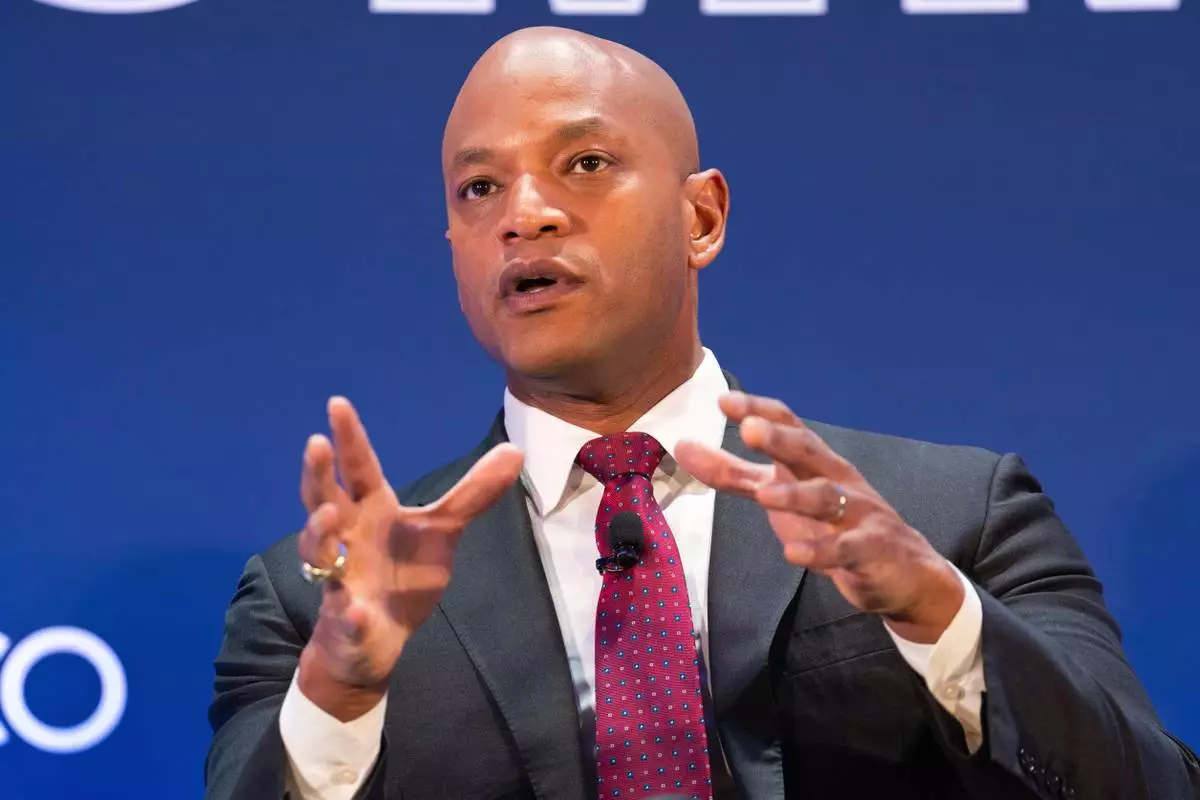
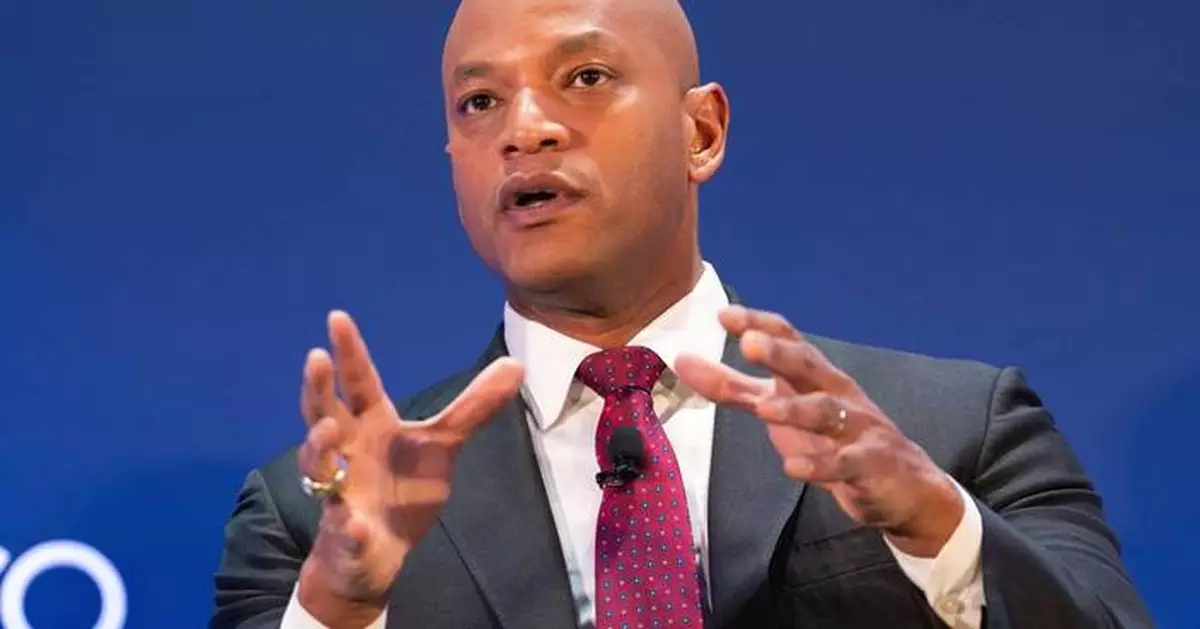
FILE - Maryland Gov. Wes Moore speaks at an event at the National Governors Association Winter Meeting, Feb. 19, 2026, in Washington. (AP Photo/Allison Robbert, File)
CAPE CANAVERAL, Fla. (AP) — Four astronauts rocketed into orbit Thursday on a space station mission that will stretch until spring, among them a Canadian whose wife will give birth while he’s away.
SpaceX launched commander Jessica Watkins and her crew for NASA after a three-week delay to fix their Dragon capsule’s leaking fuel system. Thick clouds threatened all morning to halt the countdown but in the end, the skies cleared enough to allow for a safe liftoff.
Although their stay at the International Space Station will last a long six months, the flight there promised to be the quickest yet for Elon Musk’s company: a mere eight-hour transit with an arrival well before bedtime.
With the late morning liftoff from Cape Canaveral Space Force Station, Watkins became the first Black woman to lead a crew to orbit. A geologist who worked with NASA’s Mars rover Curiosity a decade ago, Watkins is making her second trip to the space station following a lengthy stay in 2022.
“Thanks for an amazing ride,” Watkins radioed after reaching orbit.
The others are newcomers to space: NASA’s Luke Delaney, a retired Marine; Canada’s Joshua Kutryk, a colonel in the Royal Canadian Air Force; and Russia’s Sergey Teteryatnikov, a former submariner. They will replace four astronauts who have been living at the orbiting laboratory since February.
This was the 13th crew launched by SpaceX for NASA, not counting 2020's test flight. All four embrace their Crew-13 designation that pays homage in their mission patch to Apollo 13. The harrowing 1970 moonshot ended with the astronauts’ safe return.
References to the number 13 abounded Thursday. Watkins and her crew rode to the launch pad in black Teslas bearing plates that read “Lucky 13.” What's more, they carried up a small crocheted golden dragon named Lucky with a four-leaf clover around its neck.
“We figured it wouldn't hurt to bring a little of our own luck just in case, but clearly we don't need it,” Watkins said from orbit, noting they were “four of the luckiest humans on or off planet Earth.”
Kutryk will become the fourth man to become a father while orbiting Earth. Wife Heather is due to give birth to their third child in late November. The Canadian Space Agency promises plenty of support for the entire family when the big day comes.
“A lot of life-changing things can happen over six months,” NASA manager Dana Weigel said on the eve of liftoff, noting that the space agency will do its best to keep Kutryk looped in to his family.
In 2004, NASA provided a radio link between space station astronaut Mike Fincke and his wife’s delivery room during the birth of their daughter. Five years later, Randy Bresnik, commander of next year’s Artemis III mission, dialed in to his wife’s hospital from orbit.
The happy news traveled more slowly for Austrian astronaut Franz Viehbock. His daughter was born a few hours after he launched to the Soviet Union’s Mir space station in 1991. He was not informed until the next day.
SpaceX, meanwhile, is on a roll. Three hours after Crew-13 blasted off, SpaceX launched a Falcon rocket from California with more than 100 mini satellites. Another Falcon was set to soar late Thursday night from Florida, with a classified satellite for the National Reconnaissance Office. All this comes the same week that the company's massive Starship reached orbit for the first time.
The Associated Press’ health and science coverage receives financial support from the AP Fund for Journalism and private foundations. AP is solely responsible for all content. Find AP’s standards for working with philanthropies, a list of supporters and funded coverage areas at AP.org
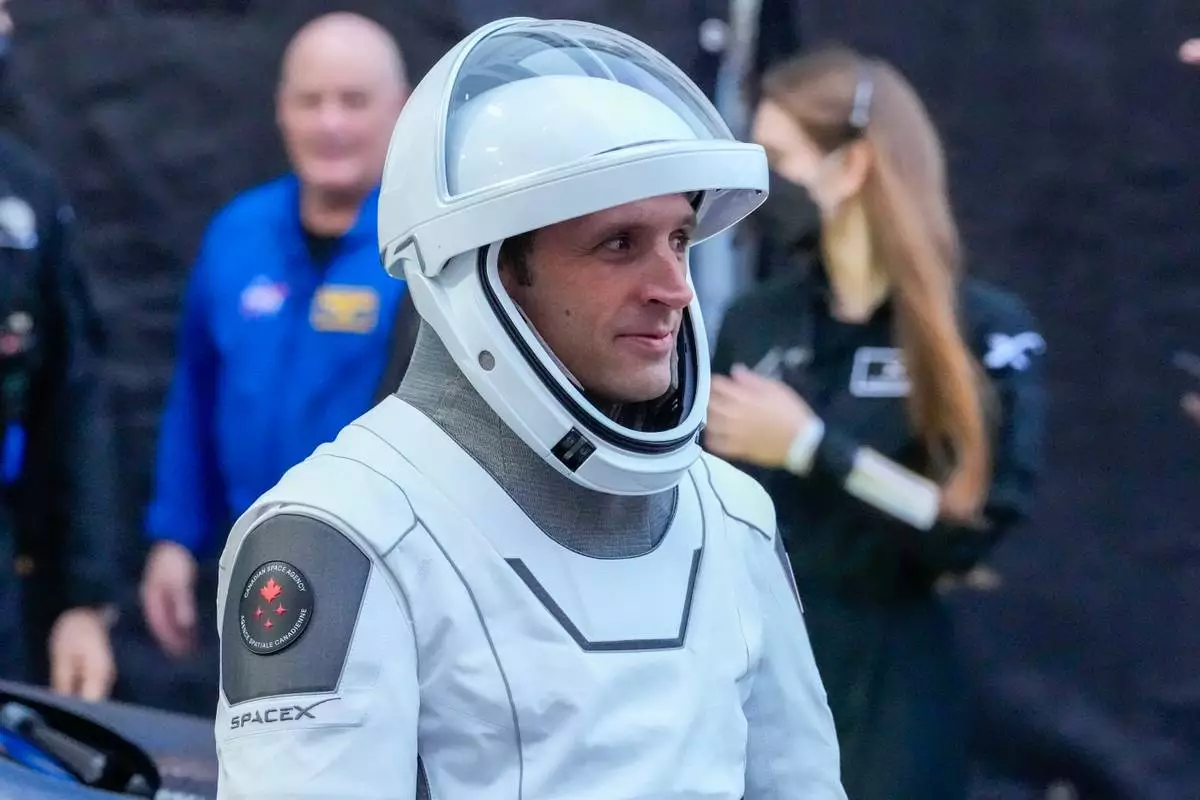
Astronaut Joshua Kutryk, of Canada, leaves the Operations and Checkout Building at the Kennedy Space Center in Cape Canaveral, Fla., Thursday, Oct. 1, 2026. (AP Photo/John Raoux)
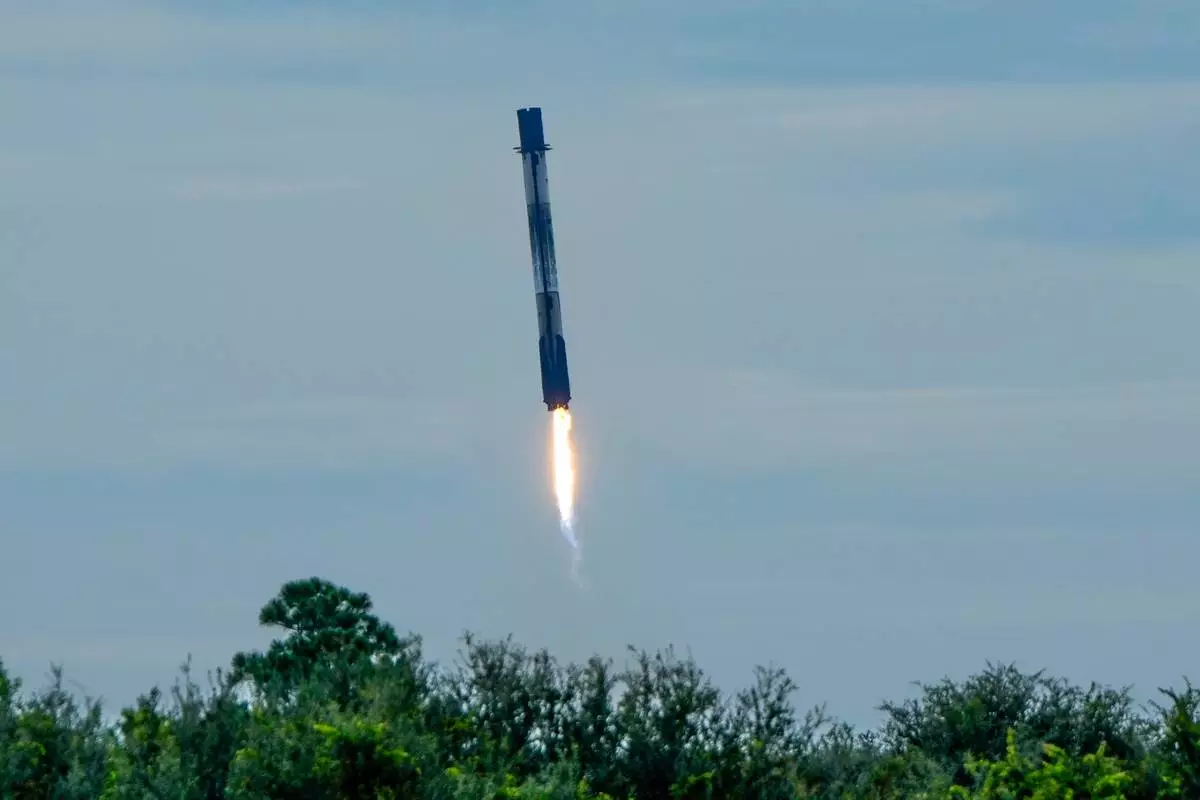
The booster from a SpaceX Falcon 9 rocket returns to pad 40 after launching the crew capsule at the Cape Canaveral Space Force Station in Cape Canaveral, Fla., Thursday, Oct. 1, 2026. (AP Photo/John Raoux)
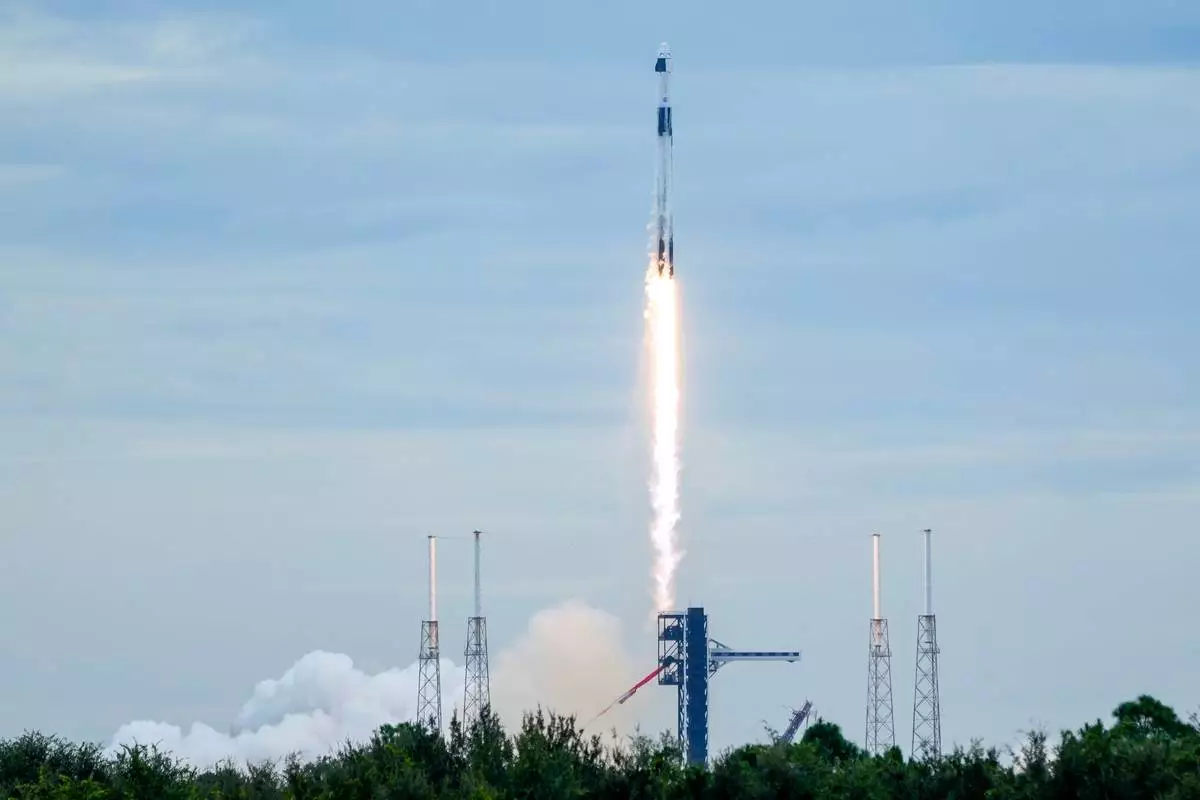
A SpaceX Falcon 9 with a crew of four launches from pad 40 at the Cape Canaveral Space Force Station in Cape Canaveral, Fla., Thursday, Oct. 1, 2026. (AP Photo/John Raoux)
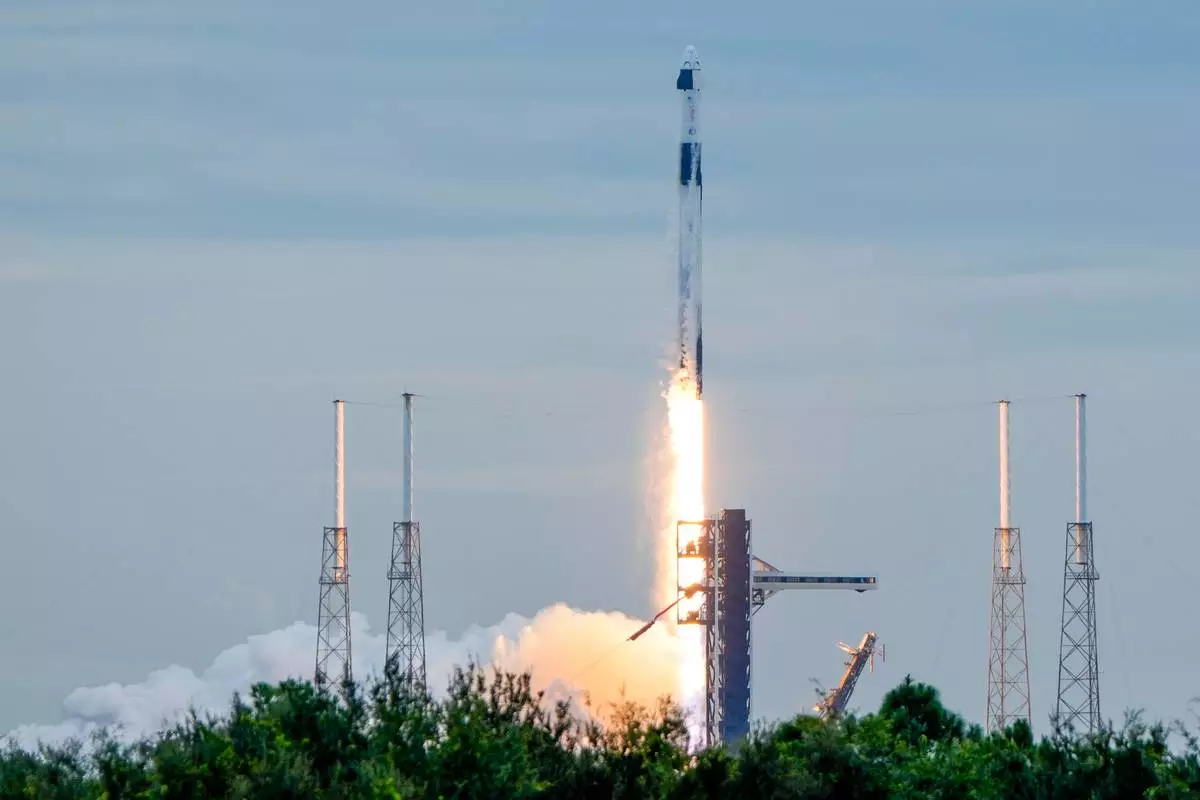
A SpaceX Falcon 9 rocket with a crew of four launches from pad 40 at the Cape Canaveral Space Force Station in Cape Canaveral, Fla., Thursday, Oct. 1, 2026. (AP Photo/John Raoux)
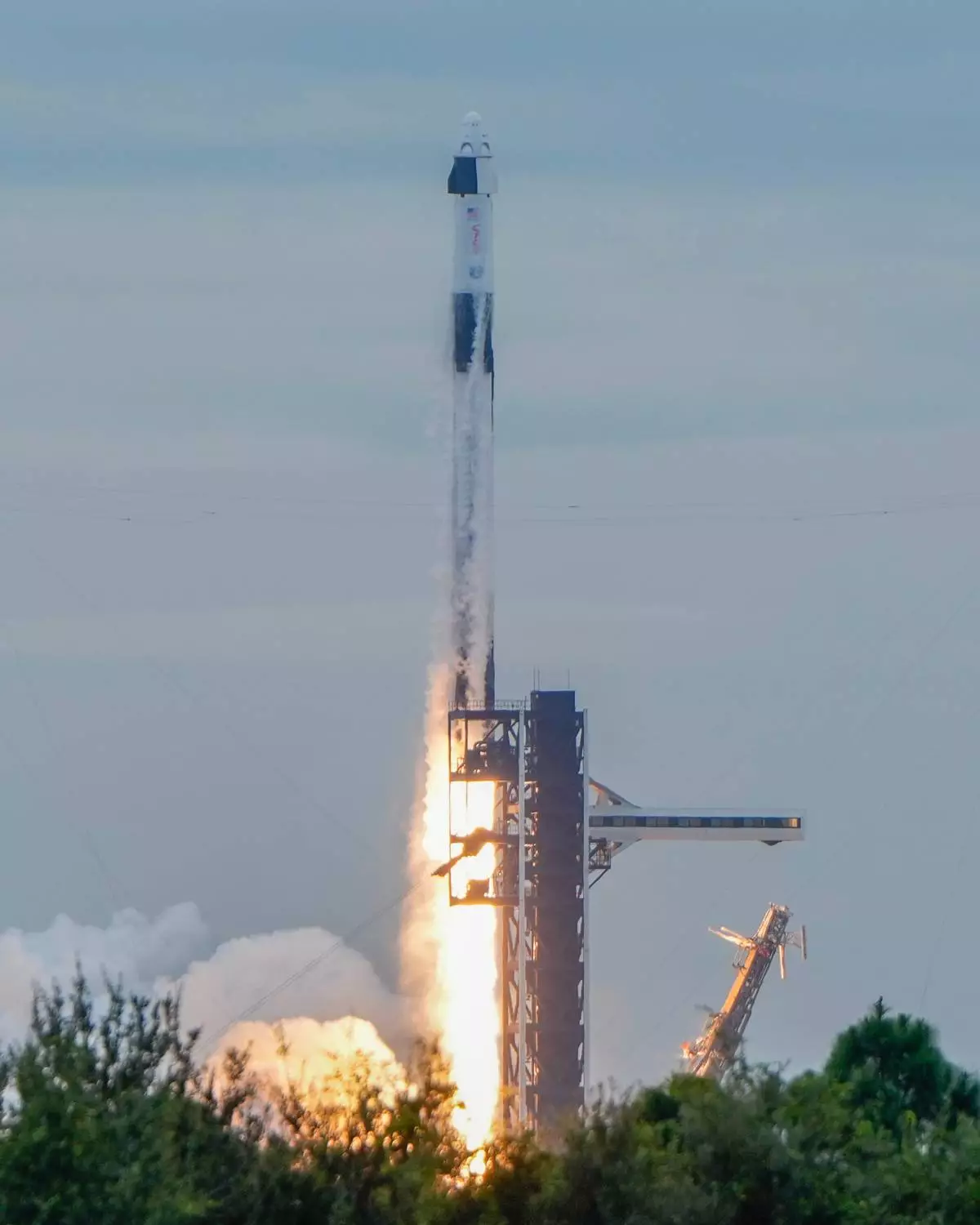
A SpaceX Falcon 9 rocket with a crew of four launches from pad 40 at the Cape Canaveral Space Force Station in Cape Canaveral, Fla., Thursday, Oct. 1, 2026. (AP Photo/John Raoux)
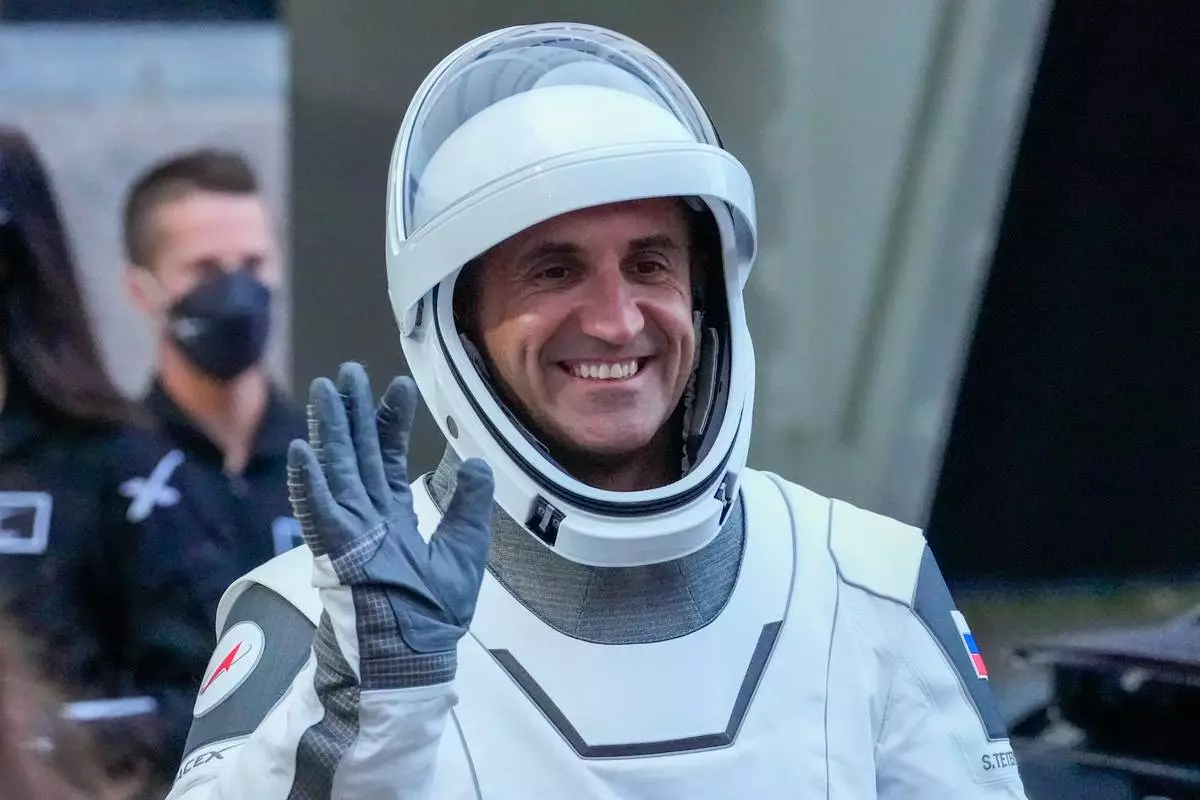
Cosmonaut Sergey Teteryatnikov, of Russia, greets family and friends as he leaves the Operations and Checkout Building at the Kennedy Space Center in Cape Canaveral, Fla., Thursday, Oct. 1, 2026. (AP Photo/John Raoux)
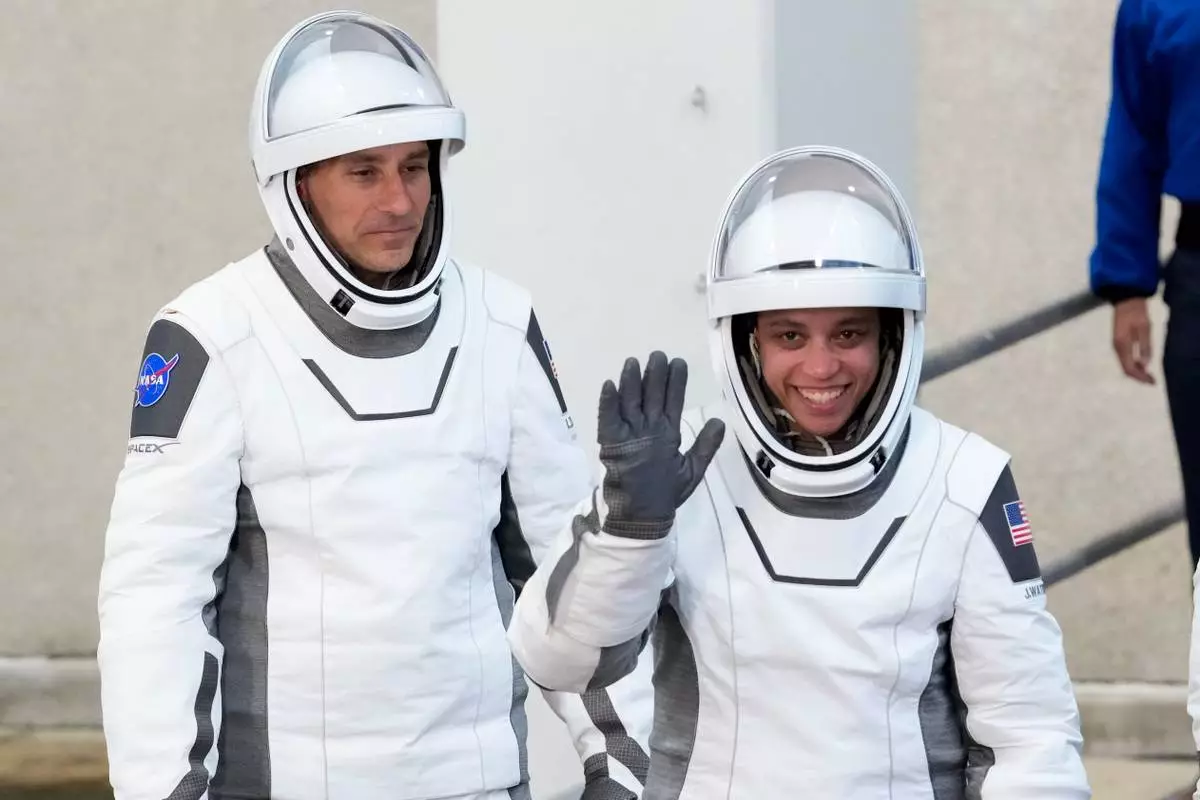
Pilot Luke Delaney, left, and commander Jessica Watkins leave the Operations and Checkout Building at the Kennedy Space Center in Cape Canaveral, Fla., Thursday, Oct. 1, 2026. (AP Photo/John Raoux)
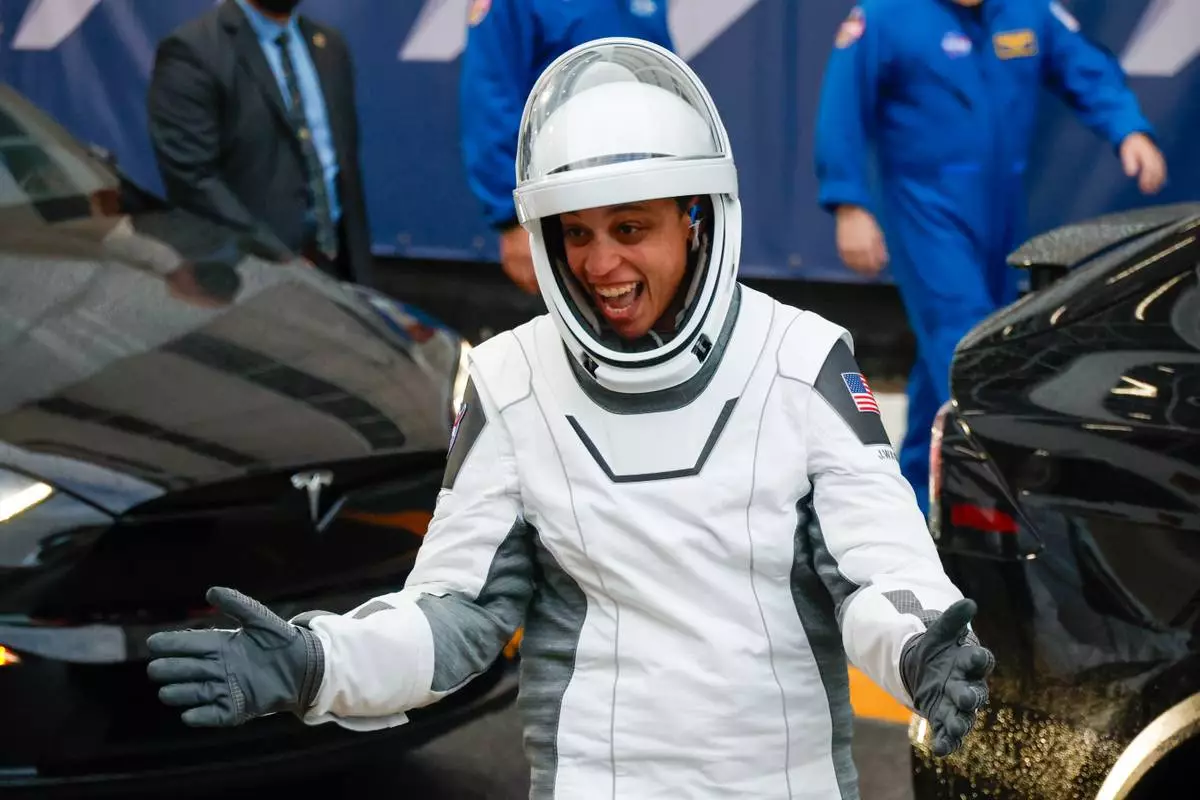
Commander Jessica Watkins greets family and friends as she leaves the Operations and Checkout Building at the Kennedy Space Center in Cape Canaveral, Fla., Thursday, Oct. 1, 2026. (AP Photo/Terry Renna)
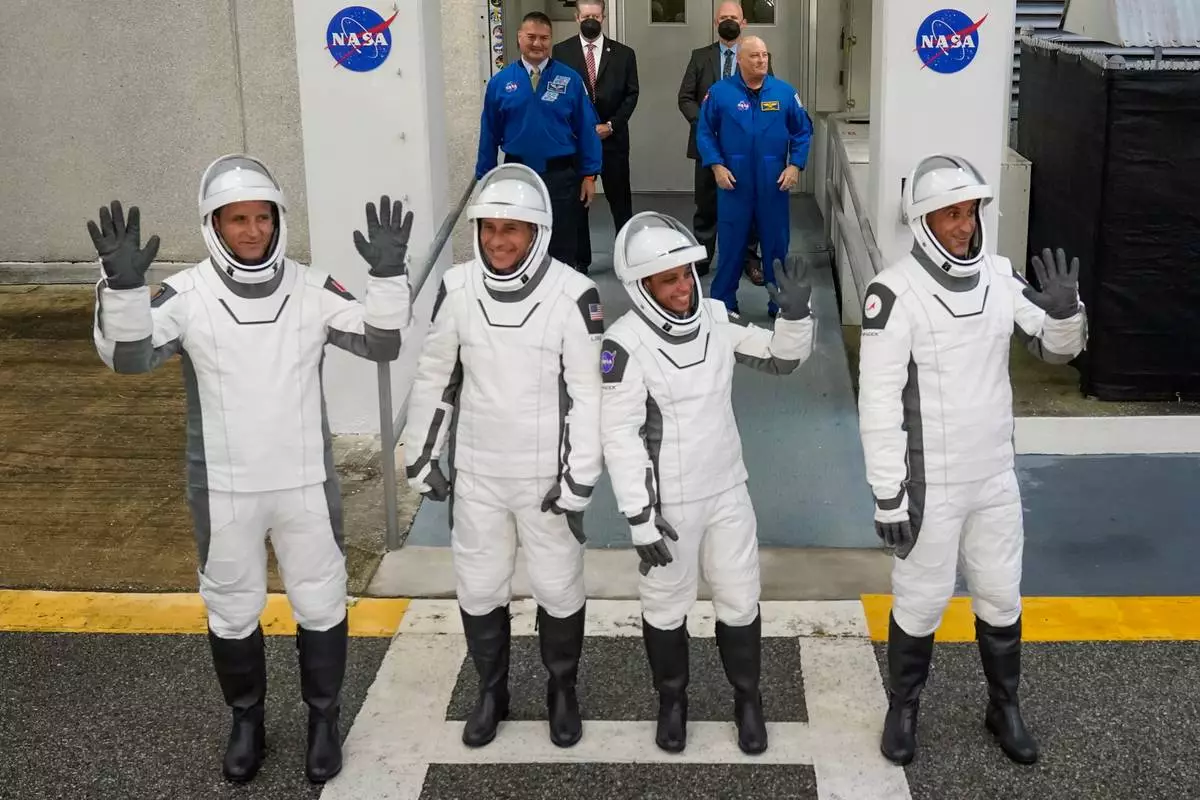
Astronauts, from left, Joshua Kutryk, of Canada, pilot Luke Delaney, commander Jessica Watkins and Cosmonaut Sergey Teteryatnikov, of Russia leave the Operations and Checkout Building at the Kennedy Space Center in Cape Canaveral, Fla., Thursday, Oct. 1, 2026. (AP Photo/John Raoux)

Astronauts, from left, Joshua Kutryk, of Canada, pilot Luke Delaney, commander Jessica Watkins and Cosmonaut Sergey Teteryatnikov, of Russia leave the Operations and Checkout Building at the Kennedy Space Center in Cape Canaveral, Fla., Thursday, Oct. 1, 2026. (AP Photo/Terry Renna)
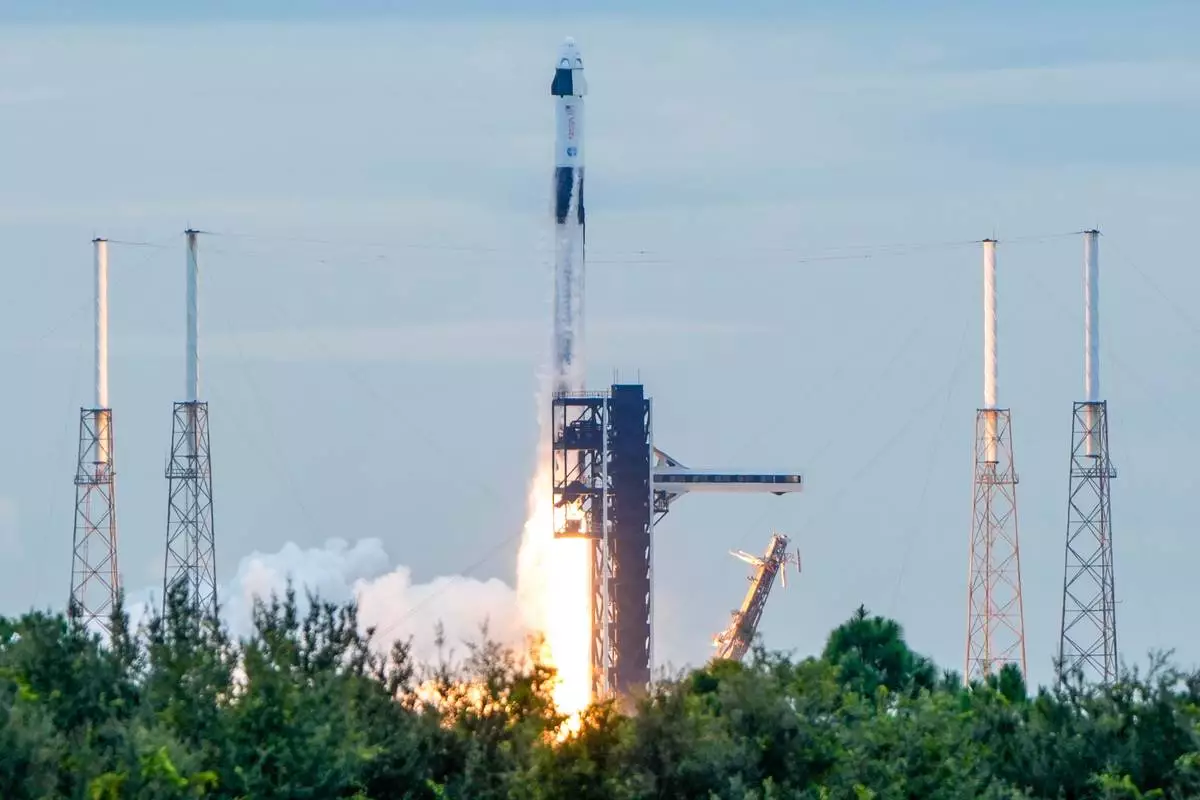
A SpaceX Falcon 9 rocket with a crew of four launches from pad 40 at the Cape Canaveral Space Force Station in Cape Canaveral, Fla., Thursday, Oct. 1, 2026. (AP Photo/John Raoux)