PHOENIX (AP) — An Arizona man’s 10-year manslaughter sentence has been tossed in a case where a video generated by artificial intelligence portrayed the deceased victim addressing a judge before the punishment was imposed.
In a decision released Wednesday, the Arizona Court of Appeals concluded Gabriel Paul Horcasitas must be resentenced in the 2021 shooting death of Christopher Pelkey because the AI video wasn't reliable.
The court found the video crossed the line, saying it didn’t reflect actual events and presented statements made in the footage as coming directly from the victim.
“Indeed, rather than document an event or recording a particular moment, the AI video presents a depiction of the victim and his thoughts created from the imaginings of the victim’s sister,” the three-judge panel wrote.
Jessica Gattuso, an attorney who represented victims in the case, and Kristen Reller, Horcasitas’ lawyer, declined to comment Thursday on the decision.
Reller had argued Superior Court Judge Todd Lang violated due process protections by relying on AI evidence. Gattuso and prosecutors told the appeals court that the lower-court judge didn’t err, saying the footage was an accurate representation of Pelkey’s character.
In what’s believed to be a first in U.S. courts, Pelkey’s family used AI to create a video of his likeness to give him a voice. Pelkey’s sister, Stacey Wales, raised the idea of her brother speaking for himself after struggling to figure out what he would say.
Wales expected an appeal on the sentence and was disappointed the AI video was cited as the reason, saying her only goal was to humanize her brother for the judge. “It feels unfair because there is a convicted murderer sitting in prison that has blankets and walls of protection around their rights. Where are the rights for the victim?” Wales said.
A victim appeals lawyer has told the family that using AI again could result in another appeal. “We will continue to let his voice be heard in whatever allowable medium we can convey that through the court system,” Wales said. The AI-generated victim impact statement was played during a May 2025 sentencing hearing after nine of Pelkey’s family members and friends stood before the judge describing how emotionally devastated they were by his killing.
Authorities say Horcasitas, 55, fatally shot Pelkey, 37, during a November 2021 road rage encounter at a stoplight in Chandler, a suburb of Phoenix. Pelkey, who was unarmed, was shot after getting out of his truck and walking toward Horcasitas’ vehicle.
Horcasitas was convicted of manslaughter in Pelkey’s death and endangerment for a gunshot that struck another vehicle at the intersection during the encounter.
The AI rendering of Pelkey said he wished he could still be with his friends and family, voiced a belief in forgiveness and said it was a shame Horcasitas had encountered him because “in another life, we probably could have been friends.” The video didn't request a specific prison sentence.
Horcasitas’ appellate lawyer argued her client had no meaningful opportunity to rebut material in the AI-generated video.
It’s not clear if attorneys or the court were aware in advance that an AI-generated video would be used. But attorneys representing Pelkey’s family said in court records that Arizona law does not require victims to disclose statements they plan to make in court to prosecutors, defense attorneys or the judge — and that victims can exercise their rights by speaking before the court or submitting statements that are written or recorded on audio or video.
In a statement Thursday, the Maricopa County Attorney's Office said its prosecutors knew the victim’s family would address the court during sentencing but weren't aware of the nature of it.
While the use of AI within the court system is expanding, it’s typically been reserved for administrative tasks, legal research and case preparation. In Arizona, it’s helped inform the public of rulings in significant cases.
But using AI to generate victim impact statements marks a new tool for sharing information with the court outside the evidentiary phases.
Reller told the appeals court that the video doesn’t disclose who wrote the words used by the AI version of Pelkey and wasn’t backed up with evidence establishing that its contents accurately reflected Pelkey’s views. It also had an “undue emotional weight” and conveyed an authenticity that wouldn’t have been there had a family member read the same words aloud, Reller said.
Horcasitas’ lawyer contended the judge weighed the statements made in the AI-generated video when deciding on a sentence, but prosecutors argued Lang didn’t consider the footage when issuing the punishment.
Shortly before delivering the sentence, the judge commented that he “loved that AI” but didn’t say from the bench whether the video factored into his decision. Lang said he felt Pelkey’s “obvious forgiveness of Mr. Horcasitas reflects the character I heard about today.”
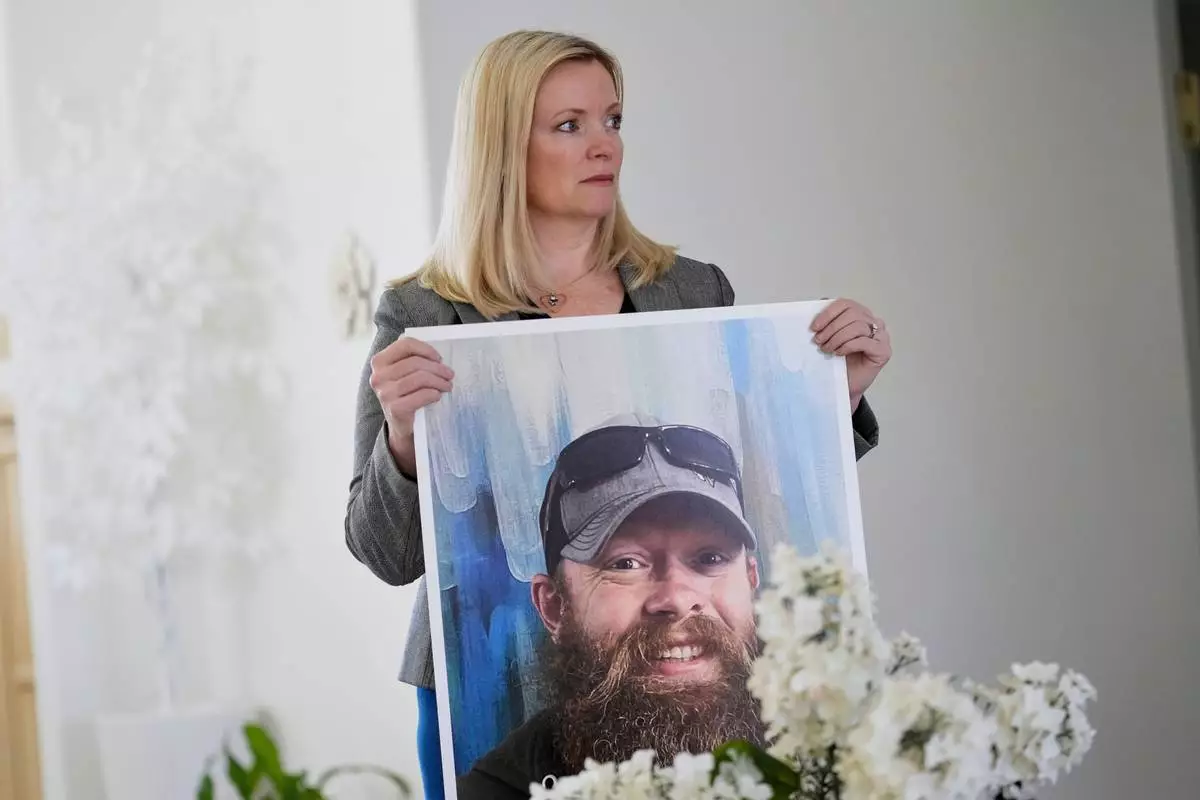
FILE - Stacey Wales, sister of the late Christopher Pelkey, displays her brother's image at her mother's home, May 7, 2025, in Chandler, Ariz. (AP Photo/Matt York, File)
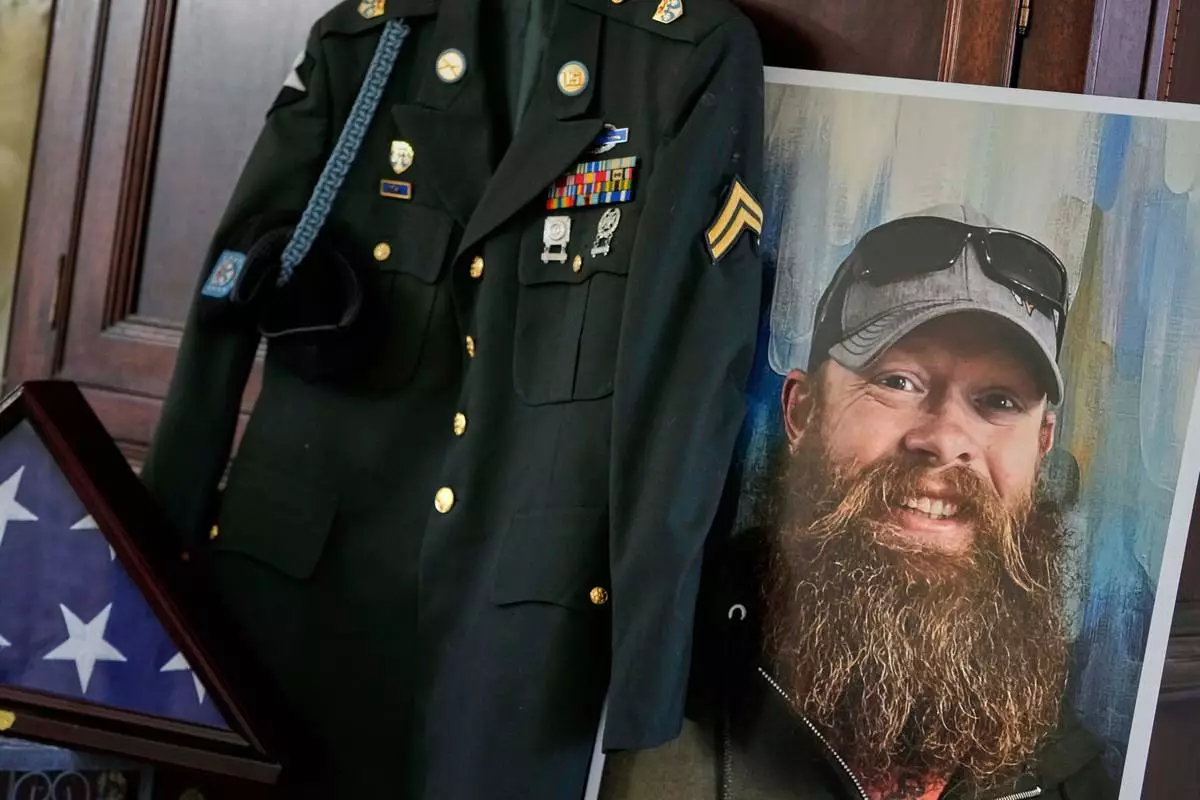
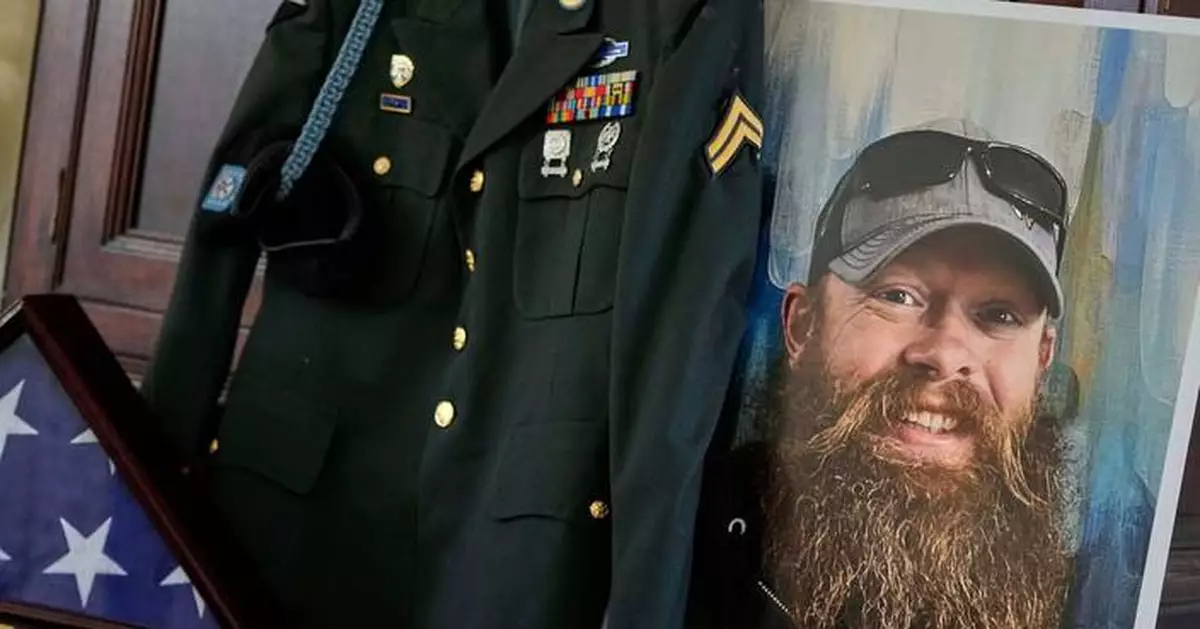
FILE - The Army dress uniform and photo of the late Christopher Pelkey is displayed at his mother's home, May 7, 2025, in Chandler, Ariz. (AP Photo/Matt York, File)
CAPE CANAVERAL, Fla. (AP) — Four astronauts pulled up at the International Space Station on Thursday after launching on an eight-hour express that set a U.S. speed record.
The fresh arrivals include a Canadian whose wife will give birth while he’s away.
SpaceX launched commander Jessica Watkins and her crew for NASA after a three-week delay to fix their Dragon capsule’s leaking fuel system. Thick clouds threatened all morning to halt the countdown but in the end, the skies cleared enough to allow for a safe liftoff.
Although their stay at the International Space Station will last a long six months, the flight there was the quickest yet not only for Elon Musk’s company, but any American entity, including NASA. The space station's convenient location when the astronauts launched enabled the fast transit.
With the late morning liftoff from Cape Canaveral Space Force Station, Watkins became the first Black woman to lead a crew to orbit. A geologist who worked with NASA’s Mars rover Curiosity a decade ago, Watkins is making her second trip to the space station following a lengthy stay in 2022.
“Thanks for an amazing ride,” Watkins radioed following liftoff.
The others are newcomers to space: NASA’s Luke Delaney, a retired Marine; Canada’s Joshua Kutryk, a colonel in the Royal Canadian Air Force; and Russia’s Sergey Teteryatnikov, a former submariner. They will replace four astronauts who have been living at the orbiting laboratory since February.
This was the 13th crew launched by SpaceX for NASA, not counting 2020's test flight. All four embrace their Crew-13 designation that pays homage in their mission patch to Apollo 13. The harrowing 1970 moonshot ended with the astronauts’ safe return.
References to the number 13 abounded Thursday. Watkins and her crew rode to the launch pad in black Teslas bearing plates that read “Lucky 13.” What's more, they carried up a small crocheted golden dragon named Lucky with a four-leaf clover around its neck.
“We figured it wouldn't hurt to bring a little of our own luck just in case, but clearly we don't need it,” Watkins said from orbit, noting they were “four of the luckiest humans on or off planet Earth.”
Kutryk will become the fourth man to become a father while orbiting Earth. Wife Heather is due to give birth to their third child in late November. The Canadian Space Agency promises plenty of support for the entire family when the big day comes.
“A lot of life-changing things can happen over six months,” NASA manager Dana Weigel said on the eve of liftoff, noting that the space agency will do its best to keep Kutryk looped in to his family.
In 2004, NASA provided a radio link between space station astronaut Mike Fincke and his wife’s delivery room during the birth of their daughter. Five years later, Randy Bresnik, commander of next year’s Artemis III mission, dialed in to his wife’s hospital from orbit.
The happy news traveled more slowly for Austrian astronaut Franz Viehbock. His daughter was born a few hours after he launched to the Soviet Union’s Mir space station in 1991. He was not informed until the next day.
SpaceX, meanwhile, is on a roll. Three hours after Crew-13 blasted off, SpaceX launched a Falcon rocket from California with more than 100 mini satellites. Another Falcon was set to soar late Thursday night from Florida, with a classified satellite for the National Reconnaissance Office. All this comes the same week that the company's massive Starship reached orbit for the first time.
The Associated Press’ health and science coverage receives financial support from the AP Fund for Journalism and private foundations. AP is solely responsible for all content. Find AP’s standards for working with philanthropies, a list of supporters and funded coverage areas at AP.org
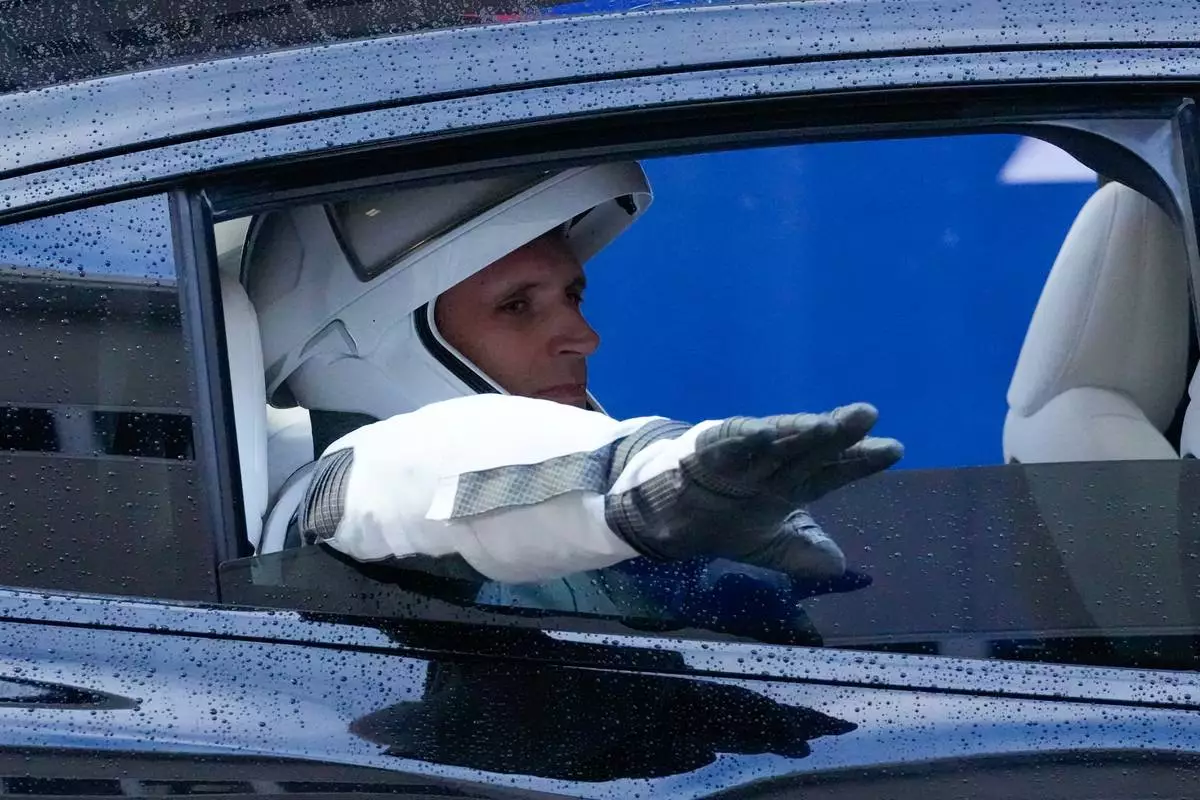
Astronaut Joshua Kutryk, of Canada, waves as he leaves the Operations and Checkout Building at the Kennedy Space Center in Cape Canaveral, Fla., Thursday, Oct. 1, 2026. (AP Photo/John Raoux)
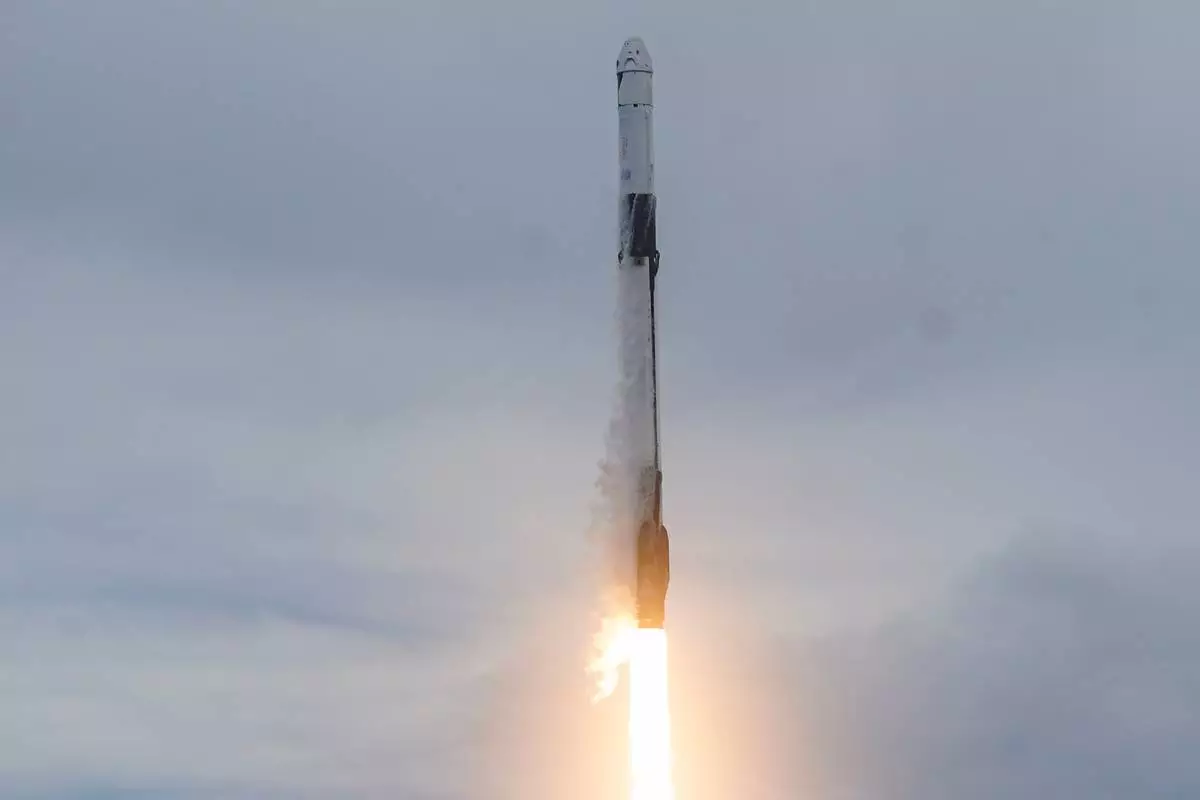
A SpaceX Falcon 9 rocket with a crew of four launches from pad 40 at the Cape Canaveral Space Force Station in Cape Canaveral, Fla., Thursday, Oct. 1, 2026. (AP Photo/John Raoux)
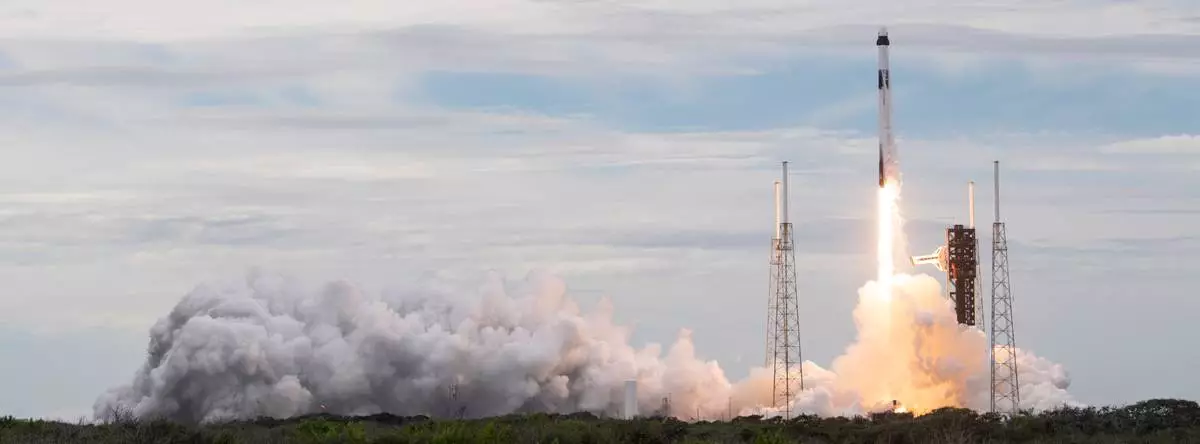
A SpaceX Falcon 9 rocket carrying the company's Dragon spacecraft is launched on NASA's SpaceX Crew-13 mission to the International Space Station with NASA astronauts Jessica Watkins and Luke Delaney, CSA (Canadian Space Agency) astronaut Joshua Kutryk, and Roscosmos cosmonaut Sergey Teteryatnikov onboard, Thursday, Oct. 1, 2026, from Cape Canaveral Space Force Station in Florida. (Joel Kowsky/NASA via AP)
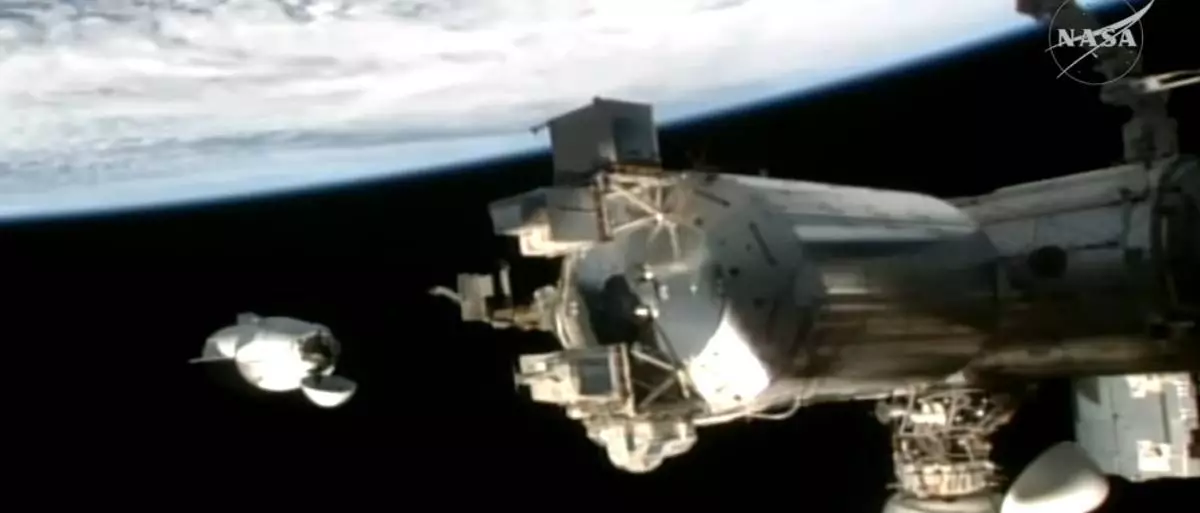
This image taken from video by NASA shows a SpaceX capsule carrying four astronauts approaching at the International Space Station, Thursday, Oct. 1, 2026. (NASA via AP)
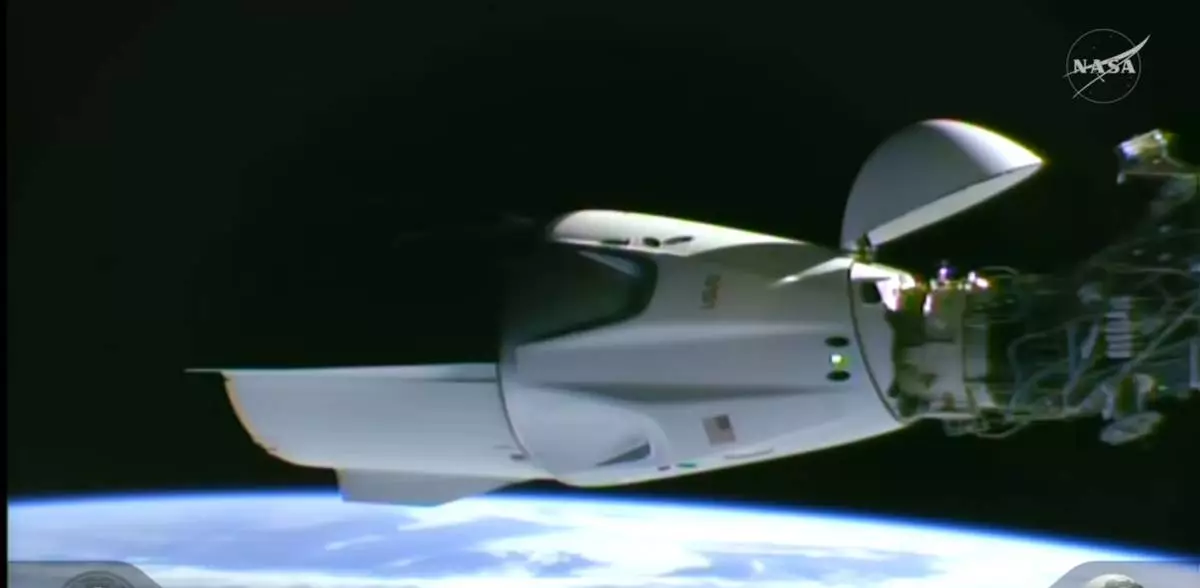
This image taken from video by NASA shows a SpaceX capsule carrying four astronauts docking at the International Space Station, Thursday, Oct. 1, 2026. (NASA via AP)
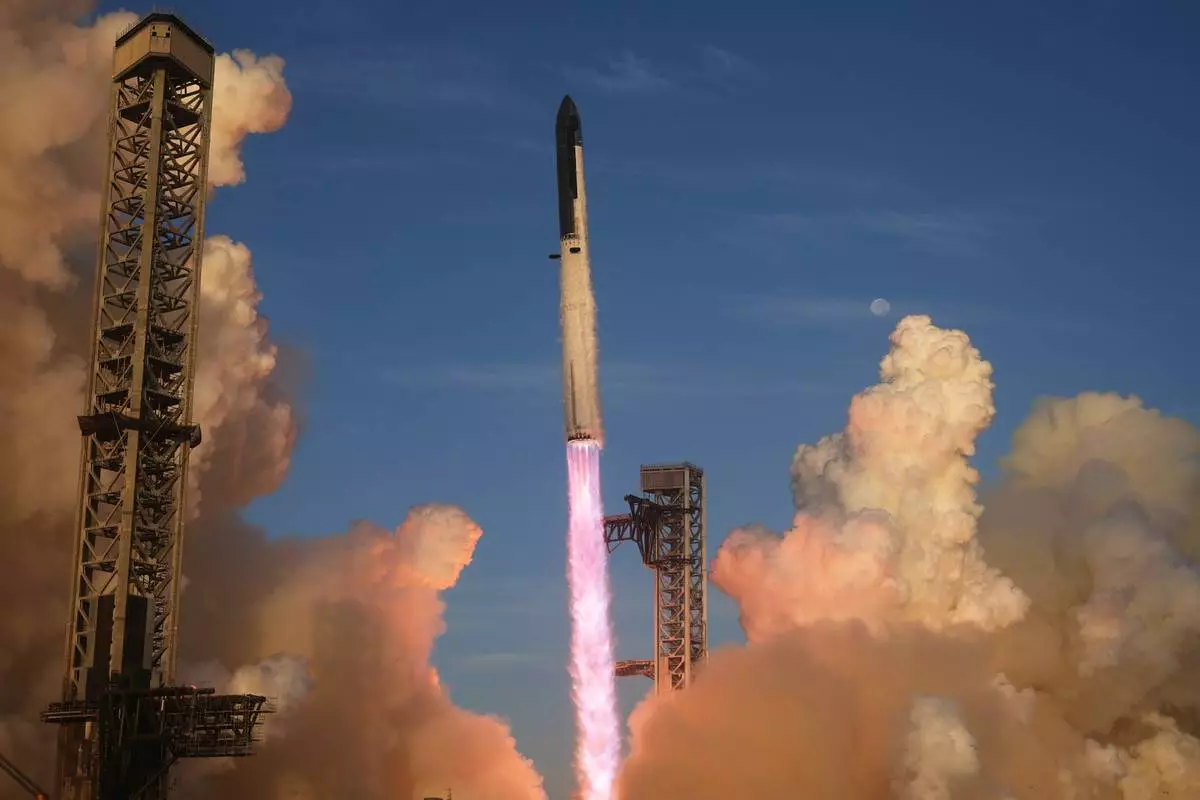
SpaceX's mega rocket Starship makes a test flight from Starbase, Texas, Monday, Sept. 28, 2026. (AP Photo/Eric Gay)
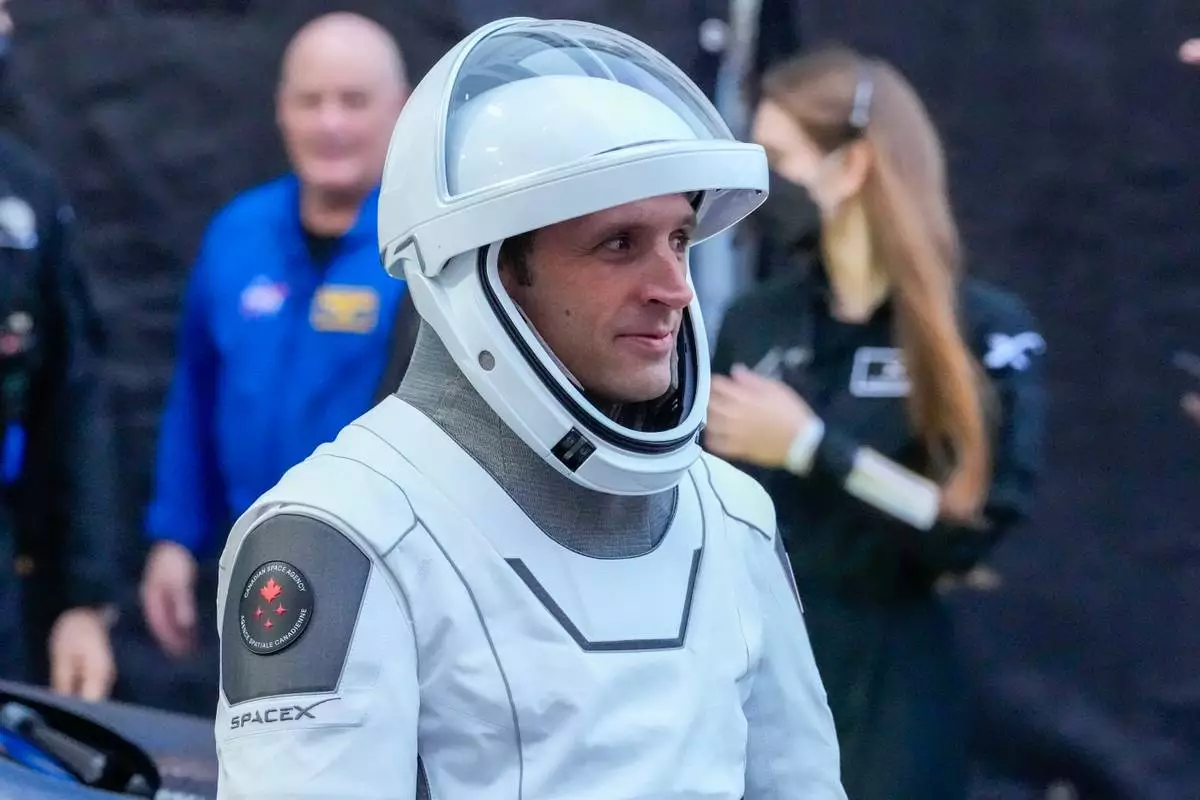
Astronaut Joshua Kutryk, of Canada, leaves the Operations and Checkout Building at the Kennedy Space Center in Cape Canaveral, Fla., Thursday, Oct. 1, 2026. (AP Photo/John Raoux)
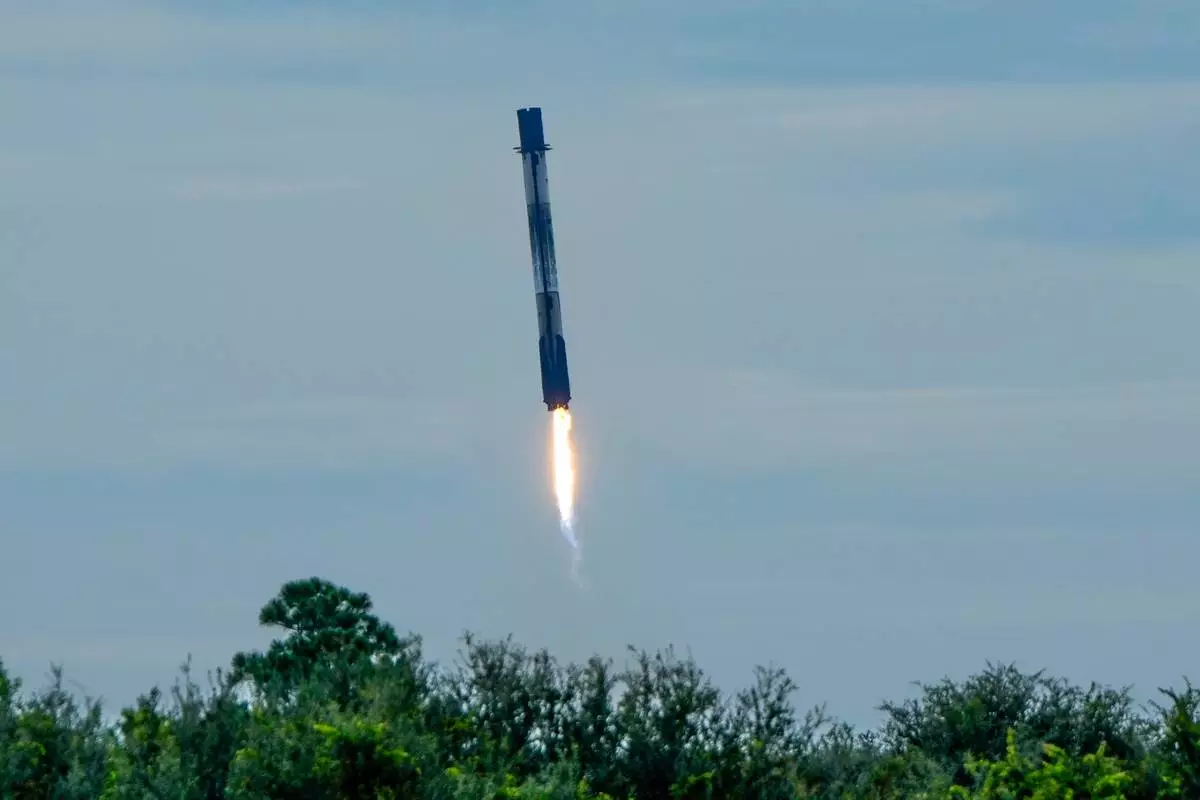
The booster from a SpaceX Falcon 9 rocket returns to pad 40 after launching the crew capsule at the Cape Canaveral Space Force Station in Cape Canaveral, Fla., Thursday, Oct. 1, 2026. (AP Photo/John Raoux)
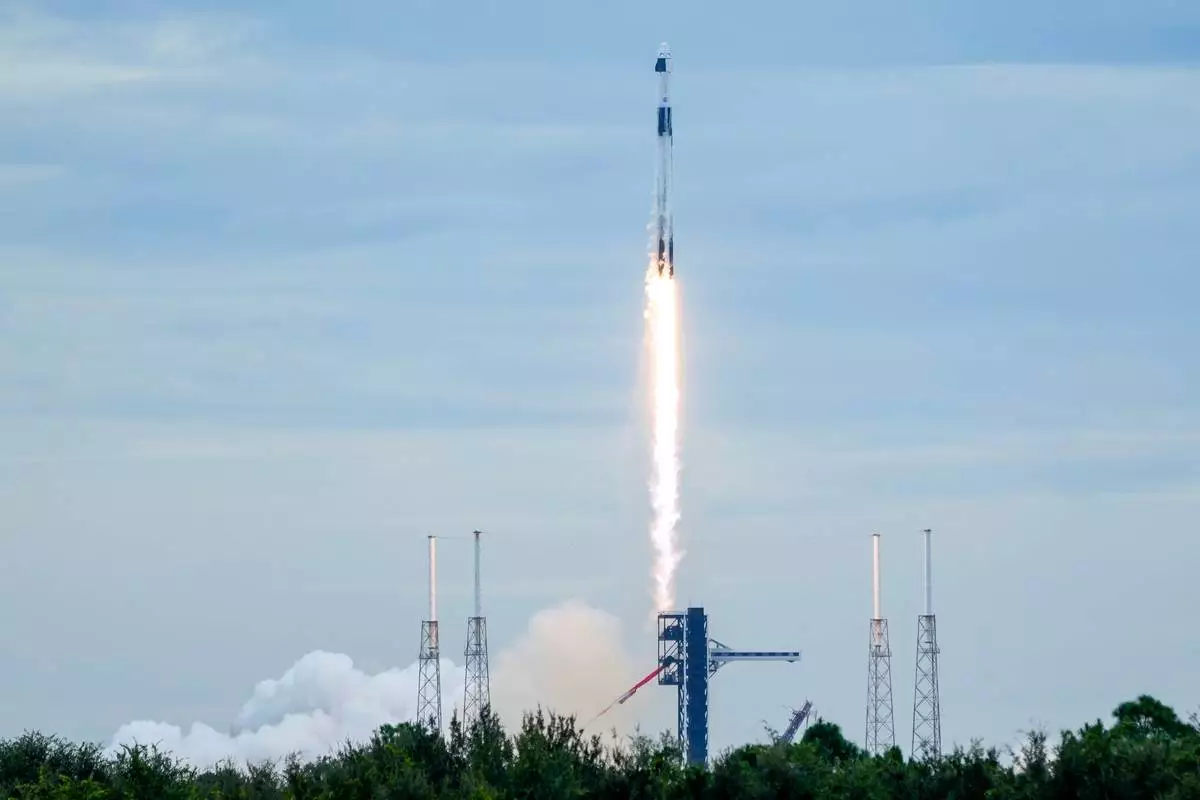
A SpaceX Falcon 9 with a crew of four launches from pad 40 at the Cape Canaveral Space Force Station in Cape Canaveral, Fla., Thursday, Oct. 1, 2026. (AP Photo/John Raoux)
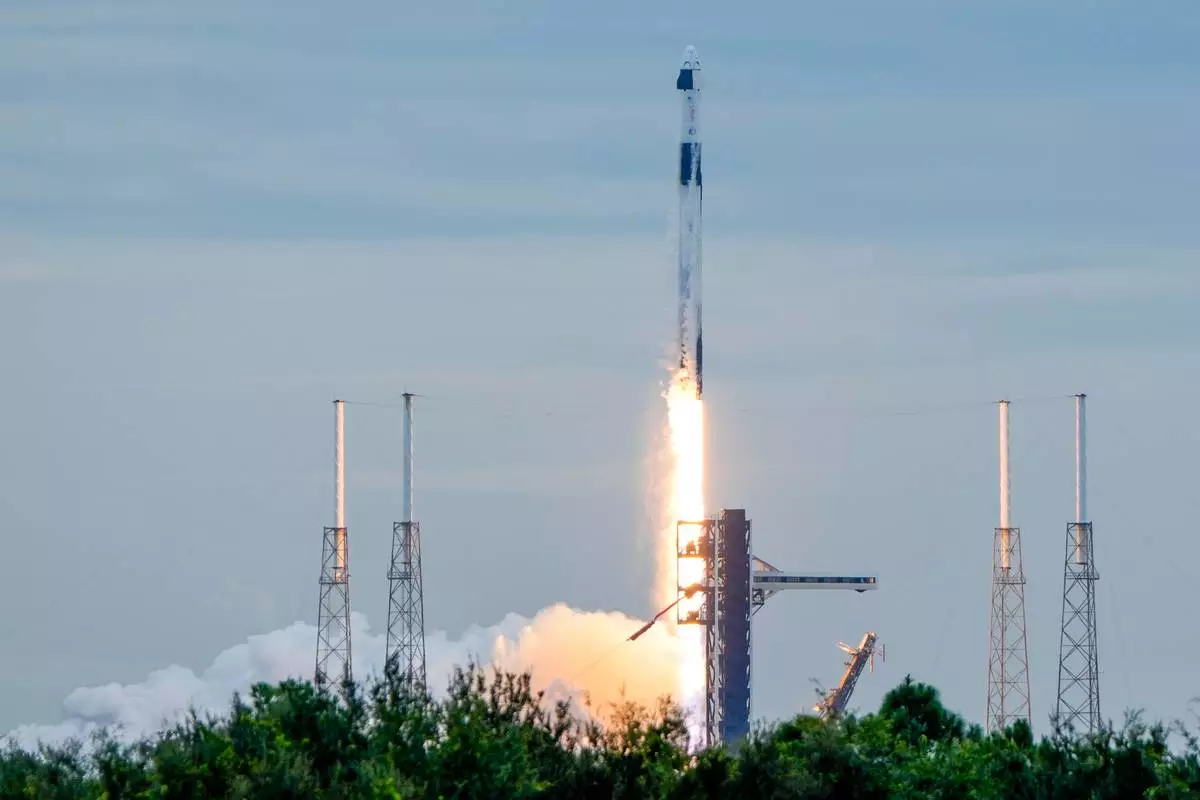
A SpaceX Falcon 9 rocket with a crew of four launches from pad 40 at the Cape Canaveral Space Force Station in Cape Canaveral, Fla., Thursday, Oct. 1, 2026. (AP Photo/John Raoux)
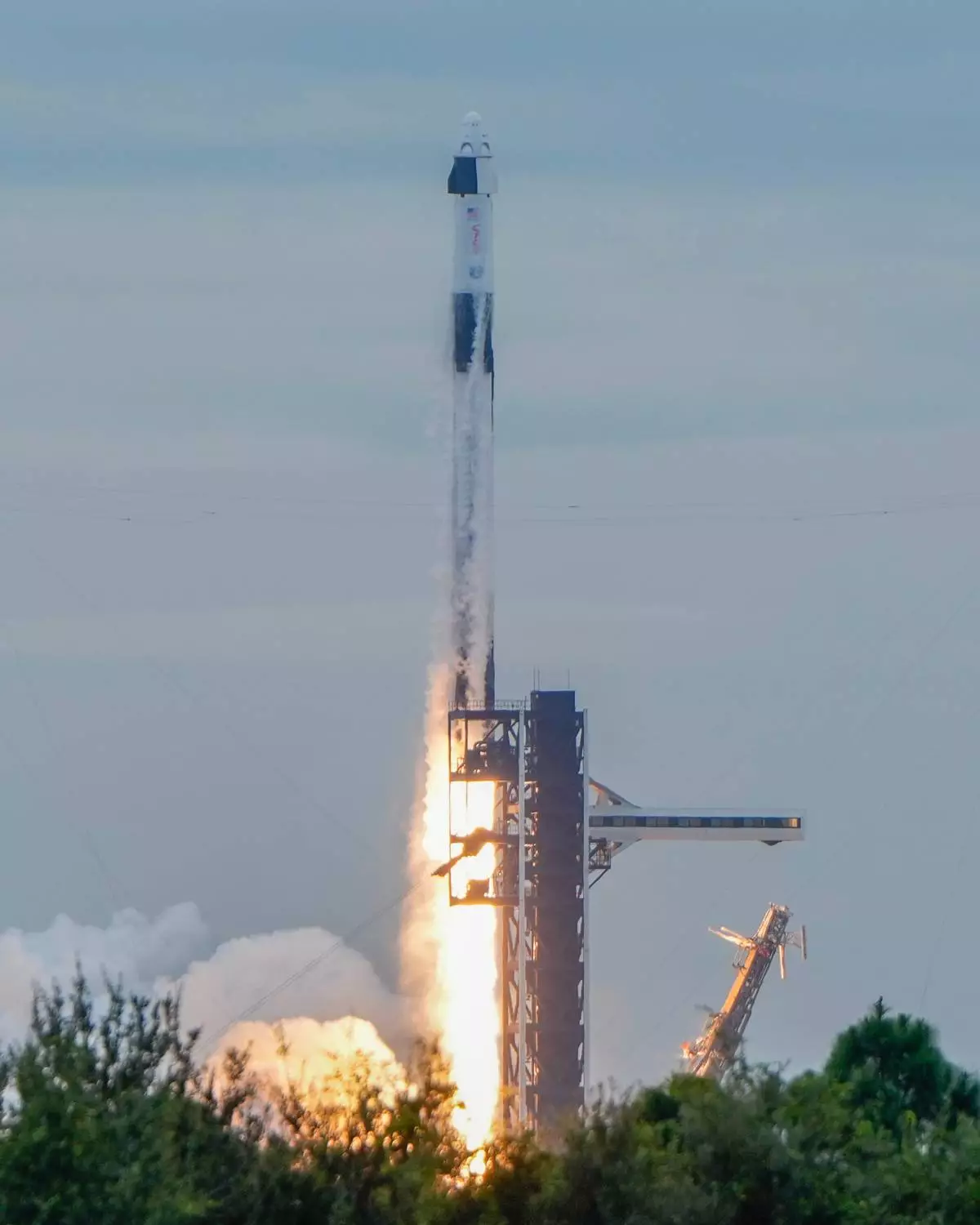
A SpaceX Falcon 9 rocket with a crew of four launches from pad 40 at the Cape Canaveral Space Force Station in Cape Canaveral, Fla., Thursday, Oct. 1, 2026. (AP Photo/John Raoux)
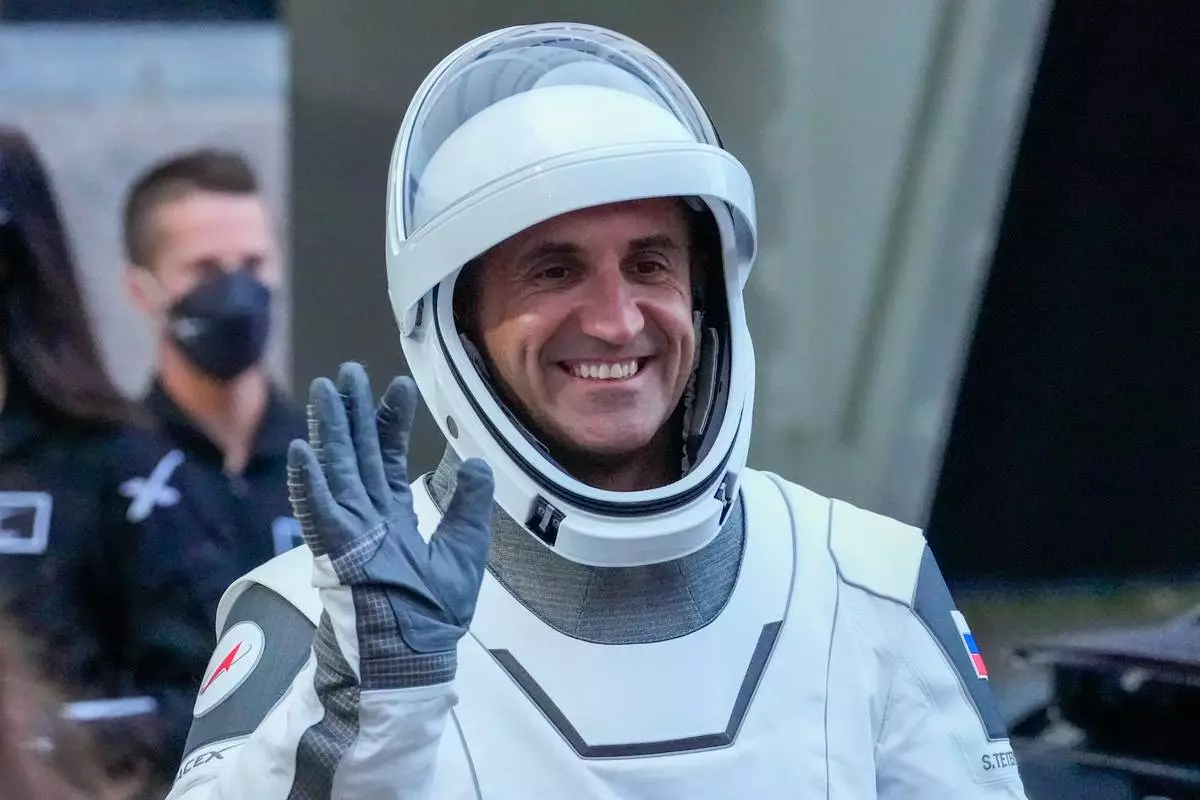
Cosmonaut Sergey Teteryatnikov, of Russia, greets family and friends as he leaves the Operations and Checkout Building at the Kennedy Space Center in Cape Canaveral, Fla., Thursday, Oct. 1, 2026. (AP Photo/John Raoux)
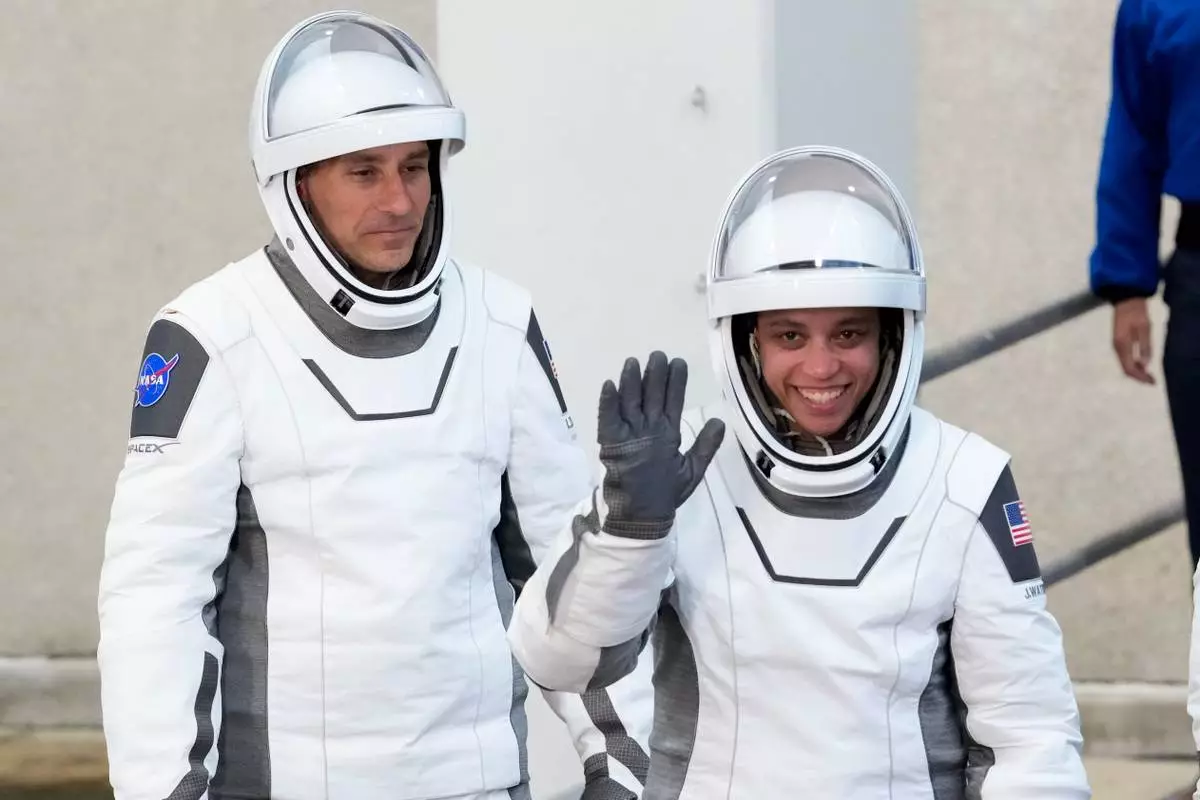
Pilot Luke Delaney, left, and commander Jessica Watkins leave the Operations and Checkout Building at the Kennedy Space Center in Cape Canaveral, Fla., Thursday, Oct. 1, 2026. (AP Photo/John Raoux)
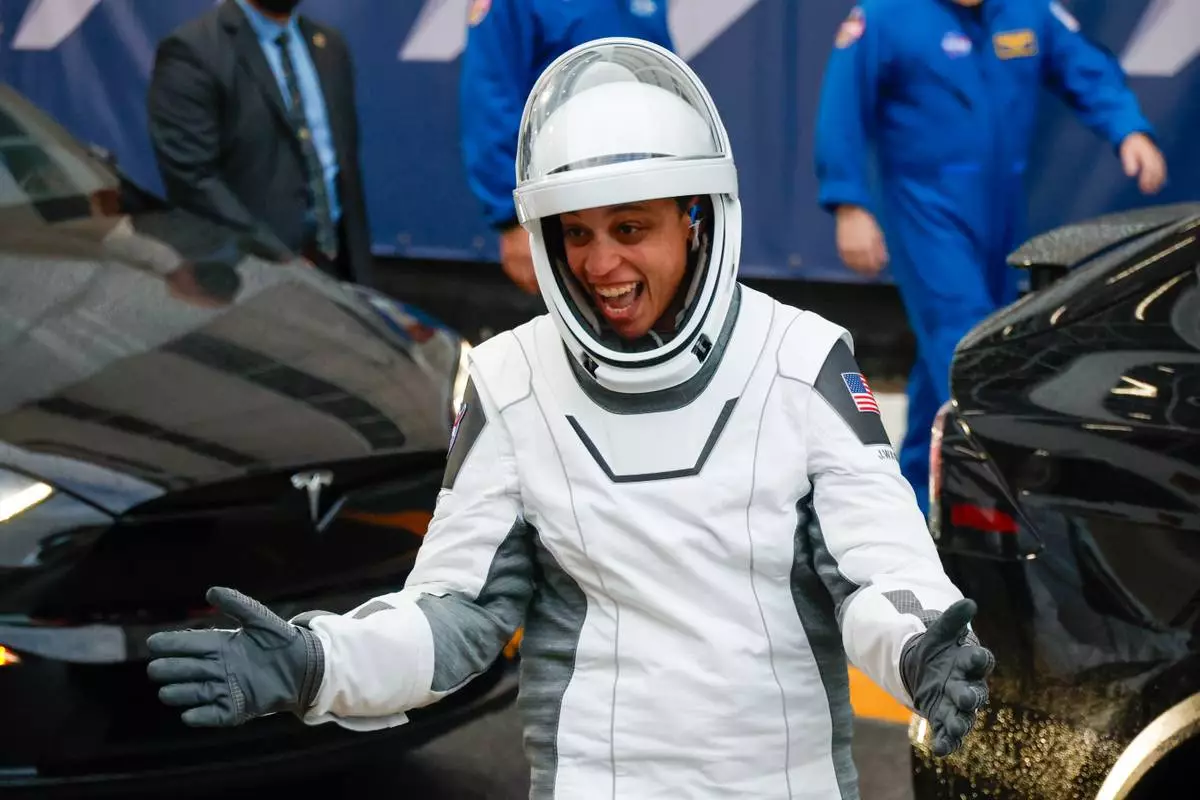
Commander Jessica Watkins greets family and friends as she leaves the Operations and Checkout Building at the Kennedy Space Center in Cape Canaveral, Fla., Thursday, Oct. 1, 2026. (AP Photo/Terry Renna)
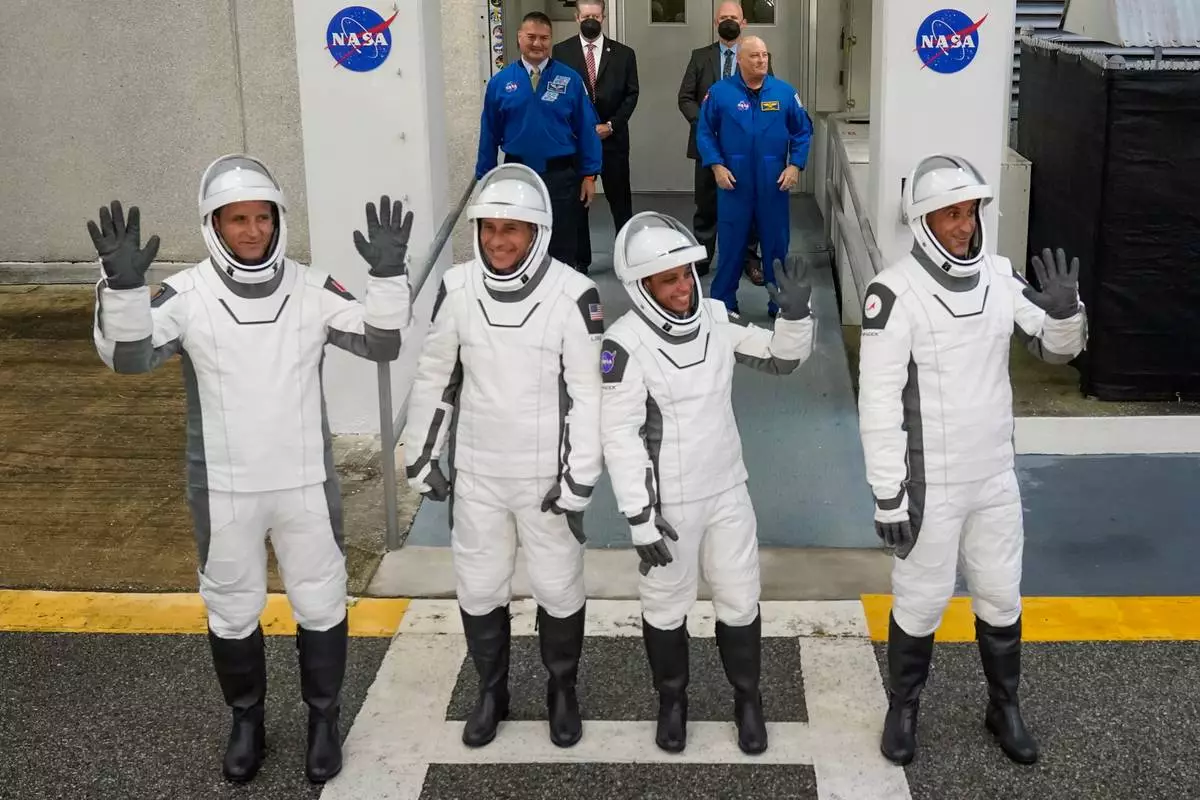
Astronauts, from left, Joshua Kutryk, of Canada, pilot Luke Delaney, commander Jessica Watkins and Cosmonaut Sergey Teteryatnikov, of Russia leave the Operations and Checkout Building at the Kennedy Space Center in Cape Canaveral, Fla., Thursday, Oct. 1, 2026. (AP Photo/John Raoux)
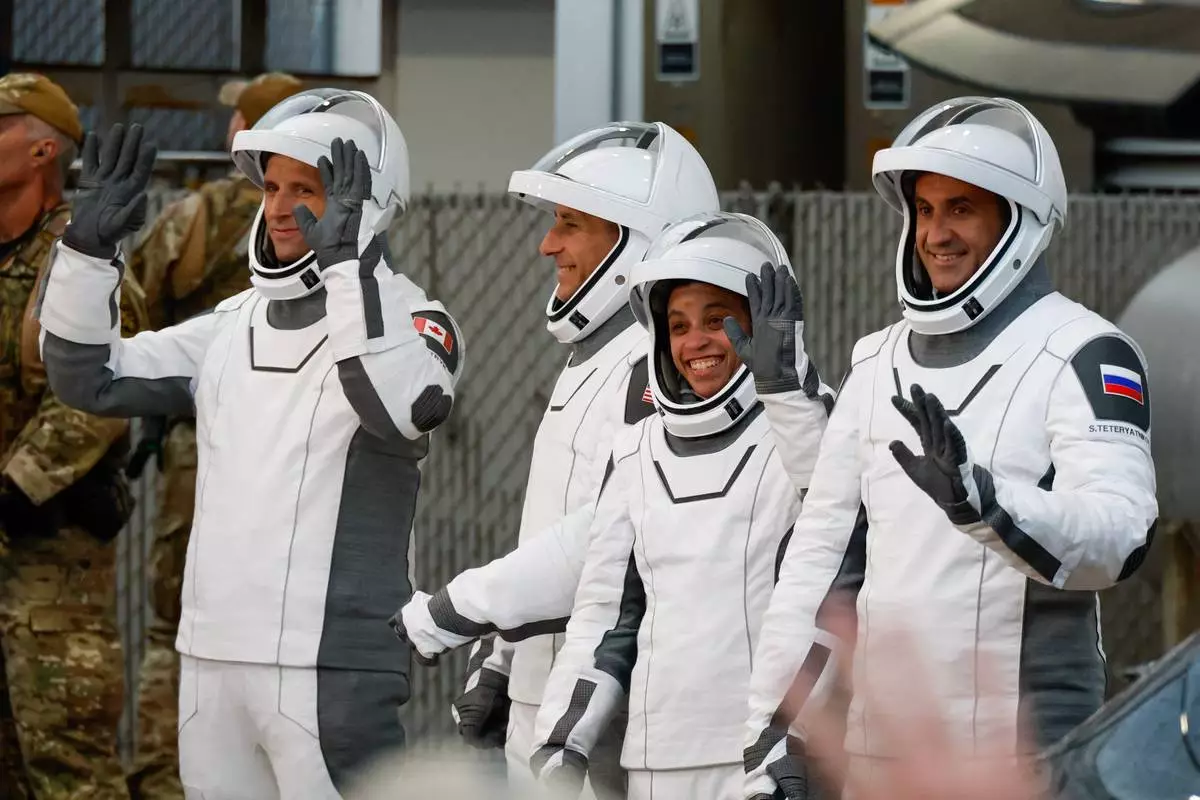
Astronauts, from left, Joshua Kutryk, of Canada, pilot Luke Delaney, commander Jessica Watkins and Cosmonaut Sergey Teteryatnikov, of Russia leave the Operations and Checkout Building at the Kennedy Space Center in Cape Canaveral, Fla., Thursday, Oct. 1, 2026. (AP Photo/Terry Renna)
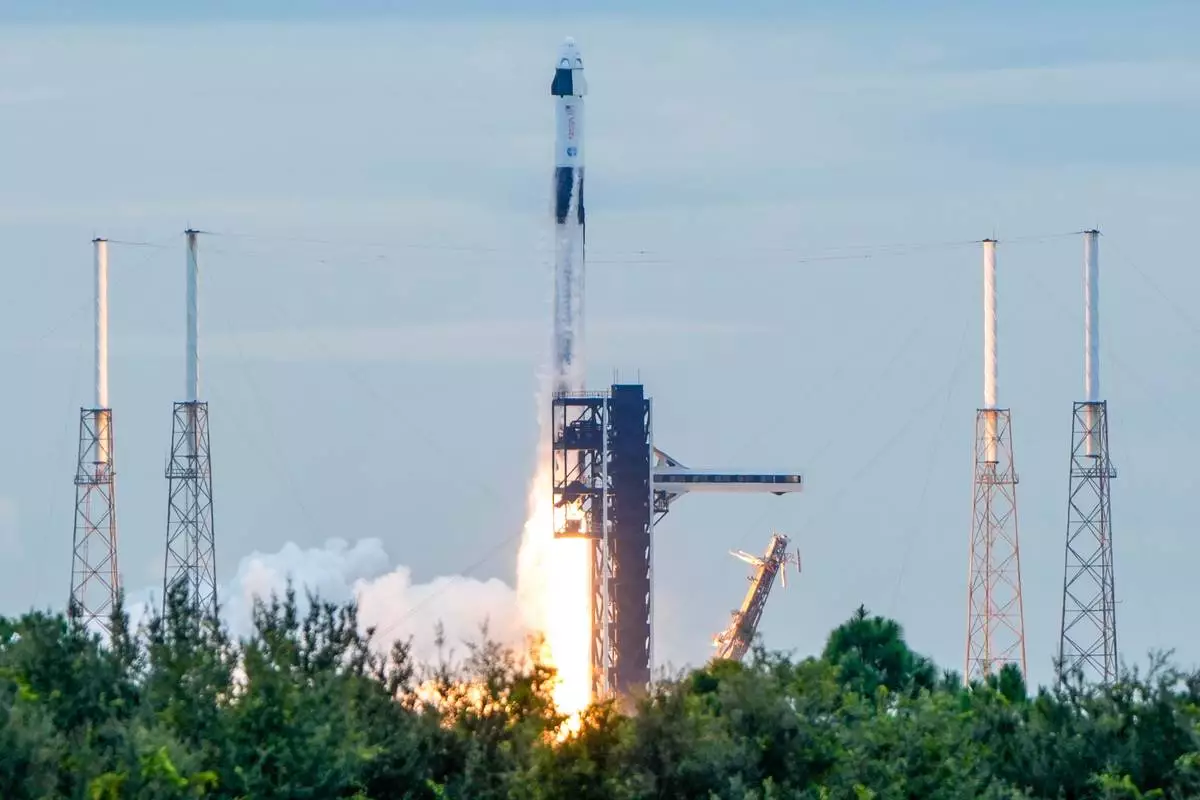
A SpaceX Falcon 9 rocket with a crew of four launches from pad 40 at the Cape Canaveral Space Force Station in Cape Canaveral, Fla., Thursday, Oct. 1, 2026. (AP Photo/John Raoux)