Schools, teachers, and students in Yemen are doing what they can to keep the country's education system going, despite a severe shortage of supplies and widespread damage to school infrastructure after years of conflict.
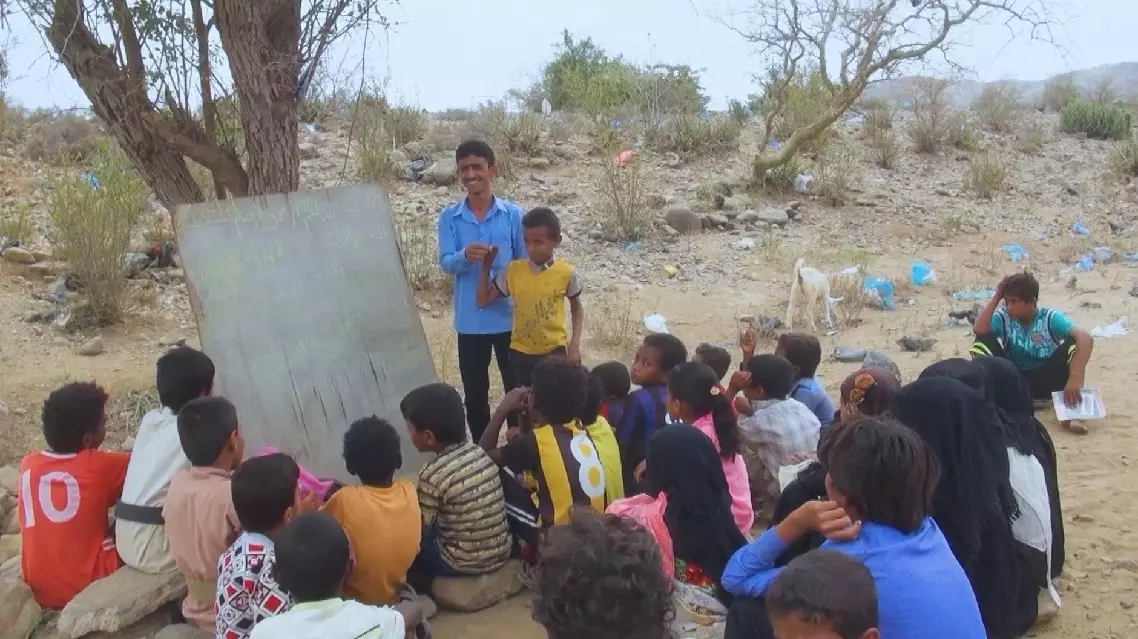
Every morning, local student Adel Abdullah and his classmates walk long distances through the mountains of Hajjah Governorate in northwestern Yemen to reach the shade of a large tree which currently serves as their classroom, despite not having walls, desks or blackboards.
A simple wooden board for the teacher, and a few exercise books and pencils for the students, are the only school supplies in this class.
"We are displaced, and we study here under the trees. We have no books or school supplies. We come to this place, which we consider our school, every day. My classmates and I come here so we can learn," Abdullah said.
Such impromptu classes for displaced children are run by volunteer teachers but, as more students join, the need for additional support and resources is growing.
"We have had to teach the students under the trees and wherever we can. Thanks to God, we have been able to continue the education process. The number of students increases every day, and more children keep coming because of the large number of displaced people," said Ali Makki, one of the volunteer teachers.
Such outdoor classrooms are not uncommon. A decade of war has caused widespread damage to thousands of Yemen’s school buildings, while some schools that are still standing now serve as shelters for displaced people.
"Airstrikes have led to the destruction of more than 3,000 schools. Many have been completely destroyed, and others only partially damaged. Some schools have been turned into shelters for displaced people," said Faten Sharaf Al-Din, a human rights officer at the Entesaf Organization, which monitors, documents, and reports on crimes against women and children.
Around 3.7 million children are not receiving any education, while more than 170,000 teachers have not received regular salaries for a decade, jeopardizing the country’s long-term prospects.
"That many male and female students have dropped out of education, and that many teachers have left the education sector, will have a negative impact on the country’s economy. A workforce that lacks education cannot be relied on to help build this country," said Ziad Al-Rafiq, an education specialist in Yemen.
Education system in Yemen struggles under shadow of conflict