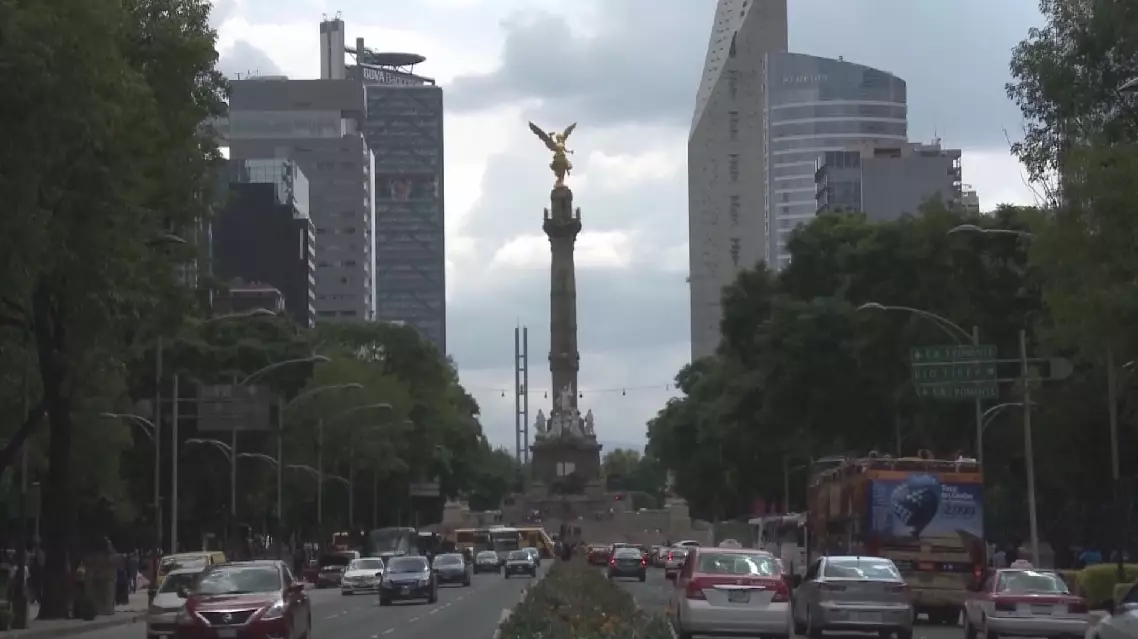
Mexico is seeking lower U.S. tariffs on steel, aluminum and vehicles as negotiations with Washington continue, Mexican Economy Secretary Marcelo Ebrard said Thursday.
Despite progress in bilateral ties and almost daily talks with U.S. Trade Representative Jamieson Greer, negotiations on reducing the tariffs imposed under Section 232 of U.S. trade law remain unfinished, Ebrard told a virtual news conference.
"Our focus has been on how to protect our businesses and jobs in Mexico when everything is changing," he said from Milwaukee, Wisconsin, while attending a meeting of G20 trade ministers.
The United States imposes a 25 percent tariff on imported passenger vehicles and light trucks, with qualifying Mexican vehicles eligible to have the duty assessed only on their non-U.S. content. Mexico and the United States are also in advanced talks to reduce or eliminate the 50 percent tariffs imposed by U.S. President Donald Trump's administration on Mexican steel and aluminum.
Ebrard said Mexico must watch for further measures from Washington, particularly those addressing trade and excess production capacity.
Asked about potential tariffs under Section 301 related to excess capacity, he said the issue was not raised at Thursday's bilateral meeting and that Mexico was awaiting Washington's decisions.
Preserving Mexico's position in the U.S. market remains a priority, he said. The United States accounted for about 85 percent of Mexico's non-oil exports in the first eight months of this year, according to official Mexican data.
Ebrard said defending Mexico's trade interests also require active participation in international forums as global trade rules shift and the United States and other economies consider new measures.
Mexico seeks US steel, auto tariff cuts
Ancient towns and historic blocks across China have rolled out a range of activities combining traditional folk customs and cultural performances during the week-long National Day holiday to boost tourism.
Boyan Ancient Town, which sits at the eastern foot of the Taihang Mountains in Handan City, north China's Hebei Province, and dates back nearly a thousand years, is bustling with visitors during the holiday which runs from Oct 1 to Oct 7.
Traditional parades, folk acrobatics, and music performances have been staged in rotation, blending ancient charm with contemporary flair. The town receives nearly 10,000 visitors a day.
In Pianyan Ancient Town, southwest China's Chongqing Municipality, a long street banquet has been set up along an old street, allowing visitors to enjoy local delicacies.
Folk performances featuring dramatic face-changing and fire-spitting acts have also been staged to add to the festive atmosphere.
"I'm from Beijing, and this is my first time attending a long street banquet. It's so lively, and the atmosphere here is wonderful. I'll definitely recommend it to my friends," said Kan Xinru, a tourist.
Also in Chongqing, Banqiao Old Town has staged a folk parade along its old street, with a plowing ox leading the way, farmers carrying goods on shoulder poles, and drums beating alongside.
"Many people are carrying things with shoulder poles, and there's so much stuff in the baskets. It really has a strong rural flavor," said Han Xu, a tourist.
In Wuzhou City, south China's Guangxi Zhuang Autonomous Region, the century-old Qilou Block has drawn big crowds during the holiday.
Known for the iconic arcade building -- structure with a frontage arcade on the ground floor that allows pedestrians to pass through, the block has rolled out scheduled performances and consumption-boosting activities during the holiday. Visitors can not only indulge in local delicacies but also watch a robot make tea.

Ancient towns, historic blocks roll out diverse activities to boost National Day tourism