Traditional Chinese medicine (TCM) has become increasingly popular among international travelers, offering them a unique way to experience Chinese culture through displays and immersive wellness activities.
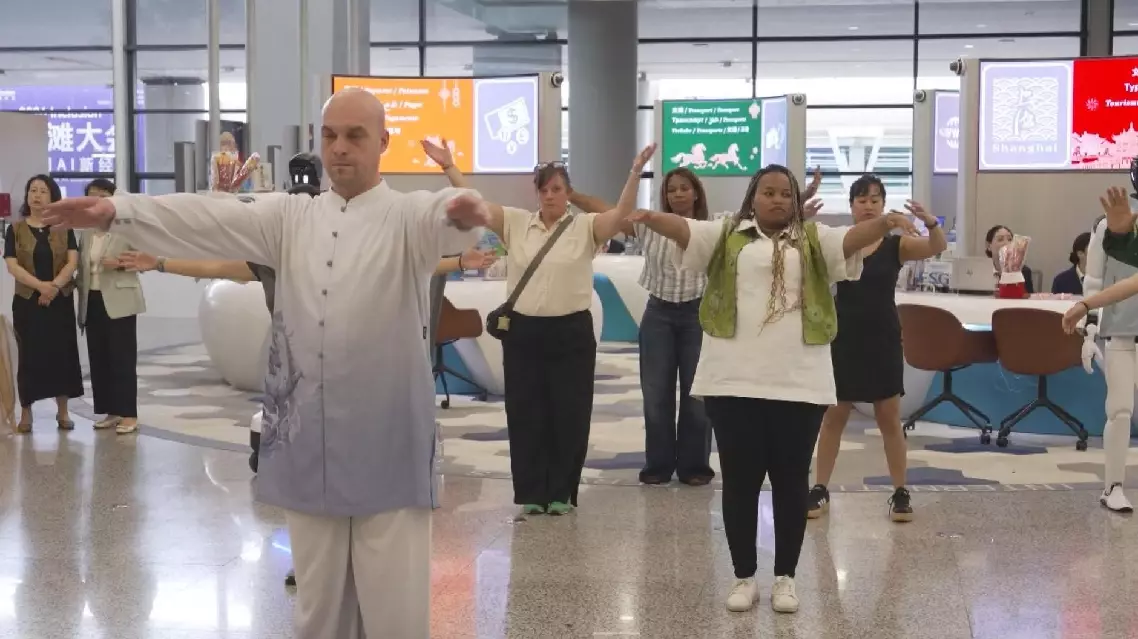
At the Shanghai Pudong International Airport, many foreign travelers have been seen joining Baduanjin exercises under the guidance of airport staff.
The activity is part of the airport's efforts to improve services for international travelers. They have also set up an exhibition of Shanghai-style TCM culture, a TCM service area, a body constitution identification area, and an interactive sachet making area.
"I think it smells really good. So I think it's a really cool thing," said Leon, a German traveler.
In north China's Tianjin Municipality, the Museum of Traditional Chinese Medicine has attracted an increasing number of foreign visitors with its rich collection of more than 600 old books and specimens, which record the changes in China's TCM industry for over a century.
"It's a lot of information. I think it's wonderful to see such a big pharmaceutical building, a lot of formulas, a lot of history, a lot of products. It's very overwhelming," said Luis, a foreign visitor. The museum also features an experience area, where interactive activities such as herb processing and incense making have been particularly popular among foreign tourists.
"I fell in love with traditional Chinese medicine when I was about 16 or 17. I used to do Wushu, and I got injured. And I started getting treated with acupuncture and tuina. And from then on, I became curious, and I started using it," said Rui Goncalves, another foreign visitor.
Traditional Chinese medicine grows popular among foreign tourists
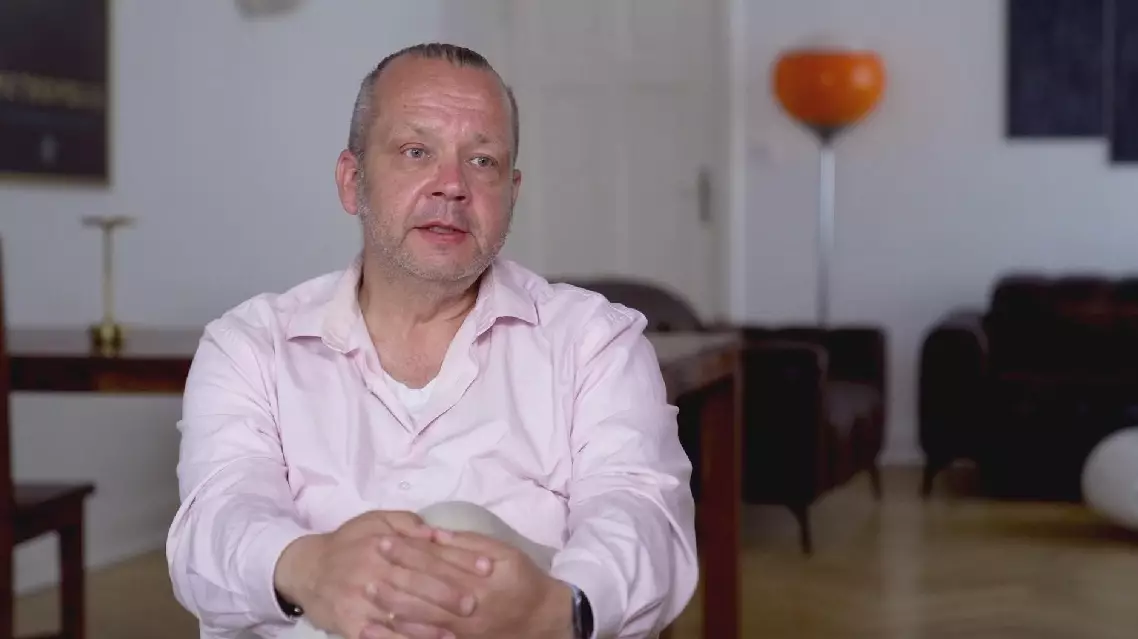
A former German clown who fell in love with Chinese culture nearly four decades ago has since risen to become a producer for China's national circus, using the comical figure of the clown -- a role which had been foreign to Chinese traditions -- to help European audiences better connect with the art of Chinese acrobatics.
Describing himself as the "black sheep of the family," Raoul Schoregge originally entered into the industry by making his name as a clown performer in a European traveling circus in his younger years.
His life was to change in the late 1980s, however, when an unexpected encounter sparked a lifelong love for Chinese culture, setting him on a pathway to a decorated career which has eventually seen him serve as a producer for China's much-acclaimed national circus.
"After some time as a clown traveling in the whole of Europe, I fell in love with one very special kind of culture, within the Chinese culture – which is the Chinese circus. And I think the first time when I saw them, it was the end of the 1980s. From this moment on, I was in love with Chinese culture, with this kind of culture. And then I became, after years, the producer of the Chinese national circus," he said.
Schoregge shared his admiration for China's long and deep performance heritage, hailing the effortless nature of the acrobatics performers who defy gravity.
"The Chinese circus has a history of 2,000 years. It's like a science, in a way. A Chinese handstand acrobat, for example, he is not 'doing' a handstand; he 'is' the handstand," he said.
Seeking to build on this rich history and impressive physical trickery, Schoregge had the innovative idea to combine other outside elements into traditional Chinese circus acts, with the aim of introducing more people to the unique charm of Chinese culture.
"In the Chinese circus, you don't have the real clown. You'll find the clown in the Beijing Opera, in the Sichuan Opera, there you find the clown, and it's very close to the European style of clowns. But in the Chinese circus, you don't really have clowns. I was the first one - I put the clown in Chinese shows in Europe to be like a bridge between the audience, the Western audience and the Eastern culture. This was like a translator in a way. Forget about all these borders, what we have in our head. For laughing, it's always the same," he said.
The veteran performer and producer now looks forward to more Chinese and European artists joining hands in creative exchanges, allowing this enthralling form of entertainment to cross borders and become a bridge connecting different civilizations.
"We have different kind of qualities – the Chinese and the Germans, and in a way, also the Europeans – and I think if we really could put all our good things together, then we have a chance to make this world a better place," he said.
While playing his part in moving an entire art form forward, Schoregge also used a metaphor of men moving mountains to express how the small efforts of many people can each contribute to something greater.
"The men who were taking away the mountain were the same who started taking away small pieces. And this is what I'm doing every day: take small pieces. And the Chinese also, there are some of my Chinese partners also, they take small pieces. And if you want, you also can take some small pieces. If we all take some small pieces, at the end we take away the mountain," he said.
German clown turned circus producer brings laughs, bridges cultures through Chinese acrobatics