Skip to Content Facebook Feature Image

Prosecutors probing deaths of 2 Ole Miss students charge shop clerk, son with selling illegal kratom

News

Prosecutors probing deaths of 2 Ole Miss students charge shop clerk, son with selling illegal kratom
News

News

Prosecutors probing deaths of 2 Ole Miss students charge shop clerk, son with selling illegal kratom

2026-10-03 03:55 Last Updated At:04:00

Federal authorities investigating the deaths of two University of Mississippi students have charged a store clerk and his son with selling an illegal kratom product, prosecutors announced Friday.

A drug task force in Mississippi had previously urged people to avoid kratom, an herbal substance that acts as a stimulant at low doses and a sedative at high doses, after authorities found packages of kratom derivatives while investigating the deaths on Sept. 21.

It’s still not clear whether those substances contributed to either death, but federal prosecutors said both appear consistent with drug overdoses. Two state agencies were working to expedite toxicology reports for the students, Mississippi Gov. Tate Reeves said in a statement last week.

Bank records show one of the students, Aidan Hamilton, made multiple purchases in September from a local vape, tobacco and beer store, according to a federal court filing.

On Sept. 24, an informant sent to the store by investigators purchased kratom-based pills from the clerk, Yahya Mohamed Mosleh, 51, who warned the informant to “be careful taking the pills because people were dying from them," U.S. Drug Enforcement Administration Special Agent Michael Dassance said in an affidavit.

Authorities later detained Mosleh and his son, Islam Yahya Mosleh, 18, who was working behind the counter, and charged them each with one count of possession with intent to distribute a controlled substance.

Scott Davis, an attorney for the elder Mosleh, and A.E. Harlow, Jr., an attorney for Islam Mosleh, said in emails that they had no comment.

Kratom, which comes from a tree native to Southeast Asia, is legal at the federal level, but some state and local governments have banned it, and federal authorities have issued warnings about its risks.

Proponents say that in its pure, ground-leaf form, kratom is a safe, natural herbal supplement that can help manage pain, anxiety and depression and ease the effects of opioid withdrawal. They say the danger is from kratom derivatives, which are often synthetic and can be highly potent. In August, the DEA banned three kratom-related compounds.

Hamilton, a freshman from Englewood, Colorado, and the other student who died, Robert Strang, a junior from Atlanta, were found in different locations, one on campus and the other off campus.

Investigators found opened packages of kratom, or synthetic kratom, labeled “Smax” in Hamilton's room with some pills missing, according to the DEA agent's affidavit. A package of Smax was also found in Strang's room, though the affidavit says he was buying it from a different store.

Yahya Mosleh told the informant who went to the store on Sept. 24 to be quiet when other customers came in and pushed the kratom pills out of sight. When the customers left, he completed the sale, according to the affidavit, again telling the informant to be careful.
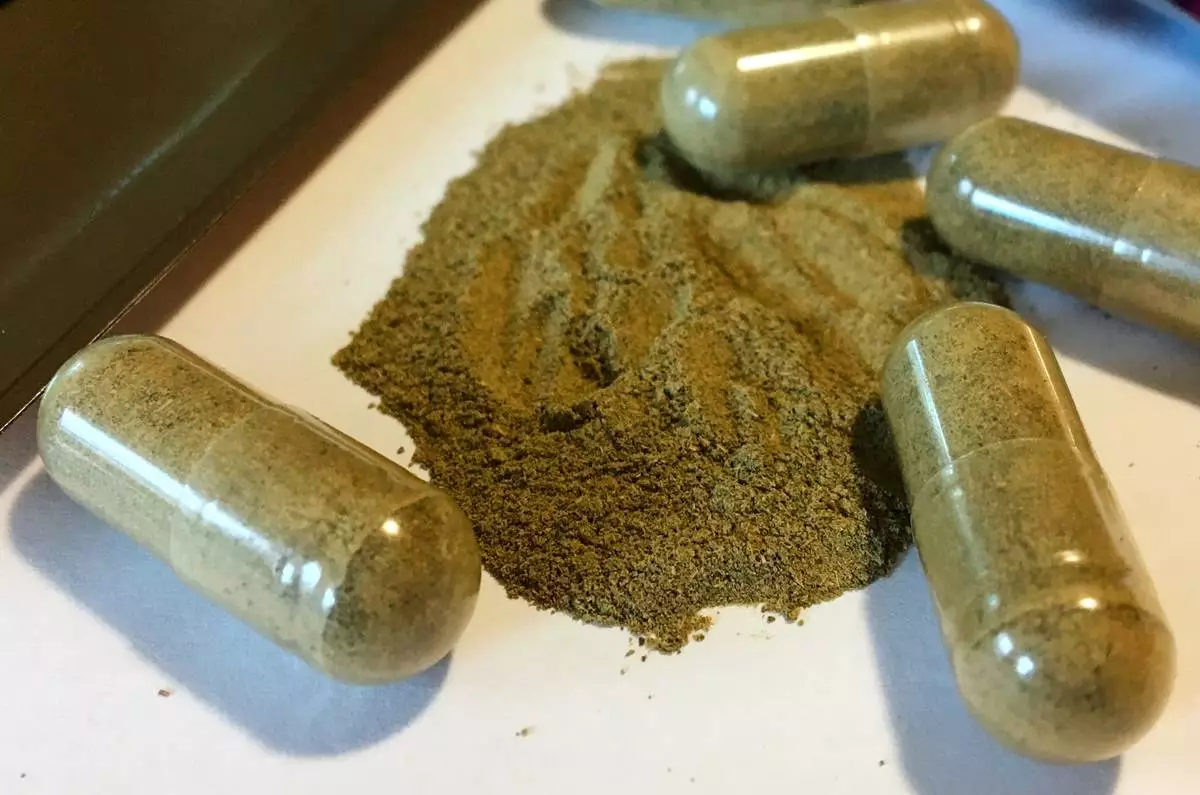
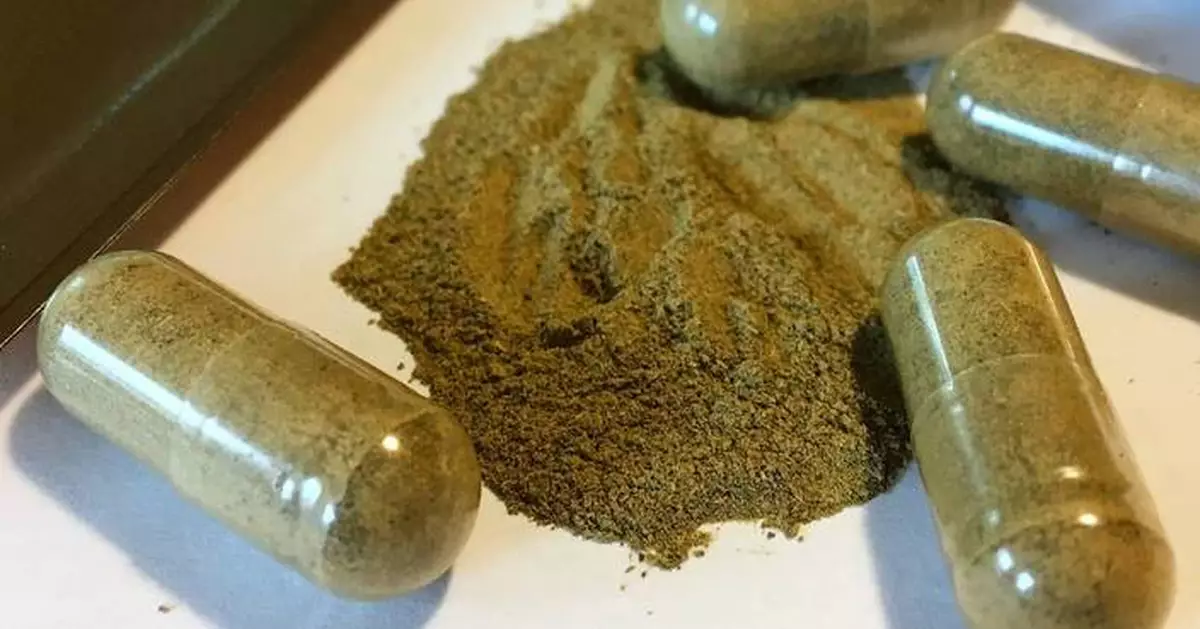
FILE - Kratom capsules are seen on Sept. 27, 2017, in Albany, N.Y. (AP Photo/Mary Esch, File)

FILE - Kratom capsules are seen on Sept. 27, 2017, in Albany, N.Y. (AP Photo/Mary Esch, File)
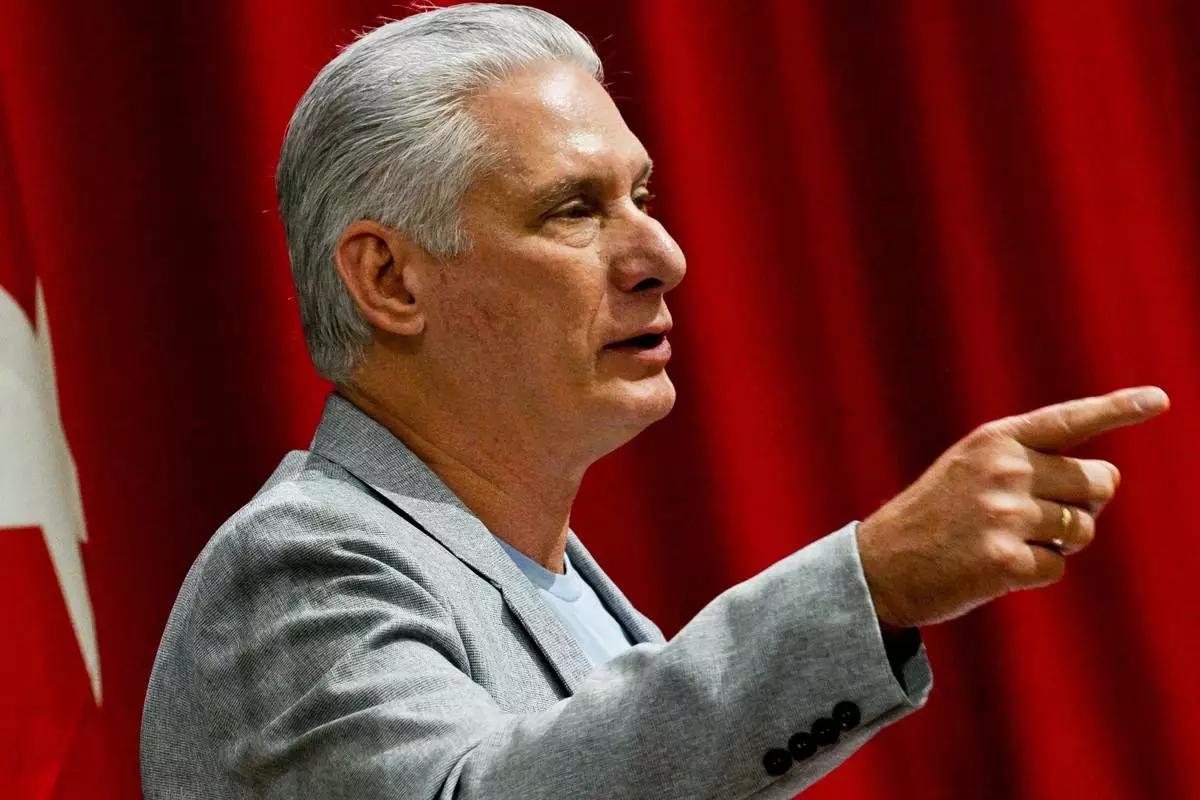
HAVANA (AP) — Cuban President Miguel Díaz-Canel on Friday accused the United States of hypocrisy for promoting private enterprise on the island while imposing new restrictions against privately-owned Cuban businesses.

Díaz-Canel hosted a podcast with Prime Minister Manuel Marrero to discuss the implementation of an economic reform package approved by parliament in June that gives private enterprise unprecedented latitude.

The reforms include allowing private businesses to employ more than 100 workers, participate in financial and currency markets, import and export goods without state intermediaries, hire workers directly and gain access to more idle land.

Although Díaz-Canel and Marrero reiterated that the Cuban government does not intend to embrace capitalism, the package moves Cuba toward the kind of economic opening the United States has demanded for decades — even as Washington maintains sanctions that Havana describes as an energy blockade.

“We are not going to stop,” Díaz-Canel said, rejecting assertions by U.S. President Donald Trump and U.S. Secretary of State Marco Rubio that Cuba is a “failed state.”

At the same time, he rejected the latest U.S. sanctions, which this week revoked the permission previously granted by former U.S. President Joe Biden for small Cuban private entrepreneurs to open accounts in U.S. banks.

No figures are available on how many Cuban entrepreneurs hold such accounts, but independent analysts on the island described the move as a setback for the development of private enterprise.

“Now they are attacking that sector as well, making it increasingly clear that there is no interest or willingness to benefit our people — that it is all a lie, all a fallacy,” Díaz-Canel added.

U.S. sanctions have deepened the economic crisis gripping the island for five years. Cubans have endured blackouts lasting more than 30 hours, transportation disruptions, flight cancellations and a sharp decline in production.

Follow AP’s coverage of Latin America and the Caribbean at https://apnews.com/hub/latin-america

FILE - Cuban President Miguel Diaz-Canel delivers a welcome speech to participants of the, "Nuestra America," or "Our America Convoy," at the Convention Palace in Havana, Cuba, March 20, 2026. (Adalberto Roque/Pool Photo via AP, File)

FILE - Cuban President Miguel Diaz-Canel delivers a welcome speech to participants of the, "Nuestra America," or "Our America Convoy," at the Convention Palace in Havana, Cuba, March 20, 2026. (Adalberto Roque/Pool Photo via AP, File)

Recommended Articles