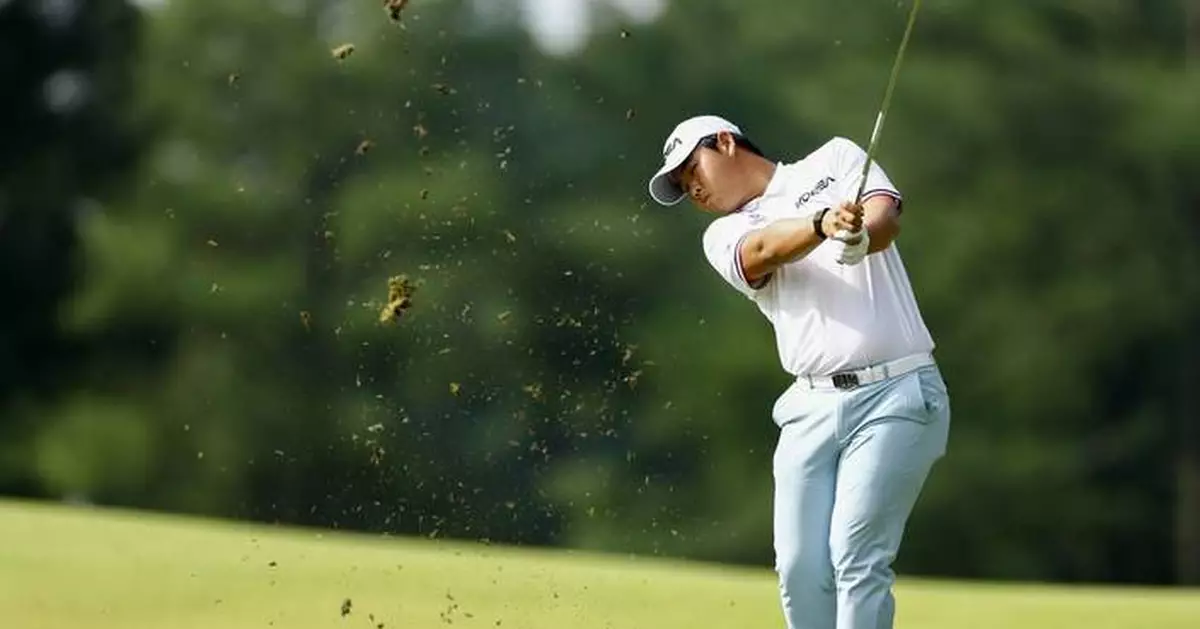
NAGOYA, Japan (AP) — South Korean golfer Tom Kim got what he came for by winning the men's singles on Saturday at the Asian Games: a gold medal and an exemption from military service back home.
He shot a 6-under 64 in Saturday's final round for a four-day total of 18-under 262. Three golfers were three back and faced a playoff with Kazuki Higa of Japan taking silver and Thailand's Sadom Kaewkanjana earning bronze.
Tom Kim made a special effort to win in Japan, flying across the Pacific when the Presidents Cup competition ended last weekend.
Asked about the exemption, he took the gold-medal approach.
“Despite that, I’m more proud that I’m able to bring a medal for my country,” he said.
He did acknowledge pressure — the flight, the expectations, the gold medal and more.
“I tried not to think about it,” he said. “I just tried to play (the) best for my country. It's a big stepping stone. I think the pressure that I felt this week, I'll be able to implement it in my upcoming seasons."
Most able-bodied men in South Korea must serve about 18 months in uniform, but a medal of any color at the Olympics — or gold in the Asian Games — provides an out.
However, South Korea failed to win the team competition. That means that S.H. Kim, who played on the team with Tom Kim, did not get the exemption. He closed with a 73 and the third team member, 35-year-old Mun Do-yeob, shot 70. Mun had already served and did not need the exemption.
Kim Joo-hyung goes by Tom Kim when he plays on the PGA Tour, and Kim Seong-hyeon goes by S.H. Kim when he plays abroad.
China won the team event with silver for South Korea and bronze for Japan.
The military exemption in South Korea also applies to classical and traditional musicians, dancers and other artists who are viewed as enhancing national pride.
The Asian Games format was 72 holes of stroke play. The teams were made up of three players, but only the best two scores counted each day toward the team total.
Tom Kim dominated the 7,035-yard at the Kasugai Country Club. The last two days he carded eagles on the par-5 13th, a 520-yard hole that was very gettable on sunny days for the final rounds with little wind.
Sixteen South Korea baseball players are also exempt after defeating Japan 3-1 in the Asian Games final earlier in the week. So are three South Koreans who won gold in esports, an event at the Asian Games.
“Of course the result is important, and the fact that the players will be exempt from the military service is important,” said Lee Sang-hyeok, who is known as “Faker” in the world of esports.
Lee won gold three years ago at the Asian Games in Hangzhou, China, and this time helped teammates avoid the conscription.
Some at home question if the exemption — created more than 50 years ago — is fair. The South Korean news agency Yonhap a few days ago termed the system “outdated” and called for change.
The news agency said the baseball game victory over Japan “symbolically reflects the changed times and the public's expectations.”
SNTV video journalist Nicky Zhu contributed to this report.
See full AP coverage of Asian sports here
See AP’s full golf coverage here
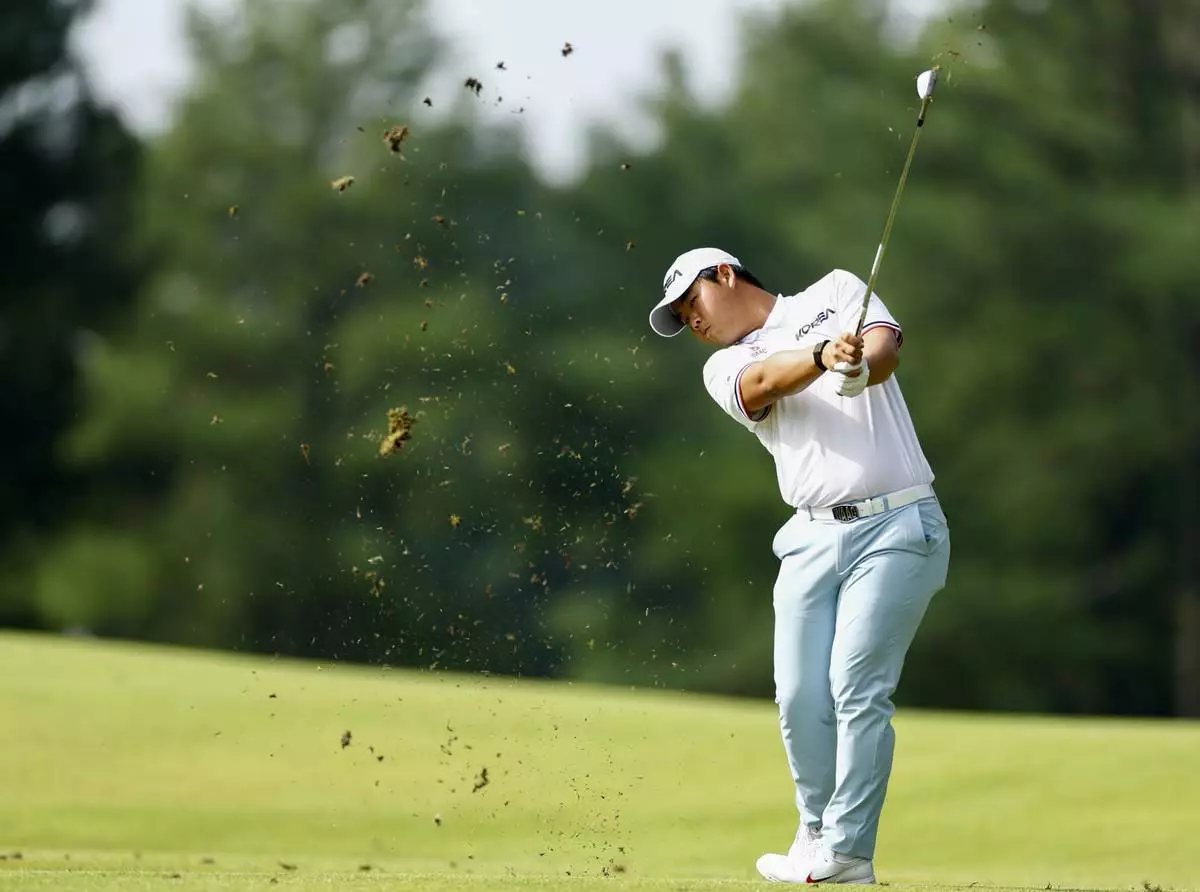
South Korea’s Kim Joo-hyung, better known as Tom Kim, plays a shot during the first round of golf at the Asian Games in Kasugai, central Japan, Wednesday, Sept. 30, 2026. (Natsumi Yasumoto/Kyodo News via AP)
RWAMPARA, Congo (AP) — More than 250 participants have been enrolled in a trial for a drug that could stop them from contracting Ebola in Congo, in what experts have described as a critical step to try to fight the deadliest outbreak of the disease in the Central African country.
The drug is targeted at Bundibugyo virus, which is responsible for the fast-moving outbreak and is without an approved vaccine or treatment. The trial began in July and is one of several studies launched to find some protection and another way of at least slowing the outbreak.
The Associated Press spoke this week to participants and doctors at the health center where the trial is taking place in the eastern province of Ituri, the epicenter of the outbreak. The participants include people who have been exposed to the disease in this outbreak, among them health workers and patients’ relatives.
At least 8,300 confirmed cases, including 4,000 deaths, have been recorded since this Ebola outbreak was declared in mid-May in eastern Congo. It has spread to seven provinces and continues to outpace efforts to track and slow it, authorities say.
The trial is testing Gilead's experimental antiviral pill, called obeldesivir, which is given soon after suspected contact with the virus to prevent the disease from developing. That approach is called post-exposure prophylaxis, or PEP.
One participant in the trial known as EBO-PEP told AP that she enrolled in the study in August after her husband tested positive for Ebola. She says so far no one from her family developed symptoms.
She and other trial participants requested anonymity to protect their privacy due to the sensitive nature of the Ebola outbreak and the medical protocol involved.
“I realized that if I even touched my husband — and I did touch him, his vomit, everything — (it meant that) I was a direct contact. I could have also passed on this contagious disease. I could have been contaminated,” the participant said.
She said she knew of entire households which had become infected after a family member tested positive for Ebola. But so far no one from her family has developed symptoms, she says.
Ebola disease only spreads once symptoms begin. People exposed to infected patients have to wait to see if they get sick. Finding people at high risk of incubating the Bundibugyo virus — also known as contact tracing — has proved difficult in Congo.
Another participant said two of their family members had caught Ebola, and one of them had died. “This disease is killing. It’s better to take precautions,” he said.
The trial, coordinated by ALIMA, a medical nonprofit, aims to recruit nearly 1,000 adults or children over the age of 12 who have come into contact with a confirmed case within the last five days but have no symptoms. Half will get a placebo.
Participants are monitored in person every day for 21 days, with a final phone call after 42 days, according to Dr. Godefroid Basara, who is working on the trial.
ALIMA said that if trial participants begin to develop symptoms, they will immediately receive supportive treatment, which has been shown to be helpful when symptoms are caught early.
If the pill proves effective, it could help break the infection chain.
“It differs from a vaccine, which may take days or weeks to provide protection. It is also different from curative treatment because it is intended for people who are not yet showing symptoms,” ALIMA research coordinator Dr. Guilavogui Jean Paul Yassa said.
Dr. Jacques Zawadi, an investigating physician working with ALIMA at the trial center, said most participants are happy to take part in the study, but it had been challenging encouraging some people who live far from the center to sign up.
He said the study is sometimes disrupted when participants find out their family members have died from the disease.
“This is the biggest challenge we face. When a person is emotionally affected, it is not easy to reason with them and ensure they return to the study,” he said.
The trial partners also include Congo’s National Institute of Biomedical Research and the French institute ANRS Emerging Infectious Diseases.
As new vaccines are under development elsewhere, Congo started vaccinating health workers with the Ervebo vaccine which was effective during previous Ebola outbreaks caused by a different, more common virus. Authorities have said Ervebo could offer some protection against Bundibugyo, but whether the vaccine can actually prevent illness is still being studied.
On Thursday, humanitarian organization Doctors Without Borders said a staff member had tested positive for Ebola and was being evacuated to the Netherlands. In June, a humanitarian physician with ALIMA also tested positive after returning to France from one of the virus hot spots.
The World Health Organization has said the outbreak continues to outpace efforts to track and slow the spread, and is set to exceed West Africa’s regional outbreak between 2014 and 2016 — the deadliest on record — which killed 11,000 people.
Brennan reported from Dakar, Senegal. Lauran Neergaard contributed from Washington, D.C.
For more on Africa and development: https://apnews.com/hub/africa-pulse
The Associated Press receives financial support for global health and development coverage in Africa from the Gates Foundation. The AP is solely responsible for all content. Find AP’s standards for working with philanthropies, a list of supporters and funded coverage areas at AP.org.
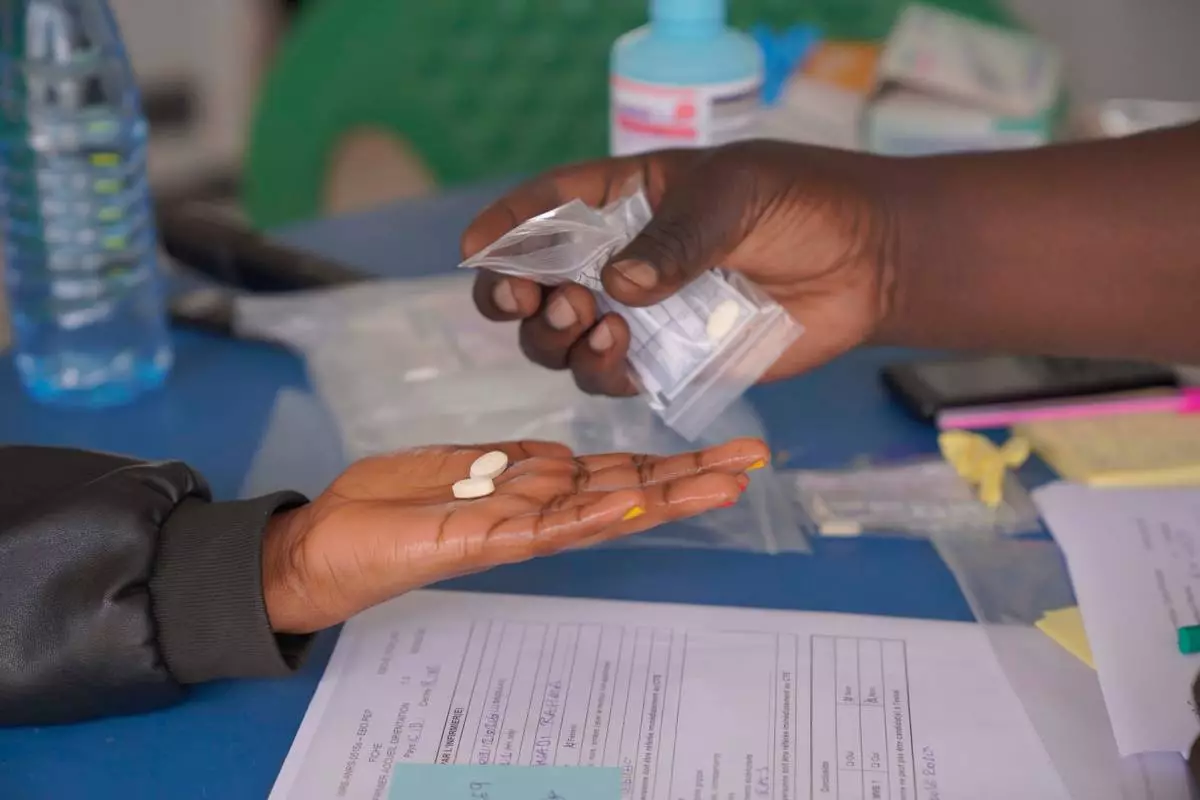
Pills are provided to enrolled patients during clinical trials attempting to stop the rare Bundibugyo virus, amidst a deadly Ebola outbreak, in Rwampara Hospital in Ituri, Congo, Thursday, Oct. 1, 2026. (AP Photo/Dieudonne Dirole)
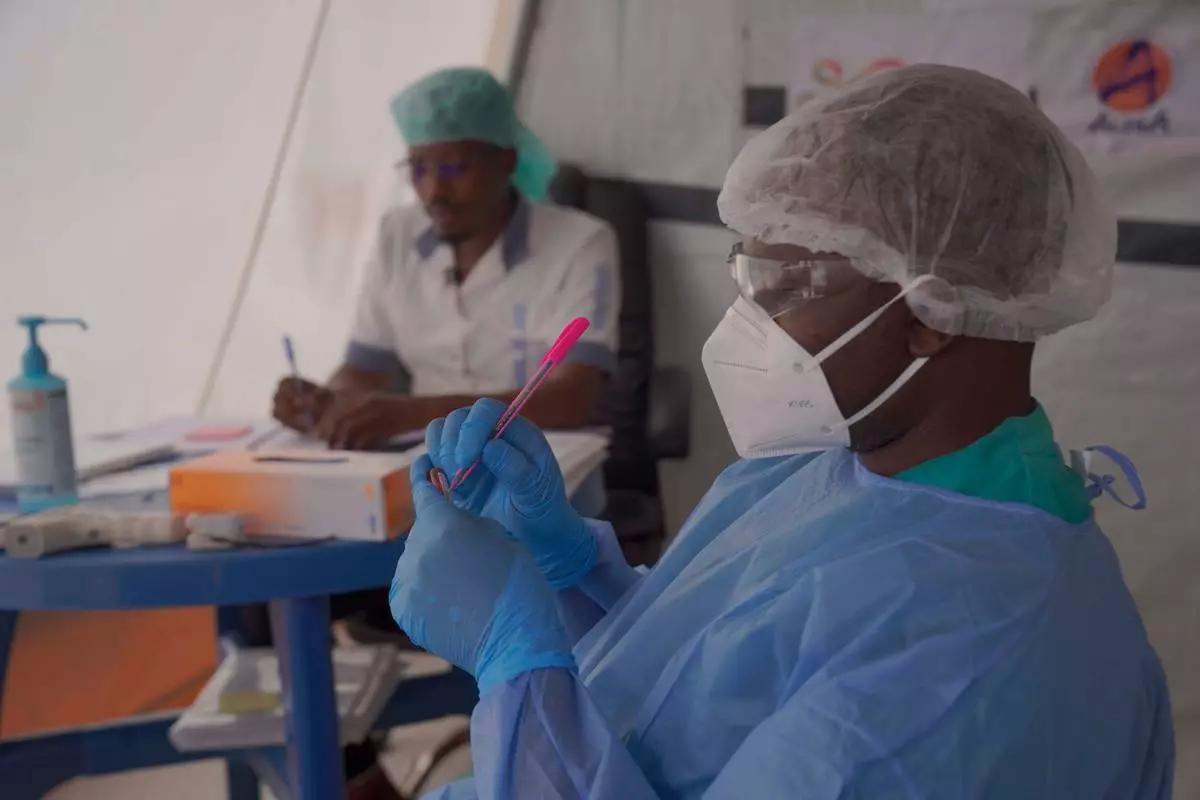
Doctors label the sample collected from an enrolled patient and record it in the hospital's files during clinical trials attempting to stop the rare Bundibugyo virus, amidst a deadly Ebola outbreak, in Rwampara Hospital in Ituri, Congo, Thursday, Oct. 1, 2026. (AP Photo/Dieudonne Dirole)
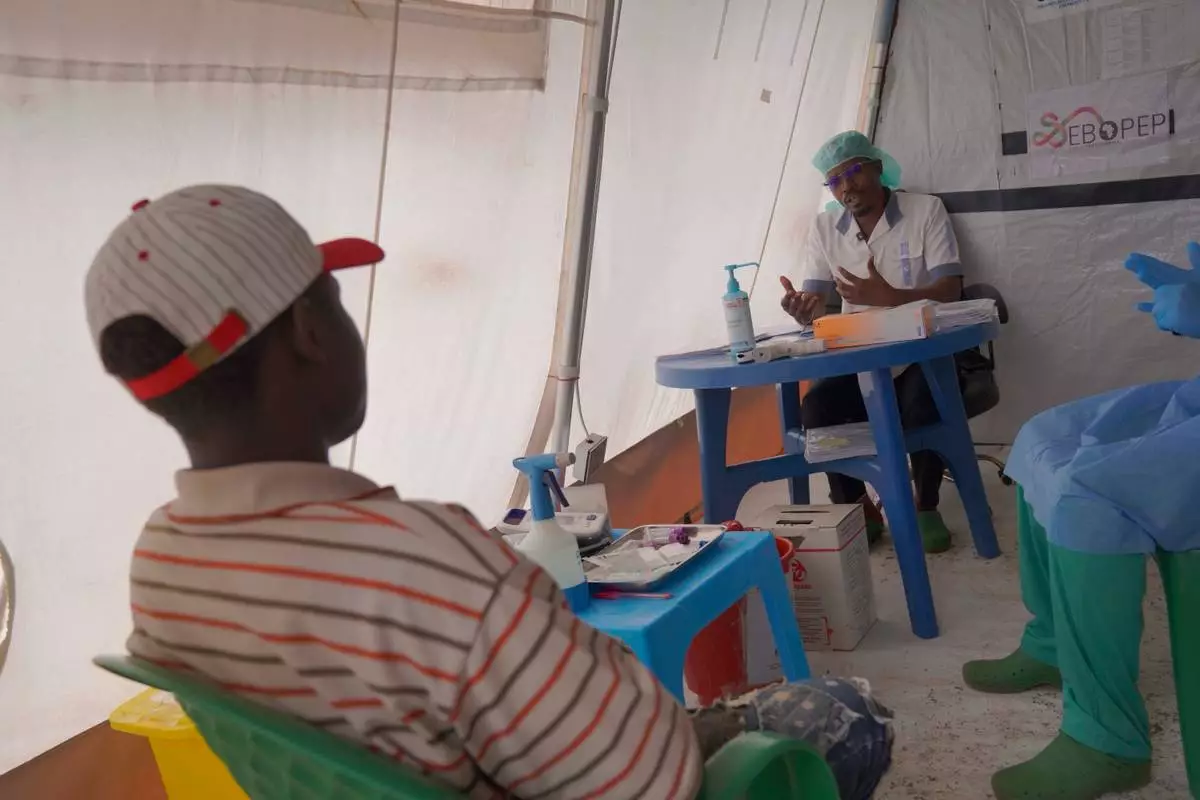
An enrolled patient receives information during clinical trials attempting to stop the rare Bundibugyo virus, amidst a deadly Ebola outbreak, in Rwampara Hospital in Ituri, Congo, Thursday, Oct. 1, 2026. (AP Photo/Dieudonne Dirole)
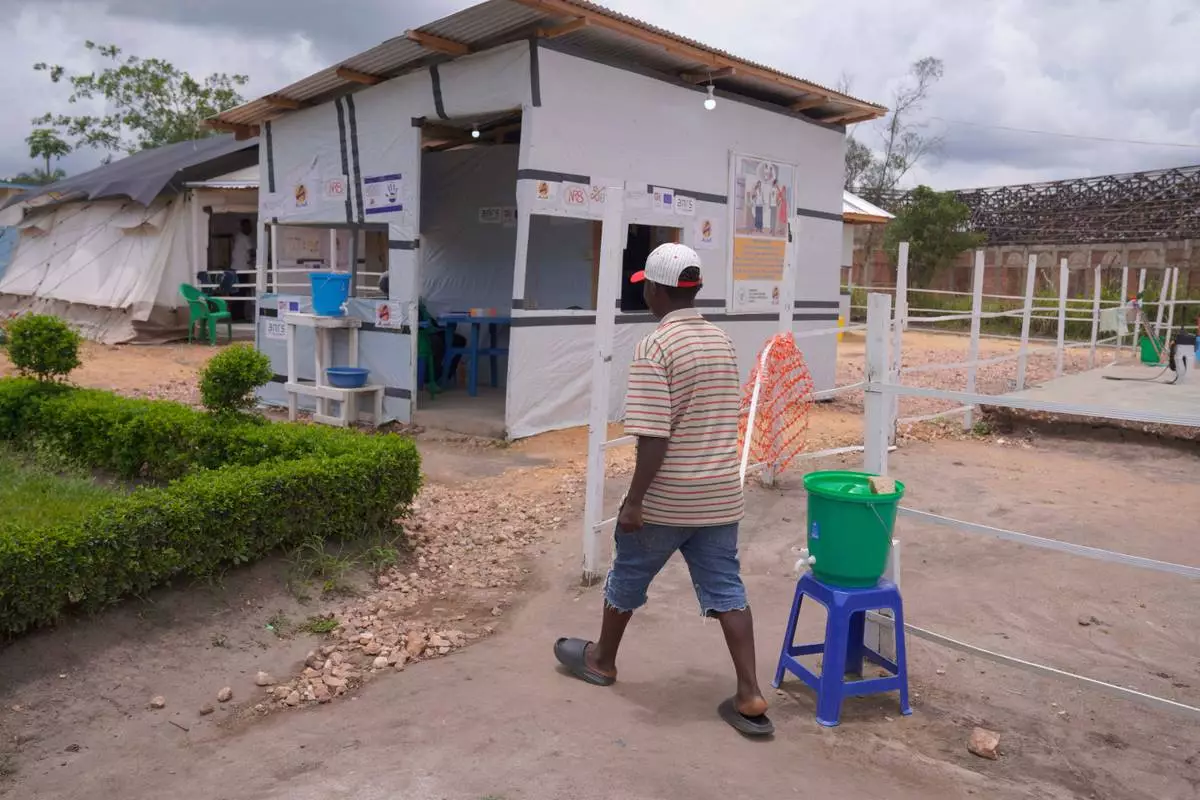
An enrolled patient arrives to clinical trials attempting to stop the rare Bundibugyo virus, amidst a deadly Ebola outbreak, in Rwampara Hospital in Ituri, Congo, Thursday, Oct. 1, 2026. (AP Photo/Dieudonne Dirole)
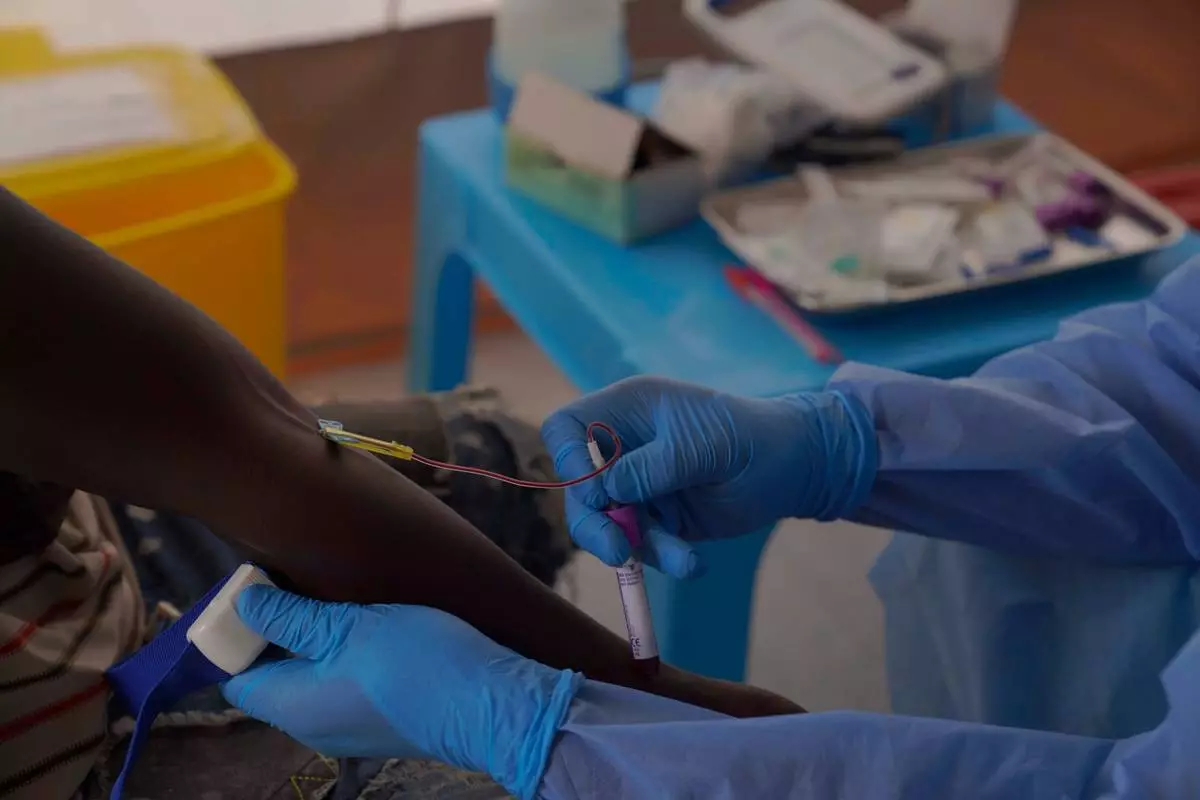
A doctor collects an enrolled patient's blood for Ebola testing during clinical trials attempting to stop the rare Bundibugyo virus, amidst a deadly Ebola outbreak, in Rwampara Hospital in Ituri, Congo, Thursday, Oct. 1, 2026. (AP Photo/Dieudonne Dirole)