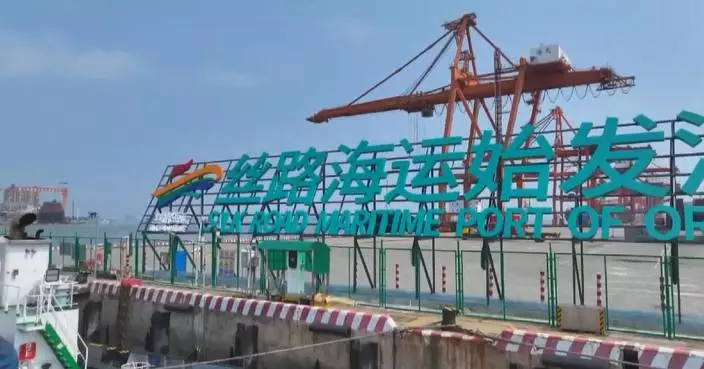
Chinese firms are partnering with Thai builders on a new round of port expansion project, the Phase-III expansion work of Laem Chabang Port.
Improved port infrastructure and logistics networks are expected to open up new opportunities for the port to connect with China and global markets and boost Thailand's industrial development, making it an important connectivity node in the country for the 21st Century Maritime Silk Road.
Located in Chonburi Province in eastern Thailand, around 130 km from Bangkok, Laem Chabang Port sits adjacent to the Eastern Economic Corridor, Thailand's manufacturing hub. Every day, huge volumes of containers, automobiles, machinery equipment and agricultural products are shipped from the port to destinations across the globe.
Dozens of kilometers around the port lie multiple large industrial parks, home to clustered manufacturers of automobiles, electronics and machinery.
In the ongoing new round of expansion, Chinese contractors are undertaking Phase-III infrastructure works, including 29 port roads, 16 bridges, a 500‑meter-long coastal berth and supporting container yards.
"Thai‑Chinese cooperation on this construction project is highly important. It helps push forward smooth project delivery and ensures the highest quality and safety standards. Aligned with the Maritime Silk Road initiative, it facilitates Thailand’s trade with the rest of the world. Laem Chabang Port will become a vital hub driving Thailand's trade toward global markets," said Anuson, Thai-side manager for the Chinese-run infrastructure projects.
Upon completion of Phase-III, the port's annual container handling capacity will rise from the current 11 million TEUs to about 18 million TEUs, further strengthening Thailand's logistics capacity linking regional and global markets.
The project has also nurtured a large pool of local engineers and technical personnel.
Pattarapong, a Thai engineer, said the role has brought her steady employment while exposing her to new construction techniques and management practices, building up her hands-on experience in large-scale port construction.
"Local workers account for roughly 70 percent of staff on the ongoing construction site. The Chinese enterprise attaches great importance to creating local jobs and keeps recruiting people from surrounding communities. I am delighted and honored to take part in this project since it is also part of the Maritime Silk Road development," said Pattarapong.
Earlier this year, a new shipping route linking Yantian Port in south China's Shenzhen City, Laem Chabang Port, and Cambodia's Sihanoukville Port was officially launched. It is expected to deepen ties between Thailand and China's Guangdong‑Hong Kong‑Macao Greater Bay Area, and open a fresh cargo import‑export corridor for businesses.
On land, Thailand is pressing ahead with the construction of a railway collection‑and‑distribution system for the port, with plans to boost freight rail links between Laem Chabang Port and northeastern Thailand.
Via maritime shipping lines and overland transport links, Laem Chabang Port connects with Thailand's industrial heartland. As regional transport networks keep improving, the port will further leverage its strengths in combined sea‑and‑land transport.
Over the past 13 years, projects such as this one under the 21st Century Maritime Silk Road have delivered fresh support for connectivity between China and Southeast Asian countries.
The 21st Century Maritime Silk Road is the sea route part of the Belt and Road Initiative proposed by China.
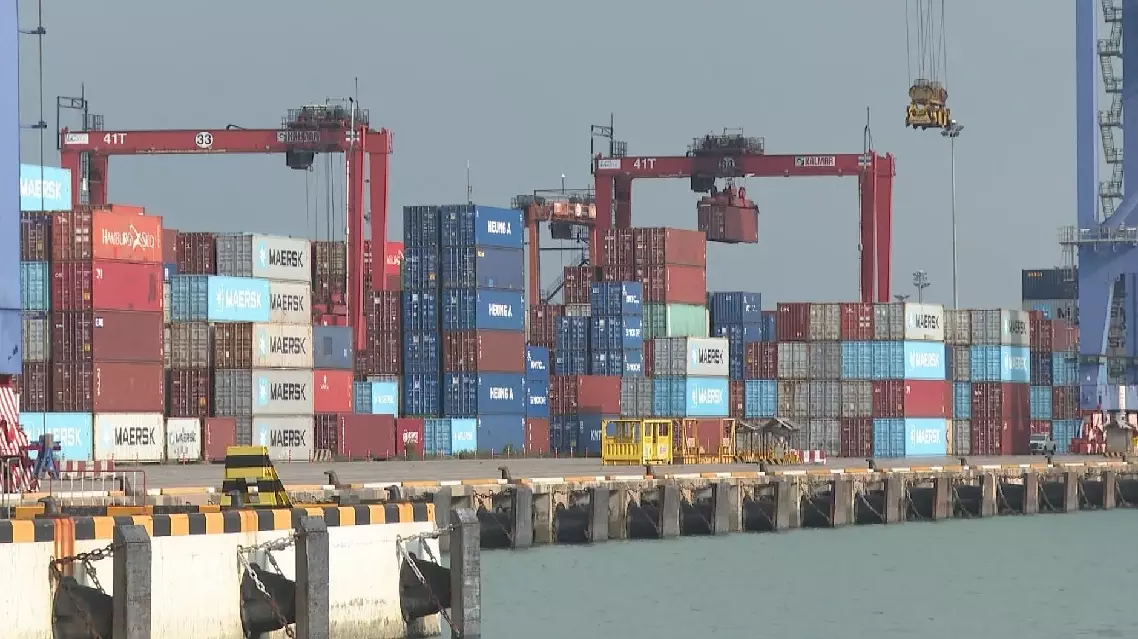
China-Thailand joint port expansion project bolsters Maritime Silk Road connectivity