A viral village sport born in rural China has made its way to the U.S., with a team of "aunties" teaching their unique form of basketball to young local athletes in places like Silicon Valley, Utah, and Seattle.
Auntie basketball was created by a group of mothers and village women from the Miao ethnic minority in southwest China's Guizhou. The women play the sport while wearing traditional ethnic clothing.
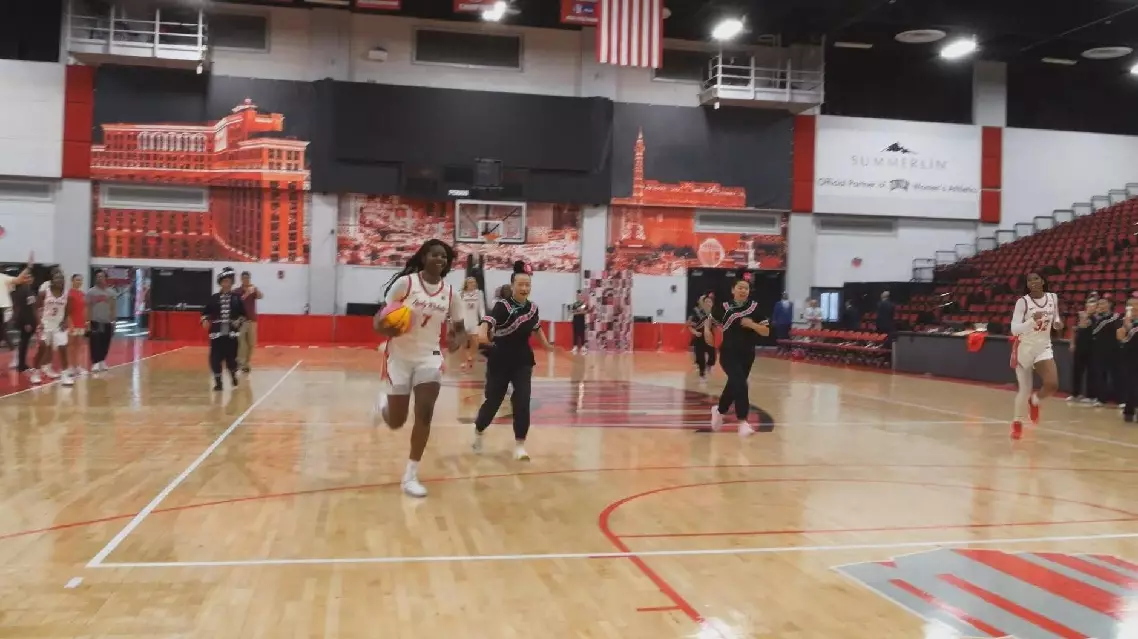
Crucially, the game is played largely without dribbling the ball, allowing players to carry it in their arms across the court. That also means players can engage in physical contact in order to halt their opponents' advance.
For many Americans, the creative twist on the sport their country invented was a delight to witness, sparking curiosity about the diversity of Chinese culture.
"I can't wait to go to China. And when I do, I'm absolutely going to visit one of these games, because that is legendary," said Dylan Westfall, a graduate student.
The Aunties arrived at the Thomas and Mack Center at the University of Nevada, where some of the country's top college basketball players compete.
In addition to being the home of the 1990 NCAA champions, the UNLV Rebels, the center is also the place where the NBA Summer League holds its games, and some of the world's biggest stars hit the courts.
The Aunties meet the UNLV Lady Rebels – a team that has won multiple conference championships. But in Auntie basketball, they are beginners, so they observed how the game is played before stepping in.
Once the game began, the Lady Rebels got off to a good start, but soon found that the rules allow the ball to get tied up, as the lack of dribbling gave the Aunties the upper hand.
But with their youth, athleticism, and size, the Lady Rebels caught on quickly and even developed fans among the Aunties.
"I love this school's women's basketball team -- their attitude, their style of play, and their passion. They're so happy and full of energy. I really like their spirit," said Zhang Xiaoyan, a member of the Auntie Basketball Team.
The Rebels reciprocated the goodwill, expressing gratitude for the opportunity to engage with another culture.
"They all look good. I like the flowers on the uniforms. It's beautiful," said Meadow Roland, forward for the Lady Rebels.
"It's so awesome and it's a great kind of thing for our young women to see, like you can play and be active and be healthy for years to come after, maybe after their collegiate careers," said Jocelyn Tinkle, assistant coach for the Lady Rebels. The coach also jested that she would be open to joining the aunties' team.
Both teams agreed that learning from each other was far more important than winning or losing.
"To learn more about the people's culture is really, really cool to me. And I love doing it because you can never know too much. And to experience other things that you've never experienced is really fun as well. So I totally would be down and I would love to visit China sometime, and that's a place I haven't been yet, so it would be really cool," said Marley Washenitz, guard for the Lady Rebels.
"From the moment they started, they just fit right in -- they adapted so fast and seemed so happy. I watched them finish the whole game with big smiles on their faces. It was a genuine cultural exchange between the U.S. and China," said Zhang Duoduo, a member of the Auntie Basketball Team.
Village-style basketball games bridge cultures as Chinese team tours US