JERUSALEM (AP) — Who are the mystery pilots who stepped in to stabilize the FlyDubai flight as it hurtled toward disaster?
As of Saturday, three days after the uniformed crew members rushed to the cockpit to steady the Israel-bound plane carrying 182 people after a sickening plummet, they still haven't been publicly identified. FlyDubai has called them only on-duty crew members traveling on the plane. It’s not clear why the airline hasn't said more.
One passenger at the front of the plane, though, described the men’s actions in an interview with The Associated Press, giving one of the most detailed accounts of the yet-unsung heroes.
“This is one of the miracles,” said Daniel Schlichter, who was seated in the second row.
“That not in every flight they bring two extra pilots. In this case, they brought them because they should have brought the plane back from Tel Aviv to Dubai, and this is the only reason they were there.” The practice is called deadheading.
The two men responded after screaming passengers discovered what was unfolding in the cockpit. They said the copilot was attacking the captain over and over, and blood was everywhere. The captain, while badly wounded, managed to unlock the cockpit door.
After a passenger grabbed the copilot and pulled him out, and others grappled with the man to subdue him, Schlichter said that one of the traveling pilots practically hurtled the scrum to enter the cockpit and seize the controls.
“He was actually kind of jumping above the guys that were handling the terrorist, and he reached out to the pilot area and started to take over,” Schlichter said. “And then the other guy, the other pilot, joined in and they closed the door because they didn’t want anybody else to be there.”
Schlichter, like others, wasn’t sure where the two men had come from. But whoever the first one was, he moved very quickly.
“He acted really like a hero, taking over the plane and reacted like he understood exactly what is going on, and I think we owe him our lives not less than the other heroes that went on the flight,” Schlichter said.
Once the two entered the cockpit and closed the door, Schlichter wasn’t sure who did what inside. It took “quite a lot of minutes,” maybe 10 or more, to stabilize the plane after a descent so extreme that part of its rudder was torn away.
A mayday call was made as the men frantically sought a place to land.
Meanwhile, some of the frightened and wary passengers wondered about them and whether they could be trusted.
“After they managed to stabilize the airplane, actually they did not have any communication with us, and I have to tell you, I was worried about this,” Schlichter said.
He worried about an even worse situation — that the men might be “hijacking the plane into maybe Iran, or I don’t know where, because we’re actually not too far.”
But after about 45 minutes, he said, the pilots announced that they would be landing in Tabuk, Saudi Arabia, and everything was going to be OK.
With that, Schlichter said, he decided to trust them. And it turned out to be true.

Daniel Schlichter looks at his phone as he speaks during an interview about an attack that occurred while he was aboard a FlyDubai flight bound for Israel, in Tel Aviv, Israel, Friday, Oct. 2, 2026. (AP Photo/Mahmoud Illean)

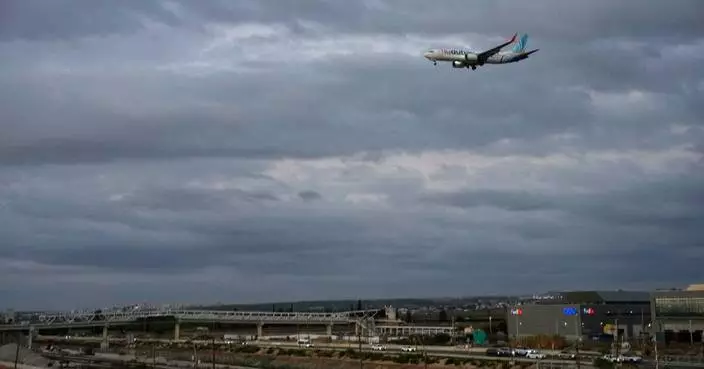
An FlyDubai plane carrying Israeli passengers who had earlier been aboard another FlyDubai aircraft that made an emergency landing in Saudi Arabia approaches Ben Gurion International Airport near Tel Aviv, Israel, Wednesday, Sept. 30, 2026. (AP Photo/Ohad Zwigenberg)
The economy, inflation and how those forces could impact the lives of Americans were front and center over the past week. Trips to the grocery store and gas station are more painful than they were last year, and rising costs are impacting the decisions of both households and businesses.
Here’s a snapshot of prominent economic data and news that occurred over the past week and what it potentially means for you.
Americans’ confidence in the economy sank to the lowest level in more than a decade this month as prices remain elevated and wages stagnate amid the ongoing Iran war.
The Conference Board said Tuesday that its consumer confidence index tumbled 6.7 points to 81.9 in September, down from 88.6 in August. That’s the lowest reading in the board’s survey since April 2014 and below the lowest level reached during the pandemic.
Respondents’ views of their present situation fell by 7.9 points to 109.3. Their short-term outlook also slid, falling 5.9 points to 63.6.
Americans remain flustered by the economy after five years of elevated inflation, potentially posing a risk to President Donald Trump and Republicans in the midterm elections, which are a little more than a month away.
Write-in responses to the board’s survey, collected from September 1-23, were mostly pessimistic this month, with frequent references to the high cost of gas, goods and services.
The average long-term U.S. mortgage rate jumped this week to its highest level in nearly three years.
The benchmark 30-year fixed-rate mortgage rose to 7.28% from 7.03% last week, mortgage buyer Freddie Mac said Thursday, the biggest leap in several years. A year ago, the average rate was 6.34%.
It is the sixth consecutive week that mortgage rates have increased.
The average rate is now the highest it’s been since Nov. 22, 2023, when it reached 7.29%.
Borrowing costs on 15-year fixed-rate mortgages, often sought by borrowers refinancing a home loan, also climbed this week. That average rate increased to 6.60% from 6.42% last week. A year ago, it was at 5.55%.
U.S. employers added a disappointing 29,000 jobs and the unemployment rate ticked up last month, the government reported Friday, a month before voters go to the polls in pivotal midterm elections at a time of discontent over the high cost of living and the state of the economy.
Hiring dropped from a revised 133,000 in August, the Labor Department said. The unemployment rate rose to a still-low 4.2% from 4.1% in August.
Economists had expected September payrolls to come in around 90,000.
Labor Department revisions also shaved 60,000 jobs off combined July and August payrolls. Average hourly wages were up just 3% last year from a year earlier, the smallest year-over-year gain since May 2021.
U.S. employers posted fewer job openings in August, but the American labor market remains resilient in the face of higher energy costs caused by the fighting with Iran.
U.S. job openings slid to 7.08 million from a revised 7.34 million in July, the Labor Department reported Tuesday. Openings came in below the 7.2 million that forecasters had expected and were the lowest since they hit 6.9 million in March.
The department’s Job Openings and Labor Turnover Survey (JOLTS) also showed that layoffs fell and the number of people quitting their jobs — a sign of confidence in their prospects — was little changed in August. The JOLTS report’s measure of gross hiring — before subtracting people who quit or lost their jobs — ticked up modestly in August.
Employers may not be laying workers off, but they aren’t hiring nearly as many as they did a few years ago. Hiring remains well below the 166,000 monthly jobs created, on average, in 2023 and 2024, and the 491,000 a month recorded during the 2021-2022 hiring boom that followed COVID-19 lockdowns.
Inflation slowed in August as Americans ramped up their spending, though prices are still elevated and a challenge for many voters that will head to the polls for midterm elections in just over a month.
Consumer prices rose 3.4% in August compared with a year earlier, the Commerce Department said Wednesday, below the 3.7% economist expectations. On a monthly basis, prices climbed 0.3%, up from 0.1% in July, a sign prices that are still running hot.
Excluding the volatile energy and food categories, inflation also came in lower than expected, rising 3% in August from a year ago. And from July to August, core prices rose just 0.2%, up from 0.1% the previous month. Many economists feared core prices would rise more quickly month-to-month.
The U.S. economy grew at a solid 2.2% pace from April through June as consumer spending and business investment came in strong.
Growth in gross domestic product — the nation’s output of a goods and services — decelerated from a 2.5% pace from January through March, the Commerce Department reported Wednesday. The second-quarter growth was an improvement on the department’s previous estimate of 1.5% — a surprise to economists who had expected little or no change in the GDP number.
Consumer spending — which accounts for about 70% of U.S. economic activity — increased at a healthy 3.8% annual pace, up from 0.7% in the January-March period. Spending has been helped by a strong stock market, which reflects enthusiasm over the prospects for artificial intelligence and which enriches wealthy investors and gives them more money to buy things with.
There was some relief in the rattled U.S. bond market to end the week after the latest jobs report cooled worries that a hot U.S economy might force the Federal Reserve to raise interest rates at their next meeting. The resulting drop in bond yields helped U.S. stocks climb back toward their all-time high.
The S&P 500 rose and pulled within 0.8% of its record set in August. The Dow Jones Industrial Average was up, and the Nasdaq composite was higher.
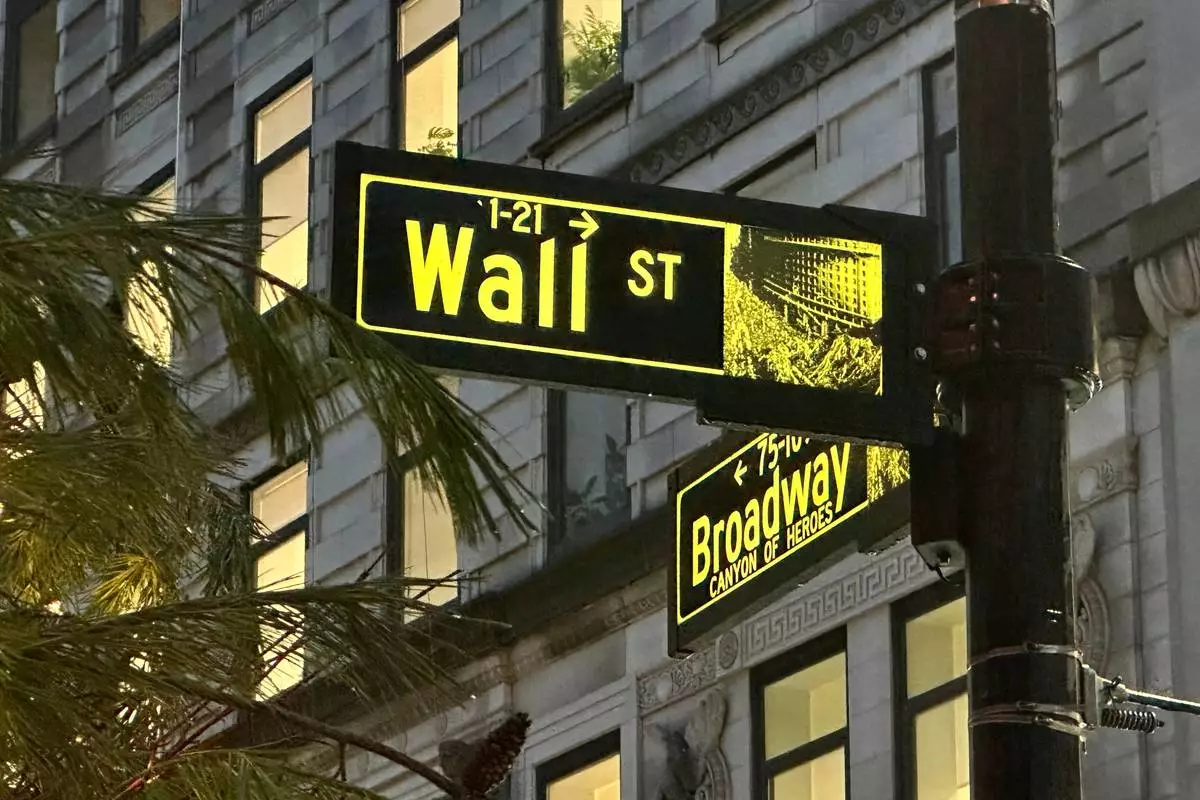
FILE - Signs mark the intersection of Wall Street and Broadway in New York's Financial District on Wednesday Dec.11, 2024. (AP Photo/Peter Morgan, File)
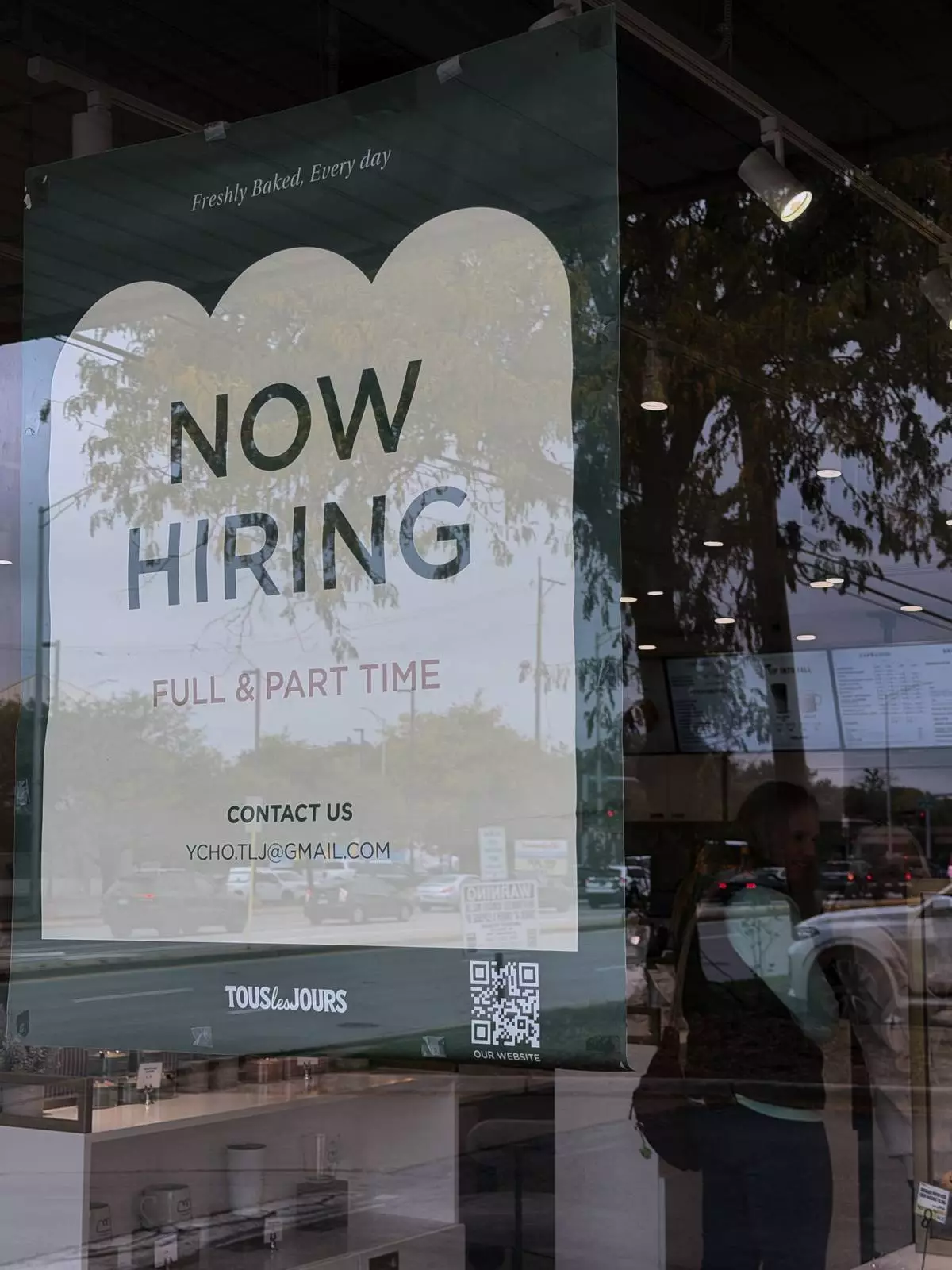
Hiring sign is displayed at a bakery in Arlington Heights, Ill., Wednesday, Sept. 30, 2026. (AP Photo/Nam Y. Huh)