
BARCELONA, Spain (AP) — Public outrage over the eviction of an 87-year-old woman has put Spain's progressive government under immense pressure to tackle the nation's entrenched housing cost crisis.
Around a thousand protestors have spent the past week camped out in Madrid’s Puerta del Sol, the capital’s most popular public space, after the elderly María del Carmen Abascal was evicted from her home of seven decades in downtown Madrid on Sept. 23. The protestors say they won't leave until the government takes real steps to protect tenants.
Click to Gallery

People gather during a protest following the eviction last Wednesday of 87-year-old Maricarmen to demand stronger laws to protect renters at Sol square in Madrid, Spain, Saturday, Sept. 26, 2026. (AP Photo/Manu Fernandez)

People gather during a protest following the eviction last Wednesday of 87-year-old Maricarmen to demand stronger laws to protect renters at Sol square in Madrid, Spain, Saturday, Sept. 26, 2026. (AP Photo/Manu Fernandez)
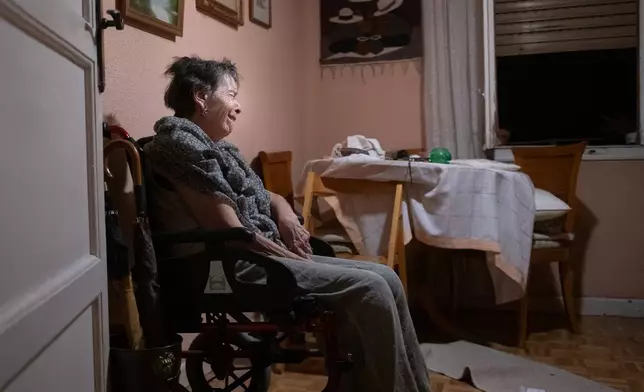
Maricarmen, 87, waits at home for police to arrive before being evicted from the home where she lived in Madrid, Spain, Wednesday, Sept. 23, 2026. (Fernando Sánchez/Europa Press via AP)

Activists camp during a protest following the eviction last Wednesday of 87-year-old Maricarmen to demand stronger laws to protect renters at Sol square in Madrid, Spain, Wednesday, Sept. 30, 2026. (AP Photo/Manu Fernandez)
The government led by Prime Minister Pedro Sánchez, who faces a national election next year, has pushed forward a package of emergency measures to respond to the housing crunch. Lawmakers plan to vote Friday on the measures in Parliament, where the Socialist-led minority coalition will need the backing of several smaller parties to get them over the line.
Here is what you need to know.
The housing crunch has been simmering for years in Spain, eating into household budgets and angering voters. While many countries have similar circumstances, Spain’s poorest and its young are being particularly hard hit because they can’t afford to purchase a home and are being squeezed by the country's small stock of rental properties.
Spain ranks near the bottom of countries in the Organization for Economic Co-operation and Development for government-owned rental properties, which represent less than 2% of its available stock. The European Union average is 8%.
Meanwhile, the average rent for Spain has almost doubled in the last 10 years. The price per square meter has risen from 8.20 euros (now $9.30) in 2016 to 15.1 euros ($17.15) this year, according to the real estate website Idealista.
Spain’s government said that 26% of Spaniards who rent spend an average of 40% of their income on rent and utilities, compared to the EU average of 18% of renters who do so.
Tens of thousands of people periodically march in major cities demanding action from lawmakers and blaming real estate speculators as well as tourist apartment platforms like Airbnb for rising rents.
But a new wave of indignation swept Spain when Abascal, who uses a wheelchair, was carried on a stretcher from her apartment after police cordoned off the street. Televised images of the eviction prompted thousands of people to protest in Madrid and other cities across the southern European country.
“I haven’t managed to defend my home, but I have fought so that others can learn to fight for what’s theirs,” Abascal said in a video recorded from a hospital bed after the eviction.
The Spanish real estate company which had insisted on evicting her in order to rent the property at a much higher price ended up reaching an agreement for her to return to the apartment, her lawyer said, adding Abascal was “happy.” She has yet to be discharged from the hospital.
Even with a satisfying resolution for “Maricarmen,” as Abascal is now widely known, she remains the embodiment of the struggle against suffocating rental costs. Protesters have carried signs with slogans such as “Not even one more Maricarmen!" and demonstrations have been cropping up in cities across the country.
“The housing crisis will sweep this government away,” left-wing parliament member Gabriel Rufián of the ERC party said when she was evicted, urging Sánchez to act.
Spain's government is hoping that its newly presented housing measures will appease the protestors and sway public opinion. It split the measures into two decrees, issuing the first on Sept. 30. Parliament has 30 days to ratify it.
It would:
1. Stop so-called “vulture funds" from speculating with real estate by prohibiting the purchase of properties for under 70% of their estimated value through 2028. The goal is to stop large real estate owners from buying properties in bulk and then reselling them at much higher prices.
2. Extend through 2030 protection for vulnerable renters, prohibiting the eviction of tenants who have been deemed by social services to be in precarious financial standing and with no other home to move to.
3. Impose tighter regulation on short-term leases. Rental contracts between one and 12 months would have to be accompanied by proof that the tenant only needs to reside in the locale for less than a year, for example, to study at a university.
4. Establish various tax incentives to encourage renting properties and real estate construction.
The government said on Sept. 29 that it will soon issue a second decree to make the standard five-year residential lease roll over automatically when it is set to expire.
If a property owner wishes to break the contract unilaterally, they would have to compensate the tenant by paying them the equivalent of a year’s rent, Housing Minister Isabel Rodríguez said Tuesday. The decree would include an exemption for owners if they can prove either they or a close relative need to move into the property.
The complete details of the second decree are supposed to be published in the government gazette on Thursday.
The latter decree has been one of the main demands of the organizers of the encampment protest, the renters association Sindicato de Inquilinas.
Both decrees need to be backed by the majority of Spain's 350-seat Parliament. That is not a given. The leading conservative Popular Party has said it will vote against both, and neither does the government have the guaranteed backing of the smaller parties it relies on to pass any legislation.
It is also no guarantee that their passage would quell the unrest and dispel the camp-in protest that is situated less than a kilometer away from the parliament.

People gather during a protest following the eviction last Wednesday of 87-year-old Maricarmen to demand stronger laws to protect renters at Sol square in Madrid, Spain, Saturday, Sept. 26, 2026. (AP Photo/Manu Fernandez)

People gather during a protest following the eviction last Wednesday of 87-year-old Maricarmen to demand stronger laws to protect renters at Sol square in Madrid, Spain, Saturday, Sept. 26, 2026. (AP Photo/Manu Fernandez)
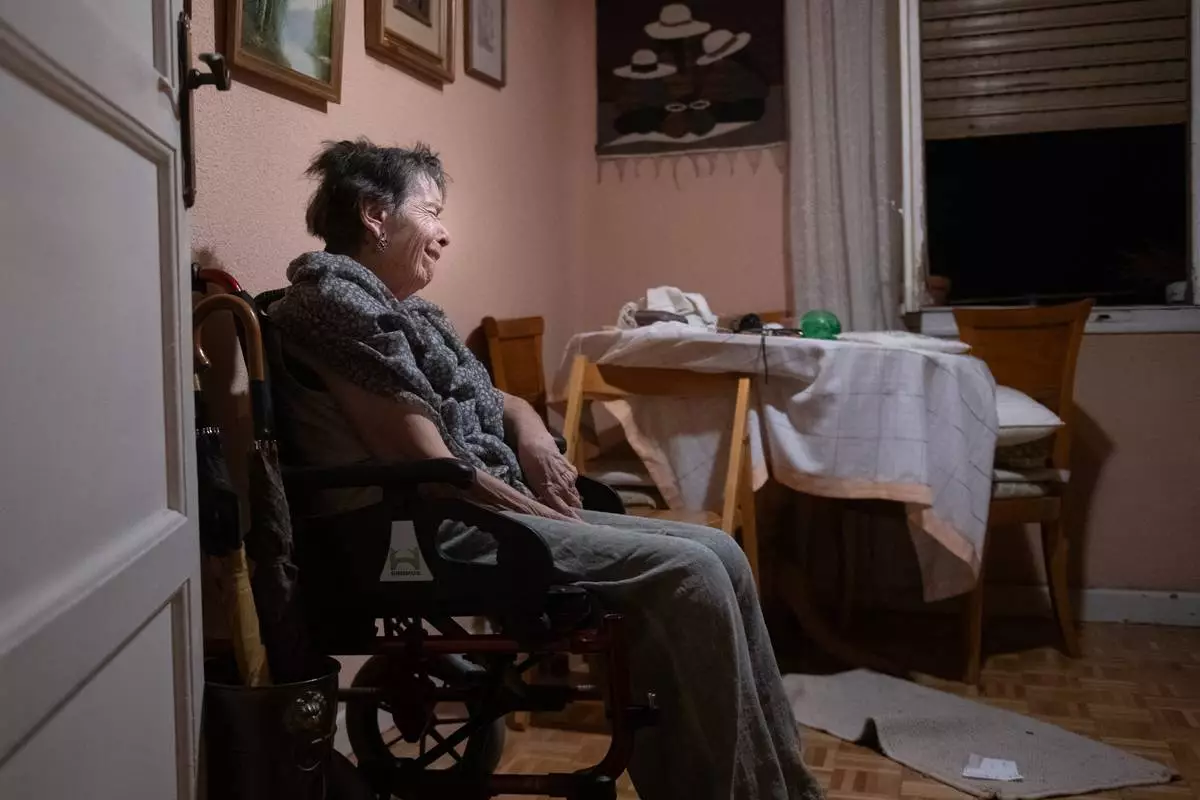
Maricarmen, 87, waits at home for police to arrive before being evicted from the home where she lived in Madrid, Spain, Wednesday, Sept. 23, 2026. (Fernando Sánchez/Europa Press via AP)

Activists camp during a protest following the eviction last Wednesday of 87-year-old Maricarmen to demand stronger laws to protect renters at Sol square in Madrid, Spain, Wednesday, Sept. 30, 2026. (AP Photo/Manu Fernandez)