WASHINGTON (AP) — Senate Republicans are dedicating one of the final votes before the midterm elections to a bill that attempts to address voter worries about data centers and their impact on energy bills.
The measure is a testament to voters' growing concerns about data centers and allows supporters to go on offense on what has become a top campaign issue. The bill's sponsor, Sen. Jon Husted, a Republican from Ohio, is in a tough reelection battle and has been labeled in campaign ads as the “face of data centers” by his Democratic challenger, former Sen. Sherrod Brown.
The bill is a modest one. It requires utility regulators to consider adopting a federal standard that charges large power customers a rate that covers the cost of the system upgrades needed to serve them. Democrats say it amounts to a suggestion and that more is needed. Republicans say the bill sends a message to regulators to act.
“You all know this is the only game in town,” Husted told reporters in advocating for his bill. “This bill passing is the only way to get a chance to prove to the American people before the midterm elections whose side you're on.”
The measure passed the House by a vote of 417-3. It will need support from at least seven Democratic senators to proceed to a final vote, but it's unclear how many will do so given the criticism from within their ranks that it doesn't go far enough and knowing that passage could give Husted's reelection prospects a lift.
“The bill is a fraud, plain and simple,” Senate Democratic Leader Chuck Schumer said.
Democrats have offered competing proposals. Sen. Martin Heinrich, D-N.M. sponsored legislation that would direct the Federal Energy Regulatory Commission to issue rules for large electricity customers that requires them to pay for necessary grid upgrades.
“They want it optional, which means zero. We want it mandatory,” Schumer said.
Republicans are looking to position Democrats as obstructionists who are blocking progress on key voter concerns. Husted's bill is one example. Another would be the bill from Sen. Pete Ricketts, R-Neb., that would bar members of Congress from purchasing individual stocks. The issue is a popular one with candidates running for office this election cycle, but also includes voter identification requirements that Democrats have called a poison pill.
Thune has teed up both bills for a procedural vote that will require 60 votes to advance.
“Both pieces of legislation strike at the very heart of issues that the American people care deeply about, passionately about, and we'll see if the Democrats are willing to take yes for an answer," Thune said.
The House and Senate are both expected to be out of session for all of October. The House left in mid-September, canceling nearly two weeks of votes as Republicans were anxious to get on the campaign trail in a bid to keep their majority in the next Congress.
President Donald Trump has embraced the building of more data centers, but there is growing wariness from voters. About 6 in 10 Americans support limiting the number of new data centers that can be built, including most Democrats and Republicans.
And a majority of Americans are “extremely” or “very” concerned about the impact of data centers on electricity prices or the water supply in the communities where they are built.
In Ohio, a data center hot spot with closely contested races for governor and U.S. Senate, the National Republican Senatorial Committee warned in a recent memo that Husted is vulnerable to losing his seat because of the centers. Husted helped promote Ohio as a destination for data centers while serving as lieutenant governor.
The Ohio race is seen as vital to determining control of the Senate, helping explain why the data center bill has generated so much scrutiny and is so hotly contested despite the overwhelming vote it received in the House.
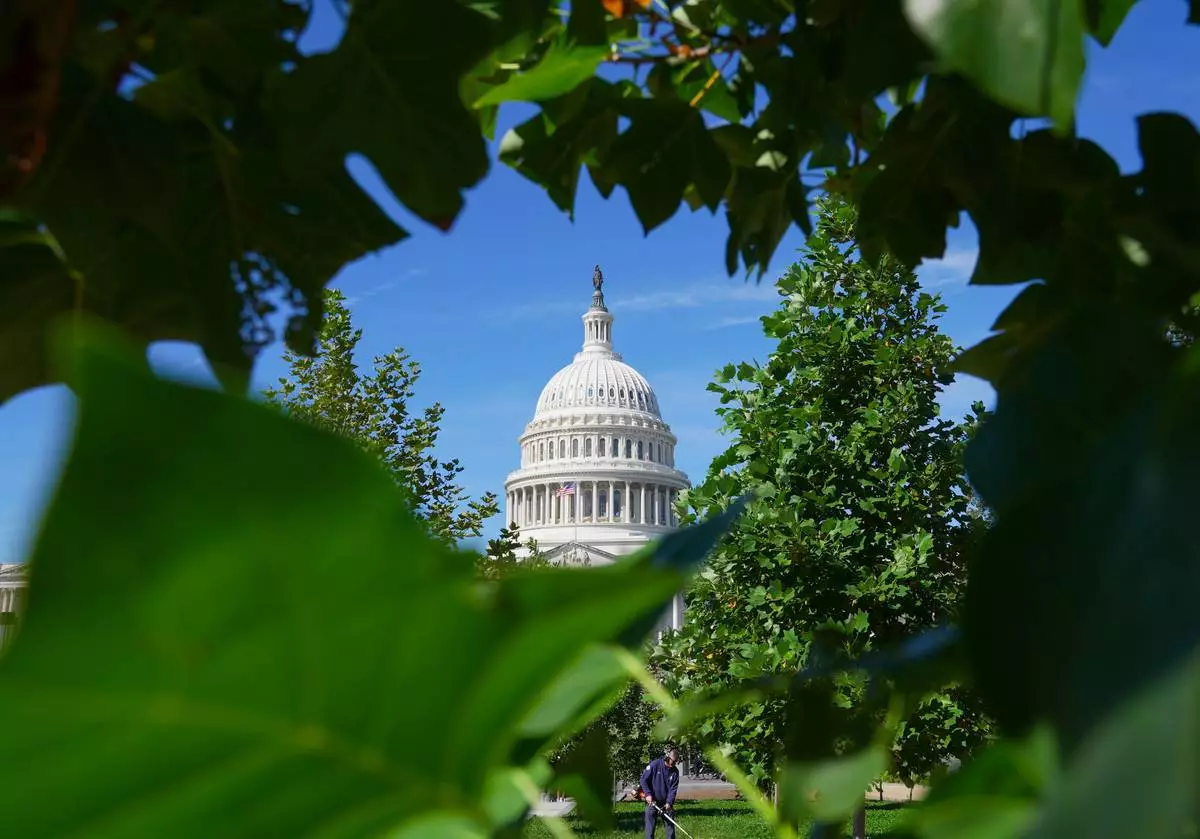
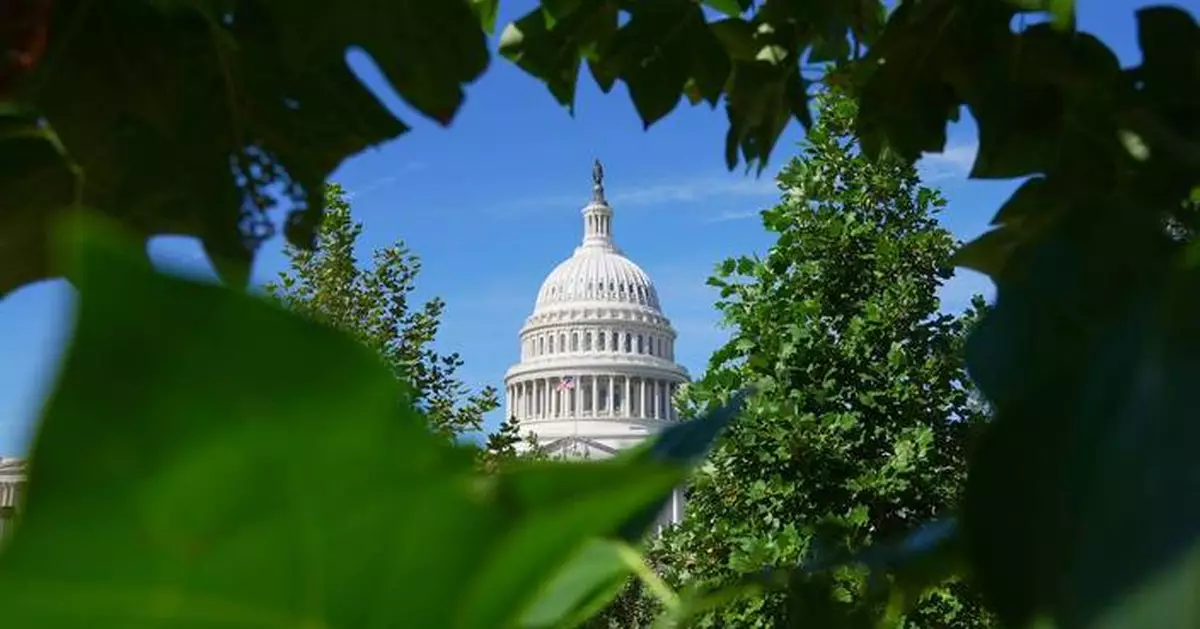
The U.S. Capitol is seen Friday, Sept. 25, 2026, in Washington. (AP Photo/Mariam Zuhaib)
BAGHDAD (AP) — The U.S. military announced Wednesday that it completed the withdrawal of all American troops from Iraq, ending a 12-year mission to fight the Islamic State group and prompting President Donald Trump to hail the conclusion of "a very expensive excursion into Hell.”
The last U.S. troops left an air base in northern Iraq under a deal between Baghdad and Washington.
Trump described the withdrawal by a Sept. 30 deadline as “orderly” and said in a social media post: “It has been a long time, with very bad decision-making that got us involved in this quagmire in the first place, but soon, that will be part of History.” He said the shift was a victory for the U.S., Iraq and a sign of victory over the Islamic State group.
The withdrawal, agreed on two years ago, comes against the backdrop of the ongoing war between the United States and Iran that has also sometimes spilled over into Iraq, with Iran-backed militias firing on U.S. troops and the U.S. striking the groups' strongholds.
Trump’s comments came as own decision earlier this year to launch the war with Iran has been compared to the Iraq war for its undefined mission as it nears its seventh month.
In recent years, Washington has appeared to seek to shift its focus from the Middle East toward Asia, but that shift has been inconsistent, with the Pentagon alternating between reducing its Mideast presence and then finding itself engaging in new conflicts — including the ongoing war in Iran.
Baghdad touted the end of the U.S. mission as a sign of the country's increasing strength and sovereignty.
The withdrawal was also celebrated by Iran-backed groups but raised concerns among some other Iraqis, particularly in the Kurdish region, where many fear a resurgence of the Islamic State group as well as more attacks by Iran-linked groups, possibly emboldened by the departure of U.S. forces.
Meanwhile, questions loom around the future of the Iraqi militias, which the Baghdad government has sought to disarm, with little success so far.
Pentagon spokesperson Sean Parnell said in a statement that U.S. troops and equipment had completed an “orderly departure” from the air base in Irbil, in northern Iraq's semi-autonomous Kurdish region.
“This milestone reflects the success of a 12-year campaign that defeated ISIS as an organized military threat in Iraq and across the region,” he said. “It also marks a transition from a wartime coalition mission to an Iraqi-led security effort supported by a more normal bilateral security relationship.”
He added that the U.S. military “will continue to provide targeted training and intelligence support to our Iraqi partners.”
Iraqi Prime Minister Ali al-Zaidi presided over the handover ceremony and described the U.S. withdrawal as the beginning of a “new phase, one defined by Iraq’s sovereignty, the strength of its institutions, the readiness of its forces, the unity of its decision-making, and balanced partnerships with its friends.”
He said Iraqi security forces will continue the fight against IS and the government will ensure that non-state groups no longer hold weapons.
U.S. troops invaded Iraq in 2003 to topple Saddam Hussein. They departed in 2011, but three years later, Iraqi authorities invited a smaller U.S.-led mission to fight the Islamic State group, which had rampaged across Iraq, seizing large swaths of territory.
With the extremist group reduced to scattered sleeper cells, Washington and Baghdad agreed in 2024 to wind the mission down.
U.S. troops pulled out of bases in most areas of Iraq last year but maintained a small presence of hundreds of troops in the semiautonomous northern Kurdish region. Bases there have regularly come under attack since the U.S. and Israel launched their war against Iran on Feb. 28. Iran-backed Iraqi militias also have coordinated with Yemen’s Houthi rebels to attack Saudi Arabia.
The Iraqi government initially linked the Sept. 30 deadline for U.S. withdrawal to the disarmament of non-state armed groups by that date.
While a handful of less-influential militias have agreed to turn over their weapons, powerful groups close to Iran rejected the prospect or set conditions for disarming that the government would be unlikely to meet.
Al-Zaidi has since walked back the deadline. He told The New York Times earlier this month that the deadline for militia disarmament has been pushed to June 2027.
The effects of the U.S. withdrawal may not be immediately visible, particularly since the U.S. military presence had already been scaled down. But officials in Iraq's Kurdish region have expressed anxiety about the departure and particularly about the removal of U.S. air defense systems.
The Kurdish regional government's Peshmerga Ministry said the Kurdish region had faced more than 1,000 drone and ballistic-missile attacks during the recent U.S.-Iran conflict.
“The departure of the United States from the Kurdistan Region under these complex regional circumstances, without the provision of a defense system, is a matter of concern,” the statement said.
Iran-allied groups in Iraq, meanwhile, have celebrated the U.S. withdrawal.
“The expulsion of the occupation forces, defeated, from the land of Iraq is the beginning of full sovereignty,” Abu Mujahid al-Assaf, a security official with the powerful Kataib Hezbollah militia, said in a statement.
He added a warning to al-Zaidi and his government not to carry out American plans, threatening that “any government that does not work for the benefit of the people will be overthrown by all means.”
The Islamic Resistance in Iraq, an umbrella group of Iran-backed militias, said in a statement that negotiations with the government over the regulation of weapons have not resulted in an agreement and that it was “not bound by any timeline or agreement” announced by the government or political entity. The group said it is open to “any dialogue that guarantees Iraq’s sovereignty and dignity.”
Associated Press writers Abby Sewell in Istanbul and Michelle L. Price in Washington contributed to this report.
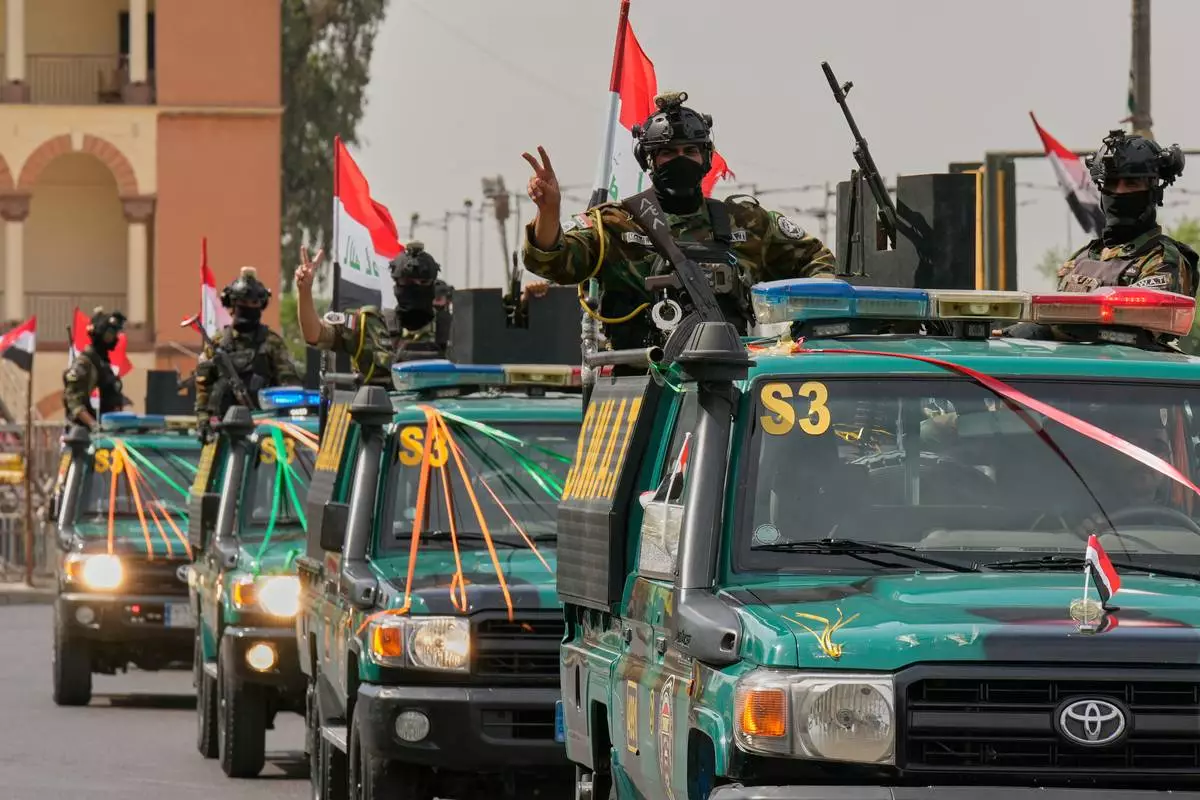
Iraqi security officers flash victory signs as they ride on vehicles decorated with national flags and ribbons during a convoy celebrating the complete withdrawal of U.S. troops from Iraq, in Baghdad, Iraq, Wednesday, Sept. 30, 2026. (AP Photo/Hadi Mizban)
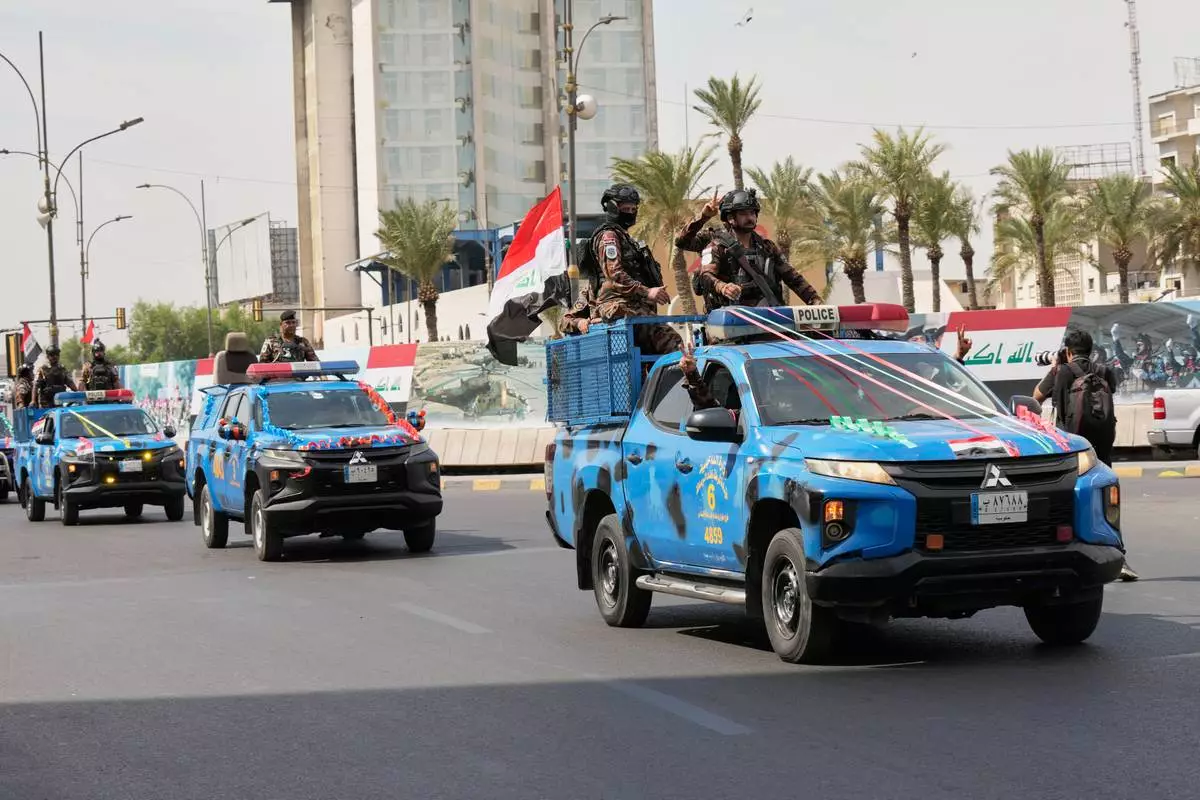
Iraqi police vehicles decorated with national flags and ribbons drive in a convoy as officers flash victory signs while celebrating the complete withdrawal of U.S. troops from Iraq, in Baghdad, Iraq, Wednesday, Sept. 30, 2026. (AP Photo/Hadi Mizban)
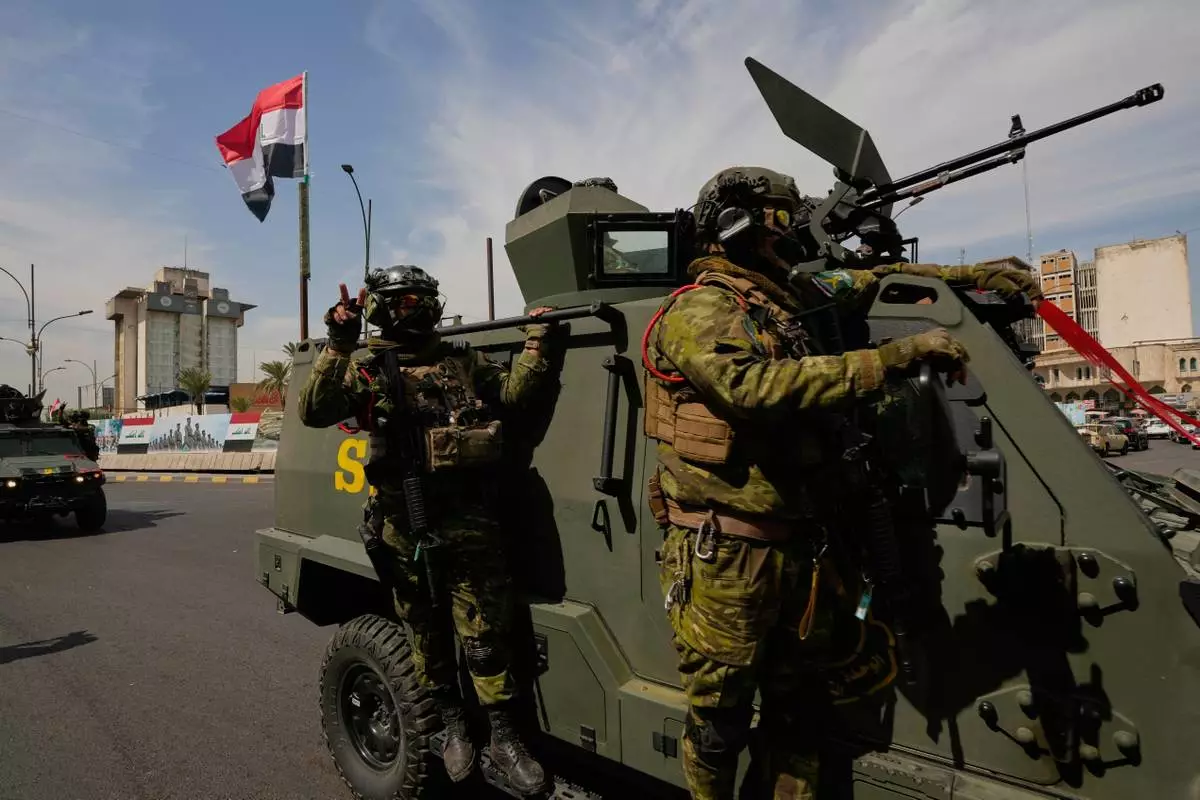
Iraqi police officers stand beside security vehicles decorated with national flags and ribbons during a convoy celebrating the complete withdrawal of U.S. troops from Iraq, in Baghdad, Iraq, Wednesday, Sept. 30, 2026. (AP Photo/Hadi Mizban)
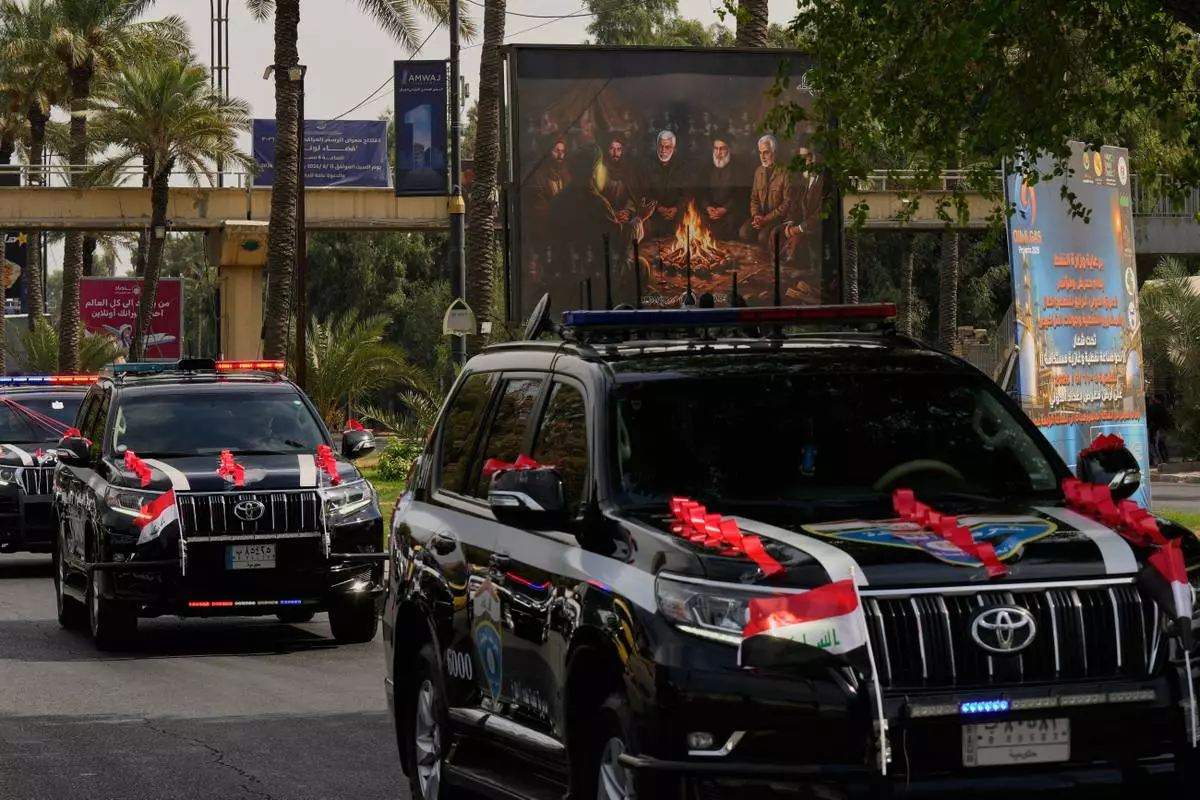
Iraqi security vehicles decorated with national flags and ribbons drive in a convoy past a billboard depicting slain Iranian commander Qassem Soleimani, slain Hezbollah leader Hassan Nasrallah and slain Iraqi militia commander Abu Mahdi al-Muhandis seated with religious figures around a fire, as they celebrate the complete withdrawal of U.S. troops from Iraq, in Baghdad, Iraq, Wednesday, Sept. 30, 2026. (AP Photo/Hadi Mizban)
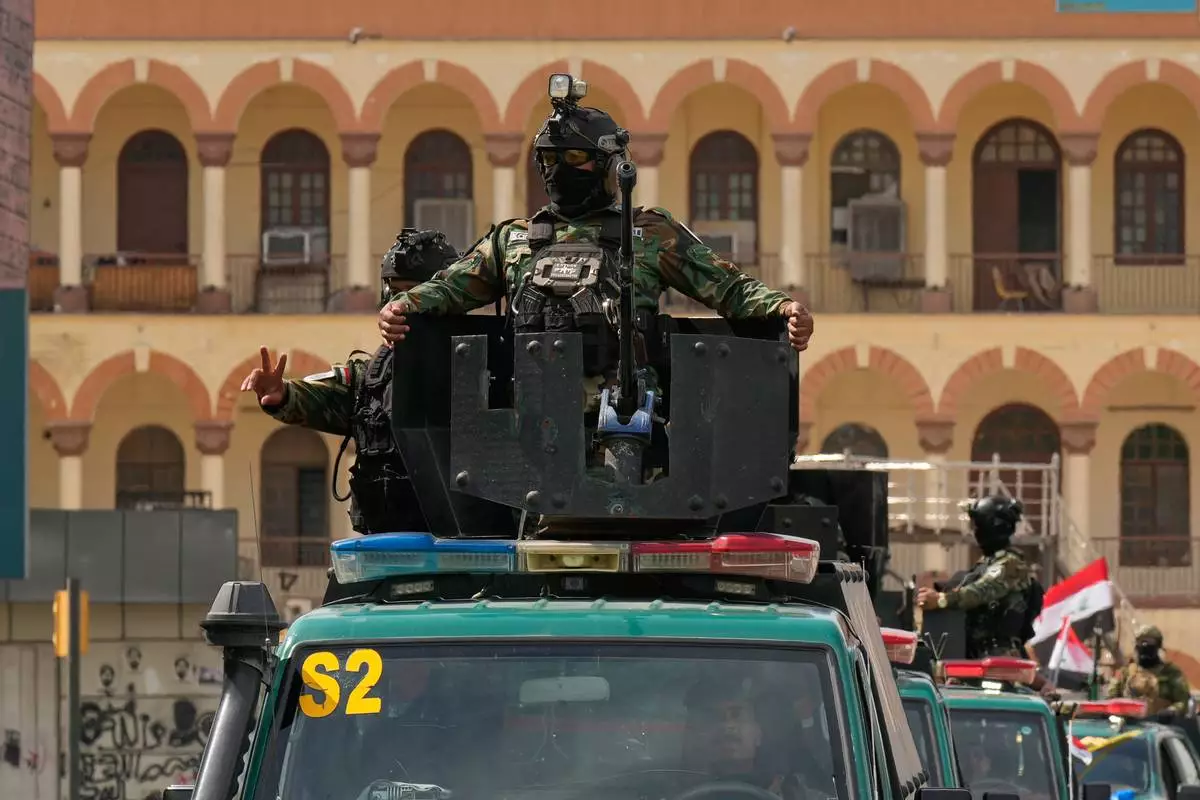
Iraqi security officers ride atop vehicles during a convoy celebrating the complete withdrawal of U.S. troops from Iraq, in Baghdad, Iraq, Wednesday, Sept. 30, 2026. (AP Photo/Hadi Mizban)
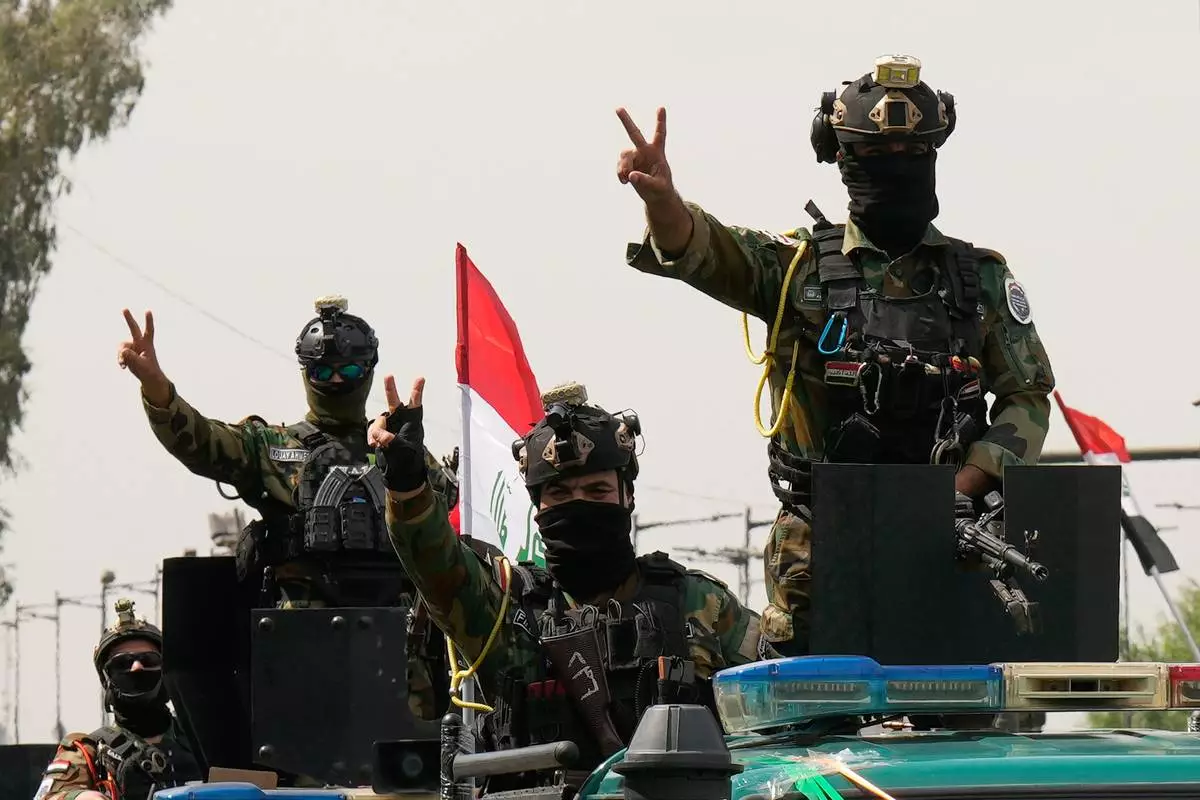
Iraqi security officers flash victory signs while riding in vehicles decorated with national flags during a convoy celebrating the complete withdrawal of U.S. troops from Iraq, in Baghdad, Iraq, Wednesday, Sept. 30, 2026. (AP Photo/Hadi Mizban)
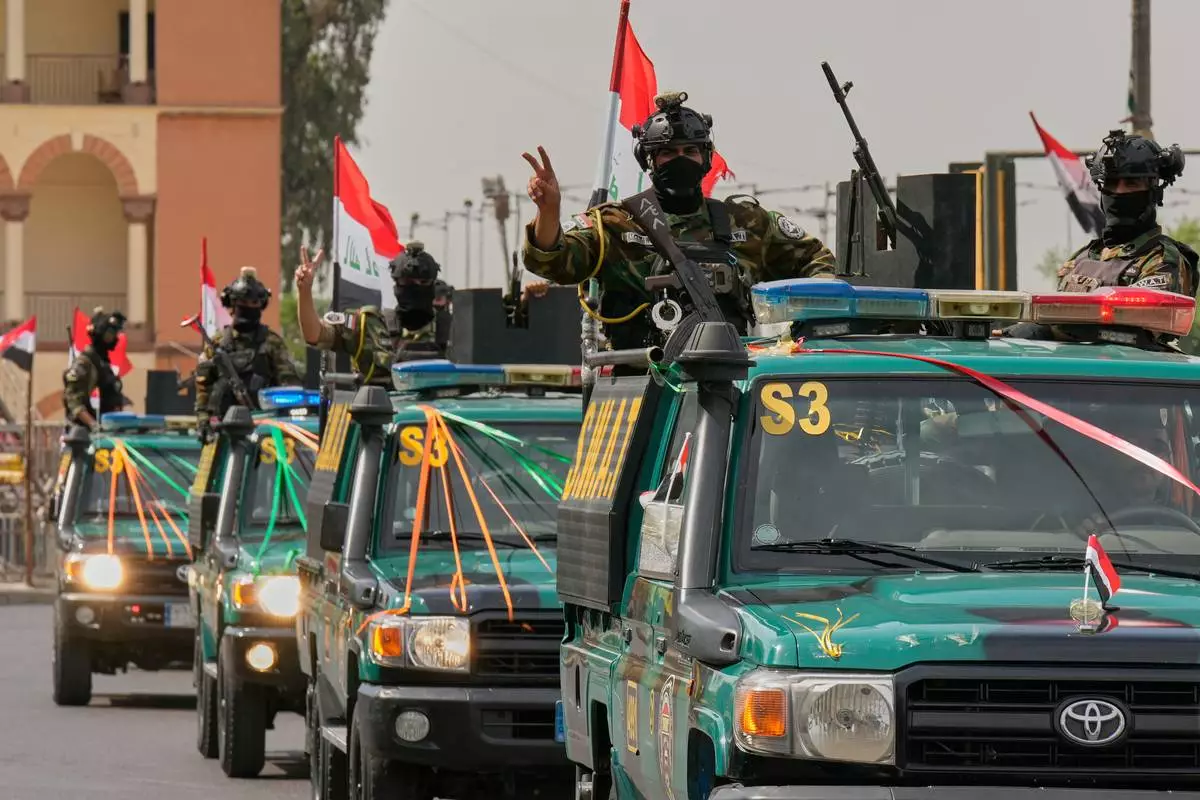
Iraqi security officers flash victory signs as they ride on vehicles decorated with national flags and ribbons during a convoy celebrating the complete withdrawal of U.S. troops from Iraq, in Baghdad, Iraq, Wednesday, Sept. 30, 2026. (AP Photo/Hadi Mizban)
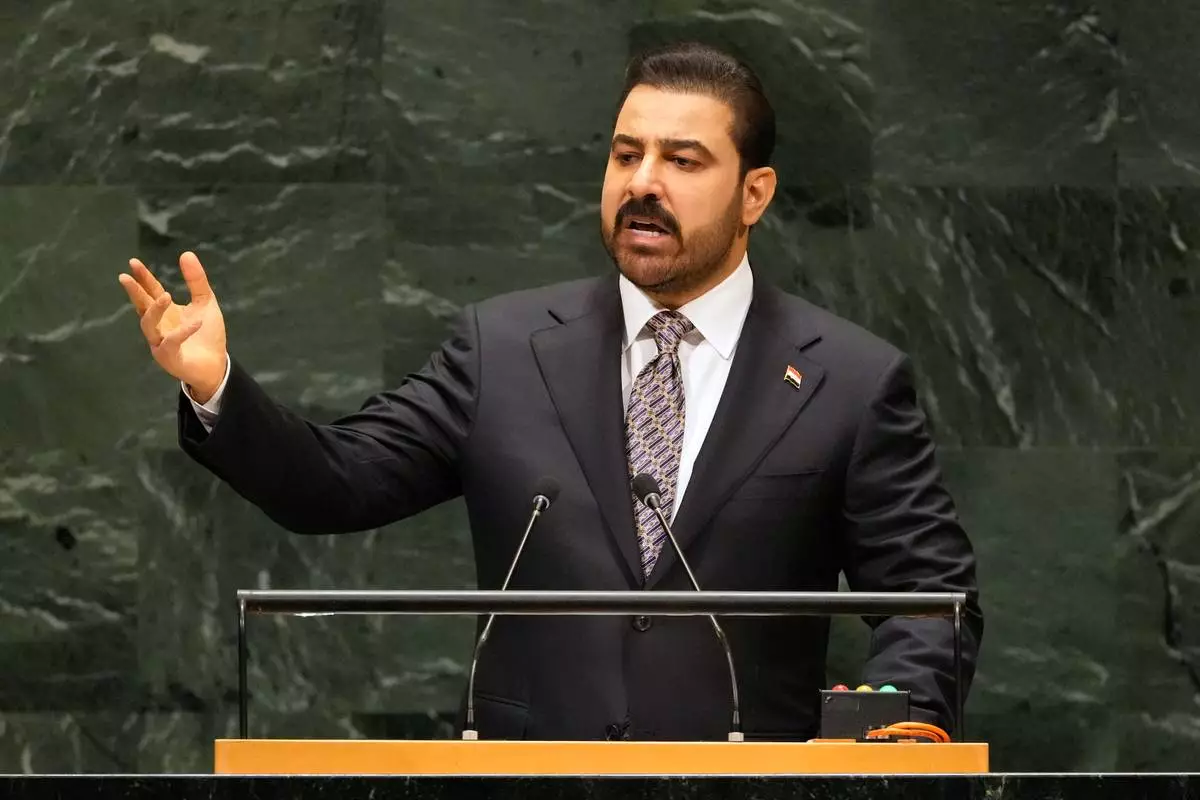
Iraq's Prime Minister Ali al-Zaidi speaks during the 81st session of the United Nations General Assembly at United Nations headquarters, Friday, Sept. 25, 2026. (AP Photo/Seth Wenig)
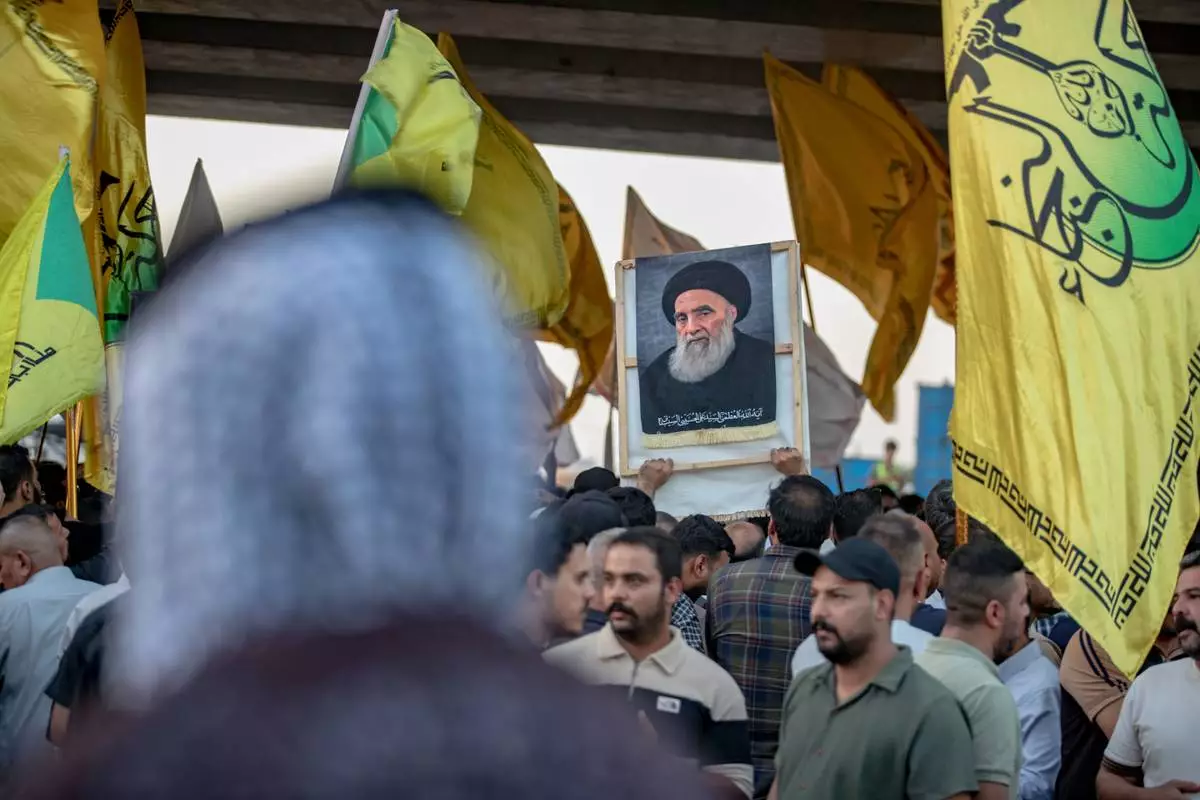
A demonstrator holds a portrait of Iraq's top Shiite cleric, Grand Ayatollah Ali al-Sistani, during a protest against the suspension of flights between Iraq and Iran outside Najaf International Airport in Najaf, Iraq, Monday, Sept. 28, 2026. (AP Photo/Anmar Khalil)