As China marks the 77th anniversary of the founding of the People's Republic of China, cameraman Ma Guoqing has a uniquely personal connection to National Day. Born on Oct. 1 and named "Guoqing" after the holiday, he has spent years documenting some of the country's landmark moments and sweeping changes through his lens.
For decades, generations of Chinese parents have named their children "Guoqing", meaning National Day, as a heartfelt tribute to the country's founding.
"My name is Ma Guoqing. I was born on October 1st, 1986. My grandfather gave me the name. I think it was because he had served in the military and I was born on that day. So it felt appropriate," said Ma Guoqing.
That name gave him a natural connection to the holiday -- a connection that took on new meaning in 2019, when Ma worked on the live broadcast of the military parade marking the 70th anniversary of the founding of the People's Republic of China.
"When I was in elementary school, I could have taken part in the 50th-anniversary celebrations. But I broke my arm and could not go. I was really disappointed. Years later, I found myself in Tian'anmen Square for the 70th anniversary. I was so thrilled that I was shaking when I found out I'd be filming there, It was overwhelming. I filmed the first crane shot, sweeping over the parade formation toward Tian'anmen," he said.
From National Day celebrations to major international sporting events, Ma's lens has chronicled China's historic moments. Looking back, he says the evolution of his equipment tells its own story of a changing era.
"I feel fortunate to have witnessed China's rapid development over the years. When I began learning camera work, I used Beta cameras, then DVCAM. Now I rarely use video cameras; I mostly shoot with versatile still cameras," he said.
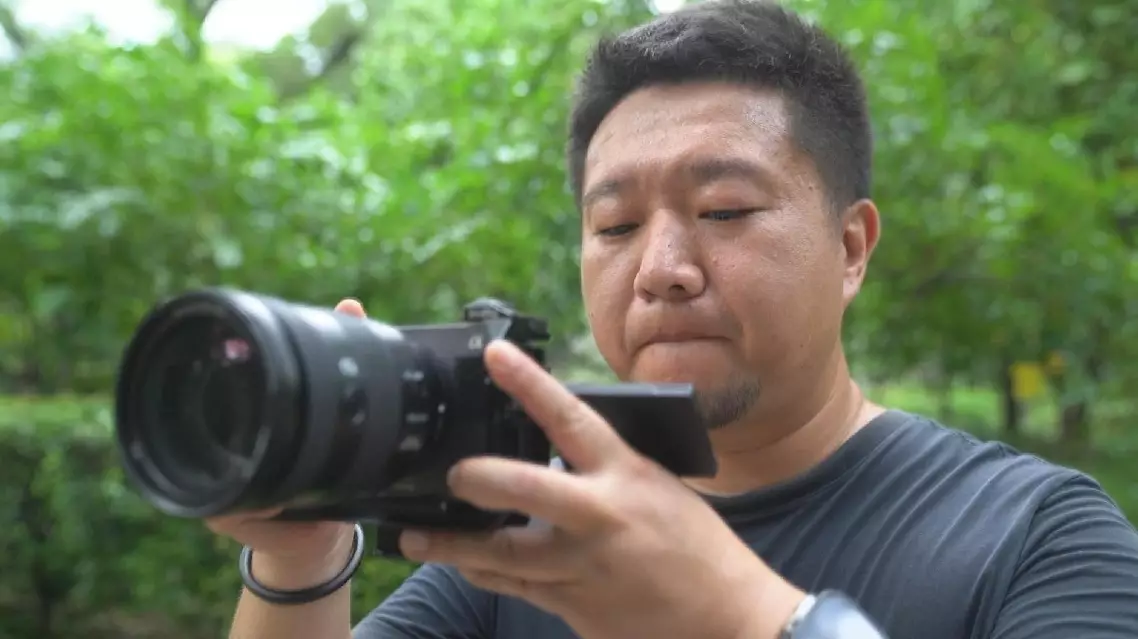
Named after National Day, camera operator witnesses China's transformation through his lens
Thousands of displaced families in the war-ravaged Gaza Strip face perilous living conditions as they are still sheltering in damaged buildings at risk of collapse.
At least 21 Palestinians, including children and women, were killed when a war-damaged residential building collapsed in Gaza City earlier this month.
Samah Mosleh and her seven children are living beneath the remains of a badly damaged building in Gaza City. Their home in Beit Hanoun, northern Gaza, was completely destroyed, forcing the family to flee.
The upper floors of the building where they now shelter have already collapsed. Cracks and structural damage surround them, but Mosleh said overcrowded displacement camps have left her family with nowhere safer to go.
"We have nowhere else to shelter. I tried to find a place where we could set up a tent, but there is no space in the camps. This building could collapse at any moment, and I fear for my children. Winter hasn't even arrived yet, and things could get even worse," said Mosleh.
Gaza Municipality said allowing construction materials and temporary housing units into the Strip could help provide safer shelter for displaced families.
"There are major challenges, especially dangerous buildings which are at risk of collapse where many displaced people are now living. If construction materials, especially cement, are allowed in, we could repair many partially damaged buildings and provide safer shelter for many residents," said Yahya al-Sarraj, mayor of Gaza City.
After nearly three years of war, continuous rescue operations have taken a heavy toll on Civil Defense vehicles and machinery, while shortages of fuel and spare parts further hamper emergency response.
"We have more than 2,000 buildings at risk of collapse. Unfortunately, displaced families are living inside them because they have nowhere else to go. Civil Defense cannot remove these dangerous structures because we lack heavy machinery and rescue equipment," said Mohammed Abu Dan, deputy director of operations of the Palestinian Civil Defense in the Gaza Strip. The United Nations warns of grave risks facing families living in hundreds of damaged buildings, saying no one should have to risk their life simply to find safe shelter.
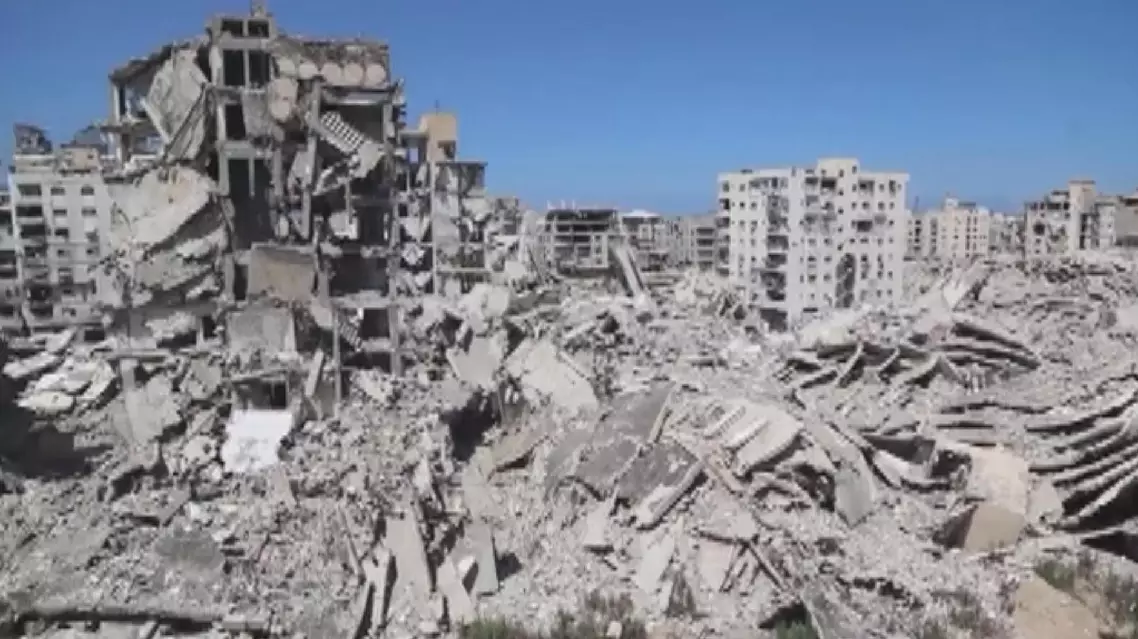
Displaced Palestinians in Gaza forced to shelter in fragile buildings