Iran's Army has decided to work on increasing the range of its missiles following the war with the United States and Israel, Iran's Fars news agency reported on Sunday.
"In this war, we came to the conclusion that we must definitely increase the range of our missiles, and we have now embarked on that path," Iranian Army spokesman Mohammad Akraminia said in an interview with Fars, which was published on Sunday.
Akraminia said the reason is that the "enemy" has deployed its forces at a greater distance from Iran's coasts, up to 1,000 kms away, "and we will continue to upgrade these missiles."
He stressed that Iran has also significantly upgraded its missiles' speed and precision, adding that future generations will be even faster and more precise.
On Thursday, U.S. President Donald Trump said that it's "possible" that he will ramp up bombing against Iran after the midterm elections.
Meanwhile, the U.S. military is sending a third aircraft carrier strike group and additional Marine Corps ships to the Middle East, adding 9,000 to 10,000 more U.S. troops to the region.
On Feb. 28, Israel and the United States launched joint attacks on Tehran and other Iranian cities. Iran responded with waves of missile and drone attacks targeting Israel and U.S. bases and assets in the region, and tightened its grip on the Strait of Hormuz.
A ceasefire was achieved between the warring parties on April 8. On June 18, Iran and the United States signed a memorandum of understanding (MoU) on ending the war in the region on all fronts.
Under the MoU, the two countries were scheduled to hold negotiations within 60 days, ending on Aug. 17, to reach a final agreement. However, the two sides failed to make sufficient progress toward a deal as tensions continued to escalate.
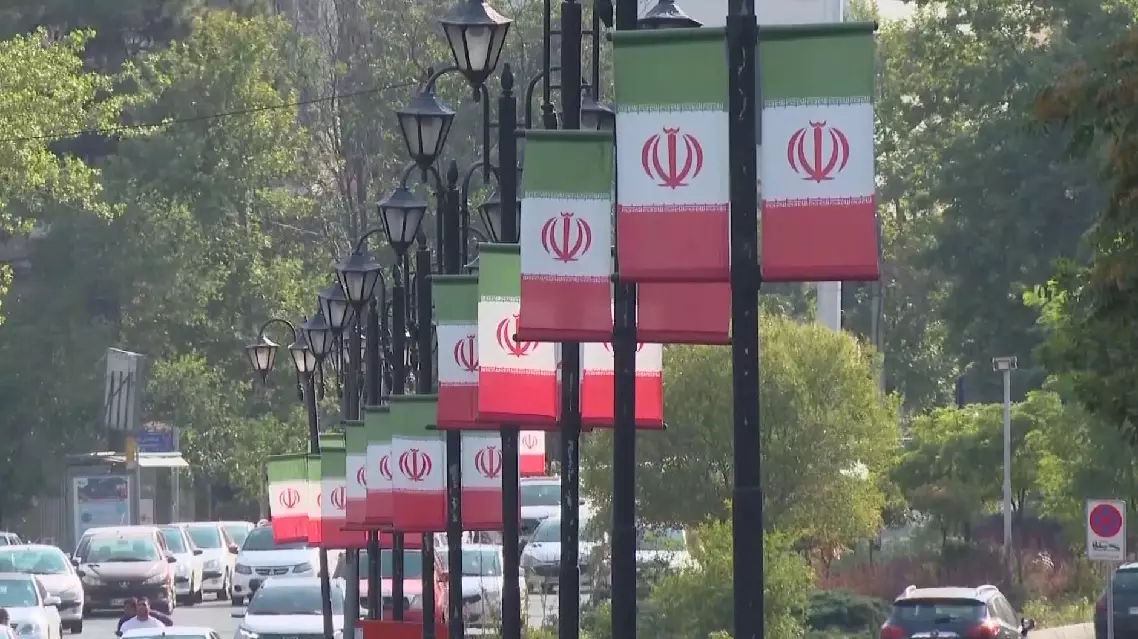
Iran's Army says to work on increasing missiles' range following war with U.S.
A large-scale immersive production recreates the smoky battlefield of how the Red Army secured an important victory against the Kuomintang forces at the Loushan Pass, a revolutionary site in Zunyi City of southwest China's Guizhou Province, in 1935 during the Long March, drawing younger generations closer to the historical event.
The Loushan Pass occupies an important place in the history of the Long March. Achieved in February 1935 after the historic Zunyi Conference in which late Chinese leader Mao Zedong (1893-1976) rose to high-level military and political leadership, the battle at the Loushan Pass is widely remembered as the Red Army's first major victory since the start of the Long March and as a turning point that helped reverse a difficult military situation.
Today, what was once a battlefield is now a popular tourism destination. Twice a day, a live-action performance lasting nearly an hour recreates battle scenes. Visitors can take part in the performance, dressing in uniforms and playing roles as local residents, helping to transport supplies and tending to wounded soldiers.
A China Global Television Network (CGTN) correspondent traveled to the area and joined the immersive experience project in one episode of the special series Marching On, which retraced the original route of the Long March across several provinces to show how the enduring spirit of determination and resilience continues to inspire generations of the Chinese people as they pursue better lives through innovation and hard work.
This year marks the 90th anniversary of the Long March, a crucial turning point in modern Chinese history that contributed to the founding of the People's Republic of China in 1949.
The Red Army soldiers, forerunners of today's People's Liberation Army, began their strategic retreat in 1934. They endured raging rivers, snow-capped mountains, and vast grasslands -- some marching as far as 12,500 kilometers -- before finally reaching Yan'an in Shaanxi Province in northwest China in 1936, where they established the CPC headquarters before the People's Republic of China was founded in 1949.
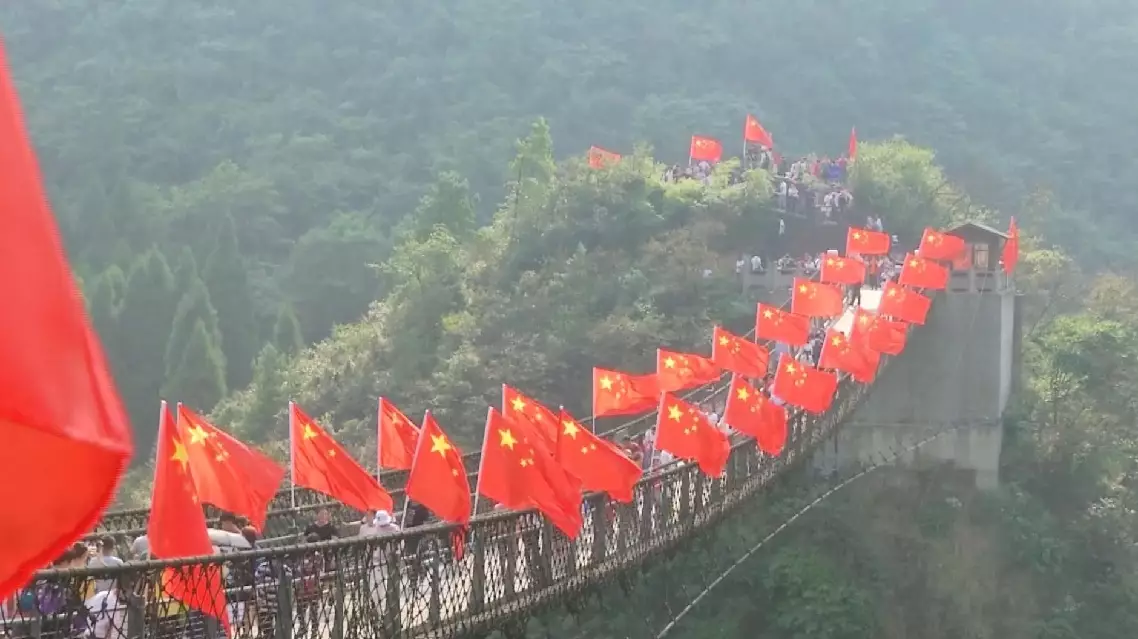
Immersive red cultural experience at Loushan Pass recreates key victory in Long March