Skip to Content Facebook Feature Image

Traditional festival fuels tourism boom in southwest China's border town

China

China

China

Traditional festival fuels tourism boom in southwest China's border town

2026-10-05 02:28 Last Updated At:12:13

Chinese holidaymakers have flocked to Yunnan Province in southwest China to share in the festive atmosphere with local ethnic minority communities amid thundering drums and a swirling sea of colorful costumes, turning a remote border county into a booming holiday tourism destination.

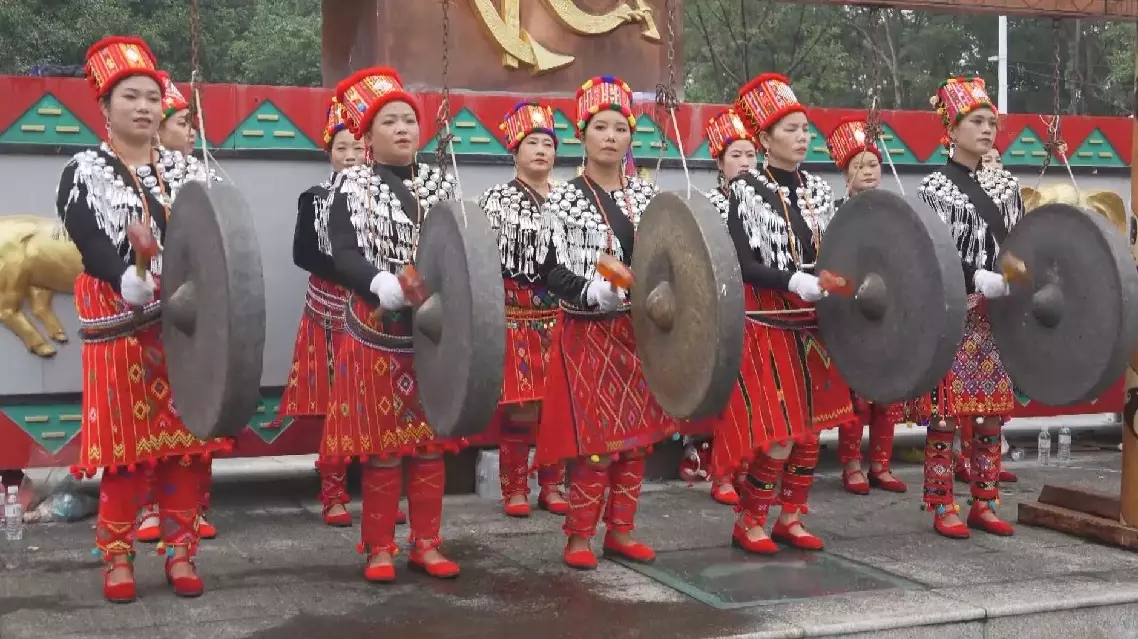
Thousands of people gathered in a square in Longchuan County of Dehong Dai and Jingpo Autonomous Prefecture on Saturday to perform a local dance called Munao Zongge. Featuring music, dance and thousands of participants, the celebration brings the community together and keeps the centuries-old tradition alive.

Meaning "dancing together" in the local Jingpo dialect, Munao Zongge is a traditional art form of the Jingpo people, usually performed during major festive occasions as a way to pray for good luck.

"This is my first time performing the Munao Zongge. It is very lively here, and the people are very welcoming," said a tourist.

"On the occasion of the birthday of our motherland, joining hands with fellow citizens of various ethnic groups in Longchuan to participate in the Munao Zongge festival allowed me to deeply experience the peace of our country and the unity of all ethnic groups as one big family," said Fan Cheng, another tourist.

The festival highlights a broader shift in China's tourism landscape, with holiday travelers increasingly bypassing overcrowded big-city destinations in favor of smaller towns and authentic cultural experiences.

For Longchuan, a small county bordering Myanmar, the trend has created new economic opportunities. Just two years ago, the county did not have a single travel agency. Today, it is welcoming a steady influx of organized tour groups and independent travelers alike.

"I didn't expect to see such a huge turnout. It shows how deeply this dance and these traditions are rooted in the collective memory of the Jingpo people. I think it's a wonderful tradition, and I hope it will be passed down to future generations," said Xu Xinda, who joined the festivities.

Local authorities are seeking to build on the festival's popularity by making Munao Zongge a regular part of the county's tourism offerings.

"We are building our tourism around 'Munao Zongge every day,' so visitors can experience this national intangible cultural heritage whenever they come to Longchuan. We hope this can become a catalyst for developing other tourism routes," said Zhou Hongfei, deputy director of the Longchuan County Culture and Tourism Bureau.
Traditional festival fuels tourism boom in southwest China's border town
Traditional festival fuels tourism boom in southwest China's border town
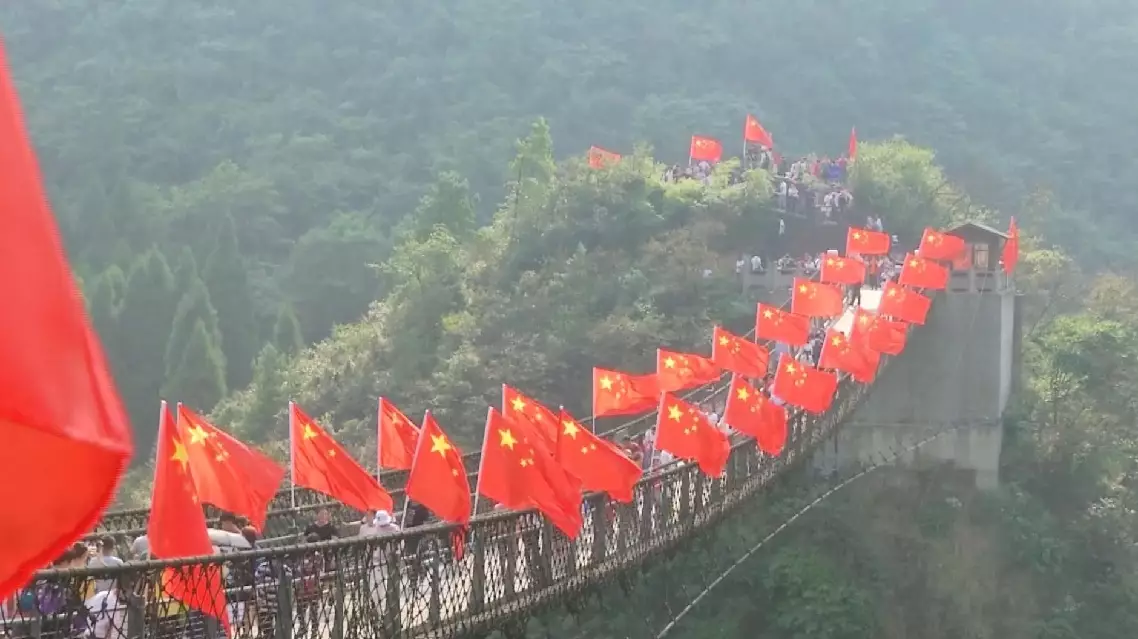
A large-scale immersive production recreates the smoky battlefield of how the Red Army secured an important victory against the Kuomintang forces at the Loushan Pass, a revolutionary site in Zunyi City of southwest China's Guizhou Province, in 1935 during the Long March, drawing younger generations closer to the historical event.

The Loushan Pass occupies an important place in the history of the Long March. Achieved in February 1935 after the historic Zunyi Conference in which late Chinese leader Mao Zedong (1893-1976) rose to high-level military and political leadership, the battle at the Loushan Pass is widely remembered as the Red Army's first major victory since the start of the Long March and as a turning point that helped reverse a difficult military situation.

Today, what was once a battlefield is now a popular tourism destination. Twice a day, a live-action performance lasting nearly an hour recreates battle scenes. Visitors can take part in the performance, dressing in uniforms and playing roles as local residents, helping to transport supplies and tending to wounded soldiers.

A China Global Television Network (CGTN) correspondent traveled to the area and joined the immersive experience project in one episode of the special series Marching On, which retraced the original route of the Long March across several provinces to show how the enduring spirit of determination and resilience continues to inspire generations of the Chinese people as they pursue better lives through innovation and hard work.

This year marks the 90th anniversary of the Long March, a crucial turning point in modern Chinese history that contributed to the founding of the People's Republic of China in 1949.

The Red Army soldiers, forerunners of today's People's Liberation Army, began their strategic retreat in 1934. They endured raging rivers, snow-capped mountains, and vast grasslands -- some marching as far as 12,500 kilometers -- before finally reaching Yan'an in Shaanxi Province in northwest China in 1936, where they established the CPC headquarters before the People's Republic of China was founded in 1949.

Immersive red cultural experience at Loushan Pass recreates key victory in Long March

Immersive red cultural experience at Loushan Pass recreates key victory in Long March

Recommended Articles