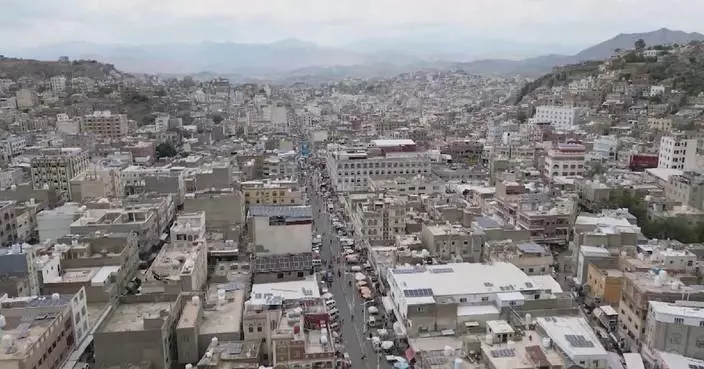
Russia said on Sunday that it launched a drone strike on a key bridge in the Ukrainian capital city of Kiev earlier in the day, as it vowed to ramp up attacks on Ukraine's military targets.
Explosions and the sounds of Ukrainian air defense systems firing echoed across Kiev on Sunday morning.
Ukrainian President Volodymyr Zelensky said that a drone hit the Northern Bridge over the Dnipro River in Kiev, saying that Russia attempts to sever cross-river transport, paralyze the city, and force civilian evacuations.
The Russian Ministry of Defense said on the same day that, in response to Zelensky's recent statements about "intensifying strikes on Russian oil refineries," Russia will step up its attacks on military, military-industrial, and related infrastructure targets in Kiev and other regions of Ukraine.
This followed a warning issued a day earlier by the Russian Foreign Ministry urging foreign citizens and diplomats to leave Kiev and avoid traveling to or staying in Ukraine.
Also on Sunday, the Russian Defense Ministry said that its forces used drones to strike four vessels transporting military supplies for the Ukrainian army.
Meanwhile, the Security Service of Ukraine (SBU) said on the same day that Ukrainian forces launched a drone attack on a military airfield in Russia's Republic of Adygea, located about 500 kilometers from the Ukrainian border.
According to the SBU, the strike hit a Su-35 fighter jet, a Su-34 fighter jet, and an ammunition depot at the base.
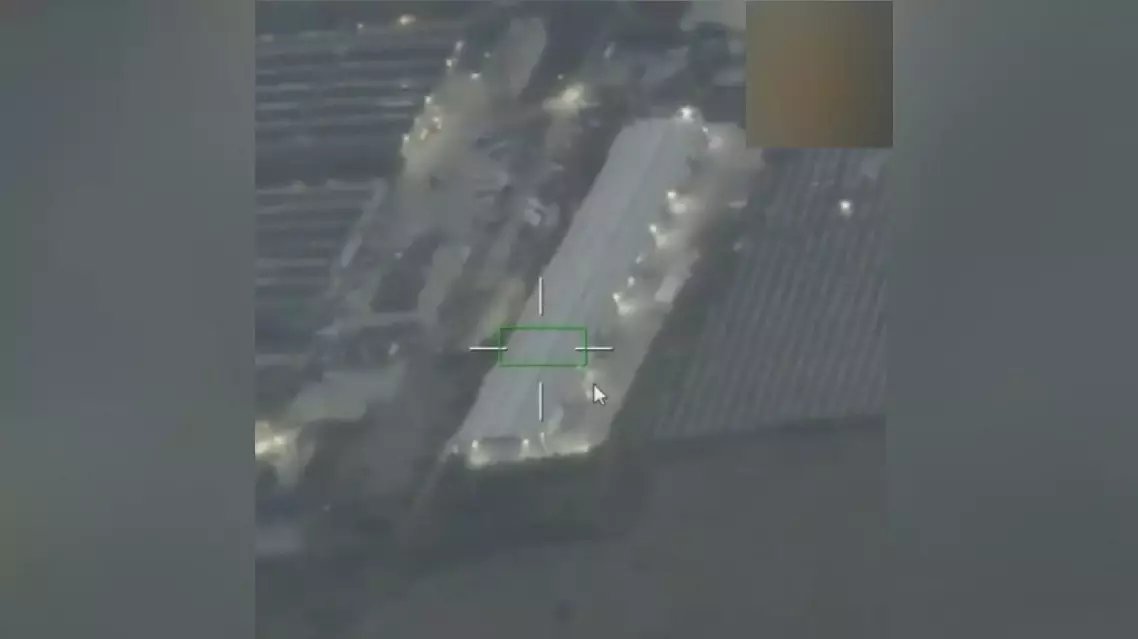
Russia reports strike on Kiev bridge as it ramps up offensives in Ukraine
A large-scale immersive production recreates the smoky battlefield of how the Red Army secured an important victory against the Kuomintang forces at the Loushan Pass, a revolutionary site in Zunyi City of southwest China's Guizhou Province, in 1935 during the Long March, drawing younger generations closer to the historical event.
The Loushan Pass occupies an important place in the history of the Long March. Achieved in February 1935 after the historic Zunyi Conference in which late Chinese leader Mao Zedong (1893-1976) rose to high-level military and political leadership, the battle at the Loushan Pass is widely remembered as the Red Army's first major victory since the start of the Long March and as a turning point that helped reverse a difficult military situation.
Today, what was once a battlefield is now a popular tourism destination. Twice a day, a live-action performance lasting nearly an hour recreates battle scenes. Visitors can take part in the performance, dressing in uniforms and playing roles as local residents, helping to transport supplies and tending to wounded soldiers.
A China Global Television Network (CGTN) correspondent traveled to the area and joined the immersive experience project in one episode of the special series Marching On, which retraced the original route of the Long March across several provinces to show how the enduring spirit of determination and resilience continues to inspire generations of the Chinese people as they pursue better lives through innovation and hard work.
This year marks the 90th anniversary of the Long March, a crucial turning point in modern Chinese history that contributed to the founding of the People's Republic of China in 1949.
The Red Army soldiers, forerunners of today's People's Liberation Army, began their strategic retreat in 1934. They endured raging rivers, snow-capped mountains, and vast grasslands -- some marching as far as 12,500 kilometers -- before finally reaching Yan'an in Shaanxi Province in northwest China in 1936, where they established the CPC headquarters before the People's Republic of China was founded in 1949.
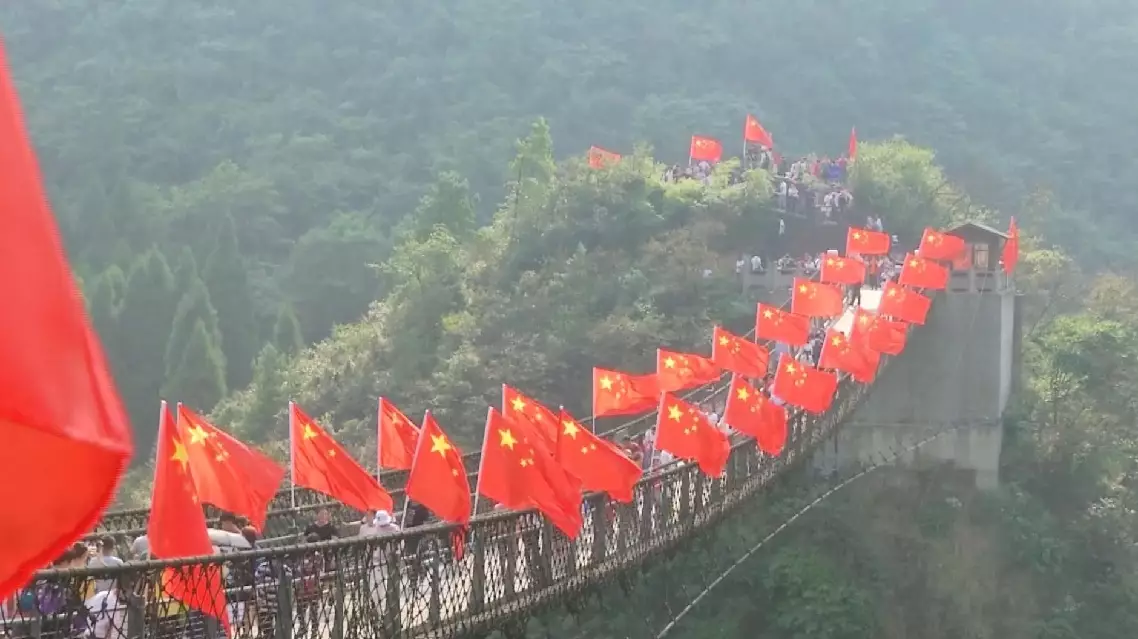
Immersive red cultural experience at Loushan Pass recreates key victory in Long March