Some foreign entrepreneurs successful in business startups in China say they have chosen the country as the destination to pursue a career because they are drawn by the country's preferential policies and scientific and technological advantages.
Owonda Denguet Rolf Gerson, an entrepreneur from the Republic of the Congo, went viral on the internet after singing a northwest China dialect song while studying bridge and tunnel engineering at the Chang'an University in northwest China's Shaanxi Province. However, he has now shifted from content creation to AI-powered short dramas aimed at overseas markets.
After becoming one of the the first expat to receive an entrepreneurship visa in the China (Shaanxi) Pilot Free Trade Zone in 2021, he co-founded a company earlier this year with a Chinese partner. It employs more than 30 people across creation, generation, editing and quality teams and has produced more than 10 overseas and several domestic short dramas.
"Making money is the ultimate goal -- many people will say that. But my way of thinking is different. I want to make more people understand how we really are. I want Africa to have a chance, whether through tourism or entrepreneurship, and let some parts of it develop," he said.
Giuseppe Faranda Cordella, a 59 year-old entrepreneur from Italy, also decided to start up a business in China. Earlier this year he launched a company in Beijing focused on Internet of Things (IoT) and remote automated safety-testing solutions for the automotive sector.
"Now we decided to come to China because China is becoming a leader in the design and production of autonomous vehicles and electric vehicles," he said.
For foreign entrepreneurs, language barriers and unfamiliar regulations are the first hurdles to overcome.
Afghan entrepreneur Wahed Ahmadzai, an entrepreneur from Afghanistan who graduated from the University of International Business and Economics in Beijing, bridges the gap for newcomers.
In 2020, Ahmadzai won recognition at a Chaoyang international talent entrepreneurship event. That same year, Beijing implemented its "Two Zones" initiative, which refers to the city's efforts to build the Integrated National Demonstration Zone for Opening up the Services Sector and the China (Beijing) Pilot Free Trade Zone.
With institutional innovation as the core, the "Two Zones" are intended to create an international, market-oriented, and law-based business environment, promote the opening-up of industries, industrial parks and essential factors of production, attract global resources, stimulate innovation, and consistently enhance Beijing's international competitiveness.
Ahmadzai dove into the official policy documents and found the policy acts as a clear roadmap for entrepreneurship, helping people quickly identify the areas best suited to their industries.
"Once you understand the 'Two Zones' initiative, you will realize how comprehensive they are. Everything that any entrepreneurs might desire, no matter whether they are foreign nationals or Chinese, is covered within this policy framework," he said.
However, many foreign entrepreneurs cannot read Chinese and miss out on the opportunities the policy presents. Recognizing this, Ahmadzai translated the policies into English, printed them in a handbook and distributed it free to fellow overseas entrepreneurs.
Through interactions with other foreign entrepreneurs, Ahmadzai discovered that overseas entrepreneurs coming to China have diverse needs. These varied requirements have raised the bar for incubation services catering to foreign talent, prompting him to become an operator of a global startup incubator. During the process, his sense of belonging also deepens.
"I sometimes forget I am a foreigner, and my friends from other countries do not treat me as one. I joke with many people that now I dream in Chinese," he said.
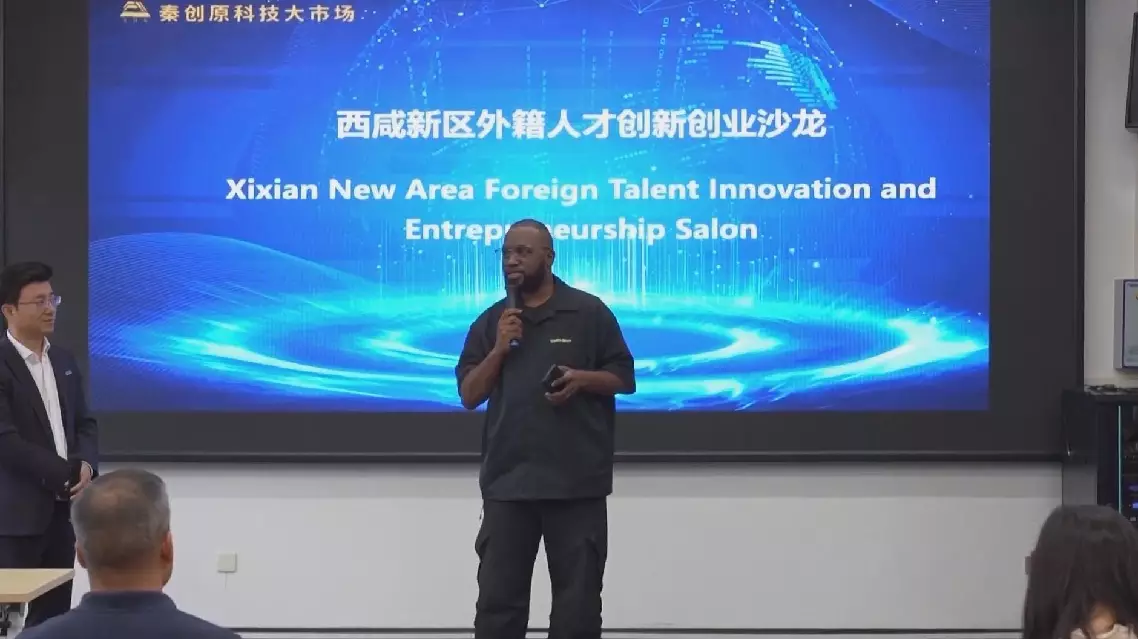
Foreign entrepreneurs drawn to China by preferential policies, technological strength