A persistent heatwave is taking a severe toll on Italy's globally renowned Parmigiano Reggiano cheese industry, driving up production costs and threatening a unique sector where dairy wheels are valued as both culinary treasures and financial assets.
Often dubbed the "Ferrari" of Italian cheese, authentic Parmigiano Reggiano commands premium prices, with a single wheel typically costing between 650 and 1,200 euros depending on its weight and aging duration. But behind the scenes, Italy's sweltering temperatures -- the hottest summer recorded since 1950 -- are squeezing producers from both ends.
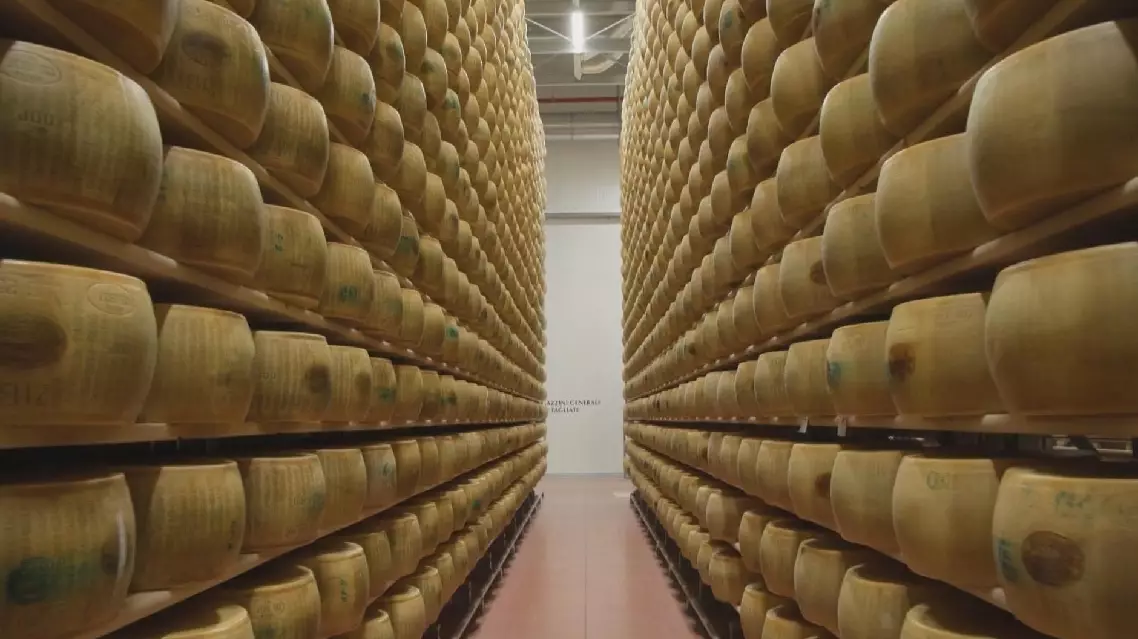
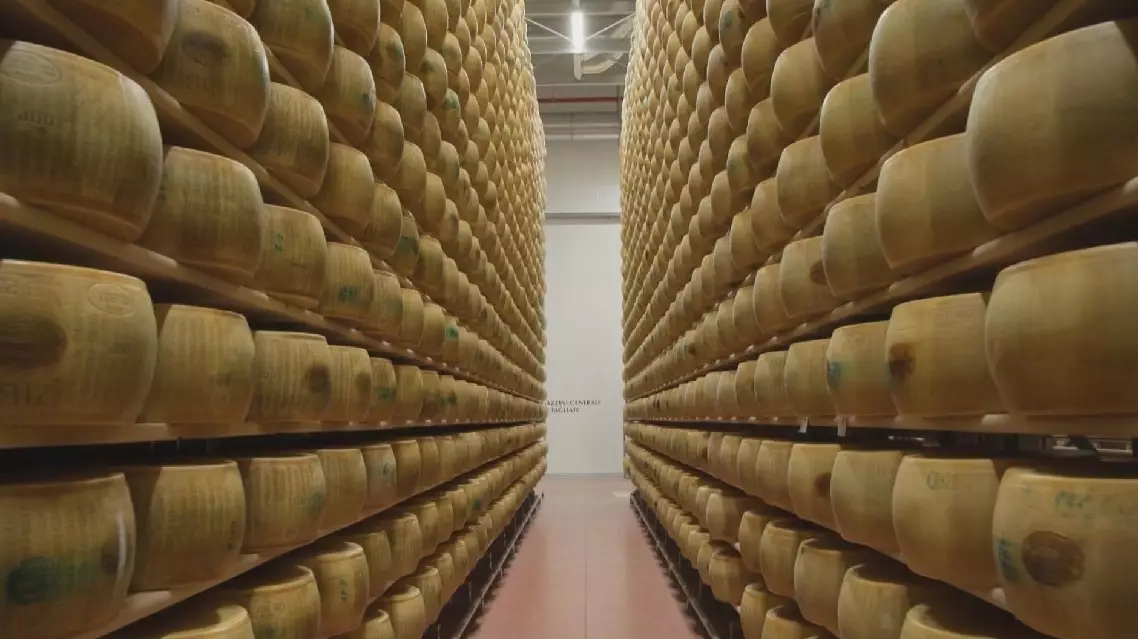
The challenge is most visible in massive, temperature-controlled warehouses like those operated by the Magazzini Generali Delle Tagliate, a subsidiary of the Italian banking group Credem. Inside the warehouse, thousands of cheese wheels slowly age.
"Here, we have 300,000 forms and another 200,000 in another facility, so 500,000 wheels [of Parmigiano Reggiano cheese] with a value above 300 million euros," said Giancarlo Ravanetti, director of the Magazzini Generali Delle Tagliate.
Parmigiano Reggiano must be aged for at least 12 months, and it continues to gain value after that. While the cheese matures, it can be used as collateral to help finance producers. But before a wheel can become collateral, it must receive a special seal of approval, which involves strict testing and tracking, like a passport, helping to identify its age and origin to help safeguard its value.
However, extreme heat is putting unprecedented pressure on this process. Keeping the warehouses at the temperature and humidity required for proper aging has become drastically more expensive.
"We've had significant costs, a sharp increase in electricity consumption, between 25 and 30 percent compared to last year," said Ravanetti,
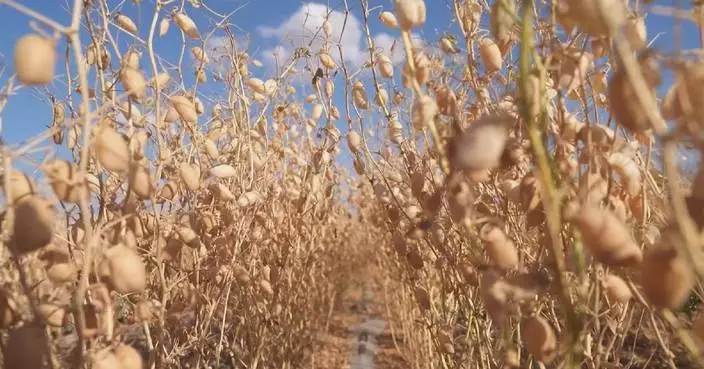
The agricultural side of the operation is also suffering. Heat stress is causing dairy cows to eat less, which directly translates to lower milk yields.
"The first loss is the milk loss, so our production losses range from 10 to 20 percent," said Giovanni Buonaiuto, primary production manager at the Parmigiano Reggiano Consortium, an industry association.
Producers cannot simply relocate their operations to cooler locations because Parmigiano Reggiano's Protected Designation of Origin (PDO) status strictly limits its production to a defined historical area in northern Italy, tying the industry to the very regions now bearing the brunt of climate change.
Nicola Bertinelli, whose family farm dates back to 1895 and who also serves as president of the Parmigiano Reggiano Consortium, emphasized that as industry adapts, it will require support as the regional, national, and European levels.
"In the short term, Parmigiano Reggiano is not at risk, but we are really concerned about the medium and long term," said Bertinelli.
To cope with the sweltering conditions, producers are forced to invest heavily in new infrastructure, including advanced cooling systems and additional water tanks.
"We have to adapt. I mean we have to manage all the variables to keep, here, the production," said Bertinelli.
Analysts warn it may only be a matter of time before price hikes are passed on to consumers. They also noted that since these cheese wheels are also collateral, the stakes could extend far beyond the barn to Italy's financial system.
Persistent heatwave squeezes Italy's prized Parmesan sector as production costs soar
Persistent heatwave squeezes Italy's prized Parmesan sector as production costs soar