Skip to Content Facebook Feature Image

'He's not coming back': Months after deadly Iranian attack, families of soldiers struggle to cope

News

'He's not coming back': Months after deadly Iranian attack, families of soldiers struggle to cope
News

News

'He's not coming back': Months after deadly Iranian attack, families of soldiers struggle to cope

2026-10-05 19:16 Last Updated At:19:20

For Michelle Tietjens, the pain of loss often hits hardest at the start of each day, when the realization dawns all over again that she’ll be facing it without her husband.

“Waking up in the morning it always takes me a little bit to get going,” she said. “Because you relive it – that he’s not here and he’s not coming back.”

More Images
Lt. Col. Tim Halbur, who was injured in an Iranian drone strike at Port Shuaiba in Kuwait, looks over his uniform in his home, Thursday, Sept. 24, 2026, in Ankeny, Iowa. (AP Photo/Charlie Neibergall)

Lt. Col. Tim Halbur, who was injured in an Iranian drone strike at Port Shuaiba in Kuwait, looks over his uniform in his home, Thursday, Sept. 24, 2026, in Ankeny, Iowa. (AP Photo/Charlie Neibergall)

Lt. Col. Tim Halbur, who was injured in an Iranian drone strike at Port Shuaiba in Kuwait, stands in in his home, Thursday, Sept. 24, 2026, in Ankeny, Iowa. (AP Photo/Charlie Neibergall)

Lt. Col. Tim Halbur, who was injured in an Iranian drone strike at Port Shuaiba in Kuwait, stands in in his home, Thursday, Sept. 24, 2026, in Ankeny, Iowa. (AP Photo/Charlie Neibergall)

Lt. Col. Tim Halbur's uniform is seen in his home, Thursday, Sept. 24, 2026, in Ankeny, Iowa, after Halbur was injured in an Iranian drone strike at Port Shuaiba in Kuwait. (AP Photo/Charlie Neibergall)

Lt. Col. Tim Halbur's uniform is seen in his home, Thursday, Sept. 24, 2026, in Ankeny, Iowa, after Halbur was injured in an Iranian drone strike at Port Shuaiba in Kuwait. (AP Photo/Charlie Neibergall)

Lt. Col. Tim Halbur, who was injured in an Iranian drone strike at Port Shuaiba in Kuwait, shows the scars on his arm, Thursday, Sept. 24, 2026, in Ankeny, Iowa. (AP Photo/Charlie Neibergall)

Lt. Col. Tim Halbur, who was injured in an Iranian drone strike at Port Shuaiba in Kuwait, shows the scars on his arm, Thursday, Sept. 24, 2026, in Ankeny, Iowa. (AP Photo/Charlie Neibergall)

FILE - Door attendants secure the doors of the transfer vans containing the remains of U.S. Army Reserve soldiers Maj. Jeffrey O'Brien, Maj. Cody Khork, Chief Warrant Officer 3 Robert Marzan, Master Sgt. Class Nicole Amor, Master Sgt. Class Noah Tietjens, Sgt. Declan Coady, during a casualty return, March 7, 2026, at Dover Air Force Base, Del., who were killed in a drone strike at a command center in Kuwait after the U.S. and Israel launched its military campaign against Iran. (AP Photo/Mark Schiefelbein, File)

FILE - Door attendants secure the doors of the transfer vans containing the remains of U.S. Army Reserve soldiers Maj. Jeffrey O'Brien, Maj. Cody Khork, Chief Warrant Officer 3 Robert Marzan, Master Sgt. Class Nicole Amor, Master Sgt. Class Noah Tietjens, Sgt. Declan Coady, during a casualty return, March 7, 2026, at Dover Air Force Base, Del., who were killed in a drone strike at a command center in Kuwait after the U.S. and Israel launched its military campaign against Iran. (AP Photo/Mark Schiefelbein, File)

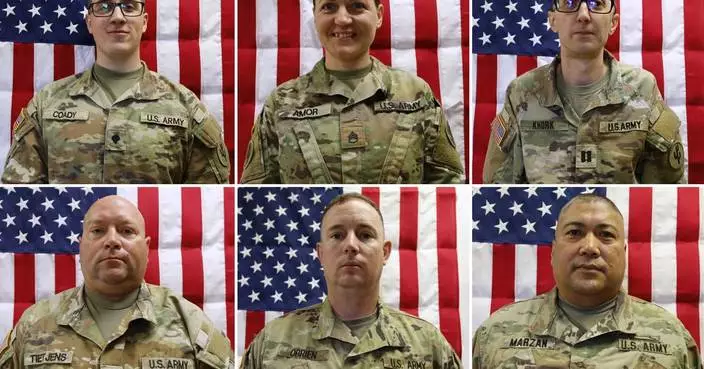
This combination of photos released by the U.S. Army taken on May 16, 2025, shows from top left, Sgt. Declan Coady, Master Sgt. Class Nicole Amor, Maj. Cody Khork, Master Sgt. Class Noah Tietjens, Maj. Jeffrey O’Brien and Chief Warrant Officer 3 Robert Marzan, after they were killed following an Iranian drone strike on March 1, 2026, in Port Shuaiba in Kuwait. (U.S. Army via AP)

This combination of photos released by the U.S. Army taken on May 16, 2025, shows from top left, Sgt. Declan Coady, Master Sgt. Class Nicole Amor, Maj. Cody Khork, Master Sgt. Class Noah Tietjens, Maj. Jeffrey O’Brien and Chief Warrant Officer 3 Robert Marzan, after they were killed following an Iranian drone strike on March 1, 2026, in Port Shuaiba in Kuwait. (U.S. Army via AP)

Sgt. 1st Class Noah Tietjens, an Army reservist from Bellevue, Nebraska, deployed for the third time to the Middle East in the summer of 2025. Even before he left, his wife felt uneasy about potential retaliation after the United States and Israel bombed Iranian nuclear sites. Her husband tried to minimize the risks to keep his family from worrying.

But after Valentine’s Day, the 42-year-old sergeant stopped calling home on the weekends, instead communicating solely by text message.

“He knew he couldn’t keep things out of his voice when he was talking to me,” said Michelle Tietjens, his wife of more than two decades. Her husband checked in by text in the hours after the U.S. and Israel pounded Iran with airstrikes to mark the start of the war on Feb. 28.

The next day, as Iran attacked Mideast bases housing U.S. troops, Noah Tietjens stopped replying to his wife’s messages. She could tell by looking at her phone that he hadn’t even read them.

She soon learned that her husband was one of six U.S. soldiers killed by an Iranian drone at Port Shuaiba, a civilian port and oil refinery in Kuwait, in the deadliest confirmed attack on U.S. troops in Operation Epic Fury.

More than seven months later, Michelle Tietjens and the families of other soldiers killed or wounded are still absorbing the reality of their bereavement and lifelong effects of their injuries. Several told The Associated Press they're angry as questions remain unanswered over the March 1 attack.

The Army declined to comment on the AP’s reporting on the Port Shuaiba strike saying it had not yet briefed the families of those killed on the outcome of its investigation into the attack. The Pentagon also declined to comment.

“We’re all really frustrated and upset and mad,” Michelle Tietjens told the AP. “We’re still waiting for answers and not getting any.”

After her husband’s death, Michelle Tietjens took five weeks off before returning to her job, hoping work would restore some sense of normalcy.

But each day brings reminders of the husband who helped her teach martial arts classes and who enjoyed fishing and watching Japanese animation with their 13-year-old son.

Noah Tietjens had planned to retire from the Army Reserve once he reached 20 years of service in November. Instead, he was promoted posthumously to the rank of master sergeant.

Michelle Tietjens is still reconciling being a solo parent. She said her son is earning good grades and playing soccer, but she sometimes worries he’s keeping too much to himself.

“I never thought I would be raising my son by myself,” she said.

In August, she received a medal awarded to her husband following his death.

“When they gave me his Bronze Star,” she said, “the general could not even look me in the eye.”

Tina Marzan has her own story of grief. She met her husband, Chief Warrant Officer 3 Robert Marzan, when she was 17 and he was stationed in Germany in 1991.

“We’ve been together ever since,” she said.

Like Noah Tietjens, Robert Marzan was among those killed by the drone strike on Port Shuaiba.

“It’s just, you know, the other part of you is missing,” his wife said.

Many of the roughly 80 soldiers stationed at the port, including Marzan and Tietjens, were from the Iowa-based 103rd Expeditionary Sustainment Command that deployed to Kuwait in August 2025. Robert Marzan, 54, had served in the unit for nearly two decades, his wife said.

He was seen as a father figure in the unit, and the couple often invited others to their home for barbecues, dinners and Halloween parties.

Robert Marzan always put his Army mission first, his widow said, and was willing to sacrifice his life throughout his 36-year military career.

So it landed hard when she heard President Donald Trump, on Sept. 4, call the conflict “small potatoes.”

“I just don’t think it’s right that it’s played down,” Tina Marzan said. “He should be more respectful.”

Families of the wounded have different challenges.

Holly Halbur had been eager for her husband to return from Kuwait with the 103rd — his second deployment in two years — so that she would no longer be raising their two young children alone in the Ankeny, Iowa.

When she heard her husband, Lt. Col. Tim Halbur, was wounded in the drone strike on Port Shuaiba, she realized his homecoming would be very different.

An Army official had told Holly Halbur that her 45-year-old husband wasn't seriously injured. But she was later dismayed to learn that her husband would likely never regain full mobility in his dominant arm. The blast shattered his forearm in four places, including his elbow.

He spent months in the Walter Reed Medical Center in Maryland, where he says he received “excellent” care that helped him regain some use of his injured hand and arm. He has had to wait weeks to line up further appointments and said he's frustrated that he cannot resume receiving therapy for his post-traumatic stress until the end of October.

"I wish I didn't have to wait as long," Tim Halbur said. “It's always nice to have that professional that you can talk to when you need to.”

His homecoming also has posed new challenges for their family.

“This might be the hardest part so far — trying to now figure out, like, who each other is again,” Holly Halbur said.

They've been married for a decade. They became close after Holly Halbur sent her future husband a care package of his favorite Chex Mix cereal while he was deployed in Afghanistan. He swore her in when she, too, later joined the Army. But the past two years they have lived mostly apart, with Tim Halbur deployed overseas.

Now that he’s back, he tries to help with household chores. But he often needs his wife’s assistance for tasks like changing the lawn mower's battery or moving heavy objects.

“We’re both going to have to have, like, grace upon grace for each other as we figure this out," Holly Halbur said, "because it’s going to be hard and frustrating for both of us.”

Lt. Col. Tim Halbur, who was injured in an Iranian drone strike at Port Shuaiba in Kuwait, looks over his uniform in his home, Thursday, Sept. 24, 2026, in Ankeny, Iowa. (AP Photo/Charlie Neibergall)

Lt. Col. Tim Halbur, who was injured in an Iranian drone strike at Port Shuaiba in Kuwait, looks over his uniform in his home, Thursday, Sept. 24, 2026, in Ankeny, Iowa. (AP Photo/Charlie Neibergall)

Lt. Col. Tim Halbur, who was injured in an Iranian drone strike at Port Shuaiba in Kuwait, stands in in his home, Thursday, Sept. 24, 2026, in Ankeny, Iowa. (AP Photo/Charlie Neibergall)

Lt. Col. Tim Halbur, who was injured in an Iranian drone strike at Port Shuaiba in Kuwait, stands in in his home, Thursday, Sept. 24, 2026, in Ankeny, Iowa. (AP Photo/Charlie Neibergall)

Lt. Col. Tim Halbur's uniform is seen in his home, Thursday, Sept. 24, 2026, in Ankeny, Iowa, after Halbur was injured in an Iranian drone strike at Port Shuaiba in Kuwait. (AP Photo/Charlie Neibergall)

Lt. Col. Tim Halbur's uniform is seen in his home, Thursday, Sept. 24, 2026, in Ankeny, Iowa, after Halbur was injured in an Iranian drone strike at Port Shuaiba in Kuwait. (AP Photo/Charlie Neibergall)

Lt. Col. Tim Halbur, who was injured in an Iranian drone strike at Port Shuaiba in Kuwait, shows the scars on his arm, Thursday, Sept. 24, 2026, in Ankeny, Iowa. (AP Photo/Charlie Neibergall)

Lt. Col. Tim Halbur, who was injured in an Iranian drone strike at Port Shuaiba in Kuwait, shows the scars on his arm, Thursday, Sept. 24, 2026, in Ankeny, Iowa. (AP Photo/Charlie Neibergall)

FILE - Door attendants secure the doors of the transfer vans containing the remains of U.S. Army Reserve soldiers Maj. Jeffrey O'Brien, Maj. Cody Khork, Chief Warrant Officer 3 Robert Marzan, Master Sgt. Class Nicole Amor, Master Sgt. Class Noah Tietjens, Sgt. Declan Coady, during a casualty return, March 7, 2026, at Dover Air Force Base, Del., who were killed in a drone strike at a command center in Kuwait after the U.S. and Israel launched its military campaign against Iran. (AP Photo/Mark Schiefelbein, File)

FILE - Door attendants secure the doors of the transfer vans containing the remains of U.S. Army Reserve soldiers Maj. Jeffrey O'Brien, Maj. Cody Khork, Chief Warrant Officer 3 Robert Marzan, Master Sgt. Class Nicole Amor, Master Sgt. Class Noah Tietjens, Sgt. Declan Coady, during a casualty return, March 7, 2026, at Dover Air Force Base, Del., who were killed in a drone strike at a command center in Kuwait after the U.S. and Israel launched its military campaign against Iran. (AP Photo/Mark Schiefelbein, File)

This combination of photos released by the U.S. Army taken on May 16, 2025, shows from top left, Sgt. Declan Coady, Master Sgt. Class Nicole Amor, Maj. Cody Khork, Master Sgt. Class Noah Tietjens, Maj. Jeffrey O’Brien and Chief Warrant Officer 3 Robert Marzan, after they were killed following an Iranian drone strike on March 1, 2026, in Port Shuaiba in Kuwait. (U.S. Army via AP)

This combination of photos released by the U.S. Army taken on May 16, 2025, shows from top left, Sgt. Declan Coady, Master Sgt. Class Nicole Amor, Maj. Cody Khork, Master Sgt. Class Noah Tietjens, Maj. Jeffrey O’Brien and Chief Warrant Officer 3 Robert Marzan, after they were killed following an Iranian drone strike on March 1, 2026, in Port Shuaiba in Kuwait. (U.S. Army via AP)
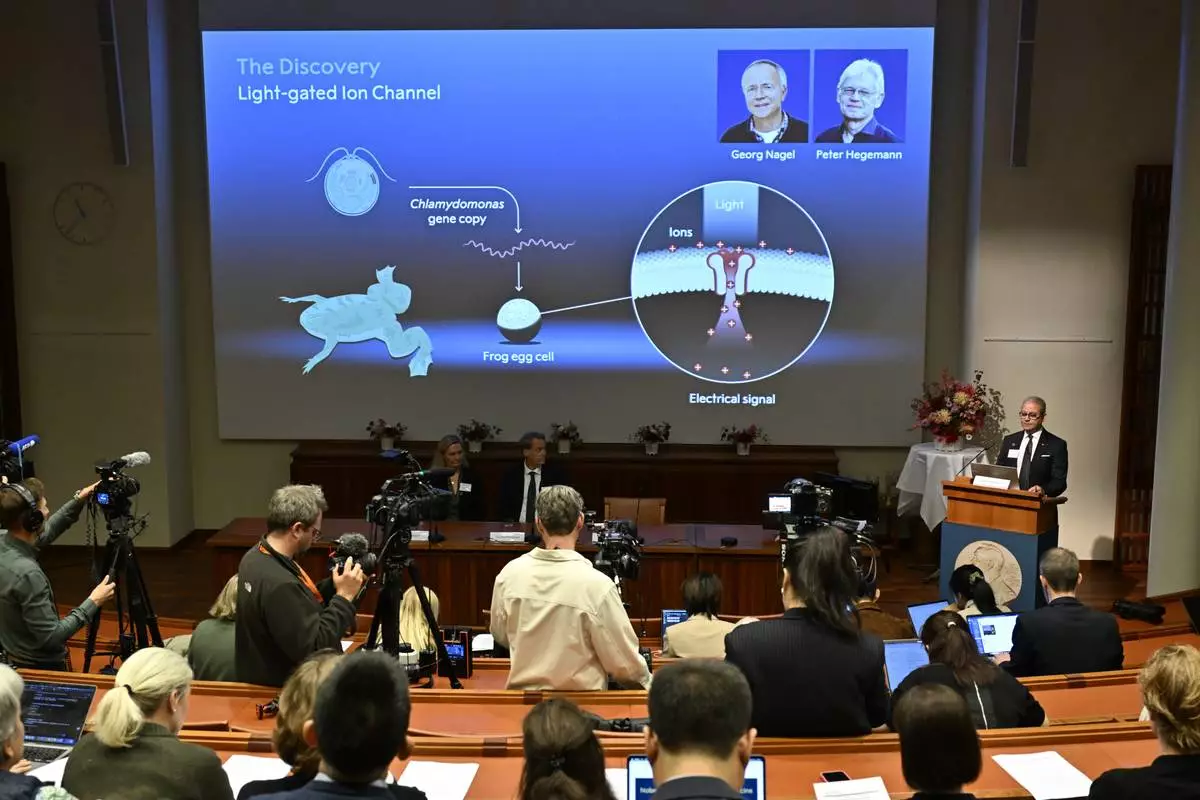
STOCKHOLM (AP) — The Nobel Prize in medicine was awarded Monday to three scientists working on the mechanisms the brain uses to switch on, or off, the activity of individual nerve cells.

Karl Deisseroth, 54, Peter Hegemann, 71, and Georg Nagel, 73, have carried out research into light-gated ion channels and optogenetics.

The Nobel Assembly lauded their work and said the method is now being used in laboratories around the world to reveal the brain’s mysteries.

The assembly said Deisseroth is based at Stanford University in California, while Hegemann is at Humboldt University in Berlin and Nagel at the University of Würzburg, also in Germany.

Optogenetics opened what the Nobel assembly called a new era in neuroscience, the discovery of a light-controlled switch to turn on and off nerve cells and circuits in the brain to better learn how it works — to start unraveling the pathways that lead to behavior and disease.

It started when Hegemann explored how a single-celled type of green algae can swim toward light. He and Nagel discovered a particular protein that, when illuminated by blue light, opens a channel to create an electrical impulse. Putting that protein into other cells makes them light-sensitive.

Deisseroth then worked with the gene that controls that protein to create a light-controlled switch for nerve cells in the brains of living mice.

“It’s a very precise set of tools for doing experiments about how the brain works that are pretty hard to do any other way,” said the University of Pittsburgh’s Jeremy Berg. He was at the National Institutes of Health in the early 2000s when it awarded Deisseroff major funding for “this vision of optogenetics that was pretty much spot-on the way it played out.”

Deisseroth, a self-described night owl, said he was up late in his Northern California home working on papers and emailing his students. He had just gone to lie down when he got the call from the Nobel assembly.

“No real sleep was achieved,” he told The Associated Press in a phone call an hour after the announcement.

He said the next task on his to-do list was to pack school lunches for his children, who were still sound asleep.

“That’s my one obligation I have in the next few hours, to make sure I make their sandwiches,” he said.

Thomas Perlmann, the secretary of the medicine committee, said he was able to reach all three winners Monday. The AP's efforts to reach Hegemann and Nagel were not immediately successful.

The prize was announced at the Karolinska Institute in Stockholm, kicking off Nobels week. The prize money this year is 12 million Swedish kronor (about $1.2 million).

Last year, the prize went to three scientists researching the immune system.

Monday's medicine prize is followed by the physics prize on Tuesday, chemistry on Wednesday and literature on Thursday.

After Friday’s peace prize is awarded, the Nobel Memorial Prize in Economic Sciences will be announced on Oct. 12.

The prize money this year is 12 million Swedish kronor (about $1.2 million), whether for an individual, small group of laureates or organization.

Neergaard reported from Washington and Ramakrishnan reported from New York. Stefanie Dazio in Berlin contributed to this report.

AP Nobel Prizes: https://apnews.com/hub/nobel-prizes

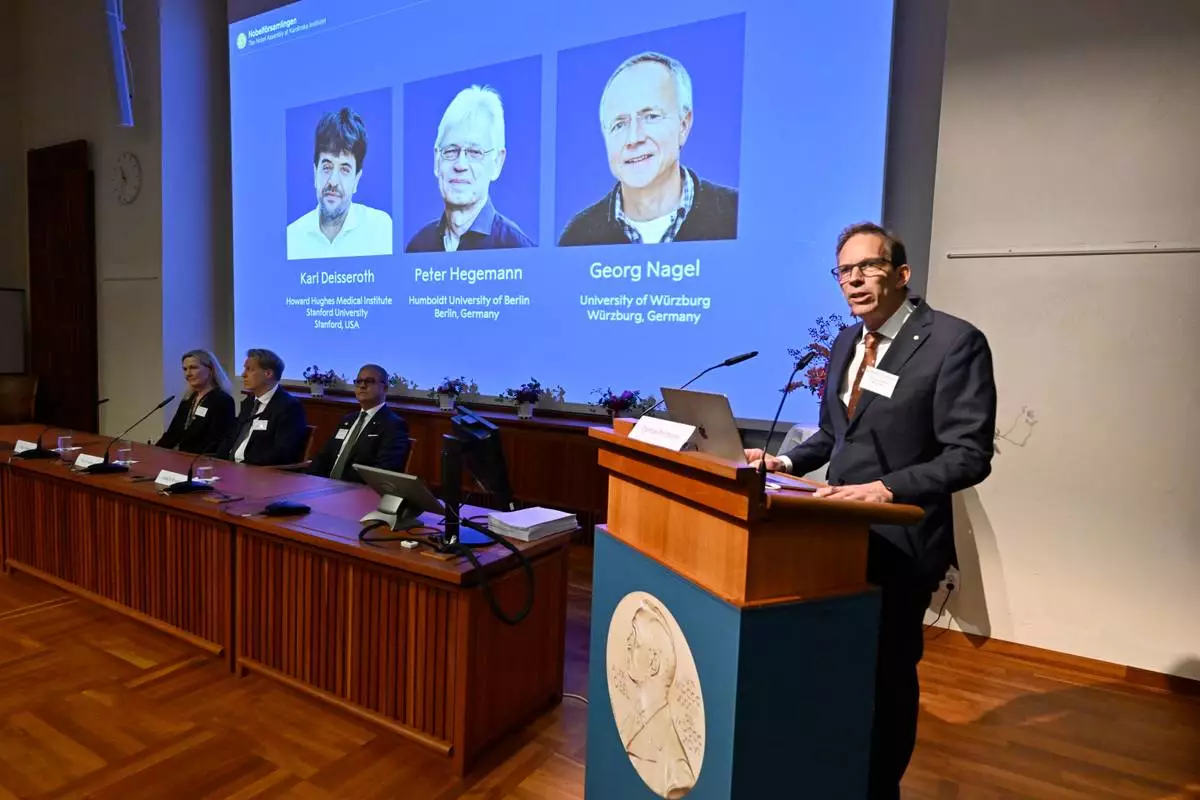
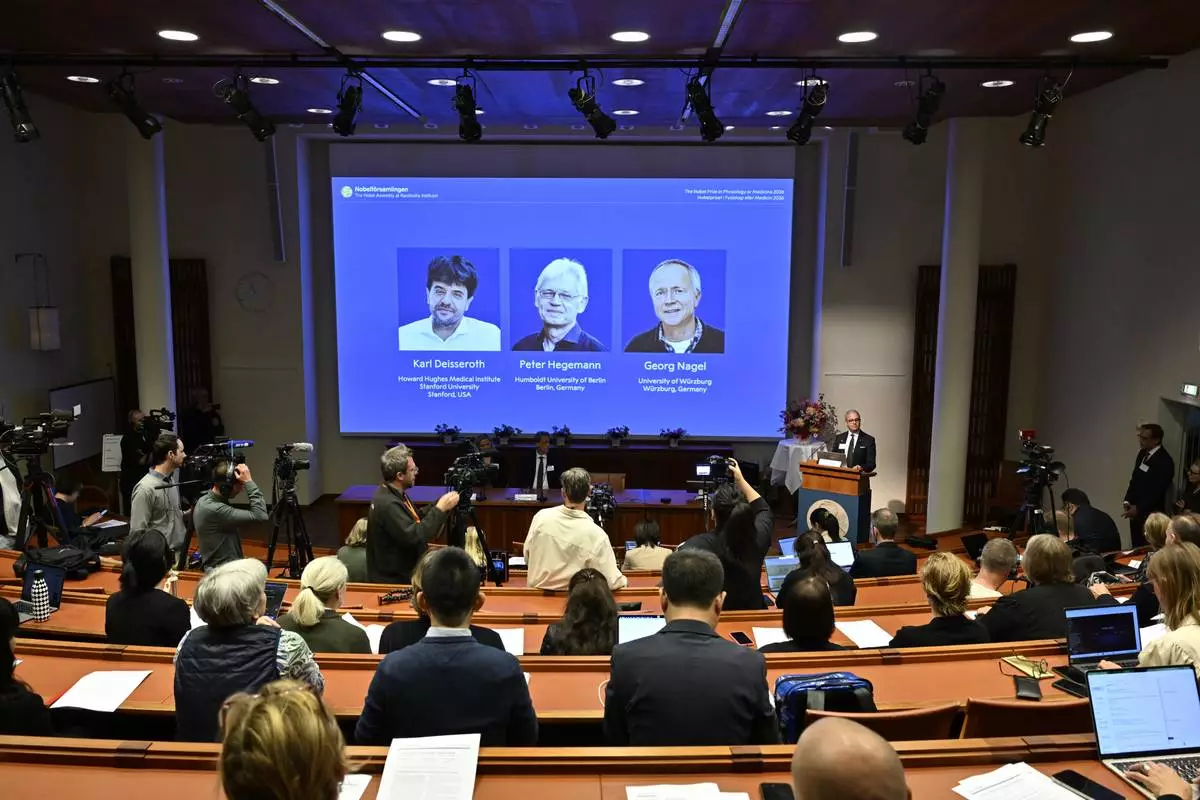
Portraits of Karl Deisseroth, Peter Hegemann and Georg Nagel are shown on the screen as they are awarded the 2026 Nobel Prize in Physiology or Medicine, as announced during a press conference at the Nobel Forum at Karolinska Institutet in Stockholm, Sweden, Oct. 5, 2026. (Pontus Lundahl/TT News Agency via AP)

Portraits of Karl Deisseroth, Peter Hegemann and Georg Nagel are shown on the screen as they are awarded the 2026 Nobel Prize in Physiology or Medicine, as announced during a press conference at the Nobel Forum at Karolinska Institutet in Stockholm, Sweden, Oct. 5, 2026. (Pontus Lundahl/TT News Agency via AP)

Portraits of Peter Hegemann, top right, and Georg Nagel are shown on the screen as they and Karl Deisseroth are awarded the 2026 Nobel Prize in Physiology or Medicine, as announced during a press conference at the Nobel Forum at Karolinska Institutet in Stockholm, Sweden, Oct. 5, 2026. (Pontus Lundahl/TT News Agency via AP)

Portraits of Peter Hegemann, top right, and Georg Nagel are shown on the screen as they and Karl Deisseroth are awarded the 2026 Nobel Prize in Physiology or Medicine, as announced during a press conference at the Nobel Forum at Karolinska Institutet in Stockholm, Sweden, Oct. 5, 2026. (Pontus Lundahl/TT News Agency via AP)

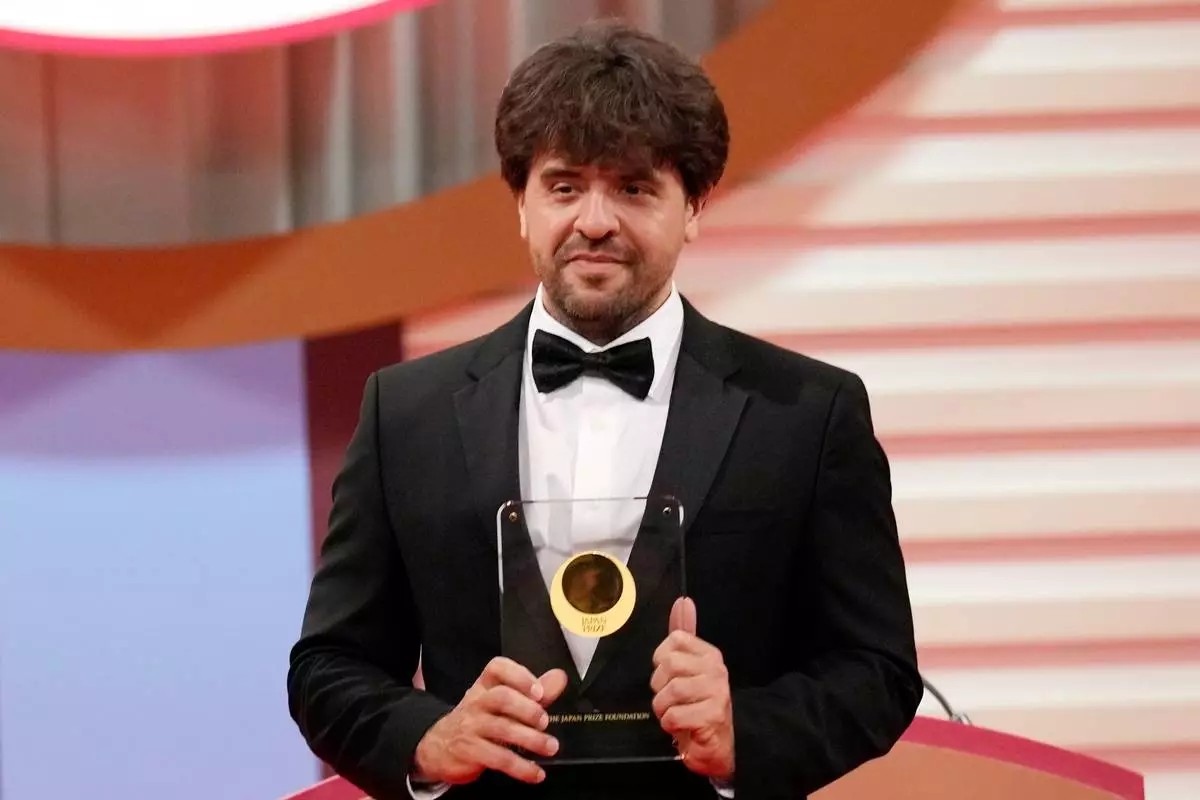
FILE - U.S. scientist Karl Deisseroth, professor of Departments of Bioengineering and Psychiatry at Stanford University, shows his trophy for "Life Sciences" field during the Japan Prize presentation ceremony Thursday, April 13, 2023, in Tokyo. (AP Photo/Eugene Hoshiko, File)

FILE - U.S. scientist Karl Deisseroth, professor of Departments of Bioengineering and Psychiatry at Stanford University, shows his trophy for "Life Sciences" field during the Japan Prize presentation ceremony Thursday, April 13, 2023, in Tokyo. (AP Photo/Eugene Hoshiko, File)

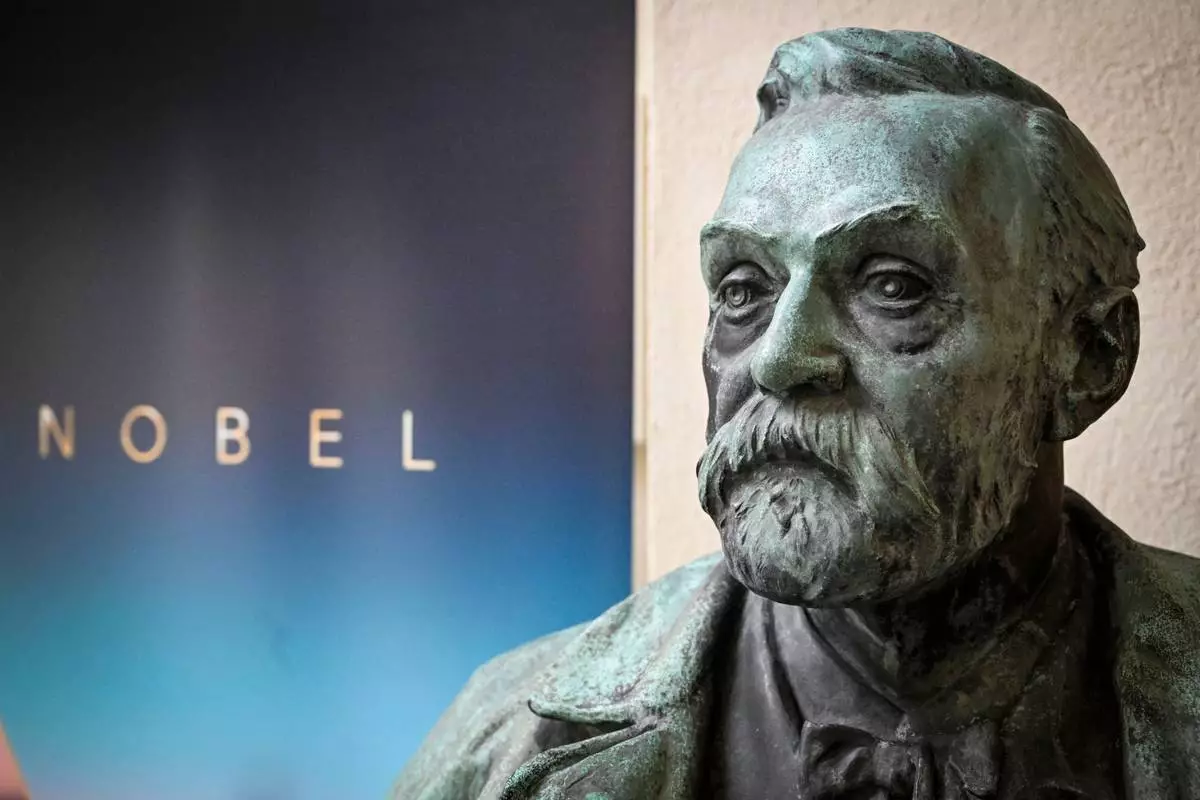
FILE - A bust of Alfred Nobel on display following a press conference to announce the Nobel Committee for Physiology or Medicine at the Karolinska Institute in Stockholm, Sweden, on Oct. 3, 2022. (Henrik Montgomery/TT News Agency via AP, File)

FILE - A bust of Alfred Nobel on display following a press conference to announce the Nobel Committee for Physiology or Medicine at the Karolinska Institute in Stockholm, Sweden, on Oct. 3, 2022. (Henrik Montgomery/TT News Agency via AP, File)

Karl Deisseroth, Peter Hegemann and Georg Nagel are shown on the screen as they are awarded the 2026 Nobel Prize in Physiology or Medicine, as announced during a press conference at the Nobel Forum at Karolinska Institutet in Stockholm, Sweden, Oct. 5, 2026. (Pontus Lundahl/TT News Agency via AP)

Karl Deisseroth, Peter Hegemann and Georg Nagel are shown on the screen as they are awarded the 2026 Nobel Prize in Physiology or Medicine, as announced during a press conference at the Nobel Forum at Karolinska Institutet in Stockholm, Sweden, Oct. 5, 2026. (Pontus Lundahl/TT News Agency via AP)

Portraits of Karl Deisseroth, Peter Hegemann and Georg Nagel are shown on a screen as they are awarded the 2026 Nobel Prize in Physiology or Medicine, as announced during a press conference at the Nobel Forum at Karolinska Institutet in Stockholm, Sweden, Oct. 5, 2026. (Pontus Lundahl/TT News Agency via AP)

Portraits of Karl Deisseroth, Peter Hegemann and Georg Nagel are shown on a screen as they are awarded the 2026 Nobel Prize in Physiology or Medicine, as announced during a press conference at the Nobel Forum at Karolinska Institutet in Stockholm, Sweden, Oct. 5, 2026. (Pontus Lundahl/TT News Agency via AP)

FILE - U.S. scientist Karl Deisseroth, professor of Departments of Bioengineering and Psychiatry at Stanford University, shows his trophy for "Life Sciences" field during the Japan Prize presentation ceremony Thursday, April 13, 2023, in Tokyo. (AP Photo/Eugene Hoshiko, File)

FILE - U.S. scientist Karl Deisseroth, professor of Departments of Bioengineering and Psychiatry at Stanford University, shows his trophy for "Life Sciences" field during the Japan Prize presentation ceremony Thursday, April 13, 2023, in Tokyo. (AP Photo/Eugene Hoshiko, File)

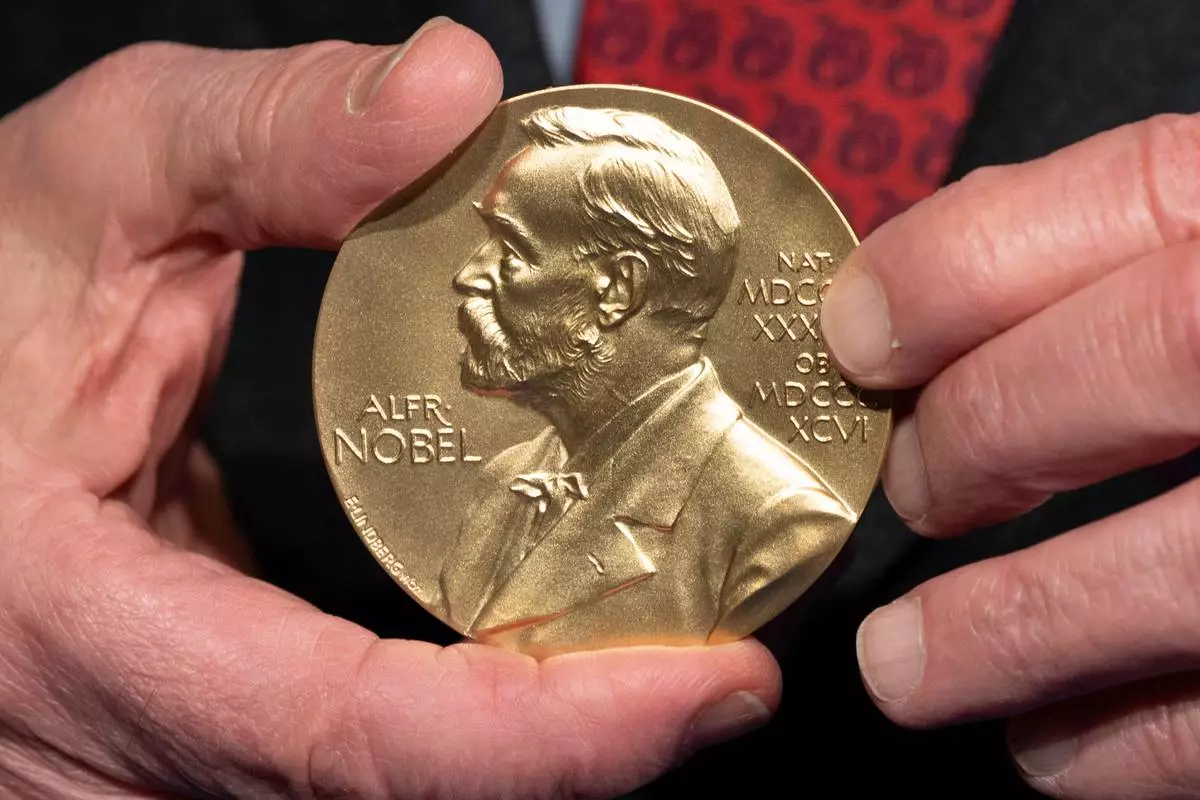
FILE - A close-up view of a Nobel Prize medal at the National Institutes of Health (NIH) in Bethesda, Md., Dec. 8, 2020. (AP Photo/Jacquelyn Martin, File)

FILE - A close-up view of a Nobel Prize medal at the National Institutes of Health (NIH) in Bethesda, Md., Dec. 8, 2020. (AP Photo/Jacquelyn Martin, File)

Recommended Articles